
Seven time nominated BEST BRITISH TRUE-CRIME PODCAST at the True Crime Awards, Independent Podcast Award and The British Podcast Awards, and voted 4th Best True-Crime Podcast by This Week, iTunes Top 25 Podcast, Podcast Magazine's Hot 50, The Telegraph's Top 5, Crime & Investigation Top 20 True-Crime Podcasts, also seen on BBC Radio, Sky News, The Guardian and TalkRadio's Podcast of the Week.

Ronald Evans, 'The Clifton Rapist' aged 82
EPISODE THREE HUNDRED AND SIXTY-TWO & THREE: This is Part One of Two of The Beast of Bedsitland. As one of Britain’s longest serving prisoners, Ronald Evans has been incarcerated for more than 55 years for GBH, ABH, rape and murder, and has never expressed any true remorse for his victims. Aged 22, he murdered Kathleen Heathcote in Mansfield, across the late 1970s he terrorised the city of Bristol being known as ‘The Clifton Rapist’ and even in his 80s, he committed a sexual assault. So why wasn’t he rehabilitated?
SOURCES: a selection sourced from various archives:
https://www.bbc.co.uk/news/uk-england-bristol-67412230 http://news.bbc.co.uk/1/hi/england/bristol/4543195.stm https://www.bbc.co.uk/news/articles/cx241ndl114o http://news.bbc.co.uk/1/hi/england/bristol/4098477.stm https://www.bbc.co.uk/news/uk-england-bristol-67440198 https://www.bbc.co.uk/news/uk-england-bristol-67420687 https://www.bbc.co.uk/news/uk-england-bristol-67440198 https://www.bbc.co.uk/news/articles/cm2ld0l877zo https://www.theguardian.com/uk-news/2023/nov/16/killer-known-as-clifton-rapist-82-jailed-for-sexually-assaulting-woman-after-release http://news.bbc.co.uk/1/hi/england/bristol/4543195.stm https://www.youtube.com/watch?v=XzyWhYdDfDg https://www.independent.co.uk/news/uk/home-news/clifton-rapist-bristol-ronald-evans-b2693541.html https://www.dailymail.com/news/article-12744387/Murderer-serial-sex-attacker-dubbed-Clifton-Rapist-Britains-longest-serving-prisoner-bars-sexually-assaulted-woman-licence.html https://www.mylondon.news/news/north-london-news/clifton-rapist-back-behind-bars-28108307 https://www.bristolworld.com/news/the-clifton-rapist-back-behind-bars-for-sex-assault-whilst-out-on-licence-4408585 Western Daily Press Thu, Nov 03, 1994 Western Daily Press Tue, Jul 24, 1979 Western Daily Press Tue, Jul 24, 1979 Western Daily Press Tue, Jul 24, 1979 The Birmingham Post Tue, Dec 19, 1978 Brent and Kilburn Times Thu, Nov 23, 2023 The Herald (Glasgow ed.) Fri, Nov 17, 2023 Western Daily Press Wed, Oct 26, 1994 Evening Post Thu, Nov 03, 1994 Western Daily Press Sat, Mar 16, 1991 Evening Post Wed, Oct 26, 1994 Evening Post Sat, Dec 01, 1990 Western Daily Press Fri, Feb 13, 1987 Western Daily Press Sat, Dec 15, 1979 Evening Post Fri, May 17, 1991 Western Daily Press Sat, Apr 22, 1978 Western Daily Press Fri, Feb 02, 1979 Western Daily Press Sat, Oct 04, 1980 The Express and Echo Thu, Nov 28, 1963 The Argus Thu, Nov 28, 1963 Daily Mirror Mon, Nov 25, 1963 Liverpool Echo Thu, Nov 28, 1963 Birmingham Evening Mail Wed, Nov 27, 1963 Hull Daily Mail Wed, Nov 27, 1963 Liverpool Daily Post (Merseyside ed.) Mon, Dec 02, 1963 Manchester Evening News Fri, Nov 29, 1963 The Guardian Journal Sat, Dec 14, 1963 Birmingham Evening Mail Thu, Nov 28, 1963 Huddersfield Daily Examiner Mon, Nov 25, 1963 Manchester Evening News Thu, Nov 28, 1963 Evening Post Mon, Jul 23, 1979 Hull Daily Mail Mon, Nov 25, 1963 Swindon Advertiser Wed, Nov 27, 1963 The Mail (Millom and South Copeland ed.) Wed, Nov 27, 1963 Lancashire Telegraph Wed, Nov 27, 1963 Birmingham Evening Mail Wed, Nov 27, 1963 Liverpool Daily Post (Merseyside ed.) Mon, Nov 25, 1963 Grimsby Evening Telegraph Wed, Nov 27, 1963 Hull Daily Mail Fri, Nov 29, 1963 The Daily Telegraph Mon, Nov 25, 1963 The Guardian Journal Mon, Nov 25, 1963 Evening Telegraph Wed, Mar 18, 1964 The Daily Sketch Sat, Mar 21, 1964 Daily Post (Merseyside ed.) Tue, Jul 24, 1979 The Guardian Journal Thu, Mar 19, 1964 Daily Herald Mon, Nov 25, 1963 Evening Post Fri, Dec 06, 1963 The Guardian Journal Sat, Mar 21, 1964 Hull Daily Mail Thu, Nov 28, 1963 Evening Telegraph Fri, Mar 20, 1964 Western Daily Press Thu, Nov 03, 1994 Daily Mirror Tue, Jul 24, 1979 Western Daily Press Wed, Oct 26, 1994 Western Daily Press Thu, Feb 22, 1979 Evening Post Thu, Mar 30, 1978 Evening Post Tue, Apr 25, 1978 Western Daily Press Wed, May 03, 1978 Western Daily Press Mon, Mar 26, 1979 Western Daily Press Sat, Mar 03, 1979 Evening Post Tue, Jun 05, 1979 Evening Post Fri, Aug 19, 1977 Western Daily Press Sat, Nov 26, 1977 Daily Star 24 July 1979 Birmingham Daily Post 19 December 1978 Mansfield & North Nottinghamshire Chronicle-Advertiser 22 December 2004 Bristol Evening Post 03 November 1978 Western Daily Press 12 May 1977 Western Daily Press 17 March 1978 Sunday Mirror 13 August 1978 Evening Post Sat, Dec 31, 1977 Evening Post Tue, Feb 27, 1979 Evening Post Thu, Jan 05, 1978 Evening Post Sat, Dec 31, 1977 Evening Post Mon, Mar 26, 1979 Evening Post Fri, Feb 23, 1979 Western Daily Press Thu, Apr 27, 1978 Evening Post Fri, Mar 23, 1979 Western Daily Press Wed, Aug 09, 1978 Western Daily Press Mon, Feb 05, 1979 Evening Post Fri, Nov 10, 1978 MUSIC:
UNEDITED TRANSCRIPT: Welcome to Murder Mile: Unleashed. (Engine) And I’m away. Sort of, I should be saying goodbye London, hello Britain, as I cruise the UK’s canal network in my little boat to bring you true crime cases from the cities, towns and villages I visit, but this week, I’m back to West London where a monster of pure evil lurked and stalked his prey. My name is Michael, I am your tour guide, and this is Murder Mile. Episode 362: The Beast of Bedsitland – Part 1 of 2. Community centres are the backbone of so many inner-city boroughs, as being places of concrete and chaos, it’s easy for the infirm, the fragile and the vulnerable to feel overwhelmed and lost. To the side of Wembley Park station sits the Chalkhill Community Centre, a vital hub providing a safe space and a lifeline for adults and children, whether through education, art, exercise, prayers, and food banks. With a range of classes and courses, it can provide a springboard to new skills, a kind ear to those who need it and a shelter for those with nowhere to turn, or somewhere to have a chat over a cuppa. Being self-funded, Chalkhill also relies on good people with big hearts volunteering their time to help others. Back in 2023, it hosted a mental health drop-in service organised by the borough’s MP and Counsellor, where the vulnerable sought help, advice and support through group therapy and solo sessions. One volunteer at the centre was 82-year-old ‘Ron’, a tall man with a wispy frame and a slight stoop; whose East Midlands accent was reassuringly honest, his neat practical clothes eluded to his working class roots, and his bald head with grey sideburns hinted that in the 1960s and 70s he had a little style. ‘Ron’ lived alone in a council flat, and with a lot of spare time on his hands, he said he wanted to give something back, so had volunteered at the centre for the past four years where he carried crates and helped deliver food bags to the needy. Said to be “the life and soul of the party”, Ron was likeable, fun and kind, he was well-thought of, and made the attendees of the predominantly female mental health drop-in group feel at ease as they struggled with their physical disabilities and emotional difficulties. But who was ‘Ron’? No-one really knew. He acted like he was kind and honest, but was a man with a past and a monster branded a danger to women. He’d spent 52 years in prison for his crimes, including GBH, ABH, rape and murder, and many had said that he should never have been released. But he had. Wembley was now his new hunting ground for vulnerable women, and although he was a stranger, back in Bristol of the 1970s, he terrorised the city being ominously known as ’The Beast of Bedsitland’… …and to his victims as ‘The Clifton Rapist’. His dark history began a decade before. Thursday 21st of November 1963 was an uneventful day in Britain; the Vietnam war was raging, NASA was testing rockets to land a man on the moon, The Beatles were mid-way through a UK concert tour, the famous bird man of Alcatraz had died, the headlines were still dominated by Christine Keeler and the Profumo Affair, and seemingly less important was that President John F Kennedy had begun a two-day trip to Texas, and that morning had boarded Air Force One for (what would be) the very last time. The day was horrendously cold and wet, it hadn’t stopped raining and it wouldn’t till the weekend. Mansfield is a historic market town, north of Nottingham and near to Sherwood Forest. Since her birth in September 1942, it had been home to 21-year-old Kathleen Rita Heathcote, and as she did most days, she sold boots at the Mansfield & District Cooperative Society, where she worked as an assistant. Being shorter-than-average (5-foot-4) and slim-framed with brown wavy hair and glasses, Kathleen was quiet and intelligent, well-behaved, and described as “good, moral and decent”. She was liked by everyone as she hadn’t a bad bone in her body, and went out of her way to do the right thing by all. Times were hard for her family, as being the youngest of four children to Harry & Edith Heathcote, described as a solid and respectable family, Harry had been forced to retire from his job as a boiler man at Mansfield Brewery, having suffered heart trouble aged 54. Money was tight and Kathleen’s wage went a little way to help them, but what she was really saving up for was her dream of marriage. Kathleen was in love with her childhood sweetheart, George Whalley, an apprentice colliery fitter from nearby Selston. As a sensible girl, although they had got engaged, they said they wouldn’t marry until they were 21, so with Kathleen being of age, and George just 20, they were saving for their wedding. That day, about 5pm, Kathleen headed to her parent’s house at 22 Princes Street, a small mid-terraced two-storey house. As it was a Thursday, and she always went to see George on a Thursday, she did her hair, her make-up, and dressing in brown dress and white blouse, as the torrent of rain had refused to relent, she popped on a brown hat, a raincoat and leather boots, and opened up her blue umbrella. As only a fifth of homes had a phone in 1963, and theirs hadn’t, Kathleen stuck to a rigid routine; she caught the bus from the stop on Sutton Road, and travelled the 7 miles / 30 minute journey to George’s at 68 Portland Road where they had tea and cake while listening to the radio with George’s mother. It was all very sweet and innocent, and those who knew them agreed “they were very much in love”. With George working nights at the colliery, at 10:25pm, although the weather was miserable and cold, their hearts were warm and joyous as they kissed each other at the bus stop and waved goodbye. The journey was as ordinary as any other, Kathleen thanked the driver, and just passed the King’s Mill hospital, at 10:58pm, she got off the bus on the unlit Sutton Road. It was dark and deathly quiet as with houses sparsely peppered, an odd light was seen, but Kathleen wasn’t worried as this was home, and besides, her mother always met her at the end of their street, just shy of the old Brickyard Tip. At 11pm, Kathleen walked into Moor Lane, a darker and more isolated side street. She could see her home straight ahead, but with the street shaped like an unfathomable u-bend which led up Victoria Street before she came back down Princes Street, instead Kathleen took a shortcut over Brickyard Tip; a derelict 40 acre waste ground, where everyone dumped their rubbish… and her short life would end. Kathleen Heathcote was a lone women walking up an unlit side street… …and vulnerable prey for the monster who would become ‘The Clifton Rapist’. Born in December 1940, Ronald Evans known as ‘Ron’ was raised as a shameful lie, as with his parents actually his grandparents, he was raised in a strict Victorian code of morality, yet all the while he hid from the world that his 14-year-old sister was really his mother, and with that his mind was scrambled. As a strapping 6 foot 2 inch, 14 stone man of a solid build who was said to be handsome and charming, ‘Ron’ Evans didn’t have any problems pulling girls, in fact, by November 1963, his wife Jill was heavily pregnant with their first child, six miles north in Shirebrook, but what he did wasn’t about love or sex. That night, as a 23 year-old colliery electrician, Evans went to a dance at Teversal Miner’s Welfare, he drank two or three pints, and having had his advances rejected by a girl, at 10:45pm, instead of heading 6 miles north-east to his home on Brunner Avenue, he drove his maroon and grey Ford Consul 5 miles south-east through Stanton Hill and Skegby, passed Kings Mill Hospital and into Sutton Road. Earlier that night, locals had reported a prowler peering through girl’s windows, but as his needs were unsated, randomly seeing Kathleen alone as she entered the darkness of Moor Lane, doing a U-turn, he creeped his car ever closer, his window down, hassling her for a date or maybe to take her home. Quickening her pace, Kathleen made it to Brickyard Tip, close to her home and her waiting mother… …only her mother wasn’t there, as in a decision which must have haunted her forever, as the rain was heavy and she was getting soaked, she headed home, leaving Kathleen alone with a sadistic predator. No-one heard her screams as the howling rain muffled any sounds. Being almost a foot taller and twice her weight, there was no chance of her fleeing his grip as he grabbed her from behind. She fought back as best she could, but being punched into submission, he broke her nose, he bloodied her lips, he bruised her face, and so violent was the struggle that her hat and bag were scattered far and wide, along with her smashed glasses, her broken watch, and four false teeth from her upper dental plate. In a last gasp at survival, she cried for help, but as he stared into her tear-soaked eyes, the last sight she would have seen was as he asphyxiated her in a two-handed strangle hold until she went limp… …and then he raped her, twice. He said “I did it to prove my manhood” having been rejected by another girl. Kathleen wasn’t this type, he didn’t have a type, as stinking of drink, he didn’t go hunting a girl to satisfy a specific whim, what he wanted was a lone, vulnerable girl on a dark and isolated street who he could control and humiliate. He claimed “I didn’t intend to murder her. I had intercourse with her there, and then at the top of Princes Street. When she screamed, I put my hand over her mouth. I must have lost control”, and as he drove away with her slowly dying on the backseat, among her scattered remains on the muddy waste-ground of the Brickyard Tip, he left behind a grim hint at her cruel demise – her ripped knickers. We’ll never know what he planned to do with her, but one thing was certain; pulling out of Moor Lane, he headed onto Sutton Road and into the rural and isolated wilds of Skegby Lane. At Skegby Sands, he claimed “she was still groaning”, so in a rare and unlikely act of remorse, he said “I decided to turn the car around” stating he was going to take her to nearby King’s Mill Hospital, but the wheels got stuck. He claimed “I tried to give her the kiss of life” and “waved down some cars but none of them stopped”, or so he said, and with a dying girl on his backseat, having choked on her own vomit following the ferocity of the attack, he locked her in the boot of his Ford Consul and went in search of a telephone. At around 1am, at the garage of Raymond Palmer on Skegby Lane, he made two calls which sealed his fate; one to a garage who wouldn’t be able to tow him out until the morning, and – bafflingly – as he didn’t have a home phone and he knew his pregnant wife, Jill would be worried about him, he called Mansfield Police Station, said he’d broken down, and asked if a Constable could make his wife aware. The call was logged, his wife was told, and in the morning, his car was pulled out of Skegby Sands. That night, Kathleen’s mother didn’t sleep as she was worried sick, she thought maybe due to the rain that Kathleen had stayed at George’s, but having failed to return a second night, she called the Police. Ron Evans on the other hand only thought about himself. The next day, he sent his suit to the cleaners, he kept her body in the boot overnight in temperatures which plunged to barely above freezing, that evening he drove his wife and mother-in-law to bingo with the body just feet away, he collected his £15 pay-packet from the colliery, and later confessing “I looked in the boot to see if she was alright. I could not believe she was dead”, before he was due to collect his wife, he calmly disposed of the body. At 8pm, he drove 30 miles north-west of Mansfield to Ladybower in Derbyshire; a 2 and a ½ mile wide, 95-to-135 foot deep reservoir containing 6.1 billion gallons of water, it’s so big, in its construction, two villages - Derwent and Ashopton – were submerged. With it unlit and tree-lined, at Ashopton Viaduct, he stripped off some of her clothes, tossed her body into the water, and drove back to pick up his wife. The following day, a neighbour saw him cleaning his car including the boot, and Evans later said of this incident to the Police, “I finally did it”, as if the murder of a young woman was always on the cards. The early seeds of ‘The Clifton Rapist’ began right here… …so, why didn’t anyone stop him before he attacked again? The investigation was headed up by Detective Chief Superintendent Joe Smalley, head of Nottingham CID. Moor Street, Princes Street and Victoria Street was sealed off and Brickyard Tip was a crime scene. Kathleen’s disappearance didn’t make the national papers as the case was local, and being Saturday 23rd of November 1963, by evening, the news was dominated by the assassination in Texas of JFK. Scattered evidence at the Brickyard Tip told the horrifying story of Kathleen’s fight for her life; a violent assault which left her false teeth smashed, her glasses shattered and - just 75 yards from her own front door - the ripped knickers of a sadistic rape of a girl who was saving herself for her wedding. And with her watch-face twisted and buckled, it was frozen in time at the moment of her attack - 11pm. Her missing handbag containing £6, her house keys and her driving licence, but robbery wasn’t the motive, and a revenge attack seemed unlikely as Kathleen was a quiet girl who ruffled no feathers. Hundreds of Police officers swarmed the area; knocking on doors, checking bins, searching alleys, with dogs sniffing the surrounding fields and lanes, and using eight bulldozers, they examined tonnes of rubbish to find clues to her attacker and her possible demise. A rusty steak knife with a cork handle was found, but with no blood or fingerprints, possibly due to the rain, it was ruled out as evidence. Finding a set of tyre marks on the muddy ground of Brickyard Tip, plaster casts were made, but could only be attributed to one of several makes of car, including a two-tone Ford Consul, several of which was seen prowling the area around the time of the window peeper. Its licence plate was unknown, its driver was unseen, and having driven out of Brickyard Tip and into the darkness of Sutton Road… …it vanished without a trace, along with Kathleen. Everyone who knew her was questioned and ruled out. All friends and loved-ones were grieving and had no reason to harm her. Any local men with a history of violence or sexual assault were assessed, but the Police had no viable suspects. And using specialist divers to search the local ponds, and even the River Maum half a mile away, not a single clue hinted at whether Kathleen was alive or dead. The violence of her assault and her vanishing into thin air brought terror to this close-knit community. Fearing a killer was in their midst seeking a new victim; people locked their doors, women walked in twos, passing cars caused a shiver, and with their hackles up, neighbours began to turn on each other. Something evil lurked among them, maybe someone they knew, maybe a friend, a father, or a fiancé? Two and a half years later, aged 57, Kathleen’s father died, it was said that her death had broken him, and with the house a reminder of her pain, her widowed mother moved out of Princes Street. With not a single sighting of Kathleen Heathcote or any proof of her life or death, a few days after the attack, Alexander Shand, the Assistant Chief Constable stated “we are treating this as a murder”. But how do you solve a murder without a body? Simple detective work. The incident log at Mansfield Police Station listed a call made two hours after the attack by Ronald Evans of Shirebrook after his two-tone Ford Consul became stuck on Skegby Lane just two streets away. On Monday the 25th of November, three days into the investigation, Evans was questioned, he claimed he missed a corner while driving home, but the Police weren’t buying his story. He denied knowing Kathleen or having anything to do with her disappearance, even when confronted with his freshly laundered suit, his spotlessly clean car and his tyre marks which matched those at the crime scene, and although he couldn’t explain why he was in Mansfield that night, when Detectives threatened to question his heavily-pregnant wife, Evans swiftly confessed “she’s in the water”. He said “I wanted to hide the facts from my wife”, which exacerbated the endless pain of Kathleen’s family. 23-year-old Ronald Evans was arrested, charged with suspicion of murder and held at Lincoln Prison. Royal Navy divers from the training school at HMS Vernon in Portsmouth were called in owing to the extreme depths and the pitch-black darkness of the Ladybower Reservoir. Stating he had dropped her body of Ashopton Viaduct, as ice and snow and rolled in, divers could only explore the submerged village below for short periods of time, and being so dark, they had to search for her body by hand. After a five-day search of the reservoir, on Monday 2nd of December, Petty Officer Gunnell found her partially-clothed body in 96ft of water, just 30 feet from the pillars of the reservoir’s bridge. Cause of death was ruled as asphyxiation, she had severe injuries to her face and body caused by a fist, she had sustained a prolonged sexual assault, and it was left up to her brother Derek to identify her body. The trial was held on the 18th of March 1964 at Nottingham Assizes before Justice Hinchcliffe. Ronald Evans admitted attacking her and disposing of her body, but he denied rape. With emotions running high, Justice Hinchliffe directed the jury “do not be influenced by feelings of sympathy for the family of Miss Heathcote… if you are satisfied that Evans must have known that his acts were likely to cause serious harm, then the verdict you come back with must be murder, but if you come back with the conclusion that his acts had caused her death, but that he did not intend to kill her or do her serious harm, then it was open to you to bring a verdict of manslaughter”. He also stated, “no-one suggests to you that a verdict of ‘not guilty’ is appropriate”, as the evidence of his evil crime was irrefutable. On the 20th of March, the final day of this three day trial, having deliberated for 25 minutes, the jury of ten men and two women returned with a unanimous verdict – Ronald Evans was guilty of murder. Summing up, Justice Hinchcliffe stated “you have been found guilty of the murder of a decent, moral girl who wanted nothing to do with you”. Evans was given a life sentence. His wife, Jill, said she would stand by her husband, but hearing the horrifying facts of the case, the next year she divorced him, she took their child, and later she remarried. He appealed his sentence in July 1964, but this was rejected. ‘Ron’ Evans was a cruel and sadistic danger to women who many argued should never be released. Fearing his safety, Evans was moved from Mansfield, 150 miles south-west to the city of Bristol, where he spent most of his sentence in Bristol Prison, commonly known as Horfield. Being locked-up 23 hours a day in a foul, rat-infested hell-hole surrounded by the deranged and the dangerous, this was believed to be enough to make him change his ways, as back then, there were no anger management classes. With the abolition of the death penalty looming, the last man hanged at Bristol Prison occurred three months before Evan’s arrival, so with his life no longer in danger, all he had to do was to bide his time. Across the late 60s and early70s, Evans was seen as a model prisoner. With a lot of time on his hands, he said he wanted to give something back, so had volunteered his services in whatever way the prison needed; Ron was said to be likeable, fun and kind, he was well-thought of, and made the newbies feel at ease as they struggled with their difficulties, and he attacked no-one but then all of them were men. So was ‘Ron’ reformed? In 1973, nine years into his life sentence, owing to good behaviour, Evans was moved to HMP Layhill, an open prison just north of Bristol. Under the Prison Hostel Scheme, as part of his rehabilitation, he was given a day pass to exit the prison and work at ISC Chemicals in Avonmouth, where his work record was good, and in June 1975, 11 years into his life sentence for murder, he was released on parole. Derek, Kathleen’s brother later said “It would be vindictive to say I told you so, but that is what I said… he was only sentenced to ten years. I hope the people who decided it was OK to set him free are now looking at their own consciences, he’s obviously not learned anything”, but to them, it didn’t seem so. With his prison sentence commuted to life on licence, in 1975, Evans met Jadwega Radziminska, they fell in love, and they married in May 1978. With their first child together being born one month before, Evans had retained his job at ISC Chemicals having retrained and been promoted to an electrician. He was reliable, industrious and charming, and earning an okay-living, they managed to secure a council house on Windemere Road in the Patchway housing estate, six miles north of Bristol City Centre. As part of his parole, he regularly saw his probation officer, and as a strict condition of his life licence, he committed no crimes; he wasn’t caught speeding in his yellow Ford Capri, he wasn’t charged with drunkenness at the works social club, and said to be ”nice but quiet” he was part of the skittles team. By day, ‘Ron’ Evans was good husband, a kind father and dedicated worker… …but by night, he was ‘The Beast of Bedsitland’ In the north-west part of central Bristol in the district of Redland is Clifton, an area densely populated with universities and colleges, dorm rooms and cheap bedsits, hence it’s nickname of ‘bedsitland’. With a high influx of young women gaining a degree, a technical qualification, or training to be nurses, at night these residential areas were awash with lone ladies walking home along the city’s busy streets. Every women knew how to be mindful of their safety, but from as late as July 1977 to December 1978 and maybe later, the city’s women would live in fear of being attacked by a cruel and sadistic monster who had no remorse nor conscience. Haunting their dreams, he was also known as ‘The Clifton Rapist’. Targeting women between the ages of 18 and 33, but also possibly younger and older; he knew every pub and club in the area, he regularly drank there, and maybe having had his advances rejected by a girl, he prowled the streets of Clifton looking for a girl walking alone as he did with Kathleen Heathcote. His usual hunting ground was the Whiteladies Road, a bustling throng of pubs, clubs and takeaways even on weekday nights, and with the last train out of Clifton Downs station being relatively early and there no night buses, any girl who hadn’t got a lift home and couldn’t afford a taxi would have to walk. Prowling the streets in his yellow Ford Capri, when he saw a lone and vulnerable girl turn off the well-lit and partially busy main road and into a darker and more isolated side-street, his method was always the same; he did a U-turn, he parked up his car, and silently walking up behind her, by the time she had heard his footsteps or smelled the beer on his breath, he had grabbed her, and she was trapped. Covering her mouth, she was unable to scream. Being a few inches taller and a few stone heavier, he overpowers her quickly. All were dragged into unlit doorways, bushes or gardens. Many were punched into submission, some were strangled in a two-handed throat hold, almost all were subjected to a prolonged sexual assault of almost an hour where there minds and bodies were scarred forever, then he calmly walked away unseen, and regarded as a good, decent man, he returned home to his family. No-one knew it was him as he lived a double life, family man by day, monster by night. But it wasn’t the sex which drove him to hurt, as - just as he had done with Kathleen - it was about controlling these women, and humiliating them. He was excited by the thrill of hurting them, but also bringing terror to this community, as he had done in Mansfield a decade before and would do 50 years later in Wembley. The Prosecutor state “Mr Evans is a leopard that cannot change its spots. Despite his age, he was and remains a sexual predator”. ‘The Clifton Rapist’ was coming to London, but first, he’d terrorise Bristol. Part two of two of ‘The Beast of Bedsitland’ concludes next week. UNEDITED TRANSCRIPT: Episode 363: The Beast of Bedsitland – Part 2 of 2. By the summer of 1977, 37 year old Ronald Evans had lived in the Parkway area of Bristol for almost two years. He was a qualified electrician with a good career and a steady wage, he was engaged with a baby on the way; he was liked, quiet, unassuming, and seemed like a law-abiding member of society. 150 miles south of Mansfield, no-one knew his name, no-one knew his face, and no-one knew he was on a life licence for the sadistic rape and murder of Kathleen Heathcote. He brought grief to her family, terror to the town and only chose her at random to prove his manhood having been rejected by a girl. Sentenced to life, many said he should never have been released, as being a danger to women, he was violent, depraved and remorseless. But having usurped the parole board into believing that this model prisoner had reformed, he was now living as a free man just six miles north of Clifton - his new hunting ground where every night thousands of lone women walked the unlit streets heading to their bedsits. By day, he was a family man… …but by night, he was a monster. Nicknamed ‘The Beast of Bedsitland’, he terrorised the city of Bristol for almost two years, yet for his many victims, he would forever be known as ‘The Clifton Rapist’. Before we begin, some sources have named the women that ‘The Clifton Rapist’ attacked. Many are still alive, traumatised and may have kept their past a secret from their families, so as victims of sexual assault deserve the right to anonymity, I shall not be naming them and shall keep their details vague. It is said that his first attack was in July 1977, four days after his second wife had given birth, unfairly blaming her, as if by denying his so-called carnal rights, this led him seek out other women, and unable to cope with their rejection, he hunted lone and vulnerable ladies across the city ruining their lives. But this is untrue, as their child was born in April 1978 and conceived when his first attack took place. Why he began and when, we shall never know. Maybe his incarceration only bottled up his frustration, likely he had attacked before Kathleen Heathcote or perhaps he indulged in perversions as a boy, but we know his attacks weren’t fuelled by sex or pornography, they were about control and humiliation. Prior to his first confirmed attack in July 1977, others occurred on same streets, hours and nights using familiar methods by a man of a similar description; 16th of March 1977, a 20-year-old girl was sexually assaulted at Clifton Hill House, a student halls of residence in Lower Clifton Hill; three days later, a 27-year old was assaulted and forced her to kneel as her assailant made his getaway in Hollybush Lane. 23rd of March, a 20-year-old was chased by a man in Clifton Hill near to Clifton Hill House and escaped. 7th of April, a 21-year-old women in nearby Victoria Square was punched in the face, thrown to the ground, and as a man sat astride her, he gagged her and threatened her with a knife, but ran off when he was spooked. And on 14th of April, a man broke into the bedroom of a nurse in Manor Hall on Lower Clifton Hill, but fled as she screamed, with a similar attack a week later in nearby Goldney House. Was this him making mistakes and perhaps ‘learning his craft’? Saturday the 16th of July 1977 was memorable as the day that James Hunt won the British Grand Prix at Silverstone, but for one 27-year-old woman, that night her life would be changed forever. At 2am, she left the Platform 1 Club at 21 Whiteladies Road, unaware that (as the last dregs of club-goers left) a man in a yellow Ford Capri was waiting for a lone women to enter one of the quiet unlit side-streets. As she turned onto Alma Road, unnoticed the car did a U-turn, parked-up behind her, and before she even heard his footsteps, from out of a garden on Pembroke Road, "somebody came steaming out of the bushes, he grabbed me from behind and got an arm around my neck so I was in a strangle hold”. With every cruel action intended to instil absolute fear in them, his method was often the same; he’d drag them somewhere dark and isolated (a doorway or garden), he’d threaten to kill them if they didn’t do as he said, he’d ask if they’ve ever been raped, then tell them “well, you’re about to”, and having strangled them into submission in a two-handed throat hold, he’d subject each to a prolonged, degrading sexual assault lasting almost an hour in which they were groped and forced to fellate him. With his morals warped, in the same way he confessed to killing and disposing of Kathleen but denied raping her, his first five confirmed victims weren’t raped according to the 1970s legal definition as anal and vaginal penetration was classified as rape, yet oral penetration was not. But sex wasn’t his motive, it was power, humiliation, and he’d claimed “to prove I could accost women without murdering them”. Three days later, an 18-year-old hairdresser left Tiffany’s Club at 2am, and as she entered Alexandra Road, a man dragged her into the doorway of a mansion block, threatened to kill her, asked if she’d been raped, forced her to perform oral sex and gripped her neck so hard she tasted blood in the throat. He calmly walked away, as if nothing had happened… …and then his attacks stopped. No-one knows why, if he did, or if some of his attacks went unreported, but he didn’t strike again until 29th of September 1977 on Leigh Road in Clifton, with this more violent and brutal. That November, at the junction of Grove Road and Redland Hill, he attacked a 21-year-old Austrian au-pair in another prolonged and degrading attack, crafted to humiliate and traumatise each woman into silence. Although slightly different, his known victims gave a similar description of their attacker; “25 to 40, 5 foot 8 to 11 or as tall as 6 foot 2, medium build, with ear-length dark wiry hair and a drooping Mexican style moustache, and drove a light-coloured car”, either a Ford Capri or Cortina. It may seem a unique description, but Ford Capri’s and Cortinas in the 1970s were as popular as the handle-bar moustache. Beside, many descriptions of The Clifton Rapist became confused, not only due to the victim’s trauma, but because several rapists were stalking the same streets of Clifton, at the same time in a similar way. Western Daily Press reported on 17th of March 1978, “Police believe there is more than one sex fiend operating in the Clifton area of Bristol” and with many being labelled as The Clifton Rapist; some were bearded, stubbly or clean shaven; some wore tracksuits, overalls or leathers; one wore a balaclava, one drove a white MBG sports car, one cycled a bike, one was only 5 foot 4, one was black, some of their victims were aged between 9 and 80, several times a window peeper was reported in the area before a woman was raped; they attacked on side streets, in doorways and broke into bedrooms; and on the 9th of November 1978, several articles reported “Police are hunting ‘The Clifton Rapist’ who lured a 14-year-old girl into a churchyard in Redland… he was about 30, 5 foot 8, with ginger permed hair and a beard, he wore black trousers, a black bomber jacket and carried a bright red crash helmet”. This wasn’t ‘Ron’ Evans, as he was 6 foot 2, stocky with a dark wiry hair and a handle-bar moustache, but often changing from suits and jackets to jumpers, he tried to throw Police off his scent by telling his victims that his name was David, and his attacks were intermittent. But he couldn’t hide his accent. So, were his attacks a compulsion, or a desire to instil terror? By 1978, the women of Bristol, especially the students living in ‘bedsitland’ grew ever more fearful as his attacks grew for violent and the Police failed to catch him. With ‘The Clifton Rapist’ being frontpage news almost every day, women were warned not to walk alone, many armed themselves with knitting needles, special nighttime buses were laid on for female students, and the Reclaim the Night campaign called for better lighting on the streets. It also led to vital conversations which had remained silent. The pressure group WAR, Women Against Rape stated that the law was “aiding and abetting rapists”. They asked for the definition of rape to be changed, tougher sentences for rapists, that men accused of rape not to be released on bail, that rape in marriage be made illegal (a law which only came into effect in 1991), that a victim’s character and sexual experience not to be used in court, and that anyone who is raped or sexually assaulted be treated sympathetically, not poked and prodded like evidence. The hunt for The Clifton Rapist was headed-up by Detective Superintendent Brian Theobald from the incident room at Redland Police Station in the heart of the attacks. 40 officers were assembled solely to arrest him, but with no independent sightings of the assailant, his details and photofits vague and inconsistent, his car said to be a Ford Capri or a Cortina but they didn’t have his licence plate, and with no fingerprints and no hair samples, as he rarely committed vaginal rapes, with no known semen sample to define his blood group (and only decades later, his DNA), they had no idea who he was. At least 20 sex-offenders matching his description were questioned but were released without charge. He clearly had a history of sexual assault, but no-one in the Bristol area matched his method. Given his knowledge of the pubs, clubs and side-streets of Clifton, Police wrongly assumed that he was local, and had been for most of his life, but Evans had only lived there two years, and mostly six miles north. Given his escalating violence, one theory detectives were exploring was that he was likely to commit murder, and possibly had. By April 1978, terrifying the community even further, the newspapers wrote “is Bristol’s ‘Clifton Rapist’ a murderer?”, speculatively linking him to the strangling, sexual assault and killing of 20-year-old Glenis Caruthers in 1974, and the sexual assault and battering to death of nurse Susan Donoghue in 1976. They searched for sexually-motivated murders in Bristol and the surrounding countries across the 1970s, but found nothing. And as his Nottinghamshire accent was barely noted, they didn’t search further, or for a rapist and murderer recently released on licence from Bristol Prison. ‘The (real) Clifton Rapist’ proved to be an enigma… but the hunt for him didn’t stop. Across July and August 1978, a peeper had persistently tried to break into the Clifton Gardens bedsit of a 23-year-old model. Having followed her home, from the dark of the bushes, he’d spied through her windows to watch her undress, sleep, and although on one occasion when he entered her room, as she screamed, her flatmates burst in with knives and he fled, they knew he would be back. With his description identical to ‘The (real) Clifton Rapist’, Police kept surveillance on the flat and laid a trap. On Tuesday 28th of August 1978, at 2am, through the French windows, he watched the model sleep. With her flatmate’s rooms dark and empty, having followed her home and knowing she was alone, he tapped on the glass of the open door to startle her, but as he crept in, he saw the shadow of a police officer and his dog inside and ran for his life, losing the surveillance team after a chase up a side street. Detectives almost caught him… …and as December 1978 turned into one of the worst winter’s Britain had seen in years, with the city plunged in a windswept icy-deathtrap, they assumed that his attacks would cease. But they didn’t. On the 18th of December, he committed his last confirmed attack on a 21-year-old university student, walking home at 3am from a party at a friend’s house. Dragging her into a derelict waste-ground off The Fosseway near Victoria Square, in his East Midlands accent he hissed “I haven’t had a woman for a long time”, then for the next hour, subjected her to a violent rape and prolonged, degrading assault. Six women had been attacked, maybe ten, maybe more, and with New Year approaching, there would be no festive cheer in the city of Bristol while a sadistic maniac stalked the streets. Detectives had no idea who he was or where he would strike next, but what they did know was they had to lure him out. But how? Bait. In January 1979, Avon & Somerset Police launched Operation Argus, named after the Greek god with many eyes, an undercover operation designed to lure and trap ‘The Clifton Rapist’. As WPC Michelle Tighe later said "there was a lot of ill feeling that the Police weren't doing anything… the bosses felt something had to be done”. Headed up by Detective Superintendent Brian Theobold, they conceived a honey-trap, which was bold, inventive, and for those like Michelle at the sharp end, life-threatening. It was comical in its conception, as like a 1970s farce, it required four male officers (one a rugby player, one a blackbelt, who were slender but lacking in any femineity) wearing blonde wigs, stockings, high heels and padded bras as if they were women. But they were not the bait, as even in the darkest of nights, the most myopic sex-pest wouldn’t be fooled by a cross-dressing copper with an Adam’s apple. They were the protection. The targets were real women, rookie officers from the Policewoman’s Unit, who – like 23-year-old Michelle – knew that as a female in a male-dominated Police force, she would never be taken seriously, with her role relitigated to typing and making the tea, unless she took a risk. Several female officers including Carol Miller who ran the policewoman’s unit put themselves forward, and from 5th of January 1979 - on the nights, the time and the streets he was known to attack - dressed in plain clothes, these lone women followed the same route that so many others had walked before. Twelve weeks in, with 10,000 man-hours spent, several streets had been patrolled 16 times, so by the early hours of Friday 23rd of March 1979, morale had started to slip as this maniac hadn’t been caught. At around 2am, with this being only her second decoy run, Michelle was dropped off at St Paul’s Road, and the unmarked car drove away, as she walked north up Whiteladies Road. But she was never alone and never out of sight, as along this pre-planned route, surveillance teams watched from unlit bedsits, burly officers hid in doorways and bushes, wearing a radio ear-piece she knew everything that was happening around her, and later stating "any time you felt you were in danger, you could call it off"… …as it was her life at risk, and her decision to abort, or continue. At 2:20am, as she passed Clifton Downs station and the Platform 1 Club, the Police radio squawked, “yellow Ford Capri, black vinyl roof, possible suspect vehicle”, having been witnessed at the scene of at least one of the rapes and described by several victims. Catching its licence plate, it was radioed in. This could have been a coincidence, but as the car slowed ahead of Michelle, it then did a U-turn. As surveillance eyeballed the driver, the radio squawked “male, early 30s, brown wiry hair, handle bar moustache”, an incredible likeness to the photofits, but was it him? As Michelle turned into Chantry Road, a small unlit side-street, again the radio squawked “he’s got out, he’s on foot, and he’s following Michelle”. If they stopped this man, and he turned out to be innocent, the operation would be blown. They could only arrest him, if he attacked her, so Michelle had to continue walking. There was a delay, a silence until the radio crackled back into life. “attention everybody, this man has previous convictions for rape, and is on life licence for murder”. It was him, ‘The Clifton Rapist’, a sex-attacker and killer was approaching Michelle from behind, and she thought “I did think, should I go on or should I stop”. But the decision was made. Michelle recalled “As I got to the streetlight, I couldn't hear his footsteps. As I turned, there he was on my shoulder. He grabbed me around the throat, and said 'Don't scream or I'll kill you' and began to drag me back into the garden”. Screaming, she hit the panic button on her radio, and as swarms of burly officers and squad cars sped to location, realising this had been a trap, he punched her twice in the face and fled, only to be brought down by PC Andy Kerslake in a rugby tackle. Handcuffed, identified and arrested, Ronald Evans was taken to Southmead Police Station. At first, he denied the attacks. But as before, when the detectives began questioning his wife, Evans stated “I don’t want to cause any more distress”, and confessed to five assaults, but denied the rapes. Tried at Bristol Crown Court, with 38-year-old Ronald Evans pleading guilty to five counts of indecent assault and one of the assault and ABH of a policewoman, on the 23rd of July 1979, Justice Kenneth Jones sentenced him to 18 months for each offence to run consecutively, and stating “the terror you struck into these young women, you humiliated them beyond measure, the public and young women must be protected”, so given that Evan’s was highly dangerous, the judge revoked his life licence, so being jailed for life for a second time but with no minimum tariff, this time, he may never be released. The officers of Operation Argus, and especially the female decoys were praised for their extraordinary bravery, with Michelle recalling "I feel proud that I bit my bit to take somebody so evil off the streets". In May 1991, having served 10 years, he appealed stating that a life sentence was ‘unfair’, but this was rejected as what he had subjected these women to was a life sentence of trauma. In November 1994, he appealed to the High Court, stating that he ‘felt remorse’, ‘had reformed’ and was ‘model prisoner’. But again, 53-year-old Evan’s conviction was upheld, and he was denied access to an open prison. By 2004, on top of his initial 10-years for murder, he had served 25 years for his attacks in Bristol, and with it said that 63-year-old Evans had “addressed all aspects of his offending and women”, with his release pending, DNA samples from the rapes of two students, aged 21 and 22, in Bristol in 1979 were linked to Evans, and although he denied this, found guilty, he was sentenced to a further 10 years. Gary Mason, who headed Avon and Somerset Police's Major Crime Review and matched Evan’s DNA to those earlier rapes stated “the last time I saw him was 2004 and he was still a danger to women”. With regards to Evans’ parole review which would have been successful had the DNA not convicted him of rape, he stated “(Evans) must have presented himself as a frail old man… you begin to wonder how many times does someone have to have their life licence revoked for it then to be permanent”. But they did. In 2015, 74-year-old Evans was about to be released on parole, when his DNA was linked to an attempted rape, buggery and an indecent assault in 1977 and 1978 in Clifton. Found guilty, he was sentenced to a further ten years, with the judge stating “it is unlikely you will ever be released”… …only he hadn’t counted on the Parole Board. In November 2018, after a total of 52 years, making him one of Britain’s longest serving prisoners, said to be frail, reformed, approaching his 80s and having presented himself as a harmless pensioner, Evans was released on licence to an area far from where he was known and feared - Wembley, West London. A spokesperson for the Parole Board stated "decisions are solely focused on what risk a prisoner could represent to the public if released, and whether that risk is manageable”. But how could they protect the public from a man who – for half a century - lived a double life, good by day and evil by night? In 2019, even though he was monitored and held under curfew, he kept it a secret from his probation officer that – although a violent serial rapist – he was volunteering at the Chalkhill Community Centre, and a predominantly female mental health drop-in group, many of whom were vulnerable and alone. By 2022, 82-year-old ‘Ron’, a tall man with a wispy frame and a slight stoop had volunteered his time for four years; his East Midlands accent was reassuringly honest, his neat clothes eluded to his working class roots, and his bald head with grey sideburns hinted that in the 1960s and 70s he had a little style. Ron was likeable, fun and kind, he was well-thought of, and said to be “the life and soul of the party”. At his trial, the Judge stated “your old crimes were all committed against women alone at night. Being a man in your 80s, you realised you had to change your tactics”; he was slow, frail, and incapable of beating a woman into submission, strangling her into semi-consciousness or raping her without Viagra, “people would think that a man in his 80s wouldn’t have sexual desires, but you maintained yours”, as on his phone he watched pornography and in his bedside drawer he had a dildo, condoms and lube. His unnamed final victim was a 53-year-old survivor of domestic violence during the Covid lockdown, who came to Chalkhill seeking sanctuary and therapy later stating “I didn’t want to be alone anymore”. She recalled “the women didn’t seem to be very forthcoming, maybe because I was new, but he was very friendly. He was articulate, clever, but handsy with the women. One time he told me ‘I’m a very touchy-feely person’ and I replied ‘well, I’m not’”. But she was put at ease, as he was well regarded. The Judge stated "It’s apparent that you manipulated (her) obvious vulnerabilities and cultivated her friendship, so when the chance presented itself, you could pursue sexual contact. It is apparent that time has done nothing to change the fact that you are a sexual predator… a significant risk to women”. After a session, to make friends, she exchanged numbers with several attendees including Evan’s, but within hours, he was already texting. Worried that he wanted a relationship, he assured her he didn’t, “but clearly this was a lie in order to stay close to her so you could exploit her and her vulnerabilities”. Having rejected several invites to come to his flat, with him persisting, in early July 2022, she agreed and they had a cup of tea and a chat in his garden, but this was all a cruel ruse to lure her even closer. On the 15th of July 2022, having treated her to a pub lunch, they went back to his flat and chatted. The day had been uneventful, and as they sat on his sofa, he seemed calm and unthreatening. She later recalled "I've met some monsters… I've never met a man who probably doesn't even understand what remorse means. He's got not one grain of remorse in him", as suddenly, “his demeanour changed”. She then said “his eyes glistened”, he got out his phone, and showing her soft-core images of women who – he claimed – wanted to have sex with him, rejecting his advances, he leaped on her. “I thought is this the point where I get killed, hit or attacked, or is this the point where I get forced and raped?”. As she sat there, terrified, she froze as he groped her… …but although prison had failed to cure him of his evil ways, being frail and slow, all his 52 years in prison had done was to dull his strength, as ‘The Clifton Rapist’ still had all of the cruel and sadistic urges of the monster he once was, but now, physically weak, he groped her again, but she had fled. The attack left her “violated, dirty and with PTSD”. She called to confront him, but (as if it was a joke) he replied "this kind of talk will get me in trouble" before hanging up. And although he continued to work at the drop-in centre as the organisers were hesitant to react, discussing it, other attendees said that they had been sexually-assaulted by him groping their breasts and rubbing his penis against them. On the 2nd of August 2022, she reported it to the Police, but they couldn’t find Ronald Evans, the rapist and murderer on their system so nothing was done. Miraculously, 8 days later, she saw a documentary on ‘The Clifton Rapist’, and seeing his name, his face and his crimes, she said "Oh my God, It's him”, she phoned the Police, it was referred to the Serious Sexual Offences unit and Evans was arrested. Tried at Harrow Crown Court, having denied all charges, after five hours of deliberation, the jury found him guilty of one count of sexual assault, but not guilty of assaulting the other two women. On the 16th of November 2023, 83-year-old Ronald Evans was sentenced to four years. His victim stated that the attack left her broken: “I don’t know what it feels like to be happy, the damage is beyond repair”. In December 2024, Evan’s appealed his sentence, and although eligible for parole in November 2025, this was rejected. As of today, being weak and unrepentant, ‘The Clifton Rapist’ remains behind bars… …but for how long? The Murder Mile UK True Crime Podcast has been researched using the original declassified police investigation files, court records, press reports and as many authentic sources as possible, which are freely available in the public domain, including eye-witness testimony, confessions, autopsy reports, first-hand accounts and independent investigation, where possible. But these documents are only as accurate as those recounting them and recording them, and are always incomplete or full of opinion rather than fact, therefore mistakes and misrepresentations can be made. As stated at the beginning of each episode (and as is clear by the way it is presented) Murder Mile UK True Crime Podcast is a 'dramatisation' of the events and not a documentary, therefore a certain amount of dramatic licence, selective characterisation and story-telling (within logical reason and based on extensive research) has been taken to create a fuller picture. It is not a full and complete representation of the case, the people or the investigation, and therefore should not be taken as such. It is also often (for the sake of clarity, speed and the drama) presented from a single person's perspective, usually (but not exclusively) the victim's, and therefore it will contain a certain level of bias and opinion to get across this single perspective, which may not be the overall opinion of those involved or associated. Murder Mile is just one possible retelling of each case. Murder Mile does not set out to cause any harm or distress to those involved, and those who listen to the podcast or read the transcripts provided should be aware that by accessing anything created by Murder Mile (or any source related to any each) that they may discover some details about a person, an incident or the police investigation itself, that they were unaware of.
0 Comments
Murder Mile UK True-Crime Podcast - #361: The Vanishing of Wendy Upton (Steve Salisbury, Lichfield)12/8/2026
Seven time nominated BEST BRITISH TRUE-CRIME PODCAST at the True Crime Awards, Independent Podcast Award and The British Podcast Awards, and voted 4th Best True-Crime Podcast by This Week, iTunes Top 25 Podcast, Podcast Magazine's Hot 50, The Telegraph's Top 5, Crime & Investigation Top 20 True-Crime Podcasts, also seen on BBC Radio, Sky News, The Guardian and TalkRadio's Podcast of the Week.

EPISODE THREE HUNDRED AND SIXTY-ONE: Wednesday the 7th of October 1998, 40-year-old Wendy Upton of Lichfield went to her local Tesco’s to buy the basics, and vanished without a trace. For nine months, there was no trace of her; no sightings, no calls and her bank account wasn’t touched, her husband believed she had been murdered, but the Police held firm to their belief that she was missing, had fled, or had overdosed. But what was the truth, and how did her killer subvert the investigation to his own need?
SOURCES: a selection sourced from various archives:
MUSIC:
UNEDITED TRANSCRIPT: Welcome to Murder Mile: Unleashed. (Engine) And I’m away. Goodbye London. Hello Britain. And as I cruise the UK’s canal network in my little boat, I shall bring you true crime cases from the cities, towns and villages I visit. This week, I’m in Lichfield, Staffordshire, where the hunt for a missing woman led to a callous killer in their midst. My name is Michael, I am your tour guide, and this is Murder Mile. Episode 361: The Vanishing of Wendy Upton. It seems impossible that anyone could go missing in the modern era, that a person - with friends, family and a life - could be seen going about their everyday business one minute, and vanish the next. Wendy Ann Upton (as she was later known) was born on the 11th of May 1958 in the city of Lichfield in Staffordshire, and like so many others she was ordinary and unremarkable. She didn’t court danger, she didn’t make enemies, and she didn’t stand out as a target to any sex pests, deadbeats or thieves. She was a smaller-than-average woman (five foot two and eight stone), she was no healthier or sicker than anyone else, she struggled through life’s trials and tribulations, and with pale skin, green eyes and auburn hair, she was pretty in her own way, but drew little attention – as I said, she was ordinary. What made Wendy so memorable was her warm and generous personality. Those who knew her said she was “a lovely woman, happy, lively, a free spirit”, she was fun-loving, her face always beamed with a beautiful smile, and “she didn’t have a malicious bone in her body”. They said “she would give you her last penny even if she couldn’t afford it, but if she didn’t have a penny, she’d give you something of hers to help make your life better”, and if she had to borrow some money, she always paid it back. When the Police examined her photo albums to learn more about her life, it was filled photos of this wonderful woman enjoying her life, with her arms wrapped around her wealth of life-long friends; happy, smiling and living her life to the full, whether on trips to Wales or the Glastonbury Festival. Having met in 1985, in July 1991, she married Peter Upton of the nearby town Burntwood, who earned a modest income as a gardener and planned to start his own business, and although he said “she told me she loved me every day of the thirteen years we were together”, they never had any children. Maybe this was a conscious choice, maybe they couldn’t conceive, or maybe her heart was truly broken having given up her baby daughter for adoption back in 1977 when she was just 19 years old? By 1998, the year she went missing, her life had taken a turn for the worse; she was unemployed, she was broke, she was living on benefits, and had an addiction to amphetamines. It was never said why; whether prescribed by a doctor to help her with ADHD (as it sharpens focus and reduces impulse control), narcolepsy (as it’s a stimulant), obesity (as it suppresses the appetite), or for recreational use. As a registered drug addict, she was receiving counselling, and according to Peter her husband, she’d got her addiction under control and trying to piece her life together, she had everything to live for. So, how and why did she vanish into thin air? Wednesday the 7th of October 1998 was an ordinary day in Lichfield, but elsewhere; President Clinton was embroiled in the Lewinsky scandal, the Kosovo war was escalating, Myra Hindley was appealing her ‘whole life’ tariff, and actor Kevin Lloyd who played Tosh from British TV series The Bill had died. That year, Peter & Wendy Upton had moved from Mesnes Green, south of Lichfield City train station, to Crane Field, a cul-de-sac on the Dimbles Estate comprising a handful of post-war council houses. As far as we know, her day began no better or worse than any other, and with dusk falling at 6:27pm, as they had ran out of the basics, it wasn’t unusual for her to head out to the supermarket for essentials. Dressed in a dark calf-length floral skirt, dark jacket and a white top, she told her husband “just going to Tesco’s”, a journey she had made hundreds of times before in this city she had lived in all her life. With it being cold and drizzly with lows of 8 degrees, she wasn’t wearing a coat as she wouldn’t be out for long, she hadn’t a mobile phone, and she had no bank cards in her handbag, just £2 in her pocket. Her route to the Tesco’s on Church Street was simple; a zig-zag path onto Dimbles Lane, down Dimbles Hill, into Curborough Road (where she had friends in the Ash Court flats), over St Chad’s Road (and in a pay phone, at 7:30pm, she called her friend on Wissage Road, 33-year-old single mother-of-six, Karen Cook, and made plans to meet up, but Wendy never arrived), she walked around the edge of Stowe Pool (where she was seen by someone who knew her at 8:30pm, 90 minutes later, even though this was a 25 minute walk), she crossed over Stowe Road into Partridge Croft (passing Smithfield Rise), up St Michael’s Road to the Tesco’s – a smaller version of current Tesco’s Extra, being demolished in 2009. She didn’t look harassed or afraid, rushed or flustered, she was just a chatty and likeable woman on her way to the supermarket for the basics, barely an hour before it was due to close for the evening. At 9:09pm, CCTV captured her entering the store, she bought nothing, she spoke to her friend, Steve, a security guard, they chatted briefly, she asked to borrow some money off him which he said he’d loan her tomorrow, and at 9:15pm, six minutes later, Steve saw her take that same ‘zig zag’ path home. Wendy was never seen alive again… …and she vanished without a trace. Worried, Peter spent the night searching for her and calling her friends as she had never gone missing before, and by lunchtime the next day, with no sign of her, he reported her missing to the Police. After a week with no calls, no confirmed sightings, her bank account untouched and no benefits withdrawn, even though this was unusual for her, the Police stated “we do not believe she has come to any harm”. Police had three theories as to where Wendy was; she had ran away to start a new life in Ireland with her friends, she’d gone in search of the daughter she had given up for adoption 21 years before, or as a registered drug addict, she may have overdosed and been disposed of by someone who was scared. Karen Cook, her friend, told the press: “I don’t think she is dead. She’s too clever. I think she’d planned it for a while… she’s gone and wants to be left alone. I don’t think she’s dead for one minute. She may have gone to look for her mum or her adopted daughter”, and many friends had the same thought, so it makes sense that Detective Chief Inspector Peter Hall, who headed up the missing person’s hunt for Wendy Upton stated “the suggestion is that Wendy is dead, though not necessarily murdered”. So, where was Wendy? As she didn’t suffer with depression, suicide was ruled out, but the detectives continued to check any bodies found against her medical record. Her home was searched, but no clothes or bags were missing, she hadn’t a passport, and she was so broke, she would barely have had the bus fare to leave the city. Being a case where a wife had vanished for no reason, her husband, Peter was suspected. Police poked into their past, spoke to their friends, examined their bank and phone records, and with Peter being a gardener, they removed nine paving slabs from the patio in their back garden at Crane Field, as a shed had recently been removed from this spot, but Peter had sold it, as without Wendy, he couldn’t work. After six months with no sightings, and mounting pressure by locals, on the 15th of April 1999, Police held a press conference appealing for Wendy’s safe return. Sat beside DCI Hall, Peter pleaded “I have no idea where she is. I hope she is alive. We were in love. I would like to appeal to Wendy, if you are out there, I would like to know if you are safe and well”, he appeared to be grief-stricken and broken. Also taking part in the appeal was Steve the Tesco’s security guard, who was last to see her alive, “we talked about a friend Pete had round the flat, she was edgy and nervous when she mentioned him. I didn’t question her. I wouldn’t force her to tell me what was wrong. I didn’t want to get involved. I hope she’s alive. I miss speaking to her. I think she was in trouble, but I was waiting for her to tell me”. Police investigated Peter’s friend, and he was ruled out as a suspect. With no proof of life, desperate for any tip as every avenue of inquiry had ended in dust, a phone line was set-up at the incident room “with a reward of ‘up to £10,000’ for any information which leads to a conviction, the finding of her body or evidence of wrongdoing”. But this was hit by disaster, when on day one, the faulty equipment had knocked out the phone lines at Lichfield CID for 18 hours. But some promising leads did come in. Of the 600+ calls, some gave names, some gave addresses, and on the 6th of May, a caller said that Wendy had “asked to borrow cash and needed it desperately”, which backed-up the security guard’s statement. And on the 5th of July, an anonymous male caller said “she’s been murdered, her body taken out of Lichfield to be disposed of”. This could have been a hoax, so Detective Sergent Simon Chapman said “no-one has told us where the body is, or if there is a body, but we’ve had information as to the area where it might be. We have been told it is outside Lichfield, but that is not to say we’re not keeping our options open”. They investigated, and although a female body was pulled from the River Trent in nearby Burton, “officers have not ruled out that it could be Wendy”… but it wasn’t. To capitalise on the re-investigation of this missing person’s case, on the 18th of May 1999 at 10:10pm, an appeal was broadcast on BBC Crimewatch, an episode which drew in 8 million viewers being the first after the murder of the show’s co-host Jill Dando. DCI Hall stated “Crimewatch will be the biggest audience we are likely to get for our appeal, and if we don’t get anything positive, that will reaffirm our suspicions that she is dead”. They wanted to know who Wendy met after she left the Tesco’s store at 9:15pm, and although some interesting leads came into the incident room, again, it led to nothing. In a final attempt to shake loose any memories from anyone who may have seen Wendy on the night she had vanished, Peter made another appeal, and Chris Ryan, a Staffordshire Police typist played the part of Wendy in a reconstruction of her last known movements at Tesco’s; they filmed the walk from her home, arrival at the store, chatting to Steve the security guard (who no-longer worked for Capital Security, but was given an identical uniform so he could play himself), they recreated the two of them chatting, and Steve watched as Wendy walked the ‘zig zag’ path towards Stowe Pool, and vanished. DCI Hall said ”this is not a murder investigation, but we suspect something untoward or sinister may have happened to her. The most likely explanation for her disappearance seems to be she is dead”. But without a body or evidence of any foul play, they couldn’t call it a murder. On the 25th of May 1999 at 8am, based on a tip-off, Police raided a flat at Ash Court off Curborough Road on the route that Wendy had walked that night. A 40-year-old man said to be “a friend and an associate… but not her husband” was arrested, his flat was searched by forensics, and although he was re-arrested, on the 3rd of June, he was released as “they had insufficient evidence to charge him”. Again, the Police had no proof as to how or why Wendy had vanished… …until on Thursday the 22nd of July 1999, nine months after her disappearance, at 4pm, while specialist teams were searching the perimeter of the Tesco’s, Royston Cunnett of Smithfield Rise told officers that his 8-year-old son had noticed a bad smell coming from the bushes. Officers came to investigate, and at 4:40pm, peeping over the garden fence into a 10 foot wide patch of waste ground between his house and the back of Tesco’s store, in an overgrown area enclosed by fences, “as I looked over, I saw a bra and then a body. I shouted to the police… and guided them to where the remains were lying”. The body wasn’t buried and it wasn’t covered, it had been left to the elements for almost a year, just a few yards from where Wendy was last seen alive. Over those first few months, as flies, maggots and foxes ate at her remains, it’s likely somebody had smelled it, but assumed it was a sewer or the bins. Taken to Queen’s Hospital in Burton on Trent, Dr Kenneth Scott performed the autopsy. He stated “it was on its back with the head under a tree… the remains were completely skeletonised”, so with no skin, no blood and no internal organs remaining, the pathologist concluded “there were no fractures to the facial bones… I am not able to say how this woman died… I cannot say if it was strangulation”. Dental records confirmed that this was Wendy’s body, but with it impossible to determine if she had died by overdose, murder or natural causes, coroner Reginald Browning had to record an open verdict. If she‘d wondered into this space by mistake, tripped, was knocked unconscious and died of exposure, that couldn’t be proven. If she had overdosed and been dumped here by a scared friend, that would be just a theory. And with the crime scene non-existent after almost a year exposed to the elements, if someone had lured Wendy here for nefarious reasons and killed her, they had got away with murder. The Police would deny this, but it was a cock-up of cataclysmic proportions, as across the nine months, teams of detectives and forensics officers had swarmed this site, staff and customers were questioned, and CCTV was supposedly checked, but barely 100 feet from the store’s front door, her body had lay. Peter, Wendy’s husband, complained that the Police hadn’t taken it seriously, they’d investigated her murder too late, that her amphetamine addiction was seen as the reason she had vanished, he also stated he had asked for sniffer dogs to search the grounds of the store, and that – with one, and just one suspect in his eyes – he had pointed them in the direction of this man, but again, he was ignored. Detective Chief Superintendent Peter Lawton retorted “there is much with Mr Upton’s statement that we could take issue with, but we understand the trauma he is going through. We do not intent to add to Mr Upton’s distress by conducting a public discussion about the details of this investigation”. The detectives stated that their investigation was “painstaking and thorough”… …so how did they miss a dead body, just yards away from where she was last seen? So far, every suspect had been eliminated and all that remained was one who (from the start) came across as calm and normal, he helped the police in their search, he offered names of possible suspects, and having taken part in the recreation, it put him above suspicion. But as the last person to see her alive, and possibly dead, claiming “I saw her walking the zig zag path towards her home”, which led their hunt away from his crime, the next day, on Friday 23rd of July, Police went to his new workplace. When Detective Inspector Graham Ingley arrived at the warehouse, “I arrested him, I told him a body had been found” - not murdered, not skeletonised and not at Tesco’s, just found – and without missing a beat, “he said ‘yes, I killed her. I was expecting you. I am sorry for wasting everybody’s time’”… … his name was Steven Salisbury. 31-year-old Steven Alexander Salisbury - although that wasn’t his birth name - was born in Lichfield in 1968. At school, he struggled, as he was of ‘below average intelligence’ with an IQ of 80, but he wasn’t sub-normal or incapable knowing the difference between right and wrong. So how did he manipulate the Police for so long? Simple, he was polite and helpful, and got lucky owing to their incompetence. With a crew cut and a bad moustache, he looked like an Army reject as he drove his Reliant Kitten to work at Capitol Security, who provide security for Tesco’s. In November 1995, he married Jayne Cooke who had two sons from a previous relationship, and in 1997, they had a daughter called Steffany. Their relationship was strained, and for good reason. Salisbury told the press, “I wasn’t really a close friend. I didn’t know Wendy that well”, which was a lie, as they’d been neighbours at Mesnes Green for the four years before she vanished. He also told Jayne, “that Wendy came into the store pestering him for money, it just went in one ear and out the other”, and yet it was Salisbury who was the ‘pest’. Giving evidence in court, Belinda Shepherd, his second cousin said “he’d often say to me, if we weren’t related, he’d like to have sex with me. At first I laughed it off. It was said more than once and it started to scare me. I told him ‘I wouldn’t touch you with a barge pole’”, he said he was joking, but he wasn’t. He would flirt with her in front of Jayne, invite Belinda round for coffee when Jayne was out, and then, in February 1997, on the morning that his daughter was born, Belinda said he came round to her flat “he wanted sex and to keep me warm in bed. I told him to get out”, and only left when she screamed. Unsurprisingly, there were also rumours he was sexually harassing customers and staff at Tesco’s. It’s impossible to know what happened on the night Wendy vanished, as with no witnesses, the CCTV incorrectly checked, the crime scene destroyed, and her body mere bones, all we have is his version of events, which he’d use to paint her in a bad light, and re-write his narrative as if he was the victim. We know she left home at 7pm, telling Peter “just going to Tesco”, her walk should have taken just 25 minutes, but not arriving till 9:09pm and seen at Stowe Pool at 8:30pm, she headed somewhere else. Maybe to see a friend, or maybe (unseen by the store’s cameras) she had met Salisbury in advance? In court, he told the jurors “she badgered me for sex in exchange for waste groceries”, and being unemployed, broke and an amphetamine addict, this seemed feasible, but did it happen? It made him seem like a stud, her a slut, and with the food not being stolen from the shelves, but spoiled waste scavenged from the compactor, this portrays her as a tragic figure, and him, somehow, as her savour. But was it true? Lisa McCleod, a checkout assistant told jury “I frequently saw Salisbury and Mrs Upton and thought they were having an affair”, so was this an illicit rendezvous, had he been pestering her for sex, was she breaking up with him to save her marriage, or did she really sell her body for old food? In his initial alibi, he claimed “she asked for a few pounds, I told her to come back tomorrow”. So was this all she was doing when she was seen entering the store at 9:09pm, as at the customer service desk she asked to speak to Salisbury, they radioed him, she left, and 30 seconds later, he followed her. That was the last time she was seen alive, and given his job, he knew where the cameras were… …and weren’t, so why did he need to hide from the CCTV? For sex, or for murder? In a dark and isolated patch of waste ground, covered in high fences, between Smithfield Rise and the back of the store, Salisbury claimed that he met Wendy. He was carrying no groceries as an unnamed security guard had been watching him. “She was hysterical, she threatened to report me for rape. I told her I couldn’t get it and she should return tomorrow. She started attacking me. I pushed her away. I kept telling her to pack it in and started to walk away. She hit me with her handbag. I started shouting at her. I pushed her again and she fell to the floor”, laying his plea of manslaughter by provocation. He claimed as they struggled on the floor, his radio went off as a member of staff needed his help with a flower display. He dropped his radio, and as he was searching for it, he suddenly saw a piece of cord. “I put it across her throat. She started laughing… I was angry. When she said she’d accuse me of rape, I was thinking about prison. She was mad and hitting me. The cord was tight round her neck and she said ‘do it, do it’. She started gurgling and was laughing as well. I pulled it tight and she just went limp”. With her dead or dying, he didn’t bury her or cover her, and he never went back. He claimed “I planned to get her body to St Chad’s church with a note of confession”, but he didn’t, as just six minutes after she had left the store, Salisbury returned as if nothing had happened, and carried on with his job. To portray her as the villain, he said she’d driven him to kill her, “so I put the cord round her throat to stop her wrecking everything”, to portray himself as the hero, he claimed, “I tried to do the kiss of life. I put her in the recovery position”, he also said he made two attempts to hang himself, but did he? Salisbury showed no emotion for his victim, no remorse for his crime, he blamed innocent parties to aid his alibi resulting in their arrest and ruining their lives, he could have been the anonymous caller who told the Police “she’s been murdered… her body is outside of Lichfield”, in the same way he led the investigation towards the ‘zig zag’ path to Stowe Pool and away from the body in the overgrowth, and he threw Peter’s electricity card just a few feet away from the body to put the suspicion on him. Based on his creepy demeanour in which he harassed women at the store and his cousin Belinda, Detectives believed “Salisbury did not accept rejection by women and was persistent in his pursuit”. But Salisbury wasn’t a desperate man driven to kill by sex-obsessed woman who put him in a deadly dilemma, as after he’d murdered her, he joked to colleagues that he had hidden her body in his car. He quit is job three days later, but Jayne his wife recalled “the strange thing was he insisted we do our shopping at Tesco’s, when we always shopped at Co-op. I just thought he wanted to stay in touch with friends… but he always parked in the same spot, and I now know it was the nearest point to her body”. Only his weirdness didn’t end there. After his arrest, having read his statements and piecing all of the strange little things he had done over those nine months, Jayne stated “he took a morbid interest in the police’s hunt for her killer”, and when the reconstruction of Wendy’s last known movements was broadcast, “he was at work and he kept ringing me up and saying ‘Can you see me? Do I look alright?’ For the next month he was on a high. He never stopped talking about it and was bragging to everyone about how he had been on TV. Looking back, I’m surprised he didn’t start handing out autographs”… …as being a local nobody, by killing Wendy, he had suddenly become a someone. (End) The trial was held at Stafford Crown Court, before Mr Justice Hughes. Anthony Baker QC for the defence stated that Wendy Upton had ‘goaded him to kill’ by threatening to tell his wife that he had sex with her, her husband that he had raped her, and maybe this was true? He confessed to strangling her, stating “I put my hands around her throat, and I squeezed”, with her goading him “do it, do it”, and no other submissions by his defence except for his low mental age. David Crigman QC for the prosecution stated “it was a killing executed with coolness and callousness, no doubt because she angered him. That he killed her is clear… I tell you immediately that his protest of manslaughter, not murder, is as false as other lies he had told”, as even in court, all he did was lie. On the 28th of June 2000, having deliberated for 85 minutes, a jury of 10 men and 2 women found 31-year-old Steven Salisbury guilty of the wilful murder of Wendy Upton, and he was sentenced to life. Summing up, Justice Hughes stated “you killed her by strangling her and you then hid her body and it stayed hidden for months. There is not the slightest doubt that you added appreciably to the grief and distress of those who knew her by hiding it and taking steps as you did by casting suspicions on others”. DCI Hall told the press, “Salisbury gave the impression, even after he had confessed to the killing, that he did not care at all about what happened to Wendy Upton. He only cared about himself. His lack of remorse shows what a dangerous and callous man he is. Even minutes after he killed Wendy he was able to collect himself and go about his job. He lied and lied again to cover up what he had done. One by one we eliminated people from our inquiry until we were left with one person – Steven Salisbury. As he piled on the lies, Salisbury’s version of events were discredited. Salisbury is a dangerous man. He is a callous individual and a liar. He is going to prison for a long time and that is what he deserves” Upon his conviction, his wife, Jayne called him ‘pathetic’ and said he deserved to remain behind bars. As of today, 26 years on, it is uncertain if Steven Salisbury is out, or soon to be released. The Murder Mile UK True Crime Podcast has been researched using the original declassified police investigation files, court records, press reports and as many authentic sources as possible, which are freely available in the public domain, including eye-witness testimony, confessions, autopsy reports, first-hand accounts and independent investigation, where possible. But these documents are only as accurate as those recounting them and recording them, and are always incomplete or full of opinion rather than fact, therefore mistakes and misrepresentations can be made. As stated at the beginning of each episode (and as is clear by the way it is presented) Murder Mile UK True Crime Podcast is a 'dramatisation' of the events and not a documentary, therefore a certain amount of dramatic licence, selective characterisation and story-telling (within logical reason and based on extensive research) has been taken to create a fuller picture. It is not a full and complete representation of the case, the people or the investigation, and therefore should not be taken as such. It is also often (for the sake of clarity, speed and the drama) presented from a single person's perspective, usually (but not exclusively) the victim's, and therefore it will contain a certain level of bias and opinion to get across this single perspective, which may not be the overall opinion of those involved or associated. Murder Mile is just one possible retelling of each case. Murder Mile does not set out to cause any harm or distress to those involved, and those who listen to the podcast or read the transcripts provided should be aware that by accessing anything created by Murder Mile (or any source related to any each) that they may discover some details about a person, an incident or the police investigation itself, that they were unaware of.
Seven time nominated BEST BRITISH TRUE-CRIME PODCAST at the True Crime Awards, Independent Podcast Award and The British Podcast Awards, and voted 4th Best True-Crime Podcast by This Week, iTunes Top 25 Podcast, Podcast Magazine's Hot 50, The Telegraph's Top 5, Crime & Investigation Top 20 True-Crime Podcasts, also seen on BBC Radio, Sky News, The Guardian and TalkRadio's Podcast of the Week.

EPISODE THREE HUNDRED AND SIXTY: Thursday the 5th of June 1975, hairdresser William ‘Tommy’ Walker headed into Birmingham to buy supplies, he went to a few bars, and the nest day, his body was found 6 miles from his home, in a lover’s lane having been beaten to death and robbed. The police convicted two men of his murder, but how safe was this conviction?
SOURCES: a selection sourced from various archives:
MUSIC:
UNEDITED TRANSCRIPT: Welcome to Murder Mile: Unleashed. (Engine) And I’m away. Goodbye London. Hello Britain. And as I cruise the UK’s canal network in my little boat, I shall bring you true crime cases from the cities, towns and villages I visit. This week, I’m in Bentley, Warwickshire to explore how solid the conviction of Tommy Walker’s killers really were. My name is Michael, I am your tour guide, and this is Murder Mile. Episode 360: Who ‘Rolled’ Tommy Walker? This killing began like any other; it had a victim (Tommy Walker), a suspect (Martin O’Halloran), a motive (robbery) and it ended after an investigation with two arrests, a trial and two convictions. It barely made the national press, yet it was called a miscarriage of justice, full of lies and corruption. In the eyes of the law, the murder was solved. The evidence was overwhelming, the culprits confessed, corroborated by witnesses, and Martin O’Halloran & Arthur Langford were convicted and imprisoned. So, why does a question mark hang over the killing Tommy Walker? Tommy hated his Christian name of William, so William Thomas Walker was known by everyone in his circle as ‘Tommy’. He also said he was 54-years-old, but being a little vain, Tommy wasn’t born in 1921 as he claimed, but in 1918, making him 57, but who doesn’t shave off a year or two as they age? Tommy was born and raised in the former mining village of Polesworth in North Warwickshire, living with his father, Christopher, who was a bricklayer and his housewife mother, Sarah, at 14 The Common with his older brother Albert and sister Dorothy, where they were educated at The Polesworth School. Generations of Walkers had lived and died in Polesworth, so everyone knew Tommy… or they thought they did, as although he never married or had a girlfriend – with homosexuality being only partially decriminalised in 1967 – few villagers knew he was gay, as many thought he was ‘eccentric’ or ‘camp’ like the other secretly gay or bisexual men of that era, Larry Grayson, Rock Hudson or Freddie Mercury. Aged 14, in the early 1930s, Tommy found his calling under the training of a local hairdresser and after a decade learning his craft, by the end of World War Two, he opened his own salon on the Tamworth Road which he ran for almost 30 years, becoming ‘one of the top ladies stylists in the district’. Many of his clients were wealthy, but his salon never expended being staffed by two assistants and his sister. As a man of sophistication and class, he was always stylishly dressed, he loved the finer things in life like fine wine, good food and high art. He was said to be pleasant and well mannered, if occasionally, a little bit sassy, but he was never embroiled in fights or arguments, as he always chose an easier life. For several years, he had lived in a small but tasteful flat at 23 Abbey Green Court in Polesworth, with his “friend” Tony Haynes, a bus driver with Midland Red in Tamworth, having met him 16 years before. Tony said “he was the kindest man you could wish to meet… if he saw anyone alone in a pub, he would buy them a drink. He was always smiling”, but he wasn’t a big drinker or a party animal. Described as a “perfect gentleman”, Tommy had no enemies, his business didn’t make a fortune, he had no secrets (except the obvious), and two months prior he’d holidayed with Tony in Morrocco, but he didn’t live an extravagant life. Some people said he was wealthy, but he wasn’t, as didn’t own his flat, his car was a nearly new Mark II Ford Capri in roman bronze, and in his will he left just £3400, £37,500 today. Tommy was murdered as proven in a court of law, but how safe was this conviction? Thursday the 5th of June 1975 was his last day alive, and also, although an important day for Britain, as a referendum had been called to see if we were to remain a member of the European Community, it was a typically ordinary day for Tommy Walker. He awoke, had breakfast, dressed in a white vest, blue blazer, a blue and red tie, a pair of hush puppies and – as a rare snow storm had hit a few days before, being a cool 12 to 14 degrees – he wore a distinctive suede jacket with a green flecked lining. Thursdays were the salon’s half day, so he closed at 1pm. At 2pm, he went to the poling station to cast his vote, Tony saw him chatting with two ladies and recalled “he said ‘cheerio, I’m going to Atherstone to tax my car, then I’m going along Watling Street to Birmingham”. All of this he did, and having filled up with fuel, at 4pm, he collected his stock at the wholesalers, leaving it in the boot of his Ford Capri. He bought a bottle of Bordeaux at Rackhams and at 5:20pm parked at the back of New Street Station. Far from the prying eyes and gossiping tongues of his village, this was where his secret life began… …but he wasn’t nervous or afraid, as he did this most Thursdays and Saturdays. Edwin Jowitt QC for the Prosecution unfairly stated in court “it was Mr Walker’s practice to spend the evening prowling the public houses and lavatories… to pick up a homosexual partner and take him back to Polesworth… he liked them manly and unkempt… younger men who looked down and out”. This is why robbery was said to be the motive, “as among the ‘gay set’, his nickname was ‘moneybags’ and ‘the millionaire’… he was often seen with rolls of notes in his hand”, and being an easy mark – not just for ‘queer bashers’ who violently attacked gay men, but also petty thieves who masqueraded as homosexuals – several times he had been assaulted, with his car stolen and his flat burgled. The pubs and clubs he visited were described as ‘dangerous’, ‘depressing’ and ‘grubby little hell holes’, and although he stood-out amongst the unwashed drunks, here he was known, liked and was a regular. At about 7:30pm, he was seen outside of the Toreador pub on Edgbaston Street, a dive for deadbeats, with an unidentified man, possibly Martin O’Halloren or Arthur Langford, but this is uncertain. At 8pm, he phoned Tony at his flat, “he said that he had met a friend” - someone nicknamed either ‘Irish’ or ‘Irish Thing’ but the line was crackly – he said nothing else, “but his last words were ‘I shan’t be late’”. At roughly 9:45pm, a short walk from the Bull Ring, he was seen by a friend, alone and outside of The Crown on the corner of Station Street and Hill Street, they talked and Tommy seemed his usual self. Then, a little after 10:10pm, he was seen near a set of notorious toilets at New Street Station between platforms 7 & 12, as used by gay men for cottaging, although the Police found few witnesses to confirm this, as that required them confessing to an illegal activity with Tommy just hours before his death. But is this where Tommy met his killer? In a pub in Birmingham’s gay district? In a public toilet for sex? Did they meet elsewhere as planned? And did Tommy plan to bring him back to his flat in Polesworth? Tony confirmed that Tommy often bought men back, “rough types”, so had no reason to hide it, and sometime after 10:40pm, Tommy drove his car 19 miles north-east in the direction of his village… ..and yet, he never made it home. Sometime between 11:10 and 11:30pm, five and a half miles short of Polesworth, Tommy’s Ford Capri pulled into the entrance of a dark secluded bridleway off the B4116 Coleshill Road in the tiny rural parish of Bentley. Opposite, the Horse & Jockey pub was closing, and at 11:40pm, as licensee Mary Taylor waved goodbye to her staff for the night, she saw Tommy’s car was parked up, dark and empty. No-one suspected that anything bad had happened, but 100 yards away, Tommy was dying in pain. The next morning, realising that Tommy was missing, Tony rang the hospitals to see if he had been admitted, then phoned the Police recalling “I can’t think who would want to do such a thing to him”. Around dawn, Alfred Stringer, a miner heading to the Baddesley Colliery walked down the bridleway, found a black pen and pocketed it, thinking nothing more of it. Passing again around noon with fellow miner Sam Keeling, “in the spot where I found the pen, the grass at the side of the path was lying flat. Being nosey, I saw a man in the ditch. He was lying face up with blood covering his face. It stunned me. He was partly covered in bracken”. He ran to the Horse & Jockey and Mary Taylor called the police. The investigation was headed up Detective Superintendent Harry Atkinson of Warwickshire CID. Timing-wise, a couple left the bridleway just after 11pm and didn’t see Tommy’s Capri, Mrs Mercer of nearby Meadow Cottage heard raised voices at around 11:15pm which she described as “cries of pain, then all went quiet”, and Mary Taylor saw the Capri parked and empty, but heard nothing at 11:40pm, which matches the fact that pathologist Derek Barrowcliffe established death as just before midnight. The crime scene was simple; tyre marks for a Ford Capri lay at the bridleway’s entrance, a flattened patch of grass suggested a struggle had taken place, his pockets were empty, drag marks led to a ditch, the body was dumped and covered in bracken, the car was stolen, and the culprits had vanished. Newspapers reported “Police believe that robbery was the prime motive for the killing”, which made sense, as everything of value or that could identify him was missing; two chequebooks, his credit cards, his wallet, his wrist watch, his keys, as well as his umbrella, his trilby hat, his suede coat, and his car. Police used tracker dogs to search the surrounding area, but none of these items could be found. For the police, this seemed to be the obvious timeline; Tommy went to Birmingham, met an unnamed man or men at 8pm as confirmed in a call to Tony, Tommy and both men had planned to drive back to Tommy’s flat, but instead stopped off at this lover’s lane in Bentley. All three – Tommy, and it is said Martin O’Halloran and Albert Langford, even though they both denied this - walked 250 feet into the isolated darkness of the bridleway, and either on the pretext of sex or masquerading as gay men mistakenly believing that Tommy was wealthy, they beat him and robbed him, but took it too far. Reports state “Tommy was about to engage in sexual activity”, it wasn’t clear how they determined this, whether his flies were undone or his penis was out, but he had partially undressed, as he had left his suede coat in the car, his tie was undone, his blazer was open, and his white vest was bloodstained. Prior to or during sex, in a surprise attack, one of the men (said to be Langford) grabbed Tommy from behind, pulled his blazer over his head and trapped his arms so he couldn’t fight back. With one culprit (maybe O’Halloran) described as “brutal, merciless, experienced in violence”, he viciously beat Tommy about the head, kicking him as he lay helpless on the ground, with pathologist Derek Barrowcliffe stating “his skull was fractured, he died in considerable pain and agony”, as haemorrhaging internally, it took at least an hour for Tommy to die, as he lay paralysed and barely conscious in the cold ditch. So, did this begin as a robbery by two down and outs masquerading as gay men… …and mistakenly end in a murder? Tommy Walker had no enemies or rivals, only friends, so that side of the investigation hit a dead end. His credit cards and his chequebooks weren’t used after his death, and his jewellery wasn’t pawned. His car, a bronze Mark II Ford Capri was one of 38,000 sold that year so it wasn’t exactly unique, but on the first day of the hunt, the West Midlands Police helicopter was called in to search for the car. Eight hours later, 105 miles north-west of Bentley, in the village of Rainford in St Helen’s, Merseyside, a farmer found the Ford Capri abandoned in a field, its registration plate TKV195J was missing, as well as Tommy’s driving licence, insurance certificate, MOT, registration book, and being forensically aware it had been wiped clean of fingerprints, with the carpet ripped out, and the console’s ashtray missing. Five days later, the licence plates were found not too far away, having been wiped clean and smashed. Were his killers from Merseyside? The Police thought not, as believing it was probably a smoke screen to throw them of the trail, they kept their focus local, thinking that Tommy’s attackers had initially planned to ‘roll’ Tommy and raid his flat, but realising he may be dead, they dumped the car, and fled. Four weeks into the man-hunt, the investigation’s HQ moved from the nearby village of Atherstone to Steelhouse Lane in Birmingham City Centre, stating “we are certain that the ‘twilight’ world in which Tommy lived could give us the answers we want” believing his sexuality was also a motive to his killing. But this side of the investigation was flawed from the outset, as their relations with the gay community was hostile, and their detective skills were peppered with ignorance and prejudice. Treating every gay man as a suspect rather than a potential witness, constables swarmed the gay district, and (laughably) undercover officers dressed in floral shirts and tight trousers tried to “blend in”. Many gay pubs were raided, regulars were “rounded up”, and the Police seemed shocked that “they were unwilling to talk”. And why would they, as back then, being one of the most corrupt Police forces in the country – who at that moment were fabricating evidence and forcing confessions leading to the wrongful convictions of the Birmingham 6, which in 1989, led to the disbanding of the West Midlands Serious Crime Squad – the gay community went silent over the killing of one of their own, for fear of being ‘fitted up’. Details were sparse and sketchy at best, and said to be “corrupt to the core”, a month later, the Police announced “we have traced a witness to the murder who is being given full police protection”, yet in hindsight, it’s likely that this was either a lie, as they claimed “we have a photofit of the killer, but have decided not to release it”, which is an odd move in a nationwide man-hunt, or that this witness was actually Mrs Mercer of Meadow Cottage, who admitted she heard “cries of pain”, but saw nothing. One month in, and the Police didn’t have a name or a description of his killers. All they had to go on was a remark made by Tommy to Tony over a crackly phone line in which he though he said at 8pm, he met a man nicknamed ‘Irish’, ‘Irish Thing’ or ‘Irish Something’ suggesting he couldn’t recall the rest. Reports state “exhaustive inquiries pointed in the direction of Arthur Langford”, a 35-year-old Scottish born native of Birmingham, twice divorced, who was nicknamed ‘peg leg Jock’ due to his artificial limb. With fair hair, side burns and a handlebar moustache, his criminal record was so long he was on first name terms with the police, he was seen drinking with Tommy in Birmingham that night, he was broke and of no-fixed-abode, and admitted of Tommy, “I know the bloke. He was a hairdresser. I had known him a long time and he used to give me money. I knew where he lived and I liked his apartment”. Arrested in a pub in Vauxhall on the 15th of July 1975, Langford was charged at Atherstone Magistrates Court, he plead ‘not guilty’ to murder and said he was in the company of his friend, Martin O’Halloran. Two days later, O’Halloran was arrested at his sister’s home at Honeysuckle Gardens in Hatfield, where he is said to have stated to Police “I have been expecting you”. Martin Anthony O’Halloran was a 26-year-old Irish drifter from Kildare, who was known as ‘Gypsy Dave’ and ‘Kojak’, he had brown hair and arched eyebrows, and having a low IQ, it was said he couldn’t read or write, and had a poor memory. In his first statement, Langford said that on Thursday 5th of June 1975 (the day of the murder) himself, O’Halloran and a friend Alan Smith hitchhiked from Birmingham to London, met O’Halloran’s girlfriend Patricia Riorden, Alan left them, they slept rough in Charing Cross, and headed to O’Halloran’s sisters house in Hatfield, where they stayed for several weeks. And at no point did they return to Birmingham. Read Langford’s statement, O’Halloran agreed with this version, but the detectives weren’t having it, “I was arrested” O'Halloran recalled “and this copper said ‘you’re guilty, that’s it’. I told him he’d got it wrong but he slapped me across the face”. As far as the police were concerned, they had their man. And then, Langford entirely changed his story claiming he was in fear of the police’s brutality… …and put the blame on Martin O’Halloran, his friend with the low IQ and bad memory. Presenting himself as O’Halloran’s lapdog, Langford said they met Tommy in Birmingham on the night of the murder. Raymond Conners, manager of the Ringway Club on Bromsgrove Street recalled seeing ‘Peg Leg’ and ‘Gypsy Dave’ along with a woman, believed to be Patricia Riorden, they then went to the Rendezvous café, and was spotted by a bus conductor who recalled the man with the artificial leg. That night, between 9 and 10pm, a barman at The Crown on the corner of Station Street and Hill Street recalled seeing Tommy, Patricia, Langford and O’Halloran sitting in the back lounge, drinking together. The mid-section around the murder was sketchy in Langford’s retelling, and yet, backed-up by other witnesses, what happened next painted what was described as “a heartbreaking picture of betrayal”. In the early hours of Friday the 6th of June, after the body was hidden and the car was dumped, Martin O’Halloran’s sister, Mary, said they both arrived at her house in Hatfield, and she was shocked at their state, “Martin’s clothes were stained with blood and there were grass marks on his knees”. He told her he had been in a fight, so she washed his clothes, and she scrubbed his shoes with a nailbrush. In her statement, Mary recalled that O’Halloran had said they had argued, “Martin said ‘I hit him, he went down and didn’t get up’. Arthur said to me ‘I went to see if the bloke was dead’”, but he wasn’t. Keen to make it ‘look good’, “Martin hit and kicked him again”, and then emptied Tommy’s pockets. Some details in her statement make no sense, as she claimed “they put him in the car, and drove him to his flat”, which Arthur knew, recalling “I knew where he lived and I liked his apartment”, but for no known reason – except that Tony was in - “Arthur said they went back to the (bridleway) and put him in a safe place”. They covered the body in bracken, drove the car to Merseyside, stripped it and fled. When asked by the judge why Mary was testifying against her own brother, Martin O’Halloran said it was because she was in love with Arthur Langford, and O'Halloran had "taken him away from her". As for Patricia Riorden, O’Halloran’s girlfriend, even though in the first of six statements, she said she had been with both men in London, his alibi was shattered when she stated that he was supposed to meet her that night, but he didn’t turn up and threatened to hurt her if she didn’t corroborate his lies. According to the statements of his best friend, his girlfriend and his sister, Martin O’Halloran, the Irish drifter with the low-IQ and the bad memory had targeted Tommy Walker, attacked him, and ordered Arthur Langford, his patsy, to help get rid of the body. He had then ordered Alan Smith to claim they had hitchhiked to London together, providing him with a weak alibi, and forcing Mary & Patricia to lie. The Police believed this wasn’t a grudge attack or a targeted hit, as unlike Langford, O’Halloran didn’t know Tommy, so it was more likely he was a victim of ’queer rolling’. In court, an unnamed witness stated that O’Halloran told him he’d ‘rolled a queer’, and was seen wearing a watch, possibly Tommy’s. But why, if he had planned to rob a supposedly wealthy homosexual who was nicknamed ‘money bags’ and carried rolls of notes, why did O’Halloran not attack Tommy in one of the notorious public toilets where he was seen cottaging, where witnesses would be few and the Police would fail to investigate? Why did he travel, with Tommy and Langford, 19 miles from Birmingham, a few miles from his flat in Polesworth and stop at an isolated lover’s lane in the tiny rural village of Bentley? Did Tommy demand sex, and scupper their plans as heterosexual thieves masquerading as gay to ‘roll’ a wealthy stylist, or was the car stopped here as it had become clear that, he couldn’t rob Tommy’s flat as Tony was home. Either way, a robbery went too far, and instead of being beaten senseless, Tommy was murdered. Questioned over many days and weeks, O’Halloran broke down being interrogated by the police. So, had the Police finally uncovered the truth… …or was this illiterate drifter with a low IQ and bad memory just confused by all these statements? On the 3rd of March 1976 at Birmingham Crown Court, Martin O’Halloran and his ex-best-friend Arthur Langford pleaded ‘not guilty’ to murder. Initially both were defended by Faber & Co, but Langford’s defence was later presented by John Field Evans QC with Brian Escott-Cox QC for O’Halloran. Edwin Jowitt QC for the Prosecution pulled apart their alibis stating “both men have lied their way out of trouble”, with Alan Smith being charged with perjury for providing a false statement. With a wealthy of witnesses condemning them, 80 pieces of evidence against them, Tommy having stated before his death he had met an “Irishman”, and with O’Halloran portrayed as a drunk with a foul temper and Langford as his terrified lapdog, the jury took just three hours of deliberation to come to a conclusion. On 26th of March 1976, Martin O'Halloran was found guilty of murder and given a life sentence, with the judge describing him as a ‘very dangerous man’. Albert Langford was found guilty, but of the lesser charged of manslaughter, and he was sentenced to just four years in prison. Summing up, the Judge said to Langford “I accept on the evidence I have heard that you were the weaker element… you were dominated by O’Halloran… you were his lapdog, tagging along, willing to join in anything he was doing. I think one of the few things you said that was true was that you didn’t want this to happen to Tommy”. Both men were convicted, but how safe were these convictions? (End) Before the Police & Criminal Evidence Act 1984, the Police could decide which evidence they brought to trial, even if it unfairly favoured one defendant over another in an era of endemic Police corruption. After their convictions, Langford sent O’Halloran a series of letters (even though he was illiterate); one read "Martin, as you know, I did this killing on my own", another read, “every day I feel a little more sad knowing that you are walking around convicted of a crime you did not do”, and although he also sent a confession to O’Halloran’s lawyers, as it conflicted with the trial’s conclusion, it was dismissed. In 1995, he begged for a fresh investigation, but the Prisons Minister Ann Widdecombe rejected this. By then, he had served his eight-year minimum tariff, but still pleading his innocence, after two strokes and a heart attack left him partially sighted and paralysed, O’Halloran went on to serve a full 28 years. In 1996, Langford died, taking the truth with him. But Maggie, Langford’s daughter, later verified the letters as real and stated that her dad "was adamant that he'd done it… he wouldn't say that all this time if it wasn't true", and she said that her father went to his grave protesting O'Halloran's innocence. In June 1999, the BBC’s Rough Justice programme found a witness who admitted they lied under Police pressure, one lied in court, several retracted their statements including Patricia Riorden – who said that O’Halloran was in London at the time of the murder – and questioning Mary, O’Halloran’s sister, she said that the bloody clothes she washed actually belonged to Langford and not O’Halloran, and being illiterate, that she had no idea what she was signing when the police wrote up her statements. In 2003, Martin O’Halloran was released from prison, being nearly blind and disabled. For 12 years, his appeals were rejected, so in 2015, he submitted himself to the Utah Test, the most accurate polygraph test, and he passed. And even if that system is flawed, ask yourself this; given that he was illiterate, had a low IQ and a bad memory which Langford abused to get off a murder charge, could he have come up with this plan to use himself as a gay honey-trap, would he have known wipe Tommy’s car clean of his fingerprints, strip it of any documentation, destroy the licence plates, the carpet, the ashtray and anything which would have forensically linked to him? Or was this just a coincidence that it fitted the Police’s needs? Was the conviction of Tommy Walker’s killer safe, or was it a miscarriage of justice? The Murder Mile UK True Crime Podcast has been researched using the original declassified police investigation files, court records, press reports and as many authentic sources as possible, which are freely available in the public domain, including eye-witness testimony, confessions, autopsy reports, first-hand accounts and independent investigation, where possible. But these documents are only as accurate as those recounting them and recording them, and are always incomplete or full of opinion rather than fact, therefore mistakes and misrepresentations can be made. As stated at the beginning of each episode (and as is clear by the way it is presented) Murder Mile UK True Crime Podcast is a 'dramatisation' of the events and not a documentary, therefore a certain amount of dramatic licence, selective characterisation and story-telling (within logical reason and based on extensive research) has been taken to create a fuller picture. It is not a full and complete representation of the case, the people or the investigation, and therefore should not be taken as such. It is also often (for the sake of clarity, speed and the drama) presented from a single person's perspective, usually (but not exclusively) the victim's, and therefore it will contain a certain level of bias and opinion to get across this single perspective, which may not be the overall opinion of those involved or associated. Murder Mile is just one possible retelling of each case. Murder Mile does not set out to cause any harm or distress to those involved, and those who listen to the podcast or read the transcripts provided should be aware that by accessing anything created by Murder Mile (or any source related to any each) that they may discover some details about a person, an incident or the police investigation itself, that they were unaware of. |
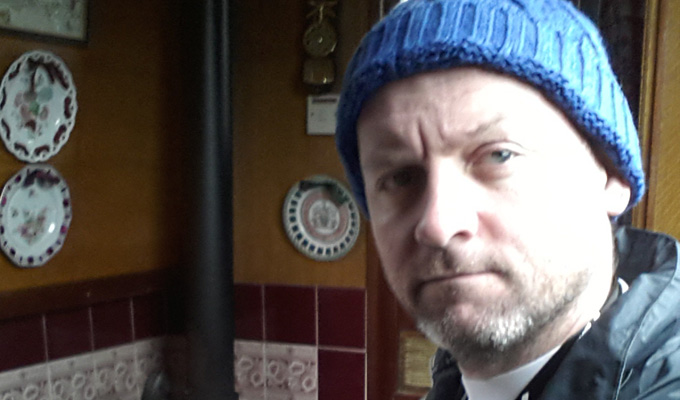
AuthorMichael J Buchanan-Dunne is a crime writer, podcaster of Murder Mile UK True Crime and creator of true-crime TV series. 
Archives
November 2026
Subscribe to the Murder Mile true-crime podcast
Categories
All
Note: This blog contains only licence-free images or photos shot by myself in compliance with UK & EU copyright laws. If any image breaches these laws, blame Google Images.
|