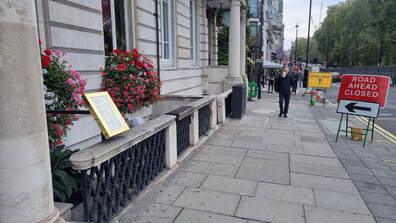
|
Five time nominated BEST BRITISH TRUE-CRIME PODCAST at the True Crime Awards, Independent Podcast Award and The British Podcast Awards, and voted 4th Best True-Crime Podcast by This Week, iTunes Top 25 Podcast, Podcast Magazine's Hot 50, The Telegraph's Top 5, Crime & Investigation Top 20 True-Crime Podcasts, also seen on BBC Radio, Sky News, The Guardian and TalkRadio's Podcast of the Week.
This is Part Two of Two of The un-Holy Trinity.
On Friday 6th of January 1967, 17-year-old Bernard Oliver vanished from Muswell Hill. 10 days later, his body was found 85 miles away in Suffolk. He had been strangled and assaulted, with his body cut into eight pieces. But who had abducted him, and why?
THE LOCATION: (note I stopped updating the map, as MapHub were demanding money)
MUSIC:
UNEDITED TRANSCRIPT: Who murdered Bernard Oliver, and why? Find out on Murder Mile. This is The Heath, also known as the Wheatsheaf Crossroads near the village of Tattingstone in Suffolk, 4 miles from Ipswich where it was believed that Bernard was raped, strangled and dismembered, and 82 miles from Muswell Hill where he last seen alive, then abducted, lured away or left without reason. With no sightings of him for a week, he ended up in a place he didn’t belong, there were no hints that he was held captive, restrained or mistreated, having been fed, and given a haircut and a manicure. Two days before his body was found and ten days after his disappearance, possibly in a warehouse in Ipswich, he was ‘expertly dissected’ by a professional, stripped of any ID, cut into eight pieces, stuffed into two old suitcases - with a shipping label, a set of initials, a matchbox, a tea towel, his sports jacket and a jewellery receipt, which may have been red herrings to confuse the detectives – and on Monday 16th of January 1967 at 9:20am, both suitcases were found, having been carelessly dumped in a hedge. It was a murder which posed more questions than answers as the Police had no suspects, sightings or motive; as why did he vanish, how did he get there, and why didn’t he flee, as it hadn’t all the hallmarks of a typical abduction, and no-one even knew if it was the same person who fed him, then killed him. The Wheatsheaf Crossroads was an odd place to dump the body parts, as although isolated, with no streetlights, few houses and farmland for as far as the eye can see, there was a real risk of the killer or killers being seen, as nearby was a pub, Folly Farm, and the A137; a busy rural road between Ipswich, the city of Colchester, the docks at Harwich, and many ships heading to Denmark and The Netherlands. A high level of care was taken to ensure that Bernard’s body wouldn’t be identified, and yet he hadn’t been buried, possibly due to several nights of frost which made the ground too hard to dig, as even Fred Burggy the farmer had to plough his field a second time. But what baffled the detectives was why the suitcases weren’t then hidden somewhere else having been hastily tossed into a hedge of bracken. It was possible, even here at an ungodly hour in the midst of winter for a culprit to be seen and panic. Many witnesses reported alleged sightings of a suspicious man with a suitcase – some weeks, months, years, and even decades later, resulting in cloudy recollections owing to time, bias and facts gleaned from the newspapers - but one sighting of the so-called ‘Trilby Man’ is very credible, as it was reported just two days after the body was found, and well before anyone knew anything about the case itself. On Monday 16th of January 1967 at 1:15am, eight hours before the suitcase were found, Sheila Foulser, a 24-year-old hairdresser was driving south along the A137 from Wherstead, just south of Ipswich. She stated “It was rather foggy”, weather reports confirm this hence her speed was slow and cautious. “I stopped to turn left at the crossroads” leading onto Church Road heading to Tattingstone village, “I noticed a man about 30 feet away, carrying a suitcase” – this was the middle of the night, in the middle of nowhere, it was cold, he was carrying a suitcase and he was nowhere near a taxi, a bus or a train. “He was walking in the direction of Tattingstone on the Harwich Road. I noticed him because at that time of night he was the only pedestrian I had seen. I picked him out in the headlights. He was middle aged and wearing a dark Trilby hat and a long trench coat”, but being foggy, that’s all she could see. She had been spooked earlier in the drive, “as a car had been following about three yards behind me with its headlights on for about five miles”, starting near to Ipswich, “but at the spot where I saw the man with the suitcase, the car behind me stopped, then turned in his direction and appeared to stop ahead of him”, just mere yards from the hedge at the crossroads where the suitcases were dumped. She didn’t see it happen, as she had driven off, with the car no-longer following her. She was unable to identify its make or the driver as it was dark, and we have only limited details on ‘The Trilby Man’. Psychologists state any killer would likely remove a body from any place they’re associated with, to a space they know but have no connection to, having travelled no more than 4 or 5 miles from the killing in order to distance themselves from any evidence, and without being found with a body in their car. Ipswich seemed a likely location, and this sighting happened 24 hours after Robert Thurston said he saw a well-dressed, middle-aged, long-faced man in long black mac’, dark trousers and polished shoes exit the R&W Paul Building between 1am and 2am carrying two suitcases and wearing surgical gloves. So, was this Bernard’s killer or killers, were they dumping the body in panic, were they innocent men, or was this a coincidence? Neither man was found, so we’ve no way of knowing if any of it is real. But it was plausible, very plausible… …and it may even have led to the culprit. The investigation was thorough. Headed up by Detective Superintendent Harry Tappin of the Met’s Murder Squad, 50,000 people were questioned, 30,000 homes were checked, 3000 cars were stopped at the road block, 2000+ statements were taken, 1800 calls and 670 letters received, with 6000 people in the villages nearby and 15,000 people in Ipswich questioned, with the same done in Muswell Hill. It was thorough, but riddled with the bias of its day. Bernard was raped, therefore it was assumed that his killer had to gay, and being just months before homosexuality was partly decriminalised, detectives “interviewed every gay man in London”, as being the villain of the era, the less-educated believed that every gay was a sadist and a paedophile, and as they ran rampant in the streets, no-one was safe. Yet, whenever a female was raped, the Police didn’t question every heterosexual male as a likely suspect. It began as gossip, when staff at the King’s Head in Stutton (2 miles south of Tattingstone) told Police that seamen were having all-night drinking parties in a nearby cottage. It was checked and ruled out, but 150 detectives questioned every gay man charged as a ‘sex offender’ in the Home Counties and East Anglia, including anyone who had been arrested for being gay, as it was still a criminal offence. Rightly, even though there wasn’t a centralised Missing Person’s Register, Police cross-referenced the details of the 120 boys, aged 12 to 20 who had gone missing in the previous year, as – like Bernard – many were young, handsome, easily led, and were fed and groomed by someone prior to their deaths. Similarities were found between the murder of Bernard Oliver, and 14-year-old Michael John Trower. Like Bernard, Michael – who lived in Hove, 116 miles south of Tattingstone – came from a good family and went to a special needs school. For no known reason, on 19th of September 1966, he ran away from home and a week after Bernard’s body was found, his dismembered skull, a limb, a plimsole and a sock were spotted in a shallow grave at Sweet Hill, an isolated spot not far from the A23 to Brighton. Michael was buried, Bernard was not, but if this was the same killer, had he learned from other killings to stuff the body parts in a locked and buried suitcase, where the foxes couldn’t dig them up? Or again, was this just a coincidence? Michael’s killer was never found, so we shall never know. As was stated, the Police “interviewed every gay man in London”, especially anyone who was famous, wealthy, powerful or a threat by the Establishment. The three most infamous suspects was the East End gangster Ronnie Kray, the music producer Joe Meek, and the pirate radio DJ Tony Windsor. Chris, Bernard’s brother stated “I have an idea that the Kray’s had something to do with it. They used to go to this house”, a 7-bedroomed period building in Bildeston called ‘The Brooks’, 12 miles north-west of Ipswich where “rent boys were brought in”. It was well known that Ronnie Kray was bisexual, had a fondness for ‘young boys’, that he organised orgies attended by politicians such as Lord Boothby, Jeremy Thorpe and Tom Driberg, that he ‘procured’ for these orgies underage boys (some as young as 10), and that The Kray’s arrest was delayed as “10 Downing Street had told the police to back off”. In 2015, documents released under FOI showed that MI5 (Britain’s Security Service) had used the Kray twins to gather intelligence on homosexual politicians and established figures, in return for protection. But they didn’t purchase ‘The Brooks’ until two months after Bernard’s body was found, there was no evidence that The Kray’s abducted or murdered a child, the killings they were convicted of (George Cornell and Jack ‘The Hat’ McVitie) were shot and stabbed, not raped and dismembered, and Ronnie’s so-called confession to his former cellmate, Pete Gillett in the BBC documentary Reggie Kray: The Final Word in 2000 was that he’d murdered ‘a young gay boy’, which came to light five years after his death. It's a tenuous link, and as always, people have jumped on it because it’s sensational. The next high profile target was gay record producer and songwriter, Joe Meek. On 3rd of February 1967, two weeks after Bernard’s body was found, in his North London flat, Joe killed his landlady Violet Shenton with a single-barrelled shotgun he’d confiscated off a friend, then turned it on himself. They’d argued over unpaid rent and loud music, he struggled with debts, drugs use, bipolar and schizophrenia, and after his death, the tabloids fabricated many of the myths which are still today mistaken for fact. One was that Bernard had worked as a tape-stacker in Joe’s recording studio, which is unproven. That he had killed himself three days after Bernard was buried, only Joe had actually killed himself three days before. That he was yet another possible boyfriend of Ronnie Kray. And – as a homosexual with a 1963 conviction for importuning for immoral purposes in a toilet – it was suggested his mental state was exacerbated as Police interviewed every gay man in London. But given that he had no connections to Ipswich, Suffolk, and had an alibi for the days around Bernard’s murder, why would he be worried? Again, it's tenuous, but it’s a more saleable story than Bernard being murdered by a nobody. Besides, neither Joe Meek nor Ronnie Kray had an ‘expert’ skill in dismembering bodies, similar to a surgeon. The next target of many was a Tony Withers alias Windsor, who was once one of the highest paid DJs in Australia, but came to the UK in 1962 to work as a radio DJ onboard the pirate radio ship ‘MV Galaxy’ for Radio London – a ship harboured off the coast of Frinton-on-Sea, 12 miles from Tattingstone. He was questioned by the Police in January 1967 about Bernard’s murder, and according to Mary Payne, who worked with him at Radio London, "he was gay, an alcoholic, and a close friend of Joe Meek". Mary later stated “we have since discovered many things about the station's personnel and associates that have saddened us deeply. It's horribly sleazy stuff", as several 1960s and 70s DJs on MV Galaxy have been convicted of heinous sexual offences, like Chris Denning, who had a 1959 conviction for distributing pornography, and in 1974 and 1985 for gross indecency and the indecent assault of a child. In 1967, Tony Windsor was dismissed owing to his alcoholism, and when interviewed by the Police, it was said that they shared this dark joke about Bernard’s murder, stating – “we are seeking a man who boarded a bus in Ipswich with two suitcases, he asked for one full fare, and two halves please". Tony Windsor was dismissed as a suspect, but with detectives investigating whether the initials ‘PVA’ found on the suitcase could belong to a Dutch national, they had the captain on the MV Galaxy submit a list of all the crew members names, as well as those who left the ship and disembarked in Holland. With no evidence, these three suspects were never arrested or convicted… …but there were two prime suspects with links to something much darker, known as The Holy Trinity. In 2004, under the Freedom of Information Act, documents released revealed that the Police’s prime suspects in the murder of Bernard Oliver were two doctors, Dr Martin Reddington and Dr John Byles. Martin Bruce Reddington was born on the 26th of June 1931 in Colchester, 20 miles south of Ipswich and 15 miles shy of Tattingstone, being two places he knew well, but had no direct connection to. As one of several sons to Yvonne and Mortimer, he was raised in affluence and privilege as his father was a respected gynaecological surgeon, and his son Martin followed him becoming a general practitioner. Records show that from 1962 to 1969, Dr Martin Reddington lived at 18 Woodland Gardens in Muswell Hill, a few streets south of Bernard’s home, and as a GP, he had a surgery in Muswell Hill Broadway, the same street that Bernard was last seen walking along. Dr Reddington may have been his doctor, but could have chatted to him at the cinema, the laundrette, or the Wimpy bar where he had worked. In 1965, two years before Bernard’s murder when he was 33 (the same age range that the pathologist said the killer would most likely be) Dr Reddington was charged with the buggery and indecent assault of teenage males, but as it never led to a conviction, he remained in his job and home in Muswell Hill. Then in 1971, four years after Bernard’s killing, with those same crimes coming back to haunt him, before he could be charged, he fled to South Africa, and then to Australia, he lived in Marrickville and Turramurra, a suburb on Sydney's Upper North Shore, where he had a surgery and worked as a doctor. There were several attempts to extradite him to the UK, but without enough evidence, Dr Reddington was never interviewed regarding the indecent assault of young males, or the murder of Bernard Oliver. In February 1977, Reddington was charged with the indecent assault of a young male while working as a GP in Turramurra, and although he made no plea, but was later cleared at Sydney Central Court. Sometime in the 1980s, he returned to the UK, he lived and worked in Surbiton, Surrey, and died on the 29th of March 1995, aged 63, leaving an estate of £250,000 (roughly half a million pounds today). When Bernard’s murder was re-opened in 1977, a private investigator said she recognised the suitcase with the ‘PVA’ initials as belonging to three men who used a laundrette in Muswell Hill. Shown photos of the Police’s prime suspects, she picked out Dr Reddington. But this was 10 years later, so was she right, was her memory clouded by time, bias and the newspapers coverage of the case, or had these suitcases got anything to do with Dr Reddington at all, as although the Police believed that the initials, the shipping label and the tea-towel could be red-herrings or a clue to the killer’s identity, the suitcases could easily have been found in a skip, and relate to someone unconnected, who was long since dead. The other primary suspect in Bernard’s murder was Dr Reddington’s friend, Dr John Byles. John Roussel Byles was born on the 27th of January 1933 in Hammersmith, West London as one of two siblings to Hilda & John Byles. Like Dr Reddington, he was raised in privilege, as his father was a highly respected doctor and he too followed his father working in obstetrics and gynaecology, which is how he may have met Dr Reddington, and as a nod to the shipping label, he had worked as a ship’s surgeon. His history is harder to pin-down, as he moved from place-to-place, but he was raised in Bromley, had lived in Kent, Kensington and Muswell Hill, and the same year he had obtained his doctor’s diploma, he was charged with indecently assaulting a 16-year-old boy in the Earls Court flat that he shared with a marketing executive called James William Halsall. They pleaded ‘not guilty’, they both claimed that the boy was lying, and on the 11th of November 1963 at the Old Bailey, they were both acquitted. In April 1967, four years later, in connection to Bernard Oliver’s murder, when detectives interviewed “every gay man in London” with a conviction for sexual offences, they searched Dr Byles’ Ennismore Gardens flat in Knightsbridge. They found nothing, but why would they, as with the culprit said to have a high level of “criminal sophistication”, would Bernard’s killer leave any evidence in their own home? That same year, along with that search, Dr Byles was interviewed “as one of two men thought to have been seen talking to Michael John Trower”, the 14-year-old boy from Hove whose dismembered body parts were found in a shallow grave near Brighton. He wasn’t charged and the case remains unsolved. In 1973, both Reddington & Byles were suspects in the murder of another boy in London, and with Dr Byles being investigated by Scotland Yard for more than 20 alleged indecent assaults, they both fled to Australia. On the 17th of December 1974, Byles was arrested in Melbourne for the gross indecency of a minor, and pending his extradition back to England, his $2000 bail was paid for by Dr Reddington. He was due appear at his extradition hearing on the 27th of December 1974, but instead, he fled. Three weeks later, on the 19th of January 1975, three days after the 8th anniversary of the discovery of Bernard's body, he booked into a room at the Prince of Wales Hotel in Proserpine, Queensland, under the alias of John Matthews, and killed himself by taking an overdose of sleeping pills. He was 41. Beside his body, he had written three notes; one addressed to his family in London, the other to his friend Dr Reddington, and a third to Scotland Yard, in which he apologised for his actions, but he made no reference to Bernard Oliver. He was buried in an unmarked grave in Proserpine General Cemetery. When he took his life, he was almost broke, unemployed, lonely and a wanted man, as just four days prior, he’d been named at Leeds Crown Court in Northen England as a ringleader in ‘The Holy Trinity’. So, who killed Bernard Oliver and why? It has never been solved, but is the evidence right there? Bernard Oliver was 17, but looked 12, as he was small, pretty, slim, and as a student at a special needs school, he was said to be “easily led”. He talked of leaving home, but hadn’t and wasn’t dressed for it and that night, he went to a café and told his friend Christine Willars ‘well, I’m going off to see a friend’. Was he chosen because of his pre-pubescent looks, was he hand-picked by someone who knew him, was he gently lured away from Muswell Hill by someone he truly trusted, maybe a teacher or doctor, who bought him a meal and a necklace for his ‘girlfriend’, plied him with cigarettes, and promised to fulfil his dreams – “he said he’d like to work on a farm with animals” – not realising it was a nightmare. Maybe no-one spotted his abduction, because he wasn’t snatched, he was coerced by a kindly friend? There were no confirmed sightings of Bernard from Saturday 7th to Monday 16th January, so maybe – given he had no restraint marks to his wrists and ankles suggesting he wasn’t held captive – had his abductor kept him sweet by driving him to Suffolk, where for a week he worked on a farm, earning some money, and living his dream, having been reassured “it’s okay, I’ve squared this with your dad”? This was something only a man of wealth and power could do, having given him food, a bed, a haircut and a manicure, believing he was being treated well, when in truth, his abductor had a darker motive. On Saturday 14th of January, Bernard was raped, receiving two lacerations and a few bruises as “he put up a vain fight for his life”. But did he not flee as he was drugged, then dismembered ‘expertly’ by a doctor or a surgeon, and disposed of as - many young boys were - having served their purpose… …for a sadistic child pornography and paedophile ring called ‘The Holy Trinity’. On the 15th of January 1975, four days before his suicide, Dr Byles was named at Leeds Crown Court as one of several men accused of the grooming, abduction and sexual assault of boys, some as young as 9, at the Holy Trinity Church in Huddersfield, West Yorkshire. Having fled to Australia before he could be charged, Byles was described as ‘evil’ and a ringleader in a network of child rape and porn. In the dock, his three perverted co-conspirators stood in his absence; Reverand John Fairburn Poole, vicar at the Holy Trinity Church, Raymond Varley an ex-child care-worker, and Clive Wilcock, a school teacher, who like Dr Byles were the kinds of adults that vulnerable children were told they could trust. Byles - who had prior allegations hanging over him for luring boys to his south London surgery, plying them with alcohol (maybe tranquilisers) and photographing the child’s rape, as well as a further claim that he had assaulted, murdered and cut up a cabin boy as a ship’s surgeon – he used dark isolated spaces where no-one would hear the children scream, such as the crypt under the Holy Trinity Church. Having been fed a last meal, lured with promises, and given a haircut and a manicure so they’d look pretty, with each young child drugged and raped, ‘The Holy Trinity’ posed them, photographed them, and sold these naked and explicit images to pornographic magazines in Denmark and The Netherlands. On the 15th of June 1975, Reverand John Poole, Raymond Varley, Clive Wilcock, and Dr John Byles and Jack Nicholls in their absence were convicted of conspiracy to contravene the Sexual Offences Act, the Obscene Publications Act and the Post Office Act, as well as the gross indecency and assault of minors. Poole denied taking part in the abuse and was sentenced to three years, Wilcock to four years, along with Raymond Varley who admitted to 7 charges of indecently assaulting boys aged 9 to 13, and in the 1980s he abused boys in Albania, Serbia, India and Thailand while working as an English teacher. An extradition application later failed as he claimed he’d dementia and he died in a Goa prison aged 63. Varley’s close associate was Dr Freddy Peats, a notorious doctor and a social worker for the Catholic Church, who participated and co-ordinated the international abuse and trafficking of young children. Dr Byles was never sentenced as he was already dead, and Dr Reddington was suspected, but never tried, even though as a known associate of Byles they were suspected of several assaults and murders, but there was never any hard evidence to connect either man to the suitcases or the killing, and it is uncertain (and unlikely, given the distance) that Bernard Oliver was brought to the Holy Trinity Church. In 1968, with the murder site still missing, no confirmed sightings and no evidence against any suspect, the investigation into Bernard Oliver’s murder collapsed, and no-one was brought to justice. As a cold case, it’s re-opened every decade, or when new evidence emerges, but little progress has been made. Chris, Bernard’s brother said "I wish it had been solved before my father, my mother and Tony died. I don't know if it ever will be”. As of today, it’s remained unsolved for 58 years, and even with advances in DNA - with Bernard’s jacket lost, the suitcases improperly stored for modern forensic purposes, and if he was murdered at R&W Paul warehouse in Ipswich, with that being renovated into flats - another piece of the puzzle is erased forever, along with every witnesses and their memories clouded by time. As Chris said, “at the end of the day, even if I found out who did it - he might be alive, or dead - but it doesn't bring my brother back. People say you'll get closure, but I'm never going to get closure". Dr Byles and Dr Reddington remain the Police’s primary suspects in the murder of Bernard Oliver… …and maybe, other young boys who were raped and murdered by ‘The Holy Trinity’. The Murder Mile UK True Crime Podcast has been researched using the original declassified police investigation files, court records, press reports and as many authentic sources as possible, which are freely available in the public domain, including eye-witness testimony, confessions, autopsy reports, first-hand accounts and independent investigation, where possible. But these documents are only as accurate as those recounting them and recording them, and are always incomplete or full of opinion rather than fact, therefore mistakes and misrepresentations can be made. As stated at the beginning of each episode (and as is clear by the way it is presented) Murder Mile UK True Crime Podcast is a 'dramatisation' of the events and not a documentary, therefore a certain amount of dramatic licence, selective characterisation and story-telling (within logical reason and based on extensive research) has been taken to create a fuller picture. It is not a full and complete representation of the case, the people or the investigation, and therefore should not be taken as such. It is also often (for the sake of clarity, speed and the drama) presented from a single person's perspective, usually (but not exclusively) the victim's, and therefore it will contain a certain level of bias and opinion to get across this single perspective, which may not be the overall opinion of those involved or associated. Murder Mile is just one possible retelling of each case. Murder Mile does not set out to cause any harm or distress to those involved, and those who listen to the podcast or read the transcripts provided should be aware that by accessing anything created by Murder Mile (or any source related to any each) that they may discover some details about a person, an incident or the police investigation itself, that they were unaware of.
0 Comments
Five time nominated BEST BRITISH TRUE-CRIME PODCAST at the True Crime Awards, Independent Podcast Award and The British Podcast Awards, and voted 4th Best True-Crime Podcast by This Week, iTunes Top 25 Podcast, Podcast Magazine's Hot 50, The Telegraph's Top 5, Crime & Investigation Top 20 True-Crime Podcasts, also seen on BBC Radio, Sky News, The Guardian and TalkRadio's Podcast of the Week.
EPISODE THREE HUNDRED AND SEVENTEEN: This is Part One of Two of The un-Holy Trinity.
On Friday 6th of January 1967, 17-year-old Bernard Oliver vanished from Muswell Hill. 10 days later, his body was found 85 miles away in Suffolk. He had been strangled and assaulted, with his body cut into eight pieces. But who had abducted him, and why?
THE LOCATION:
The location is marked with a YELLOW P near the words 'EAST FINCHLEY' - top middle.
SOURCES: a selection sourced from various archives:
MUSIC:
UNEDITED TRANSCRIPT: Why was a boy’s dismembered body split between two suitcases? Find out on Murder Mile. Today I’m standing on Steeds Road in Muswell Hill, N10; six roads east of where Alexander Litvinenko first felt the effects of Polonium 210, four roads north of the happier times of the Mercy Murderess, a short walk from another psych’ ward that the Camden Ripper conned his way out of, and three roads west of the dead pig, the tatty suit and the very romantic couple - coming soon to Murder Mile. Steeds Road is a sweet little residential street made of mostly two-storey late-Victorian to post-World War One featureless council houses with three windows, a thin door, picket fences and small gardens. 10 Steeds Road is no different. It’s the kind of house an old dear whose butt-cheeks could swallow a stool whole may have once lived, as she gossiped over the wall dispensing all her family’s secrets; like her husband’s bum grapes, her daughter’s manky ovaries, or her son-in-law’s persistently limp todger. People spoke so openly, as in their houses, they felt safe. And yet, one topic is still only whispered on this street, and that’s the disappearance of 17-year-old Bernard Oliver back in January 1967. It’s a case so horrific, it shocked a nation, it baffled a police force and it broke a fragmented family forever. Even to this day, 58 years on, his brutal killing remains riddled with more questions than answers. But why? My name is Michael, I am your tour guide, and this is Murder Mile. Episode 317: The (Un)Holy Trinity – Part One. Monday 6th of February 1967, exactly one month after he went missing, a cold wind blew over Islington and St Pancras Cemetery in East Finchley, two streets from his home and the places he used to play. It was silent and still except for a mumbled prayer for his soul, as with heads bowed and all dressed in black, his family surrounded his small grave; his father George, his mother Sheelah and his five siblings; Maureen, Andrew, Philip, Chris and Tony. Marked by a simple wooden cross, it was later replaced by a black marble gravestone chiselled with the words ‘Bernard Michael Oliver, born 1950, died 1967, so sad was the day you were taken from us. You will always be in our hearts forever dearest brother. Always loved. Never Forgotten. R.I.P’, but it wasn’t only this family who were mourning this lost boy. Staring, as his small coffin was lowered into the frosty ground, wasn’t just local mothers who hugged their children tight for fear of what could happen to them, but also more friends than this lonely lad ever had, as everyone came to say heartfelt goodbye to this boy who was kind, innocent and loved. Tony, Bernard’s youngest brother later recalled "there are times, even now, when I can't believe what happened. I think we could have accepted it, if Bernard had been shot or killed in a fight… It's hard to come to terms with. I can't bury it. I don't think I ever go a week without thinking about Bernard", as although no-one said it, they all thought it, as although his body was buried complete, it wasn’t whole. Every death is hard, a child’s death is harder, but never knowing how their child or sibling died or why was harder still, as this indescribable pain broke his family’s hearts forever and plagued their minds. So, who murdered him, and why? Bernard was raised in a solid working-class family as the fourth of six children to George (who worked at a printers) and Sheila (a housewife). His childhood was happy and simple, as living in a small council house at 10 Steeds Road, unlike the inner-city kids, Muswell Hill was a safe place to play where Bernard and his brothers would go scrumping for apples, making dens in the woods, or riding their bicycles. Being barely 17 years old, he was the spit of his father; handsome and striking, with thick lashes over grey-blue eyes, curly brown hair in a wavey crest, and a mottling of distinctive moles on his face and neck, yet being slim and just a dot at 5 feet and 3 inches tall, he was often mistaken for a 12-year-old. Bernard wasn’t the youngest, but all his siblings looked out for him, as being educated at Oak Lodge Special Needs School in East Finchley, Bernard had learning disabilities and he needed more protecting than most. Described as a shy boy who was quiet and gentle, it was also said that he was ‘easily led’. Tony, his brother (4 years his junior) who he shared a bedroom with, later said “he had a great sense of humour. I idolised him in many ways. He could be humorous, but normally kept himself to himself". Defined by his era as ‘slow’ or ‘backwards’, local kids knew him and liked him, but with no best friends or close friends except his brothers and his sister, Bernard was always a bit of a loner. Often seen taking long walks in the woods with his beloved white Poodle called Pepe, Terry his neighbour said “he said he’d like to work on a farm with animals one day”, but as a late bloomer, he also wanted to find romance. And although he claimed Margaret Prescott was his girlfriend, she rarely spoke to him. Aged 15, Bernard left school, and although he still struggled with reading and writing, he got a job as a washer boy at a Wimpy bar fast-food restaurant in Muswell Hill, and in November 1966, 11 weeks before he vanished, he worked as a warehouseman at the plastic bag factory Clear View Transparent Paper Works in Crouch End. Colleagues said “he was happy, friendly, would do anything for anyone”, and although he was said to be friends with several lorry drivers, at lunchtime he always ate by himself. The Christmas of 1966, he spent at home with his family, and it was said to be good but unremarkable. He had no known reason to go missing, but on Friday 6th of January 1967, he vanished without a trace. He wasn’t a drinker, he didn’t do drugs and he wasn’t involved in anything criminal. He wasn’t bullied at work or abused at home, as everybody loved him. He was lonely, often hanging seen around coffee bars and parks in the hope that girls would speak to him, but he was too shy to be a bother to anyone. There was joy in the house as his sister Maureen had a baby, making Bernard a first-time uncle, and although the family was fragmented as his parents had separated one year before after 18 years, neighbours said “he seemed depressed since last summer”, but George & Sheila did their best to keep the family running as smoothly as possible, so all the kids stayed with their father in the family home. He quit his job at the factory just before Christmas, so he had no money. He had no secrets, as his life was simple. He wasn’t gay, as he was interested in girls. He was clearly searching for something, as he had recently visited a spiritualist. And although he’d never gone missing before, just shy of Christmas 1966, Bernard’s father recalled “I had talked him out of leaving home… I said he wasn’t old enough to leave home. He accepted it without argument. No more was said”, but what was his motive to leave? His brother Tony later recalled “It had a massive impact on us. You can’t describe it. Even today it still upsets me. To be honest I don’t think any one of us have properly sat down and spoken and grieved. It split my family apart. It is still really raw after all this time. I just feel like I want to burst out crying”. Bernard vanished, and to this day, no-one knows why. The last day that Bernard was seen alive was Friday 6th of January 1967. It was an ordinary day, there were no issues, dramas or arguments as he left the family home at 10 Steeds Road, kissing goodbye to his dog. He wore a light sports jacket but no hat, gloves or scarf, and with it cold, this suggests he planned to stay inside, and with no bag or suitcase, he hadn’t intended to travel far or stay over night. Leaving, he told one of his brothers, he was going out with some friends to the cinema (either the ABC on Muswell Hill Broadway) or The Odeon (on Fortis Green Road) to watch ‘The Ten Commandments’, the 3 hour 40 minute religious epic starring Charlton Heston, although whether he did is unreported. His last confirmed sighting was in a café on Muswell Hill with his friend, 16-year-old Christine Willars; she recalled “Bernard was quiet all night, but at about 8:30pm, he suddenly said ‘well, I’m going off to see a friend’, he said ‘goodbye’, walked out, I haven’t seen him since’”. She last saw him on Muswell Hill Broadway walking in the bitterly cold drizzle, and thought that he was heading home, but he didn’t. There are no confirmed sightings of Bernard after that, no reports of an abduction, and with only a few small abrasions to his body, it’s unlikely that he was kidnapped, but – being ‘easily led’ – did he believe his dreams had been answered by a kindly stranger, when all he would find was a nightmare? By midnight, “we were worried”, so his father and his older brother Andrew checked the cinema (this was shut), the Wimpy bar (but they hadn’t seen him) and stayed up all night searching the streets as this was unusual for him. Andrew said “we didn’t think he’d run away from home, because he was so possessive”, but still missing by morning, they had Police place him on the Missing Person’s Register. He left behind everything he owned, loved or trusted… …and had little knowledge of the wider world beyond. From his last sighting at 8:30pm on Saturday the 7th to when his body was found at 9:20am on Monday the 16th January, there were many so-called sightings of Bernard in Muswell Hill and Soho, but as no-one really knew this quiet lonely boy who looked younger than 17, it’s hard to say if they’re even true. Detectives know that he travelled 80+ miles east to Ipswich in East Anglia, “possibly in search of farm work as he loved animals, but a check with the Farmer’s Union, who often found jobs for boys drew a blank”, as did the manifests for every coach service out of London, every truck driver who regularly drove that route along the A12, and every transport café he may have stopped at to hitch a lift. Given what had happened to him, Police searched every beach hut in the eastern seaside resorts of Felixstowe, Clacton, and Walton-on-the-Naze for signs of assault or indecency, but nothing was found. In fact, an abduction seemed unlikely, as when Bernard’s body was found, although his sports jacket was bloodstained, it wasn’t dirty like he’d been living rough. The nights were bitterly cold and wet, yet his skin was barely blemished. In his stomach, a partially digested meal was found, even though he’d left 8 days prior with enough money for coffee and a cinema ticket. And yet, most bafflingly, whoever looked after him, hadn’t notified the police, but they had given him a wash, a haircut and a manicure. But why? Why treat Bernard so well, only to then strangle him? Pathologist Dr Alfred Lintott confirmed that Bernard was murdered about 48 hours before his body was found, sometime on Saturday 14th of January, a week after he’d gone missing from Muswell Hill. As for where he died, detectives were hindered by the fact no murder site was found, but it’s likely he was alive when he left London, as no-one would risk transporting a dead body too far and risking their apprehension. Tony said “I’m sure that somebody knows. But it won’t make a difference. It won’t bring him back, nothing can. That is just the way I feel”, as 58-years-on, that vital clue has been lost forever. Likely to be on Saturday 14th of January 1967 in an undisclosed building somewhere in Ipswich, 17-year-old Bernard Oliver was murdered, having been fed, and given a recent haircut and manicure, and yet, it was clear that before his killing, Bernard had bitten his nails. But was he excited, upset or afraid? At some point, we know this young boy either undressed or was made to strip naked, as although only his sports jacket was found, it wasn’t torn or ripped. And with no marks on his wrists or ankles, we know he wasn’t restrained, but was he paid to strip, duped by an adult, or was he too terrified to flee? Why he was killed is uncertain, but in his last hour alive, he received two small lacerations to the back of his head and a few bruises to his body, as Police believe – that naked, cold and afraid – “he put up a vain fight for his life”, but before he was strangled to death, that same man or men had raped him. Tony recalled "I can't believe what happened. I think we could have accepted it if Bernard had been shot or killed in a fight. But the way his body was dissected, in such a clinical way, was spine chilling". Likely, Bernard was raped, murdered and his body dismembered in the same building, maybe a farm, a warehouse, a basement or a crypt, somewhere isolated, where his screams would never be heard. A clinical forensic psychologist (unconnected to the case) later stated that the killer was likely a mature person, possibly 30s or 40s, as their method of disposal suggested "criminal sophistication", and a consultant surgeon at Ipswich and East Suffolk Hospital said at the time “it was most likely committed by someone with a knowledge of anatomy, with previous experience of dismemberment”, maybe a doctor, surgeon or butcher, “as (it had been) expertly accomplished with the exception of one joint”. The body had been dissected with precision into eight pieces – a head, a torso, two arms, two thighs and two lower legs – and neatly packed in two suitcases, but “one would expect the person dissecting, irrespective of how calm he may be, to show some sign of nerves, anxiety or excitement towards the end. This could well be the reason for the bad workmanship on the left knee joint”. And we know his body hadn’t been stolen from a hospital or a mortuary, as none of the limbs had any surgical flaps. Detectives and psychologists agreed it was likely that Bernard was murdered and dissected within a short radius of just 4 or 5 miles of where his body was found, so Ipswich seemed possible, but where? In 2011, when this cold case was re-opened for the fifth time, a new witness came forward. Back in January 1967, on an undetermined week-night just before Bernard’s body was found, teenager Robert Thurston was pushing a scooter up Key Street by Ipswich docks, it was between 1am and 2am. As he and his friend approached ‘R & W Paul’, a large historic dockside warehouse on Salthouse Street, “as we came around the corner we heard a bang… there were a pair of main gates and a courtyard. We were right outside the gate and looked through the iron railings” past this unlit warehouse, which wasn’t open at this time of night, and shouldn’t have been occupied, except by a lone nightwatchman. “We stopped and looked around to see who was there. There were two suitcases which sat to the left-hand side of the archway and we thought ‘why would there be two suitcases standing there?’”. Robert couldn’t describe them owing to the distance and because it was dark, but they were medium sized. “A guy walked from the right, his forearms to his chest with his hands in the air. He had pink gloves on. I recognised them…”, they were surgical gloves, “as it wasn’t long after my appendix operation. (He) was frightening. He had a really long drawn face, he was well-dressed with a long black mac, dark trousers and polished shoes. We ran, bump-started the bike and fled. I can still see that drawn face”. Robert said he approached the Police ten years after Bernard’s murder, but didn’t make a statement, as he “wasn’t taken seriously”. But was this Bernard’s killer or an innocent man? Did Robert fabricate an unprovable story for attention? Or being 45 years after the killing and with memory only being 30% accurate immediately after an event, was it the truth, a lie, or a reality peppered with false memories? It seems plausible, but did those suitcases contain Bernard’s body? Monday 16th of January 1967 was a bitter winter’s day, the ground was hard and frosty, which may be why his body wasn’t buried. Dawn had broken at 7:17am, and at the north-easterly edge of Folly Farm in the remote village of Tattingstone in Suffolk, 43-year-old farmer Fred Burggy was ploughing a field when he spotted two suitcases hidden in a hedge of bracken. Feet from the crossroads of Station Road, Church Road and the A137 to Ipswich, Fred said “we get a lot of rubbish dumped here, so I didn’t take interest at first. Then I got off my tractor… opened one of the cases and that was enough for me”. He called the Police at 9:20am and spoke to Detective Chief Superintendent Tarling of East Suffolk CID. The investigation was led by DCS Tom Tarling, but given the seriousness of the case, it was escalated to the Metropolitan Police’s Murder Squad and taken over by Detective Superintendent Harry Tappin. 27 officers sealed off the area, sniffer dogs searched the bushes, lines of constables scoured the fields, on the crossroads a road-block had every motorist questioned, and working day and night, they rigged up generators to power floodlights to illuminate the scene, as there were no streetlights for miles. Fred Burggy hadn’t seen the suitcases when he ploughed that field two days before, and being close to the road but far from a bus or train, the Police had a likely window of when it was dumped by car. Across those two key nights, witnesses spotted two vehicles parked near the hedge, a blue Commer campervan on Saturday the 14th, and a light-coloured Ford Anglia on Sunday the 15th, and although 390 possible matches were found, every car was checked, but every statement proved to be fruitless. Psychologists believed the killer was local “as people are rarely random often guided by a mental map” of places they know and trust. They believed the plan was to dissect the body and bury the suitcases in separate sites to make Bernard harder to identify – hence his wallet, clothes and any ID was missing – but that the cases had been carelessly dumped together, as maybe he’d been spotted or got scared? As it was, it was impossible to identify Bernard, as he had no dental records, no fingerprints on file, and the Missing Person’s Register wasn’t held nationally. They thought he was possibly local, but with dark hair and olive-skin colouring, stated “he may be foreign, possibly Latin American or Continental”, and being slim, a late bloomer and just 5 foot 3, as many people did, they thought he was 12, not 17. Protected from frost, the sub-zero temperatures and the suitcases had preserved his body remarkably well, but although his description was issued, including those of his moles, no-one recognised him. As for the suitcases, neither belonged to Bernard, but they did contain several possible leads to his killer. Suitcase 1 containing the torso and head was 24 inches by 14 by 7 ½ inches, made of cardboard and covered in a dark green canvas with reinforced steel corners and a brown metal handle. On the front was a golden lion above the word Monarch, and to the left in black ink was scrawled the initials - P.V.A. 840 people in the UK were found to have those initials, everyone of them was checked and cleared. Attached was also an old war-time label for the Union Castle steamship called ‘Clan’, and with a letter ‘R’ written on it, likely the first initial of a passenger’s surname, Police checked the war-time manifests to uncover who this case may have belonged to, they found 190 names, and again, all were cleared. Suitcase 2 containing the limbs was 26 inches by 16 by 8, made of light cream cardboard. In 1977, 10 years later, a private investigator claimed she recognised the suitcase as belonging to three men who used a laundrette in Muswell Hill. Police investigated, she provided an artist’s impression of the man, but was this his killer, was this the Ipswich ‘suitcase man’, or had her memory been clouded by time? Police were dubious, as with a level of “criminal sophistication” had the killer made mistakes, or were these ‘red herrings’, as why would they remove the victim’s ID, yet leave a clue so glaring as initials? The only clothing, Bernard’s sports jacket was found neatly folded or rolled in the case. It was heavily-stained with his blood, in a pocket was a tatty receipt for a cheap necklace bought in Muswell Hill (which hadn’t been bought by him), as well as a matchbox of a brand marketed in Israel, even though Bernard had never been abroad, and as far as we know, he did not smoke. In the other suitcase was a striped hand-towel with the laundry mark ‘QL 42’, and although every laundrette, hotel or hospital who used a Mark IIB Polymark machine to make this unique code was checked, again, it drew a blank. The evidence was slim, and although it was circulated in the press, again drawing a blank… …the Detectives had to take an unusual step to identify the boy, and hopefully his killer Artist’s impressions are rarely accurate, so with him in immaculate condition five days after his death, a Co-op funeral director was asked to ‘dress’, prop-up and photograph Bernard’s decapitated head, and it was circulated in the press. On Thursday 19th of January at 7:10pm, while waiting for a bus to Muswell Hill, Chris, Bernard’s 15-year-old brother saw it in the London Evening Standard. "My mate said 'Chrissy, that's your brother, isn't it?'. I looked and I knew straight away. I hadn't read the story, just the picture, it read 'SUITCASE MURDER', and that's all I could see because nothing else registered". Bernard’s dad had to formerly identify the dismembered parts of his son’s body at Ipswich mortuary. Chris recalled "it was devastating to my whole family". Tony said “when his body was found I was just hollow, I just kept asking myself: 'why?’”. Still being so young when Bernard was found, “my parents didn't go into graphic detail, we never spoke about it… I think it changed all of us in different ways". Tony, the youngest took it worst, Chris said, but really “none of us spoke to each other about it because we were so hurt”, and as for his parents, “it devastated my mother and father. She felt guilty because she left the matrimonial home. All through my life, she cried, and felt really guilty even up until the day she died”. They had to deal with the loss, the pain, the never-knowing, and – as potential suspects – they had to cope with this, all while being questioned and having their home and car searched. Monday 6th of February 1967, exactly one month after he went missing, a cold wind blew over Islington and St Pancras Cemetery in East Finchley, two streets from Bernard’s home, the places that he played, and the street where he was last seen alive. Unlike so many grief-stricken parents whose son had gone missing that year, his body had been found and buried, but it didn’t take away the pain. It couldn’t. George died in February 1987 aged 73, and Sheelah in February 1996 aged 74, but neither found the piece and conclusion they deserved, as their son’s killer or killers were never brought to justice. And as Chris said, "it was terrible for my parents to go to their graves without knowing what happened to Bernard, I still believe somebody who knows what happened is still alive. I've never given up hope". But as we’ve seen, as time passes, witnesses die, evidence corrodes, places are demolished, and even when new sightings are reported, it’s hard to know if they’re the truth, a lie, an alibi, or peppered with news fragments which coincidentally fit the narrative or false memories fuelled by good intentions? 58 years after the murder of Bernard Oliver, this cold case grows increasingly harder to resolve, and although some say that time heals, for his family, the hurt only gets duller, and can never be erased. But then, maybe every speck of evidence isn’t irrelevant but is a step closer to the identity of his killer or killers, and maybe every red herring is actually a hint, as when each detail – no matter how small or spurious - is pieced together, they do link to very credible sighting of a suspect known only as ‘The Trilby Man’, and to a much darker, more sinister and truly sordid scandal, that of The Holy Trinity. The Part Two of ‘The un-Holy Trinity’ concludes next week. The Murder Mile UK True Crime Podcast has been researched using the original declassified police investigation files, court records, press reports and as many authentic sources as possible, which are freely available in the public domain, including eye-witness testimony, confessions, autopsy reports, first-hand accounts and independent investigation, where possible. But these documents are only as accurate as those recounting them and recording them, and are always incomplete or full of opinion rather than fact, therefore mistakes and misrepresentations can be made. As stated at the beginning of each episode (and as is clear by the way it is presented) Murder Mile UK True Crime Podcast is a 'dramatisation' of the events and not a documentary, therefore a certain amount of dramatic licence, selective characterisation and story-telling (within logical reason and based on extensive research) has been taken to create a fuller picture. It is not a full and complete representation of the case, the people or the investigation, and therefore should not be taken as such. It is also often (for the sake of clarity, speed and the drama) presented from a single person's perspective, usually (but not exclusively) the victim's, and therefore it will contain a certain level of bias and opinion to get across this single perspective, which may not be the overall opinion of those involved or associated. Murder Mile is just one possible retelling of each case. Murder Mile does not set out to cause any harm or distress to those involved, and those who listen to the podcast or read the transcripts provided should be aware that by accessing anything created by Murder Mile (or any source related to any each) that they may discover some details about a person, an incident or the police investigation itself, that they were unaware of.
Five time nominated BEST BRITISH TRUE-CRIME PODCAST at the True Crime Awards, Independent Podcast Award and The British Podcast Awards, and voted 4th Best True-Crime Podcast by This Week, iTunes Top 25 Podcast, Podcast Magazine's Hot 50, The Telegraph's Top 5, Crime & Investigation Top 20 True-Crime Podcasts, also seen on BBC Radio, Sky News, The Guardian and TalkRadio's Podcast of the Week.
EPISODE THREE HUNDRED AND SIXTEEN: On Thursday 18th of September 1985, 23-year-old Mirella Beechook, a separated mother of two girls made an emotional appeal before the cameras and those words that no mother should ever utter - “bring her home, dead or alive, please just bring her home”. Her 7-year-old daughter Tina was missing, and Tina’s friend, 4-year-old Stacey Kavanagh had been found strangled. But who was the maniac in their tightknit community who had murdered them?
THE LOCATION:
I've stopped adding the pin to the map, as MapHub are now demanding £8 a month, and I'll be damned if I'm forking out hard earned cash for something probably one person looks at a month.
SOURCES: a selection sourced from various archives:
MUSIC:
UNEDITED TRANSCRIPT: Were two children brutally murdered out of malice or madness? Find out on Murder Mile. Today, I’m standing in the Swan Road Estate in Rotherhithe, London, SE16; four miles further east than we’d usually walk, but as a case too fascinating to pass, it’s not coming soon, but now to Murder Mile. Mere yards from the bank of the River Thames sits the Swan Road Estate, five five-storey red-bricked tenement buildings built by London County Council from 1902 to 1908 to house the families displaced when the Rotherhithe tunnel was built. Like a ring of solid brick, on the outside sits Winchelsea House, Seaford House, Rye House, Hythe House and in the middle is Sandwich House overlooking a courtyard. As a tight community, this courtyard used to be a safe space where kids played footie squealing at a pitch which deafens all dogs, dads ‘fixed’ Ford Escorts with a hammer and a spanner, mums hung out skiddy y-fronts, and babies lay cooing in baskets thanks to its milk and a shot of rum. Ah the 1980s. Yet, that courtyard has been little more than a parking lot for transits and hot-hatches ever since the abduction and murders of two of its children in 1985, which rocked this estate, the whole nation, and left every parent asking why this killer in their midst had taken the lives of two innocents so cruelly? My name is Michael, I am your tour guide, and this is Murder Mile. Episode 316: Malice or Madness? That morning, an 8.1 magnitude earthquake had rocked Mexico City leaving 1000s dead, and with the Birmingham race riots still fresh and Live Aid still echoing, it was the worst day to make an appeal on ITN News, but the clock was ticking. As a small, elfin-like woman whose West Indian skin was pale with worry, tears rolled down the face of 23-year-old Mirella Beechook as she stated to the cameras those words that no mother should ever utter - “bring her home, dead or alive, please just bring her home”. Two girls had gone missing, her daughter still was, but hours before, the other was found dead. Wednesday the 18th of September 1985 had begun like any other. It was warm and sunny, as at 3pm, nattering with a gossip of other mothers, Mirella stood outside the gates of Albion Primary School, awaiting her 7-year-old daughter Tina to run into her arms. Tina was timid, quiet, but always neat, always smiling and as her father Ravi said “she was a real mummy’s girl”. As a trusted family friend and neighbour, she also picked up Tina’s pal, 4-year-old Stacey Kavanagh, as although the Swan Road Estate was barely a minute’s walk away, the Brunel Road was too dangerous to cross for any child, being thick with trucks and sexual predators. Although 20 years on, the Moors Murderers were fresh in everyone’s mind, child-killer Robert Black was prowling, ‘stranger danger’ adverts were played in every school, and barely three days before, 6-year-old Barry Lewis from nearby Walworth had been snatched by paedophile Sydney Cooke and his gang of murderous child rapists. Back at the Swan Road Estate, safely within sight, Stacey ran to her parent’s council flat at Winchelsea House, and on the opposite side of the courtyard, Mirella & Tina entered their flat at Sandwich House. With three hours of sunlight left, grabbing her red canvas shopping trolley, Mirella & Tina headed out to get something for tea. Before Stacey went out to play, seeing the story of 3-year-old Leoni Keating whose raped and drowned body was found in Suffolk, her heavily pregnant mother Lynn warned her “See that little girl? She won’t see her mum again. Don’t talk to strangers and don’t leave the square”, as the courtyard was a place she could always see her, and was surrounded by the people she trusted. That would be the last time she would see her daughter alive, and it happened in the blink of an eye. Mirella & Tina walked one block south to The Corner Shop at 39 Brunel Road, a grocers which was once a sitting room, and being the 1980s, it sold such delights as Vienetta, Arctic Roll, Opal Fruits, Space Raiders, Skol lager, Angel Delight, Hobnobs had just been launched, Marathons weren’t Snickers, and Wagon Wheel’s were still big-ish not bite-sized, but it was only then realising that they realised that Stacey had followed them. As one of the few grocers on this street, Mirella only went in to get ‘the basics’, and sometime between 5:15 and 5:30pm, she said she left the girls outside the shop, and was only gone a minute, maybe two. 23-year-old shopkeeper, Enver Chakarto served her, but when Mirella came out, the girls had gone. She said, “I wasn’t immediately alarmed, I assumed they had gone home”, that maybe Tina had taken Stacey back to her mother. Being a short walk, it only took Mirella two minutes to get back to her flat on the first floor of Sandwich House, but when she got there, the red front-door was locked and it was in darkness as she had left it. “When I didn’t find them, I went to Stacey’s flat to see if the girls were there”, and at 6:20pm exactly, the world of Lynn, Mick & Danny Kavenagh came crashing down. On her doorstep stood Mirella, her face a mix of panic and hysteria, rocking back and forth, and with her lips twisted, she spoke the words no mother should hear “the girls are missing”. And as she held Lynn’s hand, in her other, she held something she had found in the street - one of Tina’s red shoes. As fear set in, Lynn told Mick, “I thought she was floating in the river”, as The Ropes was a place the girls often played and was last seen by the neighbours. As word spread, every resident fanned out to find what should have been two easy-to-spot girls – 7-year-old Tina, West Indian and Asian in a yellow blouse and pink trousers, and 4-year-old Stacey, white, pale, Irish, dark haired and a foot shorter. But with Tina’s other shoe found nearby, and nothing else, at 7:35pm, as dusk fell, they called the Police. Their daughters had been missing for two hours, so as Mirella & Lynn kept their doors open in case the girls came home, Mick & Ravi joined the Police as neighbours swarmed the streets, search-dogs scoured the parks, and divers plumbed the depths of the murky river, only no-one could find them… …until 11pm, when all that changed. Barely three-quarters of a mile south, near the Globe Pond in Southwark Park, covered in early autumn leaves behind a little iron railing, a tiny pale body was found by a Police dog. Strangled with a severed electric flex but no sign of sexual assault, Stacey lay dead, her body hurriedly hidden by a killer in panic. Both girls were warned about the dangers of strangers, but having vanished from a safe space in a few minutes, two levels of grief now hung over the Swan Road Estate; anger at the maniac who murdered 4-year-old Stacey Kavanagh, and dread that 7-year-old Tina Beechook was missing, and possibly dead. Interviewed by the Daily Mirror beside her red front-door, Mirella said “the longer it goes on, the more I have to get ready for bad news. I can’t pretend she is still alive. That’s too much to hope”. Because, as every parent knows, the longer a child is missing, the less chance they would ever see her again. Up until that point, Mirella’s life had been one of hardship… …and this would be the culmination of her struggle. Mirella Beechook was born Marie Jacklin Mirella Ramdin on the West Indian island of Mauritius in 1962. With her mother dying when he was only 9 months old, she was raised to be a happy, contented and outgoing girl, but was later left devastated by the lie that her grandmother was not her mother. In 1974, aged 12, she left the sun-kissed tropics of Mauritius to live in the impoverished concrete slums of Peckham in South London, with her wayward father who resented supporting her and her sister. Owing to frequent fights culminating in an argument where she was beaten with a belt, in 1977, aged 15, Mirella left home, she slept rough, she ended up at the St Giles Centre for Homeless Woman, and diagnosed with “a depressive disorder of a neurotic type”, she became withdrawn and was often ill. She said “my life fell apart”, being separated from her grandmother and isolated in Britain, she became reliant on Mogadon to pacify her anxiety and insomnia, as well as the strong sleep syrup, Night Nurse. Being barely educated, her mood wasn’t helped by her belief in what we would term as ‘black magic’, as unlike the ‘voodoo’ in the Haitian culture, Mauritius is an island riddled with superstition, where a person’s fate is fed by sorcerers and witch doctors, as well as curses, voodoo dolls, and ‘the evil eye’. Aged 16, she met 23-year-old Poorun Beechook, a self-proclaimed financial consultant known as Ravi, and that year on the 6th of December 1977, they married, and days later, Mirella was pregnant. It was a real turning point in her life, as on the 22nd of July 1978, she gave birth to the first of two daughters. Tina Chandranee Beechook was happy, loved, and always smiling as if life was good, but it was a hard time for the Beechooks, as with Tina’s younger sister Sabrina born a year later, being homeless, they were rehoused into a small flat onto the Swan Road Estate – and although safe - five times they were threatened with eviction for non-payment of rent, and their gas and electricity was frequently cut off. Ravi was often said to be working late, but in truth, he was living with his girlfriend, Gita in Stratford. Trying to keep the family together in the only way she knew how, Mirella put voodoo effigies of him under his bed, with Ravi later stating ”I felt dizzy and had a blinding headache… I don’t believe in this nonsense, but I pulled the pin out, I suddenly felt better”. And yet Mirella’s ploy to keep him had failed. Having abandoned them in July 1983, living on just £23 40p a week in social security, Mirella started shoplifting, taking Tina with her, and getting her daughter to beg for money on the streets. By July 1984, as a first offence, Mirella was fined and bound over for the theft of some household basics; five flannels, a bath towel, a plug, a tablecloth, two pillow cases and two quilts from a store on Lewisham High Street, but being sent to prison for a later incidence of theft, between November 1984 and March 1985, the same year that she would go missing, 7-year old Tina lived with her aunt in East London. By late summer; with her psychiatrist unsure what to believe as Mirella blamed everything on voodoo, social services having effectively abandoned her, and her mental health in a spiralling decline having become hooked on Night Nurse (drinking as much as a bottle a day), she was obsessed with the idea that Ravi’s girlfriend had put a spell on her, and caught shoplifting again, she was recalled to prison. In June 1985, Tina was again sent to live with cousins in Upton Park while Mirella served a three month sentence. Released on Saturday the 13th of September 1985, she had only been back in her flat on the Swan Road Estate for five days, when Tina & Stacey were abducted, and both possibly murdered. It was a tragedy upon a tragedy upon a tragedy… …yet this child killer was someone known to every resident. With neighbours and officers searching every street for the girls, constables were placed on the estate 24 hours a day to reassure the residents, especially their grieving mothers, Lynn and Mirella. Raised with street smarts, it had been drummed into both girls to “stay away from strangers”, and they were told that if anyone tried to get them into a car, to kick, scream, shout, and do anything to get attention. Last seen at roughly 5:30pm, around rush hour, outside of The Corner Shop on the busy Brunel Road, Ravi stated “whoever did this must be sick… (Tina) wouldn’t even go to the shop with me, only her mother, she would never go off because someone offered her sweets… she must have been forced”. Yet, Detective Chief Superintendent Roy Gregg who headed up the investigation said “it could be someone who knows the children well”, as no one had seen them abducted or lured away in a car. As a veteran across many of South-East London’s most infamous murders and kidnapping, DCS Gregg was a man trained to read body language, he could smell out the truth as well as a lie, and seeking any information on who abducted Tina and murdered Stacey, it was he who set up the press conference. It was a bad morning to make an impassioned appeal for a missing child on ITN, as with an earthquake in Mexico, 4-year-old Barry Lewis missing and 3-year-old Leoni Keating found dead, even as Mirella pleaded “bring her home, dead or alive, please just bring her home”, this could easily fall on deaf ears. The search was thorough. It had to be as the detectives were certain that wasn’t a random snatching by a paedophile in a passing car who spotted two young girls outside a sweet shop, this was likely to be a man – maybe a friend, a neighbour, a cousin, or a parent - who lived nearby and was still lurking. Everyone was a suspect until proven otherwise, and as they dug deeper, they observed every detail. Making door-to-door enquiries, they cross-referenced every witness statement to seek out any lies. As the divers searched the river, a photographer captured the faces of everyone who was watching. Although both Mick and Ravi diligently aided the search, they too were questioned about their timings for the girl’s disappearance, as were their mothers, even Mirella, who was the last to see them alive. Across the estate a genuine outpouring of emotion wept. In the park where Stacey’s body was found, mothers and daughters laid posies and teddies. And at the girls’ school, the headteacher said “there has been no fights, no noise, no nothing. All through assembly, we cried. At playtime, nobody played”. As is standard, any known sex-pests, abusers, addicts or anyone with an unhealthy interest in children was questioned, and with every skip, drain and derelict warehouse searched, even though a child’s coffin spattered with pig’s blood was found in a squat, it turned out to be an old prank, left to rot. The TV appeal brought a few fresh sightings, many of them false, but it also drew the Police’s attention to someone whose lies had hampered the investigation from the start, along with their crocodile tears. When officers interviewed Enver Chakarto, shopkeeper at The Corner Shop, he gave a very different account of Tina & Stacey’s last sighting, as given by Mirella. Mirella had claimed, she arrived between 5:15pm and 5:30pm, she entered the shop alone leaving both girls outside. But Enver said, “it was 4:30pm, only Tina and her mother came in, they were only here for a minute” and he didn’t see Stacey. “Half an hour later”, so 5pm, 15 to 30 minutes before Mirella said they’d arrived, “Tina was back here with her mother, (Mirella) asked if I’d seen Stacey as she had followed them down to the shop”, and then both Mirella & Tina left. Later stating “I was surprised to find out Tina had gone missing too”. By his account, Tina & Stacey disappeared separately and roughly half-an-hour apart, where-as Mirella said that she went in alone for just a few minutes, and when she came out, both girls had vanished. It was a crucial discrepancy, which led the Police to suspect Mirella as the girls’ killer… …but why did she do it? Was it malice or madness? Was it revenge or voodoo? Mirella would state “it just happened. It was the shoplifting. I thought they would put me in jail”, as with another court date pending, “I was fond of Tina. I didn’t meant to do it to her. Nor to Stacey”. Dr John Hamilton, medical director at Broadmoor Psychiatric Hospital stated “she desperately wanted to hit back at her husband, Ravi, who had abandoned her. She wanted to hurt him by taking their own child’s life, and killed her neighbour’s child as well”. In a letter to the trial judge, Mirella blamed it on her addiction, writing “I was very drowsy with the Night Nurse I took”. At no point was she remorseful, “I can’t believe I’m in prison for this kind of crime. It’s like a nightmare”, only thinking about herself. And yet, as she wheeled that red canvas shopping trolley to The Corner Shop, both girls by her side, inside she had stashed a cut electrical flex from a vacuum cleaner, which she used to strangle Stacey. The timings were key to Mirella’s conviction. As always, Mirella picked up Tina (and Stacey) from school at 3:15pm, and they were home by 3:20pm. Lynn recalled seeing the news report on Leoni Keating at 4pm, and warning Stacey “See that little girl? She won’t see her mum again. Don’t talk to strangers”, and as she went into the courtyard to play, it’s likely that Stacey merely followed her friend, Tina, as she walked with her mother to the shop. She wasn’t killed out of malice or revenge, she was strangled because she got in the way of Mirella’s plan. At roughly 4:30pm, Enver recalled Mirella & Tina entering The Corner Shop, as the school rush had stopped and he was preparing the evening papers for the paperboys. He couldn’t recall Stacey being there, but maybe, as Mirella said “she had followed us down to the shop” and was a few steps behind. Now, with a tiny witness in tow, who hampered Tina’s murder which Mirella had planned to blame on Ravi, instead of stopping, as the ultimate revenge in what the prosecutor described as “an explosion of vengeful hatred against her faithless husband”, she would frame him for the murder of both girls. No-one saw them abducted, as both girls calmly followed Mirella, the good mother to Southwark Park, barely a 12 minute walk south, a place they loved and felt safe, surrounded by trees, ducks and swings. Arriving at Globe Pond, a favourite spot, Mirella recalled “I told Tina ‘go and play’” and as she dashed to the playground, it was then that the bible-toting Killer inside her head who she called Simon goaded her to ‘Strangle! Strangle!’, and luring Stacey into a bush, she wrapped the cut electrical flex around her neck, and unseen by anyone, she covered the tiny body with the autumn leaves, and walked away. Tina had no idea that her friend was dead and when her mother said that Stacey was missing, believing her wholly, they returned to The Corner Shop at roughly 5pm, asking if Enver had seen her, as a cruel part of Mirella’s alibi, playing the role of a frantic mother… just half an hour before she murdered Tina. She didn’t tell Lynn that her 4-year-old daughter Stacey was missing, until 6:20pm, 80 minutes later. Mirella lied “I was not immediately alarmed, I assumed they (Tina & Stacey) had gone home”, but in truth, when they returned to the dark silence of their first-floor flat at Sandwich House, later admitting to a psychiatrist “I drew images, pictures of my dead daughter”, that she stripped her naked, strangled 7-year-old Tina with her hands (having used the cut flex on Stacey) and hid her body under the bed. At 6:20pm, Lynn heard her doorbell ring, and later recalled “every time I shut my eyes, I see (Mirella) standing there, rocking back and forth, her lips kind of twisted… holding Tina’s red shoe”, but seeing Mirella in an odd state of panic “I remember she said ‘the girls are missing’, then hysterically laughing”. Everything ran through Lynn’s mind, the places she told her daughter never to play, the predators who may have abducted her, the accidents which could have happened on the busy road, but not the friend and neighbour she trusted who held her hand, with the same hand which had strangled her daughter. But it was as Mick returned at 11pm with the tragic news that Stacey’s strangled body had been found, he recalled, “Mirella was leaning against a wall, she didn’t seem upset. I couldn’t understand her lack of emotion”. But was this malice or madness? On Saturday 21st of September, Mirella stated “I rose early”. From under the bed she had slept in for the three days since the girls had gone missing – with a constable guarding her front door - she pulled out Tina’s bloated, maggot riddling corpse, shoved it into the red canvas shopping bag, and called Ravi. “She said she wanted to talk, I said ‘let’s go into the flat’, she said ‘no’ and took me by the arm. We walked and she said ‘I hope you can forgive me’, I asked why, she said ‘Tina’s in the flat’. I shook and thought she meant Tina was alive. She said ‘no, she’s dead’, I said ‘did you kill her?’, she said ‘yes’”. At 10am, the whole of the Swan Road Estate fell into silence, as a small body covered in a white sheet was removed from the flat on a stretcher, Ravi was in tears, and Mirella was led away in handcuffs. Held on remand at Holloway Prison, she told the psychiatrist “we loved each other so much. It’s like a nightmare when I close my eyes, I see them both in white lace, two angels smiling at me. I will never see Tina again, but she will always be with me… my path forever and ever until we meet in heaven” . Mirella Beechook was branded a ‘child killer’ by the press and her shocked neighbours… …and yet, there was a hint to Mirella’s murderous motive, which occurred just six years before. As I said at the start, Mirella was a mother of two daughters, not one. When Tina was just 15 months old, her sister Sabrina Beechook was born, but she didn’t live with her mother, and for good reasons. At the end of October 1979, 22 days after her birth, 17-year-old Mirella bought her baby into hospital, again she was alone, as Ravi had chosen to head overseas, leaving her alone and unable to cope. Diagnosed with gastro-enteritis, Sabrina had a common stomach bug, serious in babies as it can lead to dehydration, diarrhea, vomiting, bloody faeces and death. Every day, as a loving mother, Mirella sat beside her baby’s incubator, kissing her and cuddling her, but Sabrina only got weaker and sicker. Uncertain why she was getting worse, a sharp-eyed nurse spotted a sleeping pill beside the cot, the broken tip of a pin in the nappy, and with the baby’s blood proving positive for Mogadon, Mirella was arrested for child endangerment. Tried at the Old Bailey, she was given just three years’ probation. The safety of Mirella’s two daughters were reviewed by Southwark Socials Services, and although both were put into care, Sabrina was later adopted, but in March 1980, Tina was returned to Mirella, and she was removed from the ‘at risk’ Child Abuse Register as social workers deemed her ‘a good mother’. On Monday the 23rd of June 1986, a seven day trial began at The Old Bailey before Sir James Miskin. Having pled guilty to strangling both girls and hiding their bodies, the jury had to decide if Mirella had intentionally murdered them, or if she was deranged and her responsibility diminished. On Tuesday 1st of July 1986, a jury of seven men and five women deliberated for two hours, and returned a verdict. Guilty. She was given a double life sentence with no minimum period. Lynn Kavanagh stated “I’m glad she won’t hang, as I want her to remember my face forever”, as sat just yards from her in court, “I want her to see my face staring into her soul. I want to haunt her the way she has haunted me”. As of today, her fate is uncertain, as in 2006, Mirella Beechook renamed Jacqueline Evans appealed her sentence, but this was rejected, so whether she remains inside is uncertain. But one detail still hangs over this case, with it said that she was 2 months pregnant, did Mirella have another child? The Murder Mile UK True Crime Podcast has been researched using the original declassified police investigation files, court records, press reports and as many authentic sources as possible, which are freely available in the public domain, including eye-witness testimony, confessions, autopsy reports, first-hand accounts and independent investigation, where possible. But these documents are only as accurate as those recounting them and recording them, and are always incomplete or full of opinion rather than fact, therefore mistakes and misrepresentations can be made. As stated at the beginning of each episode (and as is clear by the way it is presented) Murder Mile UK True Crime Podcast is a 'dramatisation' of the events and not a documentary, therefore a certain amount of dramatic licence, selective characterisation and story-telling (within logical reason and based on extensive research) has been taken to create a fuller picture. It is not a full and complete representation of the case, the people or the investigation, and therefore should not be taken as such. It is also often (for the sake of clarity, speed and the drama) presented from a single person's perspective, usually (but not exclusively) the victim's, and therefore it will contain a certain level of bias and opinion to get across this single perspective, which may not be the overall opinion of those involved or associated. Murder Mile is just one possible retelling of each case. Murder Mile does not set out to cause any harm or distress to those involved, and those who listen to the podcast or read the transcripts provided should be aware that by accessing anything created by Murder Mile (or any source related to any each) that they may discover some details about a person, an incident or the police investigation itself, that they were unaware of.
Five time nominated BEST BRITISH TRUE-CRIME PODCAST at the True Crime Awards, Independent Podcast Award and The British Podcast Awards, and voted 4th Best True-Crime Podcast by This Week, iTunes Top 25 Podcast, Podcast Magazine's Hot 50, The Telegraph's Top 5, Crime & Investigation Top 20 True-Crime Podcasts, also seen on BBC Radio, Sky News, The Guardian and TalkRadio's Podcast of the Week.
On Monday 19th of February 1962, the same day that Norman Rickard’s body was found, 23-year-old Alan Vigar, who was also a quiet, handsome and secretly-gay man was strangled to death in the privacy of his flat by a tall and attractive man that the Police believe he too had picked up in Piccadilly Circus. Both men had invited their killer in, undressed, willingly been tied up and asphyxiated as part of this sex play. The press dubbed him the Twilight Sex Killer. But who was he?
THE LOCATION: (note I stopped updating the map, as MapHub were demanding money)
SOURCES: a selection sourced from various archives:
MUSIC:
UNEDITED TRANSCRIPT: So, who was the Twilight Sex Killer? Find out in Murder Mile. Today, I’m standing on St George’s Drive in Pimlico, SW1: four streets south-east of Maggie’s fall, two streets west of Martha Browning’s deadly alibi, four streets east of the woman in red, and yet a full three and a half miles south of the murder of Norman Rickard – as covered last week on Murder Mile. At 29 St George’s Drive stands yet another five-storey, mid-Victorian terraced house on the corner of a busy city street and just a short walk from a tube station - not dissimilar to Norman’s. Today, it’s an affordably priced hotel for city-breakers called ‘The 29’; with good showers so you can scrub away the London filth, and soft beds to cry away how fast you got fleeced in London - ‘Europe’s biggest rip-off’. Yet, if true crime is your thing, the front first-floor room was once the scene of a little-known sex killer. On Monday 19th of February 1962, the same day that Norman Rickard’s body was found, 23-year-old Alan Vigar, who was also a quiet, handsome and secretly-gay man was strangled to death in the privacy of his flat by a tall and attractive man that the Police believe he too had picked up in Piccadilly Circus. Both had invited him in, undressed, willingly been tied up and asphyxiated as part of this sex play. With the killer leaving no fingerprints, witnesses or obvious motive, although the coroner ruled this ‘murder by persons unknown’ as a sex game gone wrong, with a serial killer potentially stalking the city’s gay men, Police had started looking for links in unnervingly similar killings across London, Kent, Derbyshire, West Germany, even in Zurich, and - although Albert Day had seen the suspect with Norman Rickard - no-one knew his name, yet the press had already dubbed him the Twilight Sex Killer. But who was he? My name is Michael, I am your tour guide, and this is Murder Mile. Episode 315: The Twilight Sex Killer – Part Two. Like Norman, Alan was gay and lived in a world where it was illegal to be gay, and yet he was. Alan John Vigar was born in March 1939 in Tenterden, Kent, a oldy-worldly ancient town full of quaint tearooms, church fetes, a blacksmiths, maybe a maypole, Morris dancers, a pelting stock, and as a site of a very English culture, like Norman’s town, it was a place where people and ideas do not change. Raised by Robert, an aging father, who had two previous wives and many other children, Alan was the youngest son of Eleanor Vigar, with his older brother Kenneth being the one who married and had a child. And although, as a Shoesmith in the Royal Field Artillery (awarded the Star and Military Medal), Robert wanted his son to follow him into the services, knowing that he was gay and wanted to be who he wanted to be, instead of being trapped by a career – as Norman was - Alan chose to enter the arts. Aged 23, and said to be 5 foot 6, slim, with fair hair in a quiff, Alan was softly spoken and quiet, polite and well mannered, and never discussed his love life, even though he worked in an industry where gay men flourished; he began as a window dresser in Croydon, he was briefly a male model, he joined the BBC as a costumier, and was now a ‘wardrobe boy’ at Teddington Studios working on ABC TV comedy series ‘Our House’, starring Hattie Jacques, Charles Hawtree, Joan Syms and Bernard Bleslaw. Bernard recalled “he had been my dresser for the past 26 weeks. He was extremely efficient and never talked about his private life”. Filming every Saturday and Sunday, Monday was his day off, and paying £3 10s a week, Alan had occupied the front first-floor flat – a small serviced room – at 29 St George’s Drive, of which the landlady Miss Olive Molyneux described him as “the best tenant in the house”, with the housekeeper, Frederica Thornton stating “he was a very nice man”. Being private, she said “the only woman who visited him was his mother, and I never heard any disturbance from his room”. Like Norman, he was stylish and neat, last seen wearing a fawn mohair jacket with knitted sleeves, a brown shirt, black and white tight fitting trousers, black casual shoes and brown sheepskin gloves. But unlike Norman, having his own car, he often picked up men in his slightly battered Hillman Minx. And again, unlike Norman, Alan was comfortable with his sexuality, but it was still a secret, as it had to be. On Sunday 18th of February 1962, the day before his death and when Norman’s body was found, he met his brother and his mother in Westerham in Kent, and was “excited about his holiday in Italy”… …which rules out any hint that it could have been a suicide. The next day, Monday the 19th, Frederica the housekeeper saw him at about 10am, leaving with Alfred Abbott, a foreman he’d known for a year. She normally cleaned his room at 11:30am, but as he’d been away, he asked her not to bother. He departed a little after, leaving his car, as he wanted to drink. It was a typical day for an ordinary man enjoying his life. As planned, Alan & Albert headed to a several milliners in Knightsbridge, Victoria and Piccadilly as he was looking to buy a hat. Mid-afternoon, as they sat in a coffee-house near Piccadilly Circus, Alan suddenly excused himself saying he wanted to “speak privately” to an unnamed and unidentified man who Albert said Alan had been ‘eyeing up’. He was gone for five minutes, it was never said what they spoke about, and the man was never identified. Was this the same place that Norman was last seen in? We shall never know. That afternoon they strolled the West End and having parted ways outside the Ritz Cinema in Leicester Square at 5pm, it is uncertain if Alan had planned to meet Albert again that evening, as Albert called the communal phone several times at 29 St George’s Drive from 7pm to 8pm, but Alan wasn’t in. Did Alan snub Albert Abbott, as Norman had with Albert Day, or was this just a coincidence? Like Norman, instead of going home, Alan headed back to Piccadilly Circus and at 7:30pm he entered a cellar bar called Ward's Irish House, where he got chatting to an unnamed Guardsman he had known for six months. At the Coroner’s inquest, he confirmed they parted at 8.20pm at Piccadilly Circus, Alan was tipsy but not drunk, he wasn’t worried or frightened, and said “he was going to meet someone”. It was a 25-minute journey home, but he wasn’t seen till 9:50pm, so although an hour is missing from his timeline, like Norman, his last ever sighting alive was captured as he entered his home, but whereas it is said that most eyewitnesses are only 30% accurate, this sighting was by possibly the best witness. Sergeant William Wotherspoon, a plain-clothed detective for the Met’ Police was sat in a bay window on the ground-floor sitting-room next door at 27 St George’s Drive, overlooking the busy intersection. With a notepad, he was keeping surveillance on a nearby building, and at 9:50pm, “I saw Alan, who I had known for about a year, but had never spoke to, coming from the direction of Ecclestone Square”. Trained to accurately record details, William told the inquest “I had a good look at them both and took note of the other man”, but as they passed his window, “I didn't see if they had entered number 29”. In fact nobody did. William described this man; as aged 23 to 26 (a similar age to the suspect last seen with Norman), as well as also slim, 5 foot 10, well built, clean shaven with ‘classic features’, expanding this that he had “a pointed chin, a high forehead, was effeminate, and was extraordinarily well dressed” wearing a dark brown windcheater or raincoat which was zipped-up at the front. And although some details don’t match the man seen with Norman - as this man had thick fair hair, not dark - did Albert Day get this detail wrong, because being snubbed was his focus was on Norman and not his date? Of course, if he was the killer, this man who ‘may’ have accompanied Alan to his flat could have been wearing a wig or had dyed it, but if he wanted to disguise himself, why didn’t he wear glasses or a hat? Either way, no-one could confirm or refute if this was the same man as Norman’s suspect… until later. Whatever time Alan entered his lodging at 29 St George’s Drive, as per usual, no-one heard him open the door, climb the stairs, or enter his room. Frederica the housekeeper was in all night, and stated “I didn’t hear a thing”, no voices, no bangs and no struggle, just the delicate sound of music and silence. As with Norman, no-one suspected that anything was wrong, and all stated, it was an uneventful night. The next morning, on Tuesday the 20th of February, around the time of Norman’s autopsy at St Pancras mortuary, Frederica was doing her rounds, and with most of the residents out, she was going room-to-room with her hoover, dusters and cleaning box. At 11:15am, her usual time, even though she knew he’d be out, being polite, she knocked at his door, and getting no reply, she opened it with a pass key. Was this why Norman Rickard’s killer had locked him in a wardrobe? Did he believe that Norman may have had a housekeeper, so he hid the body in a locked cupboard so it wouldn’t be found for days? Inside Alan’s one-roomed lodging was a bed, a set of drawers and a wash stand, but no wardrobe. As usual, it was neat and clean, with no signs of forced entry or a disturbance, but the second she walked in – knowing Alan – she knew that something wasn’t right. His shoes were by the door and last night’s clothes had been neatly folded over the back of two fireside chairs, but he hadn’t made his bed. Alan always made his bed. So, with the curtains closed and the bedside lamp previously broken, it looked as if he had bunched up his crinkled sheets into a messy lump in the bed’s middle, and spotting a towel ominously draped over the pillow, as she removed it, she was confronted by a horrible sight… …the bulging eyes of Alan’s contorted and discoloured face. This is where confusion often sets in, as the first officer on the scene had arrived to what was described to him as “an attempted suicide”, as with the witness being so shocked, mistakes were easily made. The investigation was headed up by Detective Superintendent Fred Cornish, a different detective to Norman’s killer, as although both murders occurred in London, they were both in different boroughs. But the second the details were released – that another young, handsome, gay man was found in his own room, naked, bound and strangled - the gay men of London were already calling for the Police to catch and convict him before he kills again, and the press had already dubbed him ‘Twilight Sex Killer’. The similarities between both murders were startling. The room didn’t look like a typical murder scene, just as Norman’s had been mistaken (for at least a week) as that of a missing person. There was no struggle, no ransacking, no fingerprints, no witnesses, and no obvious motive. In fact, it took days to discover that a few items were missing; an electric razor, a cigarette case, two leather jackets, and his wallet, which could suggest his killer wasn’t a stranger? So was this a robbery, a sex game gone wrong by an opportunist thief, or was the theft a red-herring? The Police issued photos and descriptions of the jackets, as being of high-quality and no-longer being made, they were likely to be sold or worn by the killer, but this line of enquiry resulted in a dead end. Like Norman, the body was examined in-situ by a Home Office Pathologist, this time Dr Donald Teare. Based on the decomposition, his time of death was established as between 1am and 4am, but with a 25% margin of error owing to the house’s intermittent heating, this was extended to 11pm and 5am – a timing which was as good as useless. As before, Alan was naked, having willingly undressed and got into bed, which either suggests that he knew his killer, or that he was so used to bringing strangers back to his flat that for him this was normal. With no signs of force or assault, Alan had allowed his hands to be tied behind his back using the red, blue and yellow cord of a bathrobe – similar to the kind used to strangle Norman – and yet, it didn’t belong to either of Alan’s two bathrobes, and the one used to kill Norman was still around his neck. So, did his killer bring this bathrobe cord with him, or was he already wearing a bathrobe, if so, why? Again, forensic analysis was unable to determine if he had been sexually assaulted. Again, the motive was hard to prove. Again, he had been strangled from behind while laying face-down on the bed, but with the cord used to bind his wrists, his killer had grabbed Alan’s cotton vest from the chair, with one hand he had held him down as fingernail abrasions had embedded into his left shoulder, and as if he was pulling the reins of a horse, he strangled Alan with his right, forcing his face deep into the pillow. Alan was strangled and suffocated, and again, before he died, he didn’t have time to cry out or scream, even though it had taken his killer two attempts to take his life, as around his neck, were two ligature marks both made by the vest being seven inches long, but they were three-quarters of an inch apart. Blood on the pillow confirmed that he died by asphyxia strangulation, which again, the coroner could not determine if this was the result of a wilful murder; with Gavin Thurston stating “it was impossible to say whether death might not have been the result of some perverted play which got out of hand”. In short, Alan knew the risks of his ‘immoral’ (and illegal) way of life, and the outcome was death. Yet, if his killer had accidentally killed him, as he had Norman just one week before, why didn’t he flee immediately? Instead, he tried to hide him; by pulling the bedsheet up to his face, covering his head with a towel, possibly fabricating a robbery, locking the door, taking the keys, and again, creeping out. So, was this also an accident, or was it planned? Seeing the similarities, Detective Superintendent Cornish teamed up with Detective Superintendent Hare who was investigating Norman’s killing, as there was a possibility that the cases were linked. Like Norman, Alan kept a diary of the men he had met for sex. Police initially suspected he may have been killed as (working in television) he knew many celebrities who were secretly gay, “but there were no famous names, no royals, nor anyone who would cause a scandal”, so it was dropped as a motive. Again, as every clue only led to dead-ends and silences, with no evidence pointing to an obvious killer, the people and the press went into overdrive, and even the Police targeted any man who fit the brief; whether he was violent, sadistic, gay, or looked a little like the suspect Albert had seen with Norman. On the 16th of March, an unnamed soldier who had gone AWOL since Christmas was questioned and put on an ID parade in front of the key eyewitnesses (Albert Day, Sergeant Wotherspoon, Elphreda Weinand or the unnamed Guardsman) who may have seen the killer, but none of them picked him. On the 23rd of July, a ship’s Steward, whose own colleagues onboard the Rangitoto had alerted the Police to this possible suspect, who was gay and looked like the Identikit posted in the press. But again the ID parade failed. He also had a perfect alibi, that on the day that Norman & Alan were murdered, he was onboard this P&O liner, surrounded by 400 passengers, and was half way across the Pacific. He later stated “it is my misfortune that I am supposed to look like the man seen with Alan Vigar”, and fearing some repercussions, he stated “I have been treated well by the Police during my interviews”. This wasn’t the only desperate connection made, as many leads ended with a wall of silence by the gay men of London who felt they were being persecuted as suspects, rather than possible victims. But as before, many possible attention-seekers also came out of the woodwork to seek some notoriety. On Sunday the 25th of February, Patrick Lambert, a 32-year-old chef from Maidstone in Kent claimed “last Sunday (the day before Alan’s murder and Norman’s body was found) I had a drink in a Soho pub. At 10pm, I strolled to Piccadilly tube station. I met a good looking young man. We chatted. He told me his name was Johnny”, he was Scots-Irish “and had left prison recently after serving time for robbery”. “He wore a raincoat, grey flannel trousers… his hair was dark and brushed back… I agreed to put him up for the night. We had tea and cake in Victoria train station”, and arriving back at Patrick’s flat, “I dozed off. Suddenly the man threw himself at me and squeezed my throat. There was nothing I could do. I couldn’t scream”. Collapsing unconscious, this ‘Johnny’ stole £3 from his wallet, and then fled. So certain were Police that it was him, that they visited many of the gay clubs in Soho, showing regulars the Identikit and warning them “if you see this man, call us immediately, do not take him home”. But as we know, with a provable alibi to the murders of Alan and Norman, he was released without charge. Patrick’s story could be true, but every detail he states is identical to those which had already printed in the newspapers, except one fact – that the strangulation happened during sadomasochistic sex. Running out of patience, the Police headed further into their rogue’s gallery; questioning Jack Murray, owner of the Alibi Club in Soho (which both Alan & Norman had frequented) as he had been convicted in Tangiers for “leading young men into debauchery”, but he was in prison during both murders. On the 14th of March, they interviewed an unnamed Spanish hotel porter living in London, who was Interpol’s no1 suspect in the murder of Swiss postman Heinrich Gihner in Zurich, weeks before both murders. With Heinrich found naked, tied up and strangled face down on his bed, the Spanish porter was questioned by Met’s Detectives, but he didn’t match the description, and also had a strong alibi. So, were either of these men the killer, but the Police failed to catch them as they were too fixated on believing that the eyewitness descriptions were accurate in their hunt for this possible serial killer… …or does this simply show how common this kind of murder actually is? Are we seeing similarities because we want to see similarities, and ignoring the differences because they are more likely to point to it being two, three or maybe several suspects who are unconnected? Every angle had to be investigated, so Police also explored the possibility that the Twilight Sex Killings could be linked to the Bubble Car Murders of Derbyshire, also known as ‘The Carbon Copy murders’, three murders in Chesterfield and Germany linked to convicted killer, 23-year-old Michael Copeland. But although they had undoubtably been committed by the same maniac who had a hatred of gays, 60-year-old William Elliott was kicked and stamped to death, 48-year-old George Stobbs was battered to death, Gunter Himbrecht was stabbed 37 times, and there was no sadomasochistic sex involved. Michael Copeland voluntarily confessed to those three murders, and was convicted in 1965. When the Met’ Police questioned him about the deaths of Alan Vigar & Norman Rickard, he had no knowledge at all. And although he looked slightly similar to the Identikit, he wasn’t 5 foot 10, but a huge 6 foot 4. No-one could mistake him for someone else, even given how flawed eyewitness descriptions are. They even investigated a possible link to Ellen Brabon, a 72-year-old widow who was found strangled to death in her basement flat at nearby 77 St George’s Drive, and – again – the press tried to dig up dirt to link Alan to William Vassalli who sold secrets to Russia, but why would there be a connection? The nearest Police got to a link was – as we’ve covered before – the murder of Vincent Patrick Keighrey on the 2nd of December 1964, at Carroll House in Bayswater; he was found in bed, strangled, with his hands tied behind his back, there was no sexual assault, and nothing seemed to have been stolen. He too was living a double life having worked for the Police, and although three men (John Simpson, William Dunning & Michael Odam were acquitted) it’s likely that they pretended to be gay to rob him. On the 13th of April 1962, Alan Vigar was buried at St Mary the Virgin Church at Westerham. Detectives were in attendance to pay their respects, and see if his killer was watching, but this proved fruitless. On 18th of May, three months after the murders, having deliberated for five minutes, the jury returned a verdict of “murder by a person or persons unknown”, the same as Norman Rickard. Alan was blamed for his own death, as the coroner Gavin Thurston stated “whether it had been some kind of perverted play that had got out of hand, it was impossible to say”. And today, the case remains unsolved. (End) So, who was the Twilight Sex Killer? We may never know, as there were two mistakes in the reporting of the Norman’s murder (where many witnesses learned of the killings), and in the investigation itself. Albert Day, the man who was snubbed by Norman that evening, described the man Norman was seen walking home with as “20 to 23, 5 foot 10 to 11, broad shoulders, athletic, oval or round face, dark-brown brushed-back hair and a fresh complexion, dark trousers and a grey wool gabardine raincoat”. And although eye-witnesses are notoriously unreliable, Police made and distributed an Identikit of it. That was the first mistake. Albert’s detailed description of the suspect was wrong, as the tall dark-haired German girl, Elphreda Weinand, who Norman got chatting to in Piccadilly, caught the tube back with him to Maida Vale, and living at 11a Elgin Avenue, one block south, he was escorting her home. Albert Day didn’t see a man, but a taller than average woman with short dark hair wearing masculine clothes. He didn’t notice this, as being upset at being snubbed, his focus was on Norman, not the girl. And even if this suspect, whether male or female was Norman’s killer, he didn’t die that night. Saturday 10th of February was the last time he was seen alive, and even though the pathologist could only state that he had been dead for “at least a week”, and no one had seen or heard from Norman after that moment, we know he was alive, at least at 1pm on Sunday afternoon, almost a day later. Being a weekend, he did what he always did. He had breakfast, he got dressed like an ‘urban cowboy’, and with a plan to pick up a stranger for sex, he hid his jewellery and his wallet in the usual places. At 1pm, even though no-one saw him, we know he listened to the lunchtime news on the radio, as he wrote about it in a letter to his father and stepmother posted that afternoon. He wrote “just going for lunch… the weather said it’s going to rain this afternoon, so I’ll go for a walk before the rain comes”. It was a small, overlooked detail, which most of the press missed, as they were too focussed on their hunt for a salacious sex killer and serial killer of London’s gay men, rather seeing this obvious fact. That day, although he wasn’t seen, Norman must have caught his usual bus to Speaker’s Corner, and being professionally discrete, he bought a stranger back to his flat, and that man was seen by no-one. Who was the Twilight Sex Killer? Who knows. But as riddled as both murders are with coincidences, the only way to solve it is to seek out the differences and not the similarities in a hunt for a serial killer. The Murder Mile UK True Crime Podcast has been researched using the original declassified police investigation files, court records, press reports and as many authentic sources as possible, which are freely available in the public domain, including eye-witness testimony, confessions, autopsy reports, first-hand accounts and independent investigation, where possible. But these documents are only as accurate as those recounting them and recording them, and are always incomplete or full of opinion rather than fact, therefore mistakes and misrepresentations can be made. As stated at the beginning of each episode (and as is clear by the way it is presented) Murder Mile UK True Crime Podcast is a 'dramatisation' of the events and not a documentary, therefore a certain amount of dramatic licence, selective characterisation and story-telling (within logical reason and based on extensive research) has been taken to create a fuller picture. It is not a full and complete representation of the case, the people or the investigation, and therefore should not be taken as such. It is also often (for the sake of clarity, speed and the drama) presented from a single person's perspective, usually (but not exclusively) the victim's, and therefore it will contain a certain level of bias and opinion to get across this single perspective, which may not be the overall opinion of those involved or associated. Murder Mile is just one possible retelling of each case. Murder Mile does not set out to cause any harm or distress to those involved, and those who listen to the podcast or read the transcripts provided should be aware that by accessing anything created by Murder Mile (or any source related to any each) that they may discover some details about a person, an incident or the police investigation itself, that they were unaware of.
Triple nominated at the True Crime Awards and nominated Best British True-Crime Podcast at the British Podcast Awards, also hailed as 4th Best True-Crime Podcast by This Week, iTunes Top 25 Podcast, Podcast Magazine's Hot 50, The Telegraph's Top 5, Crime & Investigation Channel's Top 20 True-Crime Podcasts, also seen on BBC Radio, Sky News, The Guardian and TalkRadio's Podcast of the Week.
EPISODE THREE HUNDRED AND FOURTEEN: On Monday 19th of February 1962 at roughly 4pm, two police constables entered the basement flat at 264 Elgin Avenue in Maida Vale seeking the occupant (Norman Rickard) who had vanished without a trace. It began as a simple missing person’s report for a man who kept to himself, and it would end in the hunt for a sadistic killer who stalked the city’s gay men.
THE LOCATION:
The location is marked with a BLACK P near the words 'MAIDA HILL'.
SOURCES: a selection sourced from various archives:
MUSIC:
UNEDITED TRANSCRIPT: Who was the Twilight Sex Killer? Find out on Murder Mile. Today, I’m standing on Elgin Avenue in Maida Vale, W9; three streets south-east of the murder of Minnie Barrie, two streets north-west of the Mercy Murderess, a short walk from Lena Cunningham’s tragic demise, and two streets north of the acid torture gang - coming soon to Murder Mile. The basement flat at 264 Elgin Avenue is currently up for sale being part of a much-sought after five-storey, red bricked mid-Victorian terraced house on a desirable West London street. At a cost of £1.5 million for a three-bedroomed flat, you’d expect that the worst thing to happen would be an avocado going too soft, a futon being a bit lumpy, the feng shui of their bust of Buddha not being In alignment with their cockapoo’s chakras, and not having enough storage space for 872 pairs of hemp sandals. Luckily there’s than enough storage space in this basement flat, and there’s even a large wardrobe. But if you truly knew what went on just 63 years before, that’s a door you would want to keep shut. On Monday 19th of February 1962 at roughly 4pm, two police constables entered this flat seeking the occupant who had vanished without a trace. It began as a simple missing person’s report for a man who kept to himself, and it would end in the hunt for a sadistic killer who stalked the city’s gay men. My name is Michael, I am your tour guide, and this is Murder Mile. Episode 314: The Twilight Sex Killer – Part One of Two. 1962 would be a year of conflict and suspicion; as with the Cold War ablaze, the Cuban Missile Crisis would push the world to the brink of Armageddon, the Telstar satellite shaped global communications forever, the Profumo Affair would almost derail the British government, Yuri Gagarin had orbited the Earth one year before, and plotters were planning the assassination of US President John F Kennedy. As a distraction to the so-called ‘Swinging Sixties’ which only existed to a select few whose drug-addled memories made recollection impossible, the people were kept busy by new band The Rolling Stones, the first James Bond film ‘Dr No’, and the chatter about the suicide or murder of Marilyn Monroe. With all this chaos going on, most people got on with their lives by simply being themselves… …but many could not. Norman Edward Rickard was born on the 30th of August 1923 in Devonport, a district of Plymouth in the far south-west corner of Great Britain overlooking the Celtic Sea and the North Atlantic. Raised in a simple two-storey house at 22 Bartholomew Terrace in Stoke, Norman was the eldest of two sons to Alfred (a labourer) and Edith (a housewife), with his younger brother William born three years later. As traditionally happens, with his mother dying when he was only a boy, his father ensured the family’s stability by remarrying, and although by 1939, his younger brother had left to (later) marry and have children of his own, Norman did not. In fact, he remained at home until his early-to-mid-twenties, and raised far from any city, this is the way it had been for centuries, as here people or ideas do not change. With Devonport being the largest naval dockyard in Western Europe, it’s unsurprising - with the smell of the salty sea in his nostrils and swarming with men in crisp uniforms - that Norman became part of the Navy. Yet he was never a rivetter or stevedore, as being as well-groomed and handsome man who was polite and softly spoken, the only thing he pushed was pencils, having become a clerical officer. In 1948, he joined The Admiralty, the department of the British Government responsible for the Navy. Blessed with a good brain and a facility for languages, in 1951, he headed to Hong Kong as a supply officer as part of the victualling department (ensuring the accurate flow of supplies) as the Chinese Civil War came to an end, and returning to England in 1954, he was transferred to London in 1957. Working out of Queen Anne Mansions in St James’, just off The Mall, having lived in Paddington and Fulham, in the summer of 1961, he moved into the basement flat of 264 Elgin Avenue, owned by a retired civil servant who said “I saw little of him. He was a quiet tenant who paid his rent regularly”. Norman Rickard was an unremarkable man on the surface… …but then he had to be, given his secret. It may seem like nothing today, but Norman was gay. Until the 1967 Sexual Offences Act was passed, it was illegal to commit a homosexual act, and because he worked for the British Government, if he’d been outed, he’d have lost his career, his home and his reputation, so he has to be very discrete. By day, he was an efficient clerical worker who never spoke about his private life, he wore drab suits with no flourishes of colour, he came across as a bookworm who liked classical music, poetry and art, and he was unmarried and childless by choice. In public, he was heterosexual, but in private, he wasn’t. Behind closed doors, his flat often echoed to the tinkling of Liberace, and as a keen photographer, his salmon pink walls were adorned with stills of muscle-bound men in very tight shorts, including himself. But by night or weekends, it was then that he entered what the Police described as a ‘twilight’ world. Flamboyantly gay clubs in Soho like The Flamingo or The Sunset were too dangerous for Norman, as Police kept surveillance on its regulars and often raided it on flimsy charges. La Duce was more subtle but a casual chat in a loo with a heterosexual could result in him being busted for ‘lewd’ conduct. And although he was said to frequent The Alibi Club on Berwick Street, Norman was more of a ‘lone wolf’. Dressed in overtly masculine clothes like a rainbow coloured James Dean of the 1950s, this drab office worker dressed in a black leather jacket, tight-blue jeans, a red and white checked ‘cowboy’ shirt, blue leather gloves and black ‘cowboy’ boots. To the uninitiated, he looked like a fan of westerns like The Misfits and One-Eyed Jacks which came out in cinemas one year before, but not to those in the know. Being a decade before the ‘hankie code’ was popularised – in which a coloured handkerchief hanging from a gay man’s back pocket denoted his sexual preferences – his outfit could only hint at his needs. It was impossible to ask the men he spoke to as that constituted ‘propositioning for sex’, undercover officers often posed as gay men to entrap them, and with the law’s definition of ‘indecent’ behaviour often being dependant on the judge’s own morals and prejudice, it all had to be done in covertly. From his flat, he rode a bus down Edgware Road to the eastern edge of Hyde Park. Avoiding the public toilets, and any queens or effeminates who drew too many eyes, he chatted to likeminded anonymous men about politics at Speaker’s Corner, and as if he was heading home, he escorted them to his flat. As a secret homosexual with so much to lose, Norman had to be subtle so nobody would notice him… but that also meant there were no witnesses, his date’s description was vague, as they strolled out of Maida Vale tube station they looked like two ‘pals’, and with the curtains shut, the music on and the door closed to the basement flat of 264 Elgin Avenue, the neighbours wouldn’t have heard a sound. Because of the laws which persecuted men like him, he had to enter a ‘twilight’ world… …it was clandestine, it was dangerous, and it lead him into the hands of a sex killer. Saturday the 10th of February 1962 was the last day that Norman Rickard was seen alive. Being a weekend, for breakfast he ate poached eggs on toast, he listened to the news on the radio, with his drab office clothes in the wardrobe he dressed like an urban cowboy, and before he left; he padlocked his suitcases, he hid his wallet behind a kitchen cabinet and his jewellery on a ledge under the dining room table, as he planned to bring a stranger home for sex and was afraid of being robbed. This was something he regularly did, as did many men who solicited strangers for sex; he then caught the bus to Speaker’s Corner, and it is believed that, possibly in Piccadilly, he may have met his killer. The last of two confirmed sightings of Norman Rickard occurred that evening. Just hours earlier, Albert Day, a despatch clerk of Islingwood Place in Brighton had met Norman at Speaker’s Corner. Being a typically miserable day of grey clouds and perpetual drizzle, the crowds were slim, so Norman & Albert walked around casually chatting, and under an umbrella, they headed through Mayfair into Soho. Albert said “we went to Foyle's bookshop where I believe he bought a book”, and at 5:30pm, they parted ways, having arranged to meet between 8pm and 8.15pm at Maida Vale tube station, one block from Norman’s flat. Albert was 80 miles from home, so they had one reason to meet there – sex. …only for no known reason, Norman seemed to have changed his mind. At 7pm, in an unnamed Piccadilly restaurant, Norman got chatting to Elphreda Weinand, a 24-year-old cleaner from Germany whose English was limited, so with Norman fluent in German, they chatted. Being a tall, slim girl with short brown hair and wearing a dull-coloured raincoat and trousers, and with him resembling John Wayne on acid, they looked as dissimilar as a pea and a porcupine in a pod. But they got on well, they enjoyed each other’s company, and with Elphreda needing to head home, at roughly 8:55pm, they left the restaurant and boarded the Bakerloo Line tube from Piccadilly Circus. Yet three miles north, someone was waiting. Back in Maida Vale, Albert Day, Norman’s supposed date for the night was feeling snubbed. As agreed, he was standing outside of the tube station between 8pm and 8:15pm, but Norman wasn’t there. At 8:30pm, he asked around, found Norman’s flat, and rang the doorbell, but got no reply. Albert: “I went back to the station and waited, after a while, I went back”, even though being just 10 doors down, he could see the flat clearly, and with no reply again, “I then decided I’d waited long enough, and I left”. Walking on the east side of the Elgin Avenue, the same side as the station and the flat, at 9:10pm, “I saw him exiting the tube with a man”, but as he walked towards Albert, Norman ignored him. We don’t know why. Albert took it as a snub, he walked off in a huff, and he headed home to Brighton. As the last sighting of Norman alive, when questioned, Albert gave this description of the man he was seen with; “aged 20 to 23, 5 foot 10 to 11, broad shoulders, athletic, oval or round face, dark-brown brushed-back hair and a fresh complexion, wearing dark trousers and a grey wool gabardine raincoat”. And although eye-witnesses are notoriously unreliable, Police were able to make an Identikit from it. The next day, on Sunday the 11th of February, no-one saw or heard from Norman; not any friends nor neighbours, but then this wasn’t unusual, as he often kept to himself, and his guests were rarely seen. But a man can’t simply vanish from existence, or can he? On Monday the 12th and Tuesday the 13th, as this usually-punctual man hadn’t arrived at work, phoned in ill, or supplied a sick note, as was standard practice, an Admiralty Security Officer called at his flat. The basement flat at 264 Elgin Avenue was silent; the curtains were drawn, the door was locked, and with letters on the mat and three bottles of milk on his doorstep, the Security Officer called the police. That day, Wednesday 14th of February, a female police constable performed a ‘welfare check’ and got into the flat using the landlord’s master key. Inside, it was quiet. With all the windows secured, there were no signs of a break in. Being typically neat and clean, nothing looked as if it had been ransacked. His boots were by the door, his bed had been slept in, the lights were off, his clothes were neatly folded on a bedside chair, and as she scoured every room for him, Norman was nowhere to be seen. Clearly, he had come home, gone to bed, and (for no obvious reason) he had vanished into this air. By Monday 19th of February, having been missing for a week, two WPCs re-entered the flat looking for any documents which suggested his whereabouts; such as a passport, tickets or a hotel booking. With permission, they snapped the padlocks on his suitcases, in the kitchen they found his wallet hidden behind a cabinet and his jewellery on a ledge under the dining room table (where he’d left it one week before), and breaking the lock to the wardrobe in his bedroom, they found the biggest clue of all… …his badly decomposing body. The investigation was headed-up by Detective Superintendent Clement Hare. From the off, Norman’s death posed more questions than answers, whether an accident, a suicide or a murder, and with no signs of anyone else having been in the flat, witnesses hadn’t seen nor heard anyone arrive or leave. An in-situ post-mortem was carried out by Dr Francis Camps, the Home Office pathologist. Although impossible to accurately determine, decomposition suggested he had been dead for at least a week. With the body naked and his clothes folded nearby, it was clear that he’d willingly undressed himself. And with him gagged, bound, strangled and hanging upside down, suspended from a hook by his wrists so that his head was resting against his work shoes, with no signs of a suicide note and his friends and colleagues extolling about the good mood he was in, death by auto-erotic asphyxiation was mooted. Yet Dr Camps ruled this out, stating “death was by strangulation… but it would have been impossible for him to have tied himself in this way alone”, as although he’d been gagged using his own vest, and strangled with the cord to his own bathrobe, someone else had ripped the electric flex from the back of his radio, tied his hands behind his back, and locked him inside the wardrobe, taking the key. A forensic analysis was unable to determine if he had been sexually assaulted, but summing up the attitudes of the era, Dr Camps stated “it seems that he died during some unnatural practice”. With the coroner Dr Ian Milne reiterating “it is clear that he had gone out to solicit” and with this kind of gay sex being “a regrettable but fairly standard perversion… it will be up to the jury to decide whether his death occurred during the act, or whether there had been any intention to do injury and rob him". The press had seen it all before, describing him as a ‘degenerate’ engaged in ‘perverted’ acts with an anonymous stranger, whose lifestyle was bound with inherent dangers, and which ended in his death. In short, the risk was his. Upon closer examination, with no defensive wounds or signs of a struggle, it was clear that Norman (who the coroner’s court declared was “a known homosexual”) had invited a man back to his flat, they had engaged in sadomasochistic sex, and either he was killed for his money which was hidden, or more likely, the ‘erotic asphyxia’ was taken too far, Norman died, and in panic, his accidental killer had fled, worried that he’d be charged with murder, not death by misadventure. With no weapon or clear motive, Police weren’t looking for pre-meditated murderer, but a man who had killed possibly by mishap. In the hunt to find him, they interviewed 2000 people and took 400 statements, in his blue leather address book they questioned 24 men whose names were written, and they even developed the film from his camera containing photos of 10 men - but it lead to no suspects. His last known movements were worked out using Elphreda Weinand’s statement, and the description of the tall, slim, athletic man with brown hair and wearing a grey Gaberdine raincoat and dark trousers, as seen by Albert Day was issued as an Identikit, leading to a rogue’s gallery of violent and sadistic offenders, and although Albert attended several ID parades, he was unable to identify the man. Albert stated ”it was a pure accident that I met (Norman Rickard) that afternoon, but if he had kept the appointment with me, he would have been quite safe”. Rightly, the detectives traced Albert’s journey back to Brighton that night, and with a watertight alibi, he was ruled out as a possible suspect. Slowly, as every clue only led to dead-ends and silences, with no evidence pointing to an obvious killer, the people and the press went into overdrive, and their suspicions only derailed the case even further. As happens today, many attention-seeking tosspots came out of the woodwork to seek an opportunity for notoriety; three days after his death, a typist who was babysitting nearby claimed “a sobbing woman in a nightdress ran passed me from the direction of his flat… she was staring straight ahead, and said something like ‘Oh God’”, and although the Police searched, that woman was never found. Another girl claimed she had attended a party at Norman’s flat four days before his body was found, but crucially, three days after he’d died, only for her to later admit she made the story up for publicity. “Was he killed by Russians?” stirred the Daily Mirror, a quote they couldn’t back-up and only claimed it because the Cold War was raging, Norman worked for The Admiralty, and the Russians were the bad guys (oh how times have changed). Even though he had never been hired by MI5, MI6 or any security department, and the closest he came to espionage was ordering Tippex from a stationery catalogue. Coincidentally, also being gay, 38-years-old and a clerk in The Admiralty, the Press tried to link him to William Vassali, who in 1962 (that same year) was tried at the Old Bailey on spying for Russia, claiming he only did so as he was blackmailed, but he’d never met Norman having worked in different offices. The nearest the detectives came to a suspect was a villain known only as ‘Johnny’, a Glasgow born Irishman who was said to be violent, sadistic and was suspected of attacking a gay man in his West London flat three weeks prior; the motive was robbery, he had vanished from his lodging just days after Norman’s death, and better still, he looked similar to the Identikit of the man seen with Norman. So certain were Police that it was him, that they visited many of the gay clubs in Soho, showing regulars the Identikit and warning them “if you see this man, call us immediately, do not take him home”. But on the 27th of February, with ‘Johnny’ the Irishman having been detained, two Scotland Yard detectives questioned him, and presented with a solid and provable alibi, he was released without charge. With sex rather than robbery a more logical motive, the Police suspected that Norman’s killer was also a homosexual; as Norman had invited him back, willingly stripped, got into bed and consented to being tied up. Oddly, in Fulham, two miles south, and three weeks before Norman’s death, an unnamed man had stripped and allowed a stranger to bind his hands behind his back to aid their sexual roleplay. He said “I saw him pick up a piece of clothing”, like the vest used to gag Norman or the bathrobe cord used to asphyxiate him “and thought he was going to strangle me”. The man fought back and survived. His attacker was never found, but he was described as shorter, fatter and considerably older. With the benefits of hindsight, it’s possible we could hypothesise that maybe this was the work of one of London’s more infamous killers of gay men, but Michael ‘Wolfman’ Lupo was only 9 years old at the time of the killing, Colin Ireland was barely 8, and Dennis Nilsen was in Aldershot training to be a chef. Therefore no-one was convicted, no-one was arrested, and with no suspect, the investigation stalled. On Thursday the 24th of May 1962, at St Pancras Coroner’s Court, an eight man jury returned with a unanimous verdict – that Norman Rickard had been “murdered by person or persons unknown”. The coroner Dr Ian Milne surmised “clearly this man was indulging in an unnatural practice with another… the pleasure of strangling maybe turned into death… and at some stage during this practice he died. His body was immediately placed in the wardrobe by the person, who turned out the lights and left”. In short, with no obvious signs of robbery, it was concluded that a sex game had gone wrong… …and with Norman knowing the risks of his ‘immoral’ (and illegal) way of life, the case was closed. And yet, a second body would be found. (End) On Monday the 19th of February 1962, the same day that Norman’s body was discovered, just three and a half miles south of Maida Vale, 23-year-old Alan Vigar was found dead in remarkably similar circumstances. So similar were these ‘deaths’ that Police examined them as “potentially linked”. These two men didn’t know each other, they had never met and as far as we know, they had no mutual acquaintances, but they were both gay, both quiet, both handsome, well-dressed and slim, and Police believed that they had both met their murderers in a restaurant somewhere near to Piccadilly Circus. Having invited their killer back to their flats where they both lived alone and their neighbours barely knew them, they had both willingly undressed, placed their folded clothes on a chair, and being naked, they had allowed a stranger to tie them up with their hands behind their backs, and asphyxiate them. With no signs of a struggle, no hint of a robbery and no clear sexual assault, their killer had left quietly as if they were carried on a cold dark wind, back towards the shadows where evil lies and danger lurks. When this second body was found, again the Police found no fingerprints, no eyewitnesses, no obvious motive, and (as far as we know) the victims hadn’t even screamed. It seemed more likely that this was not a sex game gone wrong, but that a killer was slaying the gay men of London, maybe for sport? Two men lay dead, and as the weeks unfolded, many more similar cases would be unearthed; across London, with one we’ve covered before, with one in Kent, two in Derbyshire, one possibly in West Germany, and even as far as Zurich, as wherever gay men solicited, the Twilight Sex Killer would strike. The Twilight Sex Killer concludes next week. The Murder Mile UK True Crime Podcast has been researched using the original declassified police investigation files, court records, press reports and as many authentic sources as possible, which are freely available in the public domain, including eye-witness testimony, confessions, autopsy reports, first-hand accounts and independent investigation, where possible. But these documents are only as accurate as those recounting them and recording them, and are always incomplete or full of opinion rather than fact, therefore mistakes and misrepresentations can be made. As stated at the beginning of each episode (and as is clear by the way it is presented) Murder Mile UK True Crime Podcast is a 'dramatisation' of the events and not a documentary, therefore a certain amount of dramatic licence, selective characterisation and story-telling (within logical reason and based on extensive research) has been taken to create a fuller picture. It is not a full and complete representation of the case, the people or the investigation, and therefore should not be taken as such. It is also often (for the sake of clarity, speed and the drama) presented from a single person's perspective, usually (but not exclusively) the victim's, and therefore it will contain a certain level of bias and opinion to get across this single perspective, which may not be the overall opinion of those involved or associated. Murder Mile is just one possible retelling of each case. Murder Mile does not set out to cause any harm or distress to those involved, and those who listen to the podcast or read the transcripts provided should be aware that by accessing anything created by Murder Mile (or any source related to any each) that they may discover some details about a person, an incident or the police investigation itself, that they were unaware of. Murder Mile UK True-Crime Podcast - #313: A Date with Death (Mehmet Koray Alpergin & Gozde Dalbudak)27/8/2025
Triple nominated at the True Crime Awards and nominated Best British True-Crime Podcast at the British Podcast Awards, also hailed as 4th Best True-Crime Podcast by This Week, iTunes Top 25 Podcast, Podcast Magazine's Hot 50, The Telegraph's Top 5, Crime & Investigation Channel's Top 20 True-Crime Podcasts, also seen on BBC Radio, Sky News, The Guardian and TalkRadio's Podcast of the Week.
EPISODE THREE HUNDRED AND THIRTEEN: On Thursday the 13th of October 2022 at 8:30pm, an attractive Turkish-Cypriot couple (Koray & Gozde) left the Amazonico restaurant at 10 Berkley Square in Mayfair. Keen to impress his date, Koray treated Gozde to an easy evening of fine dining, fun chat and fancy cocktails. Being her first trip to London, it began with three days of sightseeing across this wonderful capital city, and she hoped, some romance. Yet a few hours later it would end in a kidnapping, torture and murder. But how did it all go wrong?
THE LOCATION:
I've stopped adding the pin to the map, as MapHub are now demanding £8 a month, and I'll be damned if I'm forking out hard earned cash for something probably one person looks at a month.
SOURCES: a selection sourced from various archives:
MUSIC:
UNEDITED TRANSCRIPT: How did a romantic date end in a brutal gangland murder? Find out on Murder Mile. Today, I’m standing on Berkeley Square in Mayfair, W1; one street south of Jeanne Western’s flat, one street east of the killing of Roberto Troyan, two streets west of Annie Sutton and the stalker within, and a few doors down from the spree-killer who forgot to pack a map - coming soon to Murder Mile. At 10 Berkeley Square – you know, just down from the Ferrari showroom and Damien Hurst’s gallery – is Amazonico, a luxurious Latin American restaurant where mere plebs like us can dine like a king in an artificial jungle for a price which will definitely make your top lip sweat. And with a range of caviars, wagyu and yellowtail, you too can look truly out of your depth as you mop up a microscopic speck of meat in a dribble of sauce, and ask the waiter “yup, tastes fine mate, but where’s the rest my dinner?” On Thursday the 13th of October 2022, as Britain neared the end of Liz Truss’ disastrous 45 days as our Moron in Chief, an attractive Turkish-Cypriot couple (Koray & Gozde) dined at this restaurant. Keen to impress his date, Koray treated Gozde to an easy evening of fine dining, fun chat and fancy cocktails. Being her first trip to London, it began with three days of sightseeing across this wonderful capital city, and she hoped, some romance. Yet a few hours later it would end in a kidnapping, torture and murder. But how did it all go wrong? My name is Michael, I am your tour guide, and this is Murder Mile. Episode 313: A Date with Death. It was dark. Everything was dark, as across Gozde’s face, a blindfold blocked out every hint of light, so when she came to, she didn’t know if it was day or night. Hours before, her make-up was pristine, but now, it ran in black rivers down her cheeks as hours of tears had left it smeared. She was scared, but what she felt most was pain as her nose was swollen, maybe broken, as blood dripped down her chin. Briefly, she couldn’t remember where she was and couldn’t see, but even through the blood and snot, with an overpowering smell of shit and piss, she knew she was sat on a toilet, but it wasn’t hers or any place she knew, as besides the persistent drip which leaked from a rusty pipe and echoed as it splashed onto the concrete floor, she could also smell a stench of rotting meat, something foul and decaying. Gozde couldn’t reach out to feel what was around her, as her hands were bound to her tied ankles leaving her bent in an painful position which made her legs cramp. But as she stretched out her legs, her boots quickly clipped the sides of what was likely to be the tiled walls of a cramped toilet cubical. Hours before - with her blonde hair freshly coiffured, wearing black boots, black leather trousers, a cream top and a cream trench coat, all stylish and expensive – she had dressed for a dream date in a high-end restaurant with a handsome man she liked but barely knew, and it had ended in a nightmare. She was the victim of a kidnapping by maybe 10 or 15 men whose language she didn’t speak, and from a nearby room, she could hear them beating and torturing someone like hyaenas attacking their prey. She was petrified, but was she next? 33-year-old Gozde Dalbudak was born and raised in the Turkish capital city of Istanbul. Like many born on the cusp of the 1990s, she was raised in a modern era and sought out dreams far beyond the limited imaginations of many parents, being part of the Instagram generation. As a stunning slim blonde who dressed to impress, her life revolved around meeting nice people, and being single, maybe a boyfriend. In June 2022, as the world slowly opened up post-Covid, her friend Nilay Toprak, a Turkish social media influencer and actress who owned her own beauty salon was hosting a party and introduced Gozde to a family friend she had known for eight years; his name was Koray and rightly she liked him instantly. Mehmet Koray Alpergin was born in February 1979 in Nicosia, the capital city of Cyprus. Raised humbly in the post-coup era which left the country split into two, with his parents he moved to Britain seeking a better life, and succeeded as his father ran a successful restaurant in Stoke Newington, East London. Like his father, Koray was hardworking and business-minded. Granted British citizenship in 2001, aged 22, he worked for a decade as a bus driver to ensure that he provided for his wife, Eleonora and their son and daughter, and even when the marriage fell apart, he remained a loyal and loving family man. Like Gozde, he didn’t want to work a thankless job for wages, he wanted to live the dream, and as a tall handsome man with a smooth voice and a warm personality, in his spare-time, he worked as a DJ at LTR, a pirate radio station which broadcast to north London’s Turkish Cypriots; he was popular, successful and being savvy, he later owned it, renaming it as Bizim FM, the Turkish word for ‘ours’. And although ‘pirate radio’ might suggest it was operating illegally, as many did, in 2010, Koray got a suspended sentence under the Wireless & Telegraphy Act as its transmitter was on top of a tower block and risked scrambling air traffic control, but having reshaped the business, today Bizim FM is the only fully licensed Turkish radio station broadcasting 24/7 outside of Turkey and Northern Cyprus. Koray was a well-liked and popular figure in the UK’s Turkish community. As a DJ, he mentored many singers and songwriters giving them their first taste of fame and success. And nobody had a bad word to say about him; "Koray was very loyal, someone that you could rely on”, “he was funny, he loved to laugh”, “he was always kind and a true gentleman”, and dedicating large chunks of his life to raising funds for children’s cancer charities, he was widely regarded as a pillar in the Turkish community. Although maybe not a well-known name to those outside of his circles, Koray was a celebrity; he lived the high life, he wore stylish clothes, he drove a £35000 Audi, he dined in fancy restaurants, and on his Instagram feed he was photographed with rappers like P Diddy, Stefflon Don and the chef Salt Bae. In June 2022, while DJing a club set in Turkey, Koray met Gozde and the two hit it off. As a single man looking for love and finding a stunning single woman who liked him, they began as more than friends, and wanting to see if this long-distance love could last or be bettered, Koray invited Gozde to London. On Monday 10th of October, Gozde arrived at Heathrow to spend five days with Koray; he showed her the sights, they dined at fancy restaurants, she met his friend Mehmet who ran Mem & Laz, a brasserie in Islington, and even though they didn’t know each other well, he was affectionate, kind and gentle. It seemed like a bright and shining future was blooming for them both… …only a dark cloud was looming and death would blindfold her eyes. Having taken a 3-month break in Turkey, some of Koray’s friends said “he wasn’t himself”, and having returned to London in the weeks before Gozde’s visit, his gym buddy Parveen recalled “he’s always been a happy-go-lucky guy… but I could tell he was very stressed. He said there was a lot on his mind”. In his stylish flat on the salubrious Ebony Crescent in Enfield, although he excluded success, hidden in a drawer was later found several county court judgements owing to outstanding debts, he hadn’t paid his council tax, and he’d received a solicitor’s letter as his Audi sportscar was about to be repossessed. But this wasn’t his biggest issue, as when Parveen prodded him, “he said he’d said the wrong thing to the wrong person… but he never told me anything more. He always kept me out of harm’s way”. On Saturday the 24th of September 2022, two weeks before Gozde’s visit, Koray heard an odd rattling coming from his car. Parveen joked “are you sure your car hasn’t been bugged?”, he went quiet, and was paranoid about a white van he had seen several time before parked-up within sight of his flat. As Joseph Heller wrote in Catch 22 “just because you’re paranoid, doesn’t mean they aren’t after you”. And they were after him, as just one day before, a tracker had been fitted to the underside of his car; they watched where he went, who he saw and waited for a moment to strike. Why? His father believed they were jealous of his lifestyle and wanted to extort £150,000 from him, which he didn’t have. But the evidence “bore all the hallmarks of being linked to organised crime, possibly drug-related”. Crispin Aylett KC for the prosecution stated “It is unclear how he came to the attention of an Organised Crime Group… they believed he had something of value, money or drugs”. It was also rumoured that Koray was involved in a drug deal for the Hackney Bombers, which infuriated their Tottenham rivals. The crime-ridden borough of Hackney is dominated by two rival OCGs who sell narcotics across Britain through young and impressionable men and boys who mistakenly believe they’ll get rich living the gangster life but are trapped by threats and debts meaning death to themselves and their families. The Tottenham Turks and the Hackney Bombacilars had amassed 100s of millions of pounds via drugs trafficking, gun-running and money laundering (through so-called legitimate businesses like minicabs, barbers shops, kebab shops and American candy stores), but just mere morsels go to the grunts as the lion’s share goes to the unseen invisible bosses who live the high-life abroad and take very little risk. Given orders through a faceless chain of terrified middle-men, by the time these brainless underlings hear what it is that the boss has ordered them to do; they have no clue why they’re doing it or who to, they only know their little part in this evil game, as until they rise up the ranks, they’re disposable. The men who perpetrated this horrifying attack were mere bit players in the Tottenham Turks. They were; Tejean Kennedy, 33 of Cricklewood; Ali Kavak, 26 of Tottenham; Samuel Owusu-Opoku, 36 of Wood Green, Steffan Gordon, 35 of Northolt; Yigit Hurman, 19 of Muswell Hill, Ali Yildirim and Cem Orman who both fled to Turkey, and they mostly had minor offences which was why they were used to do the dirty work; Isay Stoyanov was a 44-year-old Bulgarian decorator and father-of-three with drink driving and possession of cannabis offences; Kyrie Mitchell-Peart, 32, a father-of-five who had convictions for burglary, possession and driving offences, as well as 18-year-old Dylan Weatherley who had two convictions for possession of an offensive weapon and having been runner in this county lines gang since his mid-teens, he had one conviction for possession of Class A drugs and an intent to supply. As with many boys, he frequently went missing from his home, his mother was concerned, and even though he’d returned back in January 2022, that October as his orders came down, he vanished again. In the early hours of Tuesday 11th of October 2022, the day after Gozde’s arrival, a second tracker was fitted on the underside of Koray’s Audi to replace the first, as they needed to know his whereabouts as the attack drew nearer. Yet even at that close hour, these underlings had no clue what was coming. Dylan Weatherley, Isay Stoyanov & Kyrie Mitchell-Peart only became involved that day, Thursday 13th of October 2022, with many recruited at lunchtime having met at a Turkish café at 79 Pretoria Road, not far from the newly-refurbish Tottenham Hotspur stadium. With so little time or information, given their orders from on high, they hastily pieced together a ‘sort of plan’ and everyone had a job to do. Dylan's job was to remove the car’s tracker after the attack. And that was it. No-one knew why they were doing this, except they’d been told do, and as far as we know, none of them had met the target. That day, after a tour of London’s sights, at 6:30pm, Koray & Gozde dined at Amazonico in Mayfair, the Latin American restaurant on Berkeley Square. Gozde called her mother to tell it was all going well, and after a glass of champagne, at 9:30pm they drove in the night, unaware they were being tracked. As the Audi drove 10 miles north, Ali Kavak's VW Polo tailed them up Camden, Kilburn and Barnet. They texted their progress to the boys in the white Fiat Doblo van parked near Koray’s flat, and they had Junior Kettle in a Ford Focus, in case Steffan Gordon who had the knife needed a fast getaway. At 11:20pm, as seen on the CCTV and the Ring doorbell’s of this desirable street, the Audi pulled onto Ebony Crescent and parked up on the drive; it had been a lovely day, they’d had a nice meal, and now they planned to head in and unwind with a glass of wine, maybe a kiss, as Koray turned off the engine… …it was then that the gang pounced. These eight masked men grabbed Koray, pulling him from the car, as Gozde froze in terror. He tried to run, but was caught. He fought back, but was outnumbered, leaving a bloodstained fragment of his shirt behind as he struggled. And as they frogmarched him to the van, a masked man with a knife ordered Gozde to ‘shut up and get out’, as she was kidnapped too. The vehicles fled, it took less than 30 seconds, Dylan Weatherley removed the tracker (as was his role) and when convicted, the judge stated “that was the most significant part of your role in these events”. Only everyone had a job to do, but who did what to whom will never be known. Gozde was terrified, she was bound, blindfolded and bundled onto the van’s floor beside Koray, as a man’s body weight forced her down. She didn’t know who they were, and only speaking Turkish, she didn’t understand the words they spat. As she shook and cried, Koray tried to reassure her; ‘be quiet my love’, only their kidnappers were far less compassionate, and as she was punched her twice in the face, possibly breaking her nose, that was the last thing she could recalled as everything went black. The convoy drove five miles south-east along the A111, A10 and onto White Hart Lane. With the front being a busy high street opposite Tottenham Hotspur’s stadium, between two mid-Victorian houses at 4 and 6 White Hart Lane (correction: it was off Moselle Place), they entered a small industrial area at the back of the shops, and stopped. Hidden from view, at 11:35pm, having reversed the van to the backdoor, still blindfolded and bound, they dragged them both inside, and as Koray was moved to the front room, still semi-conscious, Gozde was dragged to a dirty toilet cubical at the back of a derelict shop, the door blocked by a large freezer. Neither of them would know it, especially Gozde who had only been in the UK for four days, but this was the Stadium Lounge, known as the Ezgi Turku Bar, a small Turkish/Cypriot club at 783 High Road in Tottenham, which was undergoing a substantial renovation; the windows were covered in drapes, the flats above were unoccupied, the shops on either side were closed for the night, the stadium was empty, and in what was to be a bar, surrounded by plastic sheeting was a table, a chair and a tool bag. Gozde never saw it, but she could feel and smell that she was sitting on a rancid toilet in a strange building in an unknown part of a city. Stripped of her coat, she shivered as the night dropped to just 8 degrees. Tied up and blindfolded, even if her phone hadn’t been taken, she couldn’t call anyone. If she screamed, she had no idea what would be done to her by the 10 to 15 men she heard shouting in the next room. And she had no idea why she was there, but as every so often one of them men would feed her scraps of chicken and potatoes, it became clear that she wasn’t their intended target. Through the bare tiled walls of the toilet, she heard the sounds of Koray’s panicked voice as he pleaded in English to his captors, she also heard his cries as he was beaten and his screams as he was tortured. She could do nothing but cry, as he was subjected to a prolonged and sadistic attack by baying thugs. We will never know if he told them what they wanted to hear, if he knew it at all, if they kept beating him (not knowing when or how to stop), or if the plan from their bosses had always been to kill him. First they stripped him of his clothes, as his torture had been designed to hurt and humiliate him. Tied to a chair flanked with plastic sheets, they bound his hands in front of his chest with a red cloth, then demanded answers to their bosses questions; if he lied, they hurt him; if he half-lied, they hurt him; if the truth wasn’t what they’d been told he’d say, they hurt him; and if he said nothing, they hurt him. For hours he was punched and kicked by a volley of fists and feet in the softest parts of his body. Linear bruises to his chest showed they beat him with a baseball bat, breaking 14 of his 24 ribs. In his torture, they repeatedly strangled him with a ligature allowing him just enough air to speak. And upon his bare feet, they stabbed the soles with a sharp knife and burned them with boiling water so they degloved. It’s uncertain – whoever his torturers were – if had done this before, if they were ordered to hurt him in certain ways, or if they revelled in sadism; as not only did he have wounds to his genitals, but also tearing to his rectum, and although we don’t know what was inserted in him, a mop handle was found. A post-mortem identified 94 injuries to his body; such as cuts, bruises, black eyes, strangulation marks, a fractured eye socket, bruising and tears to his genitals and rectum, and a hard blow to his head which resulted in brain damage. Dr Swift, the Pathologist stated “there was no doubt he was tortured to death… mercifully, he could not have survived these injuries by more than a few hours, no more than six at the most”, and having died in the early hours of Friday 14th, he was of no more use to the gang. As a popular and well-liked celebrity who always answered his phone, it wasn’t long before both Koray and Gozde were reported missing… but by then, the torturers were already destroying the evidence. Isay Stoyanov’s job was to clean up the torture room, to wipe away any tools, blood, fingerprints or DNA, but – like the others - lacking experience and with a plan cobbled together at the last minute, he had no idea what he was doing; he left behind a shirt, a dustpan, a kettle, a plastic cup, a can of Red Bull, two bottles of bleach, the mop handle, the tracking device from under the Audi, drops of Koray’s blood was found on the table, Isay’s (and Gozde’s) fingerprints were found on the fridge which blocked the toilet door, and his DNA was found inside of a blue latex glove, he had used to carelessly clean up. Early on the Saturday morning, roughly 31 hours after the kidnapping, Ali Kavak was seen clearing out the back seats of his VW Polo, which detectives later found CCTV footage of him tailing Koray’s Audi. At 6:43am, a camera caught him driving to an industrial unit on the nearby Triumph Trading Estate, at 1 Tariff Road in Tottenham. Inside, they moved the body into the boot of a stolen Renault Megane, in convoy with the white Fiat Doblo they drive 10 miles north-east to Loughton, and shy of the Oakwood Hill Industrial Estate, they dumped the body in woodland, just beside the road, wrapped in a carpet. It’s no surprise that at 11.55am, just a few hours later, the body was found by a dog walker, and with him tied up and tortured, although his ID was missing, he matched Koray’s missing person’s report. As for the other evidence; Koray’s phone was carelessly dumped, the Renault Megane was burnt-out on Walthamstow Wetlands with the van in Markfield Park yet even with false plates their VI Numbers were legible, the VW Polo was cleaned but still contained forensic evidence, and the embarrassingly-named Junior Kettle set fire to Koray’s clothes in a garden in Stamford Hill, but was seen on camera. They thought they had destroyed every piece of evidence which could link them to the murder… …all that remained was the one eye-witness to the kidnapping and torture – Gozde. By 4pm on Saturday 15th of October, with her body weak and exhausted having spent 41 hours trapped in a dank and cold toilet cubical, some of the masked men returned. Moving the fridge, they opened the door. Holding a sharp knife, they cut her binds. As it was cold, they gave her a large green jacket and a beanie hat. And in the VW Polo, they drove her 10 minutes up the road to an unknown spot. Having heard Koray’s death, she was trembling and terrified as to what would happen to her. Only she was no part of the plan, just an unfortunate bystander; they didn’t want her, they didn’t need her, and having told her not to call the police, they gave her £40 for a taxi and let her go. With no phone, no knowledge of where she was and a very basic grasp of English, she knew only one person in London. Mehmet, the owner of Mem & Laz Brasserie at 8 Theberton Street in Islington didn’t recognise Koray’s date having met her just days before, as with her eyes and nose bruised and bloody, “I thought she was a beggar, she looked very rough”, until he saw the fear in her eyes, and he called the Police. Taken to Kentish Town Police Station, she gave a statement, and although she was placed into special protection, not wanting to be here any longer, she fled the country five days later and never returned. The investigation was headed up by Detective Chief Inspector Matt Webb, who described it as “one of the most complex my team has dealt with”, and although (as the only eye-witness) they couldn’t compel her to recount her story in court as she was already traumatised enough, “we cracked this case through painstaking and lengthy analysis of CCTV, phone records” and evidence left at the scene. Across the year, although Ali Yildirim & Cem Orman had fled to Turkey, all of the gang were arrested; Tejean Kennedy, Ali Kavak, Samuel Owusu-Opoku, Steffan Gordon, Yigit Hurman, Junior Kettle, Isay Stoyanov, Kyrie Mitchell-Peart and Dylan Weatherley as well as others who had aided their crimes, and although some confessed to their small part, others claimed coercion or threats on their lives. It was all redundant, as Crispin Aylett KC for the prosecution stated “we do not know who killed Koray Alpergin nor do we know who participated in the violence”, but under Joint Venture, they could all be held accountable for his murder, “even if a number of them played different roles in the plan”. (End) Two trials were held at The Old Bailey in 2023 and 2024. Passing sentence, Judge Sarah Whitehouse KC stated: ‘I’m satisfied none of you were central players in the plan, as the main players used others to do their dirty work to avoid detection”. Based on the evidence; Tejean Kennedy was sentenced 20 years, Ali Kavak to 13, Steffan Gordon to 8, Samuel Owusu-Opoku to 7, Kyrie Mitchell-Peart to 6 years and 4 months, Issay Stoyanov to 18 months, and with Dylan Weatherley convicted of a separate ‘conspiracy to murder’ charge for which he received life with a minimum term of 16 years, he received an additional five years for his part in this crime. Others like Junior Kettle walked free, as did the bosses of the Tottenham Turks, meaning that as of today, no-one has been convicted of Koray’s murder. Yet with the war still raging between the rival gangs, reprisals would happen. On the 30th of July 2023, 33-year-old Talip Guzel was shot dead in a Turkish social club on White Hart Lane, it was said “he was killed because the Tottenham Turks feared he’d spill the beans about Koray's killing if he’s arrested”. In January 2023, 27-year-old Ibrahim Gumus was shot and paralysed in a 'planned execution'. The two gunmen were Mehmet Er and Dylan Weatherley, in yet another attack he took part in because he was ordered to do, had no idea why, and did it because boys like him were totally disposable to his bosses. He ruined his life for the sake of a few thousand pounds and a little respect, but now he’s forgotten. In court, Koray’s cousin chastised his killers for trying to “escape the consequences of their heinous actions and tarnish Koray's character”, his ex-wife and children were left heartbroken and empty, his father suffered two strokes and a heart attack “at the pain of losing my son”, and since her kidnapping, Gozde has remained reclusive, stating “the ordeal has left a lasting trauma on me. I am scared of the dark… I cannot sleep alone… I often lose focus and suffer with flashbacks”. She came to London looking for love, but because of something Koray had either said or done, instead she had a date with death. The Murder Mile UK True Crime Podcast has been researched using the original declassified police investigation files, court records, press reports and as many authentic sources as possible, which are freely available in the public domain, including eye-witness testimony, confessions, autopsy reports, first-hand accounts and independent investigation, where possible. But these documents are only as accurate as those recounting them and recording them, and are always incomplete or full of opinion rather than fact, therefore mistakes and misrepresentations can be made. As stated at the beginning of each episode (and as is clear by the way it is presented) Murder Mile UK True Crime Podcast is a 'dramatisation' of the events and not a documentary, therefore a certain amount of dramatic licence, selective characterisation and story-telling (within logical reason and based on extensive research) has been taken to create a fuller picture. It is not a full and complete representation of the case, the people or the investigation, and therefore should not be taken as such. It is also often (for the sake of clarity, speed and the drama) presented from a single person's perspective, usually (but not exclusively) the victim's, and therefore it will contain a certain level of bias and opinion to get across this single perspective, which may not be the overall opinion of those involved or associated. Murder Mile is just one possible retelling of each case. Murder Mile does not set out to cause any harm or distress to those involved, and those who listen to the podcast or read the transcripts provided should be aware that by accessing anything created by Murder Mile (or any source related to any each) that they may discover some details about a person, an incident or the police investigation itself, that they were unaware of.
Triple nominated at the True Crime Awards and nominated Best British True-Crime Podcast at the British Podcast Awards, also hailed as 4th Best True-Crime Podcast by This Week, iTunes Top 25 Podcast, Podcast Magazine's Hot 50, The Telegraph's Top 5, Crime & Investigation Channel's Top 20 True-Crime Podcasts, also seen on BBC Radio, Sky News, The Guardian and TalkRadio's Podcast of the Week.
EPISODE THREE HUNDRED AND TWELVE: On the morning of 18th of March 1901, having perpetuated a con to make money, the owner of Stoppani's grocer's shop at 3 Peter Street in Soho was again said to be ‘up to his old tricks’, but instead of potentially poisoning almost 10th of Soho’s residents, he unwittingly saved a frail and terrified widow from a violent and bloody death.
THE LOCATION: (note I stopped updating the map, as MapHub were demanding money)
SOURCES: a selection sourced from various archives:
MUSIC:
UNEDITED TRANSCRIPT: How did a prolific Soho poisoner save a widow from her cruel death? Find out on Murder Mile. Today, I’m standing outside of 3 Peter Street in Soho, W1; Wait! Isn’t this last week’s episode? No. But it’s the same building? Yes. But there can’t be more crimes in this same place, can there? Oh yes. As this is where Jeanne Western burned to death in a gangland hit, where Jacqueline Birri was murdered because another prostitute was on holiday, where the council helped the Camden Ripper find his next victim, and where a boy’s innocent crime led to his death in Australia - coming soon to Murder Mile. As we know, 3 Peter Street is now a boutique called Supreme where rubbery man-boys who’ve never shaved blow a year’s wage on clothes too stylish to wear while skate-boarding, so instead, they stand on corners looking constipated, strut like their left leg is too short and have faces like slapped arses. Since it was built in the 1810s, across the last 210 years, 3 Peter Street has had many incarnations; it was a pawnbrokers in the 1820s, a dairy in the 1830s, a general store from the 1850s to the 1940s, and from the 1970s, it has been a brothel, a sex shop and a clip joint. But even though, it was a decent establishment for most of its time, even seemingly respectable businesses have indulged in crime. Between 1899 and 1901, the ground and first floors of 3 Peter Street was a grocer’s shop which sold general provisions (fruits, vegetables, meats, canned goods and foreign delicacies) to the public and the restaurants, and with Soho being a melting pot of nationalities, business should have been good. On the morning of 18th of March 1901, having perpetuated a con to make money, this shop’s owner was again said to be ‘up to his old tricks’, but instead of potentially poisoning almost 10th of Soho’s residents, this time, he unwittingly saved a frail and terrified widow from a violent and bloody death. My name is Michael, I am your tour guide, and this is Murder Mile. Episode 312: Frayed Nerves and Bad Guts. As Ken Scott wrote in Jack of Hearts: “Fate is a fickle bitch. Just when you believe you’ve secured the goose that lays the golden egg, she back-heels you in the bollocks”. Sometimes it helps you, sometimes it hinders you, and other times, fate will throw you a curve ball that you never realised was even there. Winter, 1897, in an unspecified graveyard somewhere in Westminster, a bitterly cold wind whipped across the frozen spoils of earth on either side of a humble wooden coffin. Beside it, as the priest’s words echoed, a sullen woman stood wearing black, a lace veil masked her tears as she sobbed softly. With no-one to hold or hug her, she stood alone, but this wasn’t because she was disliked, far from it, she just wanted to be left alone to grieve the loss of her husband of almost the last three decades, as the pallbearers lowered the coffin into an old grave that for as many years she has visited almost daily. He was known as ‘Victor Leopold’, but said to possibly be a Russian Jew fleeing the East where the pogroms had massacred their lives and loved ones, some say his real name was ‘Gustav Ladovsky’ or something similar. Little was known about them as being good but quiet people, they didn’t mingle and kept to themselves, with him being an educated man, maybe an accountant, and her a seamstress. On this large gravestone, a space had been left for his name to be etched. Below his, at the bottom near a bundle of dying flowers she had left barely a week before, lay a space where one day her name would be written - ‘Annie Leopold’, yet four names had already been etched above; all with the same surname, all of whom died tragically young, one of whom was taken by smallpox, one who had gone by influenza, one by a tragic accident, and one – as many did – who went to sleep and never woke up. She had buried them all, all four of her babies were gone, and although each time she’d her husband’s hand to hold, now she had no-one. His death was no surprise, as two years before when he’d got sick, to fund his care, they had sold their small but cosy home on the outskirts of London and moved nearer the hospital, in a cheap lodging house on Peter Street was where she had nursed him to his dying day. That day, having thanked the priest (being the only words she uttered), alone, she walked back to her lodging (said to be) at 28 Peter Street in Soho and sat in her lonely room; her two armchairs, one now empty; two teacups, one no longer needed; with photos on the mantlepiece, reminders by the ash in his pipe and his smell still clinging to the air, as – for the next days and nights as she wept, her hand stroked the empty depression in their bed where her husband used to be – but now she had nothing. Being a good husband who had always provided for her, with no known next-of-him, his Last Will and Testament had ensured that ‘Annie’ wouldn’t fall foul as many women did in that era when their main breadwinner was dead, and even though she wouldn’t be well-off, she would never starve to death. It wasn’t until the summer of 1898 that ‘Annie Leopold’ slowly emerged from her grief. Said to be a small ‘bird-like’ woman in her late 40s or early 50s who was timid and polite, everybody gave her space to recover and to begin to live again. To keep herself busy, she worked as a washer woman and she was said to be a reliable baby-sitter, but with too many memories at 28 Peter Street, around that time, she moved to another lodging either still on Peter Street or nearby Berwick Street. That spring tragedy struck one of her neighbours, a young single woman whose toddler she babysat; when a cold became the flu and then a bad bout of pneumonia took her to her grave. With no family and the child at risk of being orphaned, ‘Annie’ took on the sole role of being his carer, and instead of being raised in a cruel workhouse, the boy would flourish in the arms of this new mum who loved him. In the summer of 1898, it was said she had found her purpose again… …it was also said that, around the same time, ‘Annie’ found love. He was known as ‘Gus’, possibly short for Gustav, the same name as her dead husband. Unsurprisingly, he too was a big man with big hands and a large bellowing laugh, so it’s uncertain whether she ever truly fell madly in love with him, or whether, still grieving, she was missing a piece of her life and this facsimile filled a space. But soon he moved in, soon she was making his dinner, mending his clothes, and with his pipe in the ashtray and slippers under the bed, suddenly she felt as if she was whole again. But he wasn’t the ‘Gustav’ she once loved, but the ‘Gustav’ she now feared. Whereas her husband was softly-spoken and affectionate, this faker was coarse and vulgar. Whereas her lover was diligent and compassionate, this interloper rarely worked and when he realised she had savings, this foul labourer stopped visiting the building sites and spent his time gambling and drinking. When he was drunk, he was violent and abusive. And when he was sober, he was the same; a nasty bastard who treated her like a skivvy, barked at her like she was a dog, and kicked like she was an old bucket of shit. One day, she thought she had got rid of him for good when he slipped off a scaffolding, but having only injured his leg and back a little, he used this as an excuse to do nothing from now on. By the winter of 1898, ‘Gus’ spent most days sat in her dead husband’s armchair like a tinpot dictator on his throne, as this fat sweaty glutton gorged on yet another free meal of pork chops, French beans, roast chicken and (his favourite) fois-gras, as delivered to his lap by his slave. And when she was too slow or dared to speak back, with a walking stick made of three-feet of beech with a hard copper base always to hand, administering many hard whacks, her frail body was often thick with welts and bruises. Being so small and timid, she never spoke up, fought back or ran, as ‘Annie’ was trapped… …and there was no way to get rid of him. At least that’s what she thought. Her saviour came in the guise of Giuseppe Stoppani, a 48-year-old Italian-born shopkeeper known as Joseph. Married in 1894 to Kathleen Smith, he had one son by his first wife, ‘Leonard’ aged 12, and having lived at 28 Peter Street where they got to know ‘Annie’, their two daughters were born - ‘Amelia’ in 1896, ‘Sessie’ in 1897, and for many years their lodger had been Kathleen’s brother John. In late 1898, Joseph opened Stoppani’s, a provisions shop on the ground floor of 3 Peter Street, where they sold fruits, vegetables, fish, meats, dried and tinned goods to restaurants and the passing public. Being neither big nor brave, Joseph wasn’t the kind of man to save a widow’s life as being a down-on-his-luck grocer trying to scrape by in a rough and seedy part of town, he was mostly known for cutting corners to make an easy penny, especially as the Boar war began to bite the average wage; sometimes he fiddled the prices, sometimes he added to the weighing scales, and sometimes, well… you’ll see. This was an era when the average person didn’t have a kitchen at home, let alone a fridge; that became a status symbol for the middle-classes in the 1950s and 60s, and for the less well off from the 1970s on. So prior to that, people either ate out, bought food pre-cooked, or relied on a gas hob or log fire. For centuries, food could only be preserved in winter, or by being salted, smoked or dried. Glass jars were better but prone to shattering. So it wasn’t until 1813 when Bryan Donkin & John Hall built the first commercial canning factory in London, and by sealing the food in tin cans using pressure cookers at the right temperatures, the bacteria can remain dormant within for years without any refrigeration. It revolutionised food, but when there’s things to be sold, there was also money to be made and saved. In the 1800s, it was said that at least 70% of the food sold had been tampered with to increase profit; bread was often bulked out with ash, sand and chalk, and although the 1860 Food Adulteration Act had some powers to kerb it, many grocers still perpetuated this con, and Joseph was one of them. In November 1899, shy of the new Millenium, Thomas Claverley the Sanitary Inspector for the parish of St Thomas’s issued a warning to Joseph about the state of the cheeses on sale in his window. They weren’t just ripe, they were repugnant. Mr Claverley referred to them as “unwholesome”, as when the wax paper was untied, it revealed an oozing mess of greens and blues, which fizzed and popped. Joseph was issued a warning, a slapped wrist, but seeing nothing but profit, he chose to ignore it. That month, Joseph had a plan, a big plan, one which could see him spending as little as £1 and making a tidy profit of £30 (£4500 today). And having rented a basement at 14 Broad Street, one street up, all he needed was a workbench, a reel of tin alloy, a can-opener, a soldering iron and a strong stomach. Talking of stomachs, ‘Gustav’s gut was growing larger as this glutton gorged on the goods he got Annie to fetch him; as she worked, he slept; as she earned, he squandered; and without any irony, seeing the boy she was raising as her own as nothing but “a leech” who he claimed “belongs in a workhouse”, she could shield the boy from his walking stick whacks with her own broken body, but for how long? Annie hadn’t a bad bone in her body, but she hated this man and she wanted him dead, but his death was as distant as any dream of happier times. She couldn’t strangle him as she knew she hadn’t got the strength, any poison purchased was noted in the chemist’s register, she was too afraid to suffocate him in his sleep, and although a heart attack could take him, he’d probably die beating her to death. ‘Annie’ was tip-toeing ever closer to her grave, and Joseph was nowhere to be seen… …but by the winter of 1898, his penny-pinching antics could definitely be heard. Across Old Compton Street, up Wardour Street, along Berwick Street and over Greek Street, a foul and fermented fug hung in the air, as the bottoms of several diners popped with little gasps of flatulence. In such cheap eateries, an occasional botty grumble or a back-passage bellow was not uncommon, but as each restaurant saw an increase in patrons groaning, sweating and rubbing their guts, as the street became awash with the splash of stomach bile, this area usually stunk, but this time, it stunk bad. Something was wrong, and with a flushing toilet not standard in Britain until the 1950s, many a bedpan was carried to the sewer with not a single ‘brown trout’ being released, but a shoal of stinking sprats. Again, Thomas Claverley the Sanitary Inspector was called to investigate and whereas he would usually expect to find a maybe bad stew in one café’s kitchen being the culprit, all of the affected restaurants had purchased the same tins of food from the same little grocer’s shop – Stoppani’s at 3 Peter Street. It was a con Joseph had done before, just never on this scale. On the 16th of December 1899, during the harsh winter just shy of centuries change, Joseph drove two horse-drawn carts from Soho, two and a half miles east to Eastcheap and the warehouse of Messrs Thurbers & Co, a trustworthy importer of canned goods from overseas. As often happened when his ship docked, it was to be expected that some of the tinned foods from Italy may have spoiled, and so were destined to be thrown on either the rubbish heap or sold at a discount as pig food or as manure. But with Joseph willing to pay to it take away, George Howard the manager sold him a tonne of canned foods for a sovereign, and (as was the law) he wrote on the invoice ‘unfit for human consumption”. So far, everything was legal and above board… but as the carts returned to Soho, Joseph redirected it to his recently rented cellar at 14 Broad Street, and set about pulling off his moneymaking con. Each tin was ‘blown, buckled into a ugly shape like a old boxer’s nose, as either it had been damaged in transit, the food had been incorrectly sealed or pressure-cooked at the wrong temperature, so even to the most blind of buyers, it was clear that this food was off, but to Joseph, it was still sellable. Having purchased over 1000 tins, at his workbench, he pierced each bulging lid with a single prick, this caused the foul gases of decomposing meats and vegetables to escape. Draining out the stinking liquid, he replaced this with salted water which disguised the hideous whiff and ceased the decay for a while, he then soldered the hole shut with an alloy, hammered the tin back into a reasonable shape, sanded it down where it had rusted, and sold it in his shop as ‘damaged’ stock, as everyone loves a bargain. Unfortunately, too many people loved a bargain and now the streets were stinking of shit. On the 19th of December 1899, John Pollard, another sanitary inspector went to the cellar and found 650 tins of tomatoes, peaches, apricots, peas, pineapples, pears, sardines, asparagus and condensed milk, many fizzing with putrefaction, and 3 kilos of bacon, “all mildewed and covered with maggots”. At his shop, a further 400 tins were found, as thankfully this second batch of rotten pigswill hadn’t sold as well, and for good reason, as across Soho, many were still suffering with bad guts and bilious. One of whom was Gustav. Across the New Year, he had been bedbound, as a horrific chorus of gurgling and foul winds had emanated from his rusty downpipe. For days, he had vomited. As for nights, as his skin grew paler, it looked as if Soho’s new sickness might ultimately take this glutton to his grave. So, with him unaware of this, it was said she kept on feeding him this deadly stew, and prayed for mercy. On Friday 2nd of February 1900 at Marlborough Street Police Court, Joseph Stoppani was summoned before Mr Denman for the sale of tinned foods being “unsound and unfit for human consumption”. The sanitary inspectors laid the case against him, Mr Ricketts his solicitor said “it was useless to defend against the overwhelming evidence”, Joseph claimed “I thought I could find some good food among the bad”, but with Dr James Edwards, medical officer of health for the district stating “those tinned goods might have killed a large number of people”, even though it didn’t, Joseph was rightly convicted. Mr Denman summed up “it was a shocking thing that people should indulge in such a trade, selling as food what was meant for manure and was worse than poison. I can’t imagine a more worse case”. All 1000 tins were destroyed, Joseph was ordered to pay £3 4s costs, and sentenced to 3 months hard labour. It wasn’t a big story, as that day alone, Ebenezer Durvan, a grocer on Whitcross Street was sentenced to six months for trying to sell 136 tins of decomposing salmon, and Henry Schimdt, manager of the London Hotel was fined £50 for selling liquor without a licence and had £130 worth of stock destroyed. In short, this Soho poisoner was no different to any other who had entered the court that week, and as nobody had died, the law was as weak as ever, and once again, he got just a slap on the wrist. But as Joseph went to prison, ‘Annie’ was still in her own prison. ‘Gustav’ wasn’t dead, as like everyone else, he got sicker, only to get better. With a few of the old tins left, she kept feeding him this rancid filth having disguised its stench with mustard or horseradish, but as the bloated bastard read about Joseph’s conviction, he demanded that she buy his food elsewhere. By now, having barely moved in months, with ulcers on his legs, his back covered in bedsores and even a boil upon his buttocks, Annie should have had some peace from his persistent beatings by his walking stick as he grew slower, but being immobile only made him more volatile towards her, and the boy. The more pain he felt, she more he made her feel his pain, as days turned into weeks and then months. Given his size and growing sickness, some days she hoped that his indigestion was a burst appendix, that a bout of reflux was a massive heart attack, or that one of his headaches was a terminal cancer, but fate never handed him anything which was even close to being fatal, as somehow he kept on living. You may think, why didn’t she just get a knife and slit his fat gizzard from ear-to-ear, as she watches him choke on his last gasp and die a slow painful death? In her dreams, she had probably thought of that, but as neither she nor the boy had any family, if she was convicted of murder, she’d be dangling from a noose by sunset, and with this orphan being sent to the workhouse, he’d be as good as dead. Joseph Stoppani would be in prison for three months, so maybe, maybe she would just wait? In April 1900, having served two-thirds of his sentence, Joseph was released from prison. In his absence, his wife, Kathleen had been running the grocer’s at 3 Peter Street, but with word having spread across Soho about his disgusting shop where the rusty tins on the shelves bulged and popped, business had been bad, very bad. With his name synonymous with filth, he got a new partner, Gastano Melisi, and with the shop now renamed as ‘G Melisi & Co’, it should have been a fresh start for him. But they were both up to his old tricks, only this time in places he wasn’t known as a poisoner. Having purchased for a sovereign another tonne of rotten vegetables and meats in ‘blown’ tins which were destined to be sent to the piggery, they both put profits over people’s lives, but this time, the streets didn’t ring with the parps of putrefied guts, as the manager of the Empire Buffet at the Brighton Empire had recognised the signs of pricked and resoldered tins, and he had called a sanitary inspector. On Friday the 11th of January 1901, at Brighton Police Court, Joseph Stopanni & Gastano Melisi were convicted of selling 247 tins of “utterly bad French beans” which “could have caused fatal results”, Gastano was able to pay the £30 fine, but being broke, Joseph served another three months in prison. Released at the start of March 1901, Joseph returned to his shop, a broken man, and with no money to buy goods and no customers browsing his shelves, he slowly began to spiral into a depression which had before (and would again) send him to the workhouse infirmary, where the poorest were treated. Back at Annie’s lodging, Gustav was furious, his festering leg ulcers were sore, weeping, and blaming her for his pain, she received the brunt of his violence, as when he hurt, she hurt, as the stick hit hard. Early on the morning of Monday the 18th of March 1901, having screamed all night, even though she so wanted to push him down the stairs hoping that the fall would snap his neck, leaving the boy fast asleep, she aided this wheezing lump outside, and painfully slow over to the doctor’s on Meard Street. There his ulcers were drained, cleaned, dressed, and being as good as new, they left. He should have been happy, but he wasn’t, as once again, all he did was bitch about her; complaining about her food, her mood, her dwindling savings, and the boy he never liked and insisted she “get rid of”. She knew that one day he would beat her senseless or even dead. Maybe that was today, or maybe tomorrow? It was then that she saw smoke on Peter Street, a lot of smoke, and then she heard screaming. (End) Fearing for her sleeping boy, Annie ran toward Peter Street leaving the puffing wastrel hobbling and waving his walking stick, angrily cursing “come back woman, I demand it”. If he had got her, he’d have made her regret it. But it was as he neared Peter Street, that fate took an odd turn, as with the carriage driver and his passengers looking towards the smoke, Gustav was hit hard by a 3 ¼ tonne omnibus. The evil bastard was said to be dead before Annie had even turned having heard him scream. Her lodging wasn’t on fire and her boy was fine, having slept through it all. Outside of 3 Peter Street, Joseph Stoppani stood beside his wife, all soot covered, coughing and clutching their daughters, as the fire which had started in their first floor lodgings had consumed the top floor and the grocer’s shop. That night they lost everything, except the few things Joseph was able to salvage from the flames, and although it was deemed to have been an accident, some speculated that he was up to his old tricks; that a fire was on, the embers were hot and beside it, a soldering iron and several tin cans were found. According to records, Joseph never rebuilt his grocer’s shop, he hadn’t the money or the strength. On the 30th of November 1904, three years later, for the third time in as many years, Joseph was admitted to the Westminster Union workhouse, where his notes describe him as ‘temporarily disabled’. It is uncertain if he ever knew the effect he had on ‘Annie Leopold’s life, or how much of it was even true. After that day, it was said that Annie and the boy were never seen again; she never said goodbye, she left behind a few belongings and being uncertain of her real name, we can’t be sure where she went. Some say that as the last few years had been horrific, ‘Annie’ headed home, maybe back East, but having placed one last flower on her family’s grave before she left, a space still remains for her name. The Murder Mile UK True Crime Podcast has been researched using the original declassified police investigation files, court records, press reports and as many authentic sources as possible, which are freely available in the public domain, including eye-witness testimony, confessions, autopsy reports, first-hand accounts and independent investigation, where possible. But these documents are only as accurate as those recounting them and recording them, and are always incomplete or full of opinion rather than fact, therefore mistakes and misrepresentations can be made. As stated at the beginning of each episode (and as is clear by the way it is presented) Murder Mile UK True Crime Podcast is a 'dramatisation' of the events and not a documentary, therefore a certain amount of dramatic licence, selective characterisation and story-telling (within logical reason and based on extensive research) has been taken to create a fuller picture. It is not a full and complete representation of the case, the people or the investigation, and therefore should not be taken as such. It is also often (for the sake of clarity, speed and the drama) presented from a single person's perspective, usually (but not exclusively) the victim's, and therefore it will contain a certain level of bias and opinion to get across this single perspective, which may not be the overall opinion of those involved or associated. Murder Mile is just one possible retelling of each case. Murder Mile does not set out to cause any harm or distress to those involved, and those who listen to the podcast or read the transcripts provided should be aware that by accessing anything created by Murder Mile (or any source related to any each) that they may discover some details about a person, an incident or the police investigation itself, that they were unaware of.
Triple nominated at the True Crime Awards and nominated Best British True-Crime Podcast at the British Podcast Awards, also hailed as 4th Best True-Crime Podcast by This Week, iTunes Top 25 Podcast, Podcast Magazine's Hot 50, The Telegraph's Top 5, Crime & Investigation Channel's Top 20 True-Crime Podcasts, also seen on BBC Radio, Sky News, The Guardian and TalkRadio's Podcast of the Week.
EPISODE THREE HUNDRED AND ELEVEN: On Monday the 12th of May 1975 at 2:40pm, two prostitutes on the first and second floors of 3 Peter Street were ‘entertaining’ their clients. With these small flats connected by a communal door, their punters rang the right bell for Jeanne, the left bell for ‘Sheila’ and were greeted on the stairwell by the correct prostitute’s maid. It was all very businesslike and efficient for these two professional woman.
But with a campaign of violence between rival gangs having torn apart this side of the city, as bad men did bad things for selfish reasons, two women would become the unwitting victims of ‘The Syndicate’.
THE LOCATION:
I've stopped adding the pin to the map, as MapHub are now demanding £8 a month, and I'll be damned if I'm forking out hard earned cash for something probably one person looks at a month.
SOURCES: a selection sourced from various archives:
MUSIC:
UNEDITED TRANSCRIPT: How did a veteran prostitute shame one of Soho’s most infamous gangs? Find out on Murder Mile. Today, I’m standing outside of 3 Peter Street in Soho, W1; the same building where Eliza Higgs wept after her baby was beaten to death by the babysitter, where Jacqueline Birri was murdered by a disgruntled client, where the eviction of Elizabeth Valad led her into the arms of a serial killer, and where one man poisoned hundreds in Soho, but didn’t learn his lesson - coming soon to Murder Mile. Oh yes, we’ve visited this building many times before in its grim and disturbing history. Currently it’s a designer boutique called Supreme, where kids (with legs like pipe-cleaners, faces devoid of smiles and an inability to wipe their arses without vlogging about it) queue up outside for hours in the hope of buying (what to me looks like) a bland white vest for £80, ripped jeans like a tramp’s used it to clean a barbed wire fence for £300, and some seriously ugly trainers that a rapper has exclusively puked on for a fee, only for the buyer to then instantly sell it to someone, who sells it to someone, who sells it to someone, none of whom ever wear or touch it, but frame it and film it as they tug themselves off. But the history of this building wasn’t always full of privilege and joy, but sex, greed and death. On Monday the 12th of May 1975 at 2:40pm, two prostitutes on the first and second floors of 3 Peter Street were ‘entertaining’ their clients. With these small flats connected by a communal door, their punters rang the right bell for Jeanne, the left bell for ‘Sheila’ and were greeted on the stairwell by the correct prostitute’s maid. It was all very businesslike and efficient for these two professional woman. But with a campaign of violence between rival gangs having torn apart this side of the city, as bad men did bad things for selfish reasons, two women would become the unwitting victims of ‘The Syndicate’. My name is Michael, I am your tour guide, and this is Murder Mile. Episode 311: ‘The Hooker with the Heart of Gold’ For more than a century, Peter Street has been synonymous with one thing – sex. As a small impoverished dead-end (off Wardour Street and on the corner of Berwick Street market and Walker’s Court), Peter Street has always been a place of destitution and prostitution, as when there are vulnerable victims to exploit, there will always be monsters to rule and money to be made. Back in the 1970s at the precipice of its sordid squalor, bar a pub and a school, almost every building on this three storey street of shame either had a striptease, a peep show or a mucky bookshop on the ground floor, with a gambling den in the basement, and the small flats above converted into brothels. Like the uniform of a closet pervert, men in crumpled raincoats dashed from door-to-door with sweaty brows, flushed faces, a stiff walk and a tent pole in their pants, as they either snuck out with a brown paper bag of pure filth plastered with boobs and bush on every page, or upstairs passed a sign reading ‘model’ for three minutes of bored grimacing, only to be topped off with two pumps and a squirt. It was a stinking rancid cesspool frequented by drunks, addicts and deadbeats, avoided by cops (except those on the take) and with opposing dens of depravity being ran by rival gangs; tempers flared, blood was spilled, and soon, the stench of scorched skin would fill the air as bodies burned on Peter Street. The morning of Monday 12th of May 1975 was as ordinary as any other; the streets were grimy owing to the bin men being on strike, London was still reeling from the Moorgate tube crash, Britain had its first female leader of any British political party in Margaret Thatcher, and the Vietnam war was over. At 10am on the dot, being punctual as ever, the familiar shape and sassy swagger of 63-year-old ‘Jean’ entered Peter Street; she was sweet as a pie, happy as a canary and neat as a pin, with her hair always coiffured, her nails polished and never a ladder in her stockings, as she tottered in a fur coat and heels from her modestly stylish flat at 127 Mount Street in Mayfair, where as far as we know she lived alone. Jean’s real name was Jeanne Odette Juliette Western; she was born in France on the 11th of July 1911, she had lived in Soho and Fitzrovia since at least the Second World War, and was a veteran prostitute who had worked this neighbourhood for decades, being a mother-figure to any newbie on the streets. She was quiet, polite and never made any ripples. If she passed anyone in the street, she’d say “hello dear” and ask about their loved ones, but she rarely spoke about herself, so her mystery can only be gleaned in clues; being big-hearted, she regularly gave to cancer charities and fed the homeless children, Western was her married name and although she wore a ring, her husband was never seen, and although she was the proverbial ‘Hooker with the Heart of Gold’ who was punctual and polite, for years (if not decades) she had saved every spare penny she could to finally escape this life forever. To the side of the adult bookshop at 3 Peter Street, she polished the doorbell on the right as she entered the black door and ascended the thin wooden stairs. As usual, she waved to ‘Sheila’ Lawrence, a 35-year-old sex-worker in Flat 1 on the first floor, and as Jeanne ascended to Flat 2 on the second, she was greeted with a hot cup of tea by her maid, 56-year-old Mrs Pietrina Conzimu, known as Rena. Jeanne & Rena had worked together for years. Arriving early, Rena always got the flat ready. Split into two; the back-room consisted of a seating area for the clients, a kitchen hob where she made them a warm tea, a lockbox for the day’s takings, a radio to play something soothing and erotic, nudie mags on the table (as getting him hard was half the work), and in the front room was Jeanne’s bedroom, with a double bed, fresh sheets of pinks and lace, a vase of flowers, condoms and the smell of lavender. This is the way it had been for years; it was clean, relaxing and safe, but with the building being ran by the infamous Vassallo gang (long-established pimps from the Sicilian side of Malta), by 2:40pm, both flats would be engulfed in an inferno, and these two women would be burned beyond any recognition. Death would come to Peter Street as greedy men meted-out violence and vengeance… …but there was nothing that Jeanne & Rena had done to spark it, far from it. Prostitution had changed very little in the decades Jeanne had sold sex in Soho; cash was king, names were anonymous, girls were sold like cattle and rival gangs slashed and hacked to carve up the city for themselves. By war-time (and the sadistic era of the Soho Strangler who lay four prostitutes dead in his wake), the French pimps had lost control of the sex-trade as Roger Vernon was incarcerated, ‘Red Max’ Kassell lay dead in a ditch, and Maltese/Sicilian gangs like the Messina Brothers had muscled in. The Messina’s built the foundations of the Maltese strangle-hold on the West End sex-trade and what would later be known as ‘The Syndicate’. As a Sicilian criminal family from Malta whose father made his fortune enslaving vulnerable young girls to sell their bodies in seedy brothels, by the late 1940s, the Messina Brothers (Eugenio, Carmelo, Alfredo, Salvatore & Atillio) ran 30 brothels on Queen Street, Bond Street and Stafford Street, with 200 of London's most expensive prostitutes being Messina girls. Later bragging to the press, "we Messina’s are more powerful than the British Government. We do as we like in England", this was true, as having paid off most of the Met’ Police’s senior officers, they ran amok without arrest, kidnapping women from such exotic climbs as Belgium, France and Spain, and forcing them to marry their pimps who had ‘acquired’ British passports, they could never be deported. As little more than sex hostages forced to fornicate and fellate any passing drunken punter, working 12 hour shifts they would be beaten for any insolence, made to hand over 80% of their earnings, and many girls would be attacked as warnings to others like in 1948 with the brutal murder of ‘Ginger Rae’. By the 1950s, they were at the height of their powers, but as with Red Max, their rivals were circling. The Messina’s downfall came on the 3rd of September 1950, when investigative crime-reporter for The People newspaper Duncan Webb published a front-page article with the headline ‘arrest these men’, with a full expose of the names, dates and places of their criminal empire. With Parliament demanding that the Met’s corruption be stamped out, a task force under Superintendent Guy Mahon aggressively went after the brothers, and in March 1951, the Messina’s fled the country, leaving England forever. The collapse of the Messina’s empire didn’t end the Soho sex trade, as other Maltese and Sicilian gangs simply stepped in; one was the slightly depleted Vassallo Gang, and the other was called… …‘The Syndicate’. In a classic rise and fall story almost identical to the Messina’s, The Syndicate was headed by two men; Bernie Silver, a self-confessed “working-class East Ender with a taste for fine foods and flashy clothes”, who through prostitution, pornography and racketeering rose up the ranks as one of the West End’s most infamous crime-bosses; and Frank Mifsud known as ‘Big Frank’, an 18-stone ex-copper who made a name in Soho’s criminal underworld being known for his violent temper. He was also there in the Carlisle Club in 1948 when Amabile Ricca the so-called ‘Terror of Maltese London’ was murdered. Like the Messina’s, they started out small by bullying and threatening local businesses. Starting off with a strip-club on Brewer Street, by the late 1960s, the two owned 19 of Soho’s 24 strip-clubs, and although in 1956, Silver was charged with living off immoral earnings, even though there was evidence to convict, as happened a lot, oddly the judge closed this open-and-shut case and Silver walked free. Yet it was changes in the law which made The Syndicate both rich and powerful. Under the 1959 Street Offences Act, the maximum sentence for living off immoral earnings was seven years, and with sex-workers being fined £60 (£1700 today) for soliciting on the street, ‘The Syndicate’ moved it all inside. Between 1967 to 1972, they forcibly acquired the leaseholds and freeholds of between 25 to 30 flats in Soho; running strip-clubs in the basement, sex shops and even legitimate stores on the ground floor, and brothels above, of which the prostitutes paid them £100-a-week to rent, the equivalent of £3000. Owning clubs such as the Gigi, the Casbah, the Blue Moon, the Taboo, the Folies Bergères, the Metro, the Americana and El Morocco were real money-spinners, but the real cash-cows was their brothels. Sidestepping the law by placing postcards advertised in phone boxes, punters made appointments by phone, doormen ushered away any punters they suspected of being police, and Silver & Mifsud never met the girls, front men always collected the cash, and all premises were under someone else’s name. But for the girls, life was hard. To cover the exorbitant rent, many worked in 12 hour shifts, most were assaulted for not earning enough, and although ‘The Syndicate’ at its height collected over £100,000 in rents every week (that’s £1.9 million today), the girls were never protected from punters or pimps. ‘The Syndicate’ didn’t care about the girl’s, all they cared about was their own wealth and power. In court, Prosecutor Michael Corkery stated “these men have made a rich living”. Silver himself owned a deluxe Knightsbridge flat, a twin-engine yacht, a Rolls Royce, and properties in the Channel islands. With the 1964 Obscene Publications Act which criminalised the possession of anything ‘obscene’ for profit and gain, as the notoriously corrupt CID Commander Wally Virgo was on the take, as well as most of the Met’ Police’s Obscene Publications Squad, they bribed Detective Chief Superintendent Bill Moody to grant them a licence to sell pornography which made their premises immune to Police raids. The 1960s and 70s were dangerous times for prostitutes like Jeanne Western, as frictions between rival gangs escalated, especially on Peter Street, as The Blue City at No30 was ran by ‘The Syndicate’, and directly opposite at 2-3 Peter Street, Jeanne & Sheila worked in a brothel ran by the Vassallo Gang. With the Police in ‘The Syndicate’s pocket, the Vassallo’s sex shop and brothel was often raided by the Met’, who smashed and looted everything under the guise of the law, and even though these women were merely innocent pawns in an escalating war, every time they had to just sweep up and carry on. Prostitutes were frequently victims of assaults by rivals gangs, and with so many of their colleagues being murdered by pimps and punters alike – whether Dutch Leah, French Marie, French Fifi, Ginger Rae, Evelyn Oatley, Margaret Lowe, Doris Jouanette, Rosa O’Neill, and Jacqueline Birri at 3 Peter Street in 1961 shortly Jeanne moved in, they received no protection from either the Police or their pimps… …especially as this raging war escalated. The 1960s and 70s saw a spate of petrol-bombings at strip-clubs and brothels in Soho as rival gangs vied for control, three of which in 1966 and 67 were committed by Anthony Cauchi & Tony Galea, but as the gang-leaders always keep their hands clean, it was said to have been arranged by Frank Mifsud; one which occurred at The Gigi Club at 62 Frith Street, as we’ve covered in ‘The Five Shilling Striptease’. Convicted of manslaughter in 1969, Maltese ‘front man’ John Borg (of the Vassallo Gang) was said to have been offered £4000 to ‘take the rap’ for an unnamed ‘vice king’, but instead, he vanished with £20000 of the gangster’s money, and in 1978, he was found burned to death in a bedsit in Shoreditch. And during their rise to power, in 1956, a protection racketeer called Tommy ‘Scarface’ Smithson, who was attempting to take control of the sex-trade in Soho, was gunned down at ‘Blondie Bate’s’ boarding house in Maida Vale having been shot in the arm and the neck by a Maltese gunman called Philip Ellul. Convicted of murder alongside Victor Spampinato, Ellul escaped the death penalty, he served 11 years in prison, and by 1974, being found sleeping rough on a park bench in San Francisco, although he had agreed to give evidence against the man who organised the hit – Frank Mifsud – reneging as he feared for his life, this was another piece in the puzzle which saw the downfall and collapse of ‘The Syndicate’. In 1969 and 1973, with an expose by The Times and News of the World newspapers unravelling their criminal network, Silver & Mifsud rapidly started destroying their files and selling off their properties, the crime group broke-up and - before their clubs could be raided by the Met’s new anti-corruption ‘gangbuster’ Detective Chief Superintendent Albert Wickstead - being tipped-off by corrupt officers at Scotland Yard, Mifsud fled to Switzerland, Silver to France, but falsely believing that the case was being shutdown by his bent coppers, Silver returned to England was arrested on the 30th of December 1973. DCS Wickstead and his team raided every club and brothel ran by ‘The Syndicate’, and with a detailed ledger found at the home of Silver’s associate Jimmy Humphreys which listed all of their pay-offs to the Police, Detective Chief Superintendent Bill Moody was sentenced to 12 years in prison, and the 1967-77 corruption trials led to 13 detectives being convicted and sentenced to a total of 90 years. From the 20th of September 1974 for the next four months, ‘The Syndicate’s ringleaders Bernie Silver and Frank Mifsud (extradited from Switzerland) were tried at the Old Bailey before Justice Geoffrey Lane. Along with their ‘front men’; Anthony Mangton, Romeo Saliba, Frank Melito, Emmanuel Bartolo, Victor Micaleff, Lawrence Agious, Nazarene Galea, Frederick Brett, Vincent Stevens and Joseph Mifsud (Frank’s brother), all pleaded ‘not guilty’ to conspiring to live wholly or partly off the immoral earnings of prostitutes; with Micaleff, Misfud and Brett also accused of the kidnap, bribery and assault of one of the Crown’s witnesses, Frank Dyer, who was merely a bit-player in 'The Syndicate’s network. On the 24th of September 1974, with Silver & Mifsud being practically invisible as they kept their names off all paperwork and did most of their dealings through middlemen, desperate to prove they were the ringleaders, the Crown called their key witness; Francis Vassallo, a “self-confessed ponce” and so-called nightclub owner who had worked at the Blue Moon Club “making membership cards” for ‘The Syndicate’ which were used in evidence, he even stated, he had a conversation with Victor Micaleff, who openly bragged about their business, their methods, and the strip-clubs and brothels they ran. Found ‘guilty’ on the 20th of December 1974, their paltry sentences led some to suspect that the jury had been paid-off; Melito, Micaleff & Mifsud (Frank’s brother) got just two years, Romeo Saliba agreed to return to Malta so he walked free, Micallef & Brett were found ‘not guilty’ of kidnapping, Bartolo & Mangton got 5 years plus a £10-15k fine, and although the ringleaders of this multi-million pound gang which left hundreds of women beaten, broken and even dead, Bernie Silver was sentenced to 6 years with a £30k fine, and Frank Mifsud to just five years. Upon appeal, they were both acquitted. It was a pitiful example of the law only serving the rich and the powerful. ‘The Syndicate’ was dead... …but what had this got to do with Jeanne Western? Nothing, nothing at all. It was never said whether the order came down from the top, as bosses like Silver & Mifsud never got their hands dirty, but the target was the Crown’s key witness who had fingered them, Francis Vassallo. From his cell in Wormwood Scrubs prison, it was said, Victor Micaleff (front-man for the now-defunct ‘Syndicate’) arranged for his cousin, Joseph Frendo, a minicab driver from Stepney to put a hit on this rat. To give himself an alibi, he’d ensure he was visiting Victor in prison at the time that the incendiary bomb exploded, and having allegedly hired two Maltese men - John Everett (his alias) and Alfred Tabone (a bookmaker’s boy) - to plant it, he would miles away when Francis Vassallo died by inferno. The problem was, having blabbed to the Police (some say to erase his own crimes as a pimp who lived off his wife’s sex work), Vassallo feared for his life and knowing that – soon – he’d be as good as dead with a hole in his head and his bullet-riddled body found rotting in a boggy ditch, he had fled to Malta. Francis Vassallo was gone, but they didn’t need to kill him to kill him. As a ‘message’ of the fate which awaited him when they found him, they just needed to kill the one person he loved - his wife Margaret. The afternoon of Monday 12th of May 1975 was clammy, and although Peter Street stunk of jizz, fag ash and rotting litter as the bin men were on strike, it was so warm, they had to open a few windows. At roughly 2:40pm, half an hour before the school closed (and like clockwork, the sex-workers shut their curtains so the kiddies couldn’t see the sweaty slap-and-tickle within), the mucky bookshop at 3 Peter Street had a spattering of perverts perusing the plethora of porn, and in the two flats above, the brothel was busy as usual. On the first floor, ‘Sheila’ Lawrence was ‘finishing off’ a nervous young man, as on the second, Jeanne Western had a regular, 45-year-old Pias Schemebri of Stoke Newington. Jeanne had many regulars, as being a veteran of the sex-trade, she was efficient without being pushy, she was polite and quiet which made her an unlikely target of a drunken attack, and to quell any nerves of an anxious punter, she would often whistle a little ditty or hug them to her motherly bosom. As usual, Rena, her maid was in the backroom making a lukewarm cup of tea as the next client sat in an armchair waiting, and the radio played something soothing and erotic, as in Jeanne’s pink and lace bedroom, Jeanne was pumped by Pias for £3, as the air hung with the smell of sperm and lavender. But although ‘love-making’ emanated from the window, death was coming to Peter Street. Outside the black front-door stood the bomber and his look-out, said to be Everett & Tabone, clutching a crude incendiary bomb made of a glass bottle of petrol, a shotgun shell and a simple blasting fuse. They pressed the bell to ‘Flat 2’ – Jeanne’s flat, as always Rena answered “hello?”, “I’m here for business” (being code for sex), Rena buzzed him in, and she waited by the open second floor door. Yet he never came. The explosion sounded like a sharp pop, nothing more, as the flames erupted on the bend of the stairs between the ground and first floor, and with the front door and the window of Jeanne’s flat left open, a wind tunnel of fire whipped-up the stairs like the red hot tip of a dragon’s tongue; scorching the tinder dry walls of the stairs, and bursting through both rooms of Jeanne’s flat. Only Jeanne wasn’t their target, and neither was Rena. The bombers had made a simple mistake. They had rang the bell for ‘Flat 2’, Jeanne’s flat, whereas one floor below in ‘Flat 1’ was ‘Sheila Lawrence’, a Maltese woman whose husband had recently fled England and her real name was Margaret Vassallo. ‘Sheila’ recalled “I was trapped half-way up the stairs screaming, surrounded by flames. Suddenly, a man called Budgie grabbed my arm” and dragged her from the inferno, as the fire enveloped the building, smoked poured from every window, and the blaze on the second-floor licked the roof tiles. Six people coughed and sputtered in the street; three from the bookshop, as well as Budgie, ‘Sheila’ and ‘Sheila’s maid, but three were missing, their pained screams emanating from the top flat. Through a hot dense cloud of black smoke, the naked frame of Jeanne’s client, Pias Schemebri was precariously balanced on the sill, flames around him, and seeing no way out, he jumped from the highest window. Hitting the road hard after a 25 foot fall, he broke his back, and although in pain, at least he was alive. Inside, Jeanne struggled toward the window; with every breath she inhaled fire, every bead of sweat boiled, every hair singed, her skin was peeling and blistered, and her lingerie had melted into her skin. Crawling over the broken glass of the shattered window, blinded, Jeanne jumped for her life, and with the fall breaking her ribs, wrists, face, puncturing a lung and several other injuries it was impossible to determine, although alive, her body lay splayed in the middle of Peter Street still smoking and burning. Her maid, Rena wasn’t so lucky. Being trapped in the back-room, unable to get to a door or window, although alive but unrecognisable, she was later found unconscious cowering beside the dressing table. Both women were rushed to Roehampton hospital, a specialist in burns, but they died of their injuries. In her statement, ‘Sheila’ Lawrence ironically stated “I hope to God I’m not next… a few weeks ago in Berwick Street there was a similar fire at the house of some friends of mine, another in Romilly Street” and this was the third. And although the press speculated that a “maniac was on the loose”, Detective Chief Superintendent Albert Wickstead, the gangbuster who had broken up ‘The Syndicate’ knew just what this was – so by Saturday, Joseph Frendo & Alfred Tabone had been charged with murder. (End) But as I’ve already said, the law only serves the rich and the powerful. Silver & Mifsud denied involvement, Everett was never found, Micaleff had a cast-iron alibi, and with not enough evidence against Tabone, he was freed. Joseph Frendo was tried at the Old Bailey on the lesser charges of ‘conspiracy to cause an explosion and to endanger life’, and although found guilty, he was acquitted on appeal, and the deaths of Jeanne Western and Rena Conzimu remains ‘unsolved’. Likewise, on the 8th of July 1975, when the collapse of ‘The Syndicate’ led to both Silver & Mifsud being convicted of their part in the 1956 murder of Tommy ‘Scarface’ Smithson, Mifsud was acquitted, and although Silver was sentenced to life for conspiracy to murder, again he was cleared on appeal. The gang who had brought so much misery to Soho had filled their pockets full of cash, made many lawyers and detectives very wealthy, and they lived long happy lives having served no time for their crimes. Even today, people still worship these gangsters as if their grubby little actions are worthy of praise, but even in death, the woman they had killed would bring shame on the petty deeds of ‘The Syndicate’. Said to be a kindly mother-figure, when Jeanne’s will was read, being frugal, she had amassed £32,000 for her retirement (almost half a million pounds today). But with no children and a husband to inherit it, she bequeathed her entire fortune to the three charities (which it was said helped her husband in his dying days); Cancer Research, Imperial Cancer Research Fund and the Institute of Cancer Research – as even in her death, she continued to help others, whereas ‘The Syndicate’ only helped themselves. A spokesman for the Imperial Cancer Research Fund said “we are extremely grateful for this money, no matter where it comes from”, as Jeanne truly was the proverbial ‘hooker with the heart of gold’. The Murder Mile UK True Crime Podcast has been researched using the original declassified police investigation files, court records, press reports and as many authentic sources as possible, which are freely available in the public domain, including eye-witness testimony, confessions, autopsy reports, first-hand accounts and independent investigation, where possible. But these documents are only as accurate as those recounting them and recording them, and are always incomplete or full of opinion rather than fact, therefore mistakes and misrepresentations can be made. As stated at the beginning of each episode (and as is clear by the way it is presented) Murder Mile UK True Crime Podcast is a 'dramatisation' of the events and not a documentary, therefore a certain amount of dramatic licence, selective characterisation and story-telling (within logical reason and based on extensive research) has been taken to create a fuller picture. It is not a full and complete representation of the case, the people or the investigation, and therefore should not be taken as such. It is also often (for the sake of clarity, speed and the drama) presented from a single person's perspective, usually (but not exclusively) the victim's, and therefore it will contain a certain level of bias and opinion to get across this single perspective, which may not be the overall opinion of those involved or associated. Murder Mile is just one possible retelling of each case. Murder Mile does not set out to cause any harm or distress to those involved, and those who listen to the podcast or read the transcripts provided should be aware that by accessing anything created by Murder Mile (or any source related to any each) that they may discover some details about a person, an incident or the police investigation itself, that they were unaware of.
Triple nominated at the True Crime Awards and nominated Best British True-Crime Podcast at the British Podcast Awards, also hailed as 4th Best True-Crime Podcast by This Week, iTunes Top 25 Podcast, Podcast Magazine's Hot 50, The Telegraph's Top 5, Crime & Investigation Channel's Top 20 True-Crime Podcasts, also seen on BBC Radio, Sky News, The Guardian and TalkRadio's Podcast of the Week.
EPISODE THREE HUNDRED AND TEN: In the summer of 2008, two brilliant French scholars - Gabriel Ferez & Laurent Bonomo – were studying at this facility on a three-month placement as part of their degree in biochemistry. As students who excelled, here they met likeminded scientists on their journey to become the best they could be, but with this city being so expensive, they also came across two of the worst examples of London’s scum.
THE LOCATION:
The location is marked with a yellow 'P' south of the words 'Peckham'. To use the map, click it. If you want to see the other maps, click here.
SOURCES: a selection sourced from various archives:
MUSIC:
UNEDITED TRANSCRIPT: Two students tortured because their killer couldn’t recall four digits. Find out why on Murder Mile. Today, I’m standing outside of the South Kensington campus of Imperial College London, SW7; two streets east of the shattered memory of Gunther Podola, three streets south of the stolen womanhood of Alvada Kooken, and a short walk from the bad bingo caller’s banger - coming soon to Murder Mile. On Exhibition Road just shy of Hyde Park sits the Natural Sciences Faculty of Imperial College London, a learned establishment for the smartest of brainboxes who dedicate their time to clever things; like reading BIG books with LONG words and usually NO photos. Unlike most students who blow three years of study slumped in a heap, humping a scrubber, chugging a keg, mooning their butt crack to all residents this side of Harrods, and spattering every pavement with 8 litres of cider-stinking chunder. But learning about each other’s culture is a big part of university life. In the summer of 2008, two brilliant French scholars - Gabriel Ferez & Laurent Bonomo – were studying at this facility on a three-month placement as part of their degree in biochemistry. As students who excelled, here they met likeminded scientists on their journey to become the best they could be, but with this city being so expensive, they also came across two of the worst examples of London’s scum. My name is Michael, I am your tour guide, and this is Murder Mile. Episode 310: Tortured for Digits. Gabriel Alain Daniel Ferez was destined to be one of life’s winners. Born in 1985, in the leafy French village of Prouzel in Picardy, northern France, Gabriel was the eldest of three to Francoise & Olivier, and together he was raised in a quaint little farmhouse surrounded by vineyards beside the River Selle. They weren’t wealthy, they lived simply, they had issues as all families do, and even though his parents had divorced, they maintained a stable life for their children’s sake and raised them well; filling their heads with life skills and ethical goodness, their hearts with positivity and hope, and their morals with the difference between right and wrong, as good parents raise good children, but bad parents don’t. As a child whose father was a nurse, Gabriel couldn’t help but become fascinated by science, and even before his teens at the Louis Thuillier secondary school in Amiens, he shone at chemistry, physics and maths, and during his summer holidays, he volunteered as a technician at Amiens hospital to educate himself further. He read avidly and travelled widely, taking part in an exchange programme in Mexico. His father described him as “the most intelligent, affectionate, wonderful son anyone could want”, his sister said he was “an exceptional boy who would do anything for anyone”, and an ex-girlfriend stated he was “my love, my treasure and my best friend” - he was liked by everyone and for good reason. In 2006, Gabriel won a place to study biochemistry at Polytech Clermont-Ferrand, one of France's most prestigious scientific institutions, and it was here that he met his new best friend, Laurent Bonomo. Likewise, raised right by his parents in Velaux, a provincial village in the Cote de’Azur, Laurent Bonomo was described as a "fantastic, fun-loving, exuberant guy". Said to be “sociable, kind and funny”, it’s no surprise that he was elected student president, that he excelled at science, and by 2008, he was in his third year of a master's degree in biochemistry and both he and Gabriel were described as “two model students with such unblemished records and glittering futures”. They were popular, well liked, and as the director of the university stated “they were the ones you knew would go on to do great things". But for Laurent, it wasn’t all about his degree, as ten months earlier, he had fallen in love with Marie Bertez, a student at the University in Valenciennes, and as his father said “'he changed after meeting Marie. He became more responsible and was ready to settle down”, and being so madly in love, with plans to marry when his studies was over, in April 2008, Marie & Laurent entered a 'civil partnership'. She called him her beloved 'Lolo'… but their lives would change forever, when he moved to London. At the start of May 2008, Gabriel & Laurent flew to the UK to live and take part in a 3-month exchange programme at Imperial College London. Studying at the Natural Sciences Faculty beside the Science Museum and the Natural History Museum, they were here to research protein chains within DNA, but it wasn’t all about work. Quickly, they became part of the university's union and clubs, as a polymath Laurent rarely lost in any chess championships, and they were described as “mature and sensible”. It was a fantastic opportunity for two bright students, but coming from rural French villages to a major metropolitan city would have seemed daunting, especially in London. Built not by plan but by a history of plagues and corruption, blitz bombings and disasters, London is a city where the safest street often runs parallel to a gangland cesspool, and millionaire’s mansion may be next door to a dingy crack-den. If you don’t know London; you won’t know where to go, how to walk about, and when to run like hell, and like many newcomers needing a place to stay to this city, they moved to where they could afford. Together they shared a small flat in South Norwood, far out of London near Croydon, but as Laurent wanted a little bit of privacy for when his fiancé Marie came to visit, he moved to New Cross. South London has seen spikes and spirals of wealth and poverty across its varied and violent history, but with New Cross embracing a recent renovation, it had become a hub for creatives and the aspirational, but it is still surrounded by pockets of poverty riddled with despair and deprivation, in places like Deptford. Gabriel’s grandmother recalled calling him, he loved travelling and had spent a year in the chaotic and often dangerous city of Mexico “but nothing prepared him for London”. That year, 17 people had been stabbed to death in London, mostly by morons with no brain cells, just big knives and bad attitudes. A columnist for the French website Le Figaro's wrote “I've lived in London for 10 years and there are many places known for robbery, violence and murder where I don't go. The embassies and consulates won't tell you that, so you have to find it out for yourself”, and with knife crime rising and an influx of chemically dubious drugs for those too afraid to face the reality of life, some streets were no-go zones. Thankfully, Laurent found a nice flat in New Cross in a quiet cul-de-sac occupied by students and young professionals. It was a ground-floor flat at 12 Sterling Gardens in Admiral Court; built in the 1990s, it was clean and affordable, and although a resident later said “you hear of trouble around here, gangs and things, but if you keep your head down you will be alright”, that’s exactly what these boys did. Gabriel’s grandmother said “he was finding life tough in London… he was lonely, and Gabriel & Laurent were looking forward to getting back to France”. They had both been in London for just six weeks… …but they would never return home alive. Daniel Sonnex (nicknamed ‘Dano’, ‘DD’ and even ‘Mad Dog’ by the morons who praised his bad deeds) was a pointless waste of space who never had a chance to succeed being raised by such bad parents. By 2008, his dad, Bernard Snr had amassed 26 convictions and had been in prison six times for robbery, burglary, theft, firearms and drug offences, with 47 charges for the protection rackets he ran in pubs and bars. Bernard and the Sonnex family were said to be infamous, but you rarely see old and wealthy criminal, as mostly, they end up broke as a bigger bad-ass takes over their scams and relegates them to petty pinching or an early grave, which is why they lived in a crappy house on Etta Street in Deptford. According to Daniel Sonnex, his dad drank heavily and was erratically violent, "he‘d kick us all out onto the street in his rages… people were always coming round asking for money and trying to get him", they were known to Social Services and Police regularly raided the house looking for drugs and guns. It’s no surprise that – aged 10 – Sonnex was excluded from primary school, and although he was meant to be educated at a tuition centre a few hours a day, he spent his childhood drinking, smoking cannabis and in his early teens, he became a thief, a burglar and had a £100-a-day addiction to heroin and crack. His bad parents had made him into this monster, which is not to excuse him for his brutal and sadistic crimes, as even those from worse backgrounds have flourished, as all it takes is brains and courage. As for his siblings, Sonnex’s sister, Louise, a mum of two received a five-year sentence for GBH having broken her dad’s girlfriend’s arm with a golf club, and a conviction for glassing a woman threatening ‘I'll open her up like a can of beans’ when she accused her brother Bernard of rape. By 2008, Bernard Jnr, his brother had served ten prison terms for 34 offences including robbery, aggravated burglary and witness intimidation, and once shoved a gun into the mouth of a DJ for not playing Bob Marley. So again, it’s no surprise that Daniel Sonnex wasted his life, and became a useless thug and drug addict. In 2003, aged 17, he was sentenced to eight years at Portland Young Offender's Institute for wounding with intent, resisting arrest, attempted robbery, wounding and four charges of violent robbery. He served five years, of which he spent long periods confined in segregation owing to his bad attitude and violence to prisoners and staff, he was transferred several times between Reading, Aylesbury and Feltham, and when he attended an anger management class, he later stated “it only made me angry”. He was just a kid who had spent the first part of his adulthood in prison, and although he was already being seen as a danger to society… it was a catalogue of failures which kept this killer on the streets. In May 2004, one year into his sentence, a prison doctor assessed him and stated “he admits that his reactions could kill”, suggesting he knew that he had no control over his anger and aggression. His file stated “he is a very troubled young man” with a history of violent crime and 40 incidents during his first year in prison for drugs, fighting and arson, but none of this data was shared with anyone else. In July 2007, having gone through a drug withdrawal programme, he was calmer and less paranoid, but although he was considered ‘high risk’, on the 8th of February 2008, he was wrongly categorised as ‘medium risk’, and this serious mistake wasn’t spotted as the printer in the probation office broke. Released early from prison, this ‘medium risk’ felon wasn’t supervised by the Police as he should have been, but was handed to Susanne Blaine, a newly qualified probation officer with only a few months experience and three times the workload, with 127 criminals to monitor at the same time. In her own words, “I couldn’t cope” and lacking the support she needed, more mistakes let this criminal walk free. On the 10th of February 2008, Sonnex and an accomplice tied up a pregnant woman and her boyfriend, put pillowcases over their heads, threatened them with a hammer, a saw and a knife, and demanded money. But with the couple too terrified to bring charges (likely having been threatened by his family), Daniel Sonnex wasn’t recalled to prison, his parole wasn’t reviewed, and he received a verbal warning. On the 23rd of April 2008, while on parole, Sonnex was arrested for stealing a handbag from a pub, but instead of being instantly recalled to prison, he was placed on bail and with the Police failing to inform his probation officer of this for five days, on the 28th of April, he was finally sent back to HMP Belmarsh. And then, on the 16th of May at Greenwich Magistrates Court, a mix-up (and the government’s need to ‘ease prison overcrowding’) meant he was granted ‘unconditional bail’ and walked free. Two weeks later, on the 1st of June, an arrest warrant was issued but the Police failed to execute it for 16 days… …a failure which directly led to the brutal torture and murder of Gabriel Ferez & Laurent Bonomo. It began as innocently as any other petty crime, as this wasn’t an act of hatred but opportunism, when on Monday 23rd of June 2008 at roughly 6am, while Laurent was taking a shower in his ground floor flat at 12 Sterling Gardens, a burglar entered via an open window and stole his laptop. It wasn’t worth much, he thought little of it, and although the Police dusted for fingerprints, it was never recovered. By Sunday 29th, with the theft at the back of his mind, Gabriel & Laurent went to Wimbledon to watch the tennis, but being the middle Sunday of the championships, there was no matches being played. With the sun warm and the air cool, they walked along the Thames chatting about life and science, Laurent was excited as his girlfriend Marie was staying the next day, and having caught the District Line to Cannon Street and a train to New Cross, at 9pm they grabbed a McDonald’s and headed home. That night, in the flat, the two sat playing games on the PlayStation, and by midnight, with Laurent on a pull-out bed and Gabriel beside him on the futon, feeling tired, they both headed off to sleep. It was a night as ordinary as any other, but elsewhere in the city, very bad people were doing very bad things. 34-year-old Nigel Edward Farmer was described as “a wannabe bad boy. He wanted people to respect him and thought that he had to be feared, but he was in way too deep”. Booted out of his own home by his girlfriend, the mother of his two children, Farmer was crashing on Sonnex’s sofa at their Etta Street home in Deptford, and it was said “he was intimidated by the Sonnex’s, he was their bitch". 12 years his senior, Farmer had one conviction, a three-year sentence in 1997 for a knifepoint robbery having also developed a £100-a-day cocaine and heroin habit, which totalled £36,500 a year. On the 25th of May, one month before the double murders, Farmer checked into Oxleas, a psychiatric unit in Woolwich having slashed his wrists. Four days later he discharged himself, and was “still feeling low”. On the night of Sunday the 29th of June, Sonnex & Farmer had been drinking heavily, addling their tiny minds with a cocktail of cannabis, cocaine and ecstasy, and having been robbed of the coke they had tried to sell, they burgled several houses in Sittingbourne, but blew the money they stole on drugs. It’s baffling that they didn’t get caught, as with neither man wearing black but dressed to go boozing – with Sonnex in a two-piece jeans-jacket and a flat-cap like a poor man’s Guy Ritchie, and Farmer like the loser of a Bez from the Happy Monday’s look-a-like competition – they stuck out like sore thumbs. But as burglars do when they’re desperate, broke and willing to steal anything for a hit, they returned to the scene of an old crime knowing that the items they’d already nicked would have been replaced. At around 5am, roughly around dawn, Sonnex & Farmer sauntered into Admiral Court in New Cross. It was quiet, empty, and with the window of the living room to Flat 12 of Sterling Gardens slightly ajar as the night was warm, as Sonnex claimed he kept watch, Farmer (as his patsy) was ordered inside. Gabriel & Laurent were fast asleep when Farmer crept in; he didn’t know them, he’d never met them, he didn’t give a crap about their achievements or that one was to be married soon, all he cared about was swiping the new laptop, getting out unseen (as burglars are cowards), and selling it to buy drugs. The problem was that Farmer was utterly useless as a burglar. Within seconds, he’d knocked a glass off a windowsill causing Gabriel & Laurent to wake with a start. Later blabbing to the Police, Sonnex claimed “I heard him shout 'D! D! Come in. I need a hand'”, and as he climbed inside, “I saw one guy”, Gabriel sitting on a futon “talking in French very, very loudly", as Farmer held Laurent in a headlock, “his hand around his neck, pushing his head on the pillow of the bed, aggressively saying, 'stay down, stay down'… I grabbed the other one, but wasn't fighting back". All of this Sonnex claimed to recuse himself of the most heinous of crimes, which Farmer flatly refuted. Again, although associates stated that Farmer “lived in fear of Daniel Sonnex”, Sonnex told the court “(Farmer) tied up (Laurent) and ordered me to bind the other one’s feet and ankles” with a pair of his girlfriend’s stockings which had been left behind, and a set of towels wrapped around their heads so the students couldn’t see, couldn’t shout and could only speak when the burglars needed them to. Gabriel & Laurent were smart, they knew not to excite or anger these jittery and aggressive addicts, as being two slim-framed bookworms who were bound and blindfolded on a bed in their underpants, they didn’t stand a chance if they fought back. Besides, all the burglars wanted was money and goods which could be replaced, so as Farmer ransacked the flat, Sonnex recalled in his defence, “one spoke a little English, said something about his girlfriend, I know that for sure. I said 'just keep thinking about your girlfriend’", as soon enough the burglars would be gone, and the whole incident would be over. Being students, there wasn’t much to steal; the laptop hadn’t been replaced, so Farmer swiped their mobile phones which were Motorola RAZR V3’s worth £74 each if new (but £20 stolen), two Sony PSP handheld game consoles worth £130 if new (but £50 stolen), a little cash and Laurent’s bank card. Again, both men were smart, so when Sonnex claimed that Farmer asked for the PIN number, Laurent was “very compliant” and gave him those four meaningless digits, as only able to withdraw £200 a day, it would be stupid to lie, especially as they knew the burglars wouldn’t leave when they got it. And that’s what they did. With Farmer holding the two students hostage with a kitchen knife to their throats, Sonnex walked to the ATM at the Western Union on nearby Deptford High Street. So proud was Farmer of his pathetic little heist that he phoned Bernard, Daniel Sonnex’s brother to brag, and was heard shouting at one of the terrified students “shut your fucking mouth or I'll cut your hand off'”. This is where an education would have been useful, but having left school aged 11, learned nothing from his dad but theft, spent most of his childhood on drugs and almost all of his adulthood in prison, when Sonnex popped the cash card into the ATM, he only had to remember four simple numbers… …but he couldn’t. He hadn’t written them down, he didn’t think to phone Farmer, and instead, getting angry at the ATM, he took a guess at the PIN, but it was wrong. He took another punt at the digits, but again, he cocked that up. And as this brainless junkie jabbed at the keypad, hoping that he’d miraculously solve this 1 in a 1000 chance of getting the code right, instead he messed it up, and the ATM swallowed the card. With it stuck inside the belly of this alarmed system, he left, with nothing, not even his dignity. It was his fault, all of it, but as a paranoid addict from a criminal family who understood nothing but violence, he couldn’t see his own failure, as to him there were only two people to blame for his lack of brains. It was said that Sonnex returned to the flat at about 8am… and that’s when the torture began. Detective Superintendent Mick Duthie said “it was speculated that owing to the level of violence that the killer or killers were on crack cocaine”. Described as ‘an orgy of bloodletting’, “they were treated like animals… it was carnage, there was blood up the walls and the ceiling”, as they were tortured for any items of value, but they had given all they had; two phones, two games consoles and a cash card. With a pitiful haul of just £140, which would barely buy these addicts half-a-day’s drugs each… …Sonnex’s fury was unleashed. Over two hours, both students had 243 wounds inflicted upon them; with the knife driven into Gabriel’s bound and helpless body 47 times, as the blade penetrated his head, neck, back and chest with such force that his skull was skewered as the knife severed his brain. And with Farmer stating of Laurent “he wouldn’t die”, being stabbed with a sadistic sustained ferocity, the same knife had savaged his brain and body 196 times, 100 of which happened after he was dead. At about 10am, five hours after they had begun, with next-to-nothing in their pockets, the flat and the bodies were soaked in petrol, set alight, and as smoke and flames licked out of the window, two bangs were heard, so loud, that they startled the neighbours, and the fire brigade made a grisly discovery. And as if this catalogue of failure which let this killer walk free hadn’t done enough damage, ironically, at 2pm that day, the Police finally actioned the warrant to recall Sonnex to prison, but when they got to his parent’s house in Deptford where he’d been sighted, he and Farmer escaped over the back wall. Codenamed Operation Dockery, it seemed like a targeted hit but there was no obvious motive for the students to be tortured, the stolen items were searched for but never found, and although detectives said “it was clearly a frenzied horrible attack… it did not appear to be the work of professionals”. Sonnex & Farmer were as useless as burglars as they were as killers, as having set fire to the flat while they were both still inside, that first explosion occurred when a portable gas heater caught light, and as Farmer fled the scene with his hands scorched and his face badly burned, two neighbours saw him. On the 6th of July 2008, with an e-Fit and his description released; “a white male, 30 to 40, slim, white trainers, blue jeans, dark top with the ‘Junfan’ on it” like a piss-poor Bez impersonator, the next day, he handed himself in at Lewisham Police Station… or at least he tried to, as being the final insult in this catalogue of failures, he had to wait to be seen, as the receptionist thought he was joking. (End) Luckily, Farmer waited in line, confessed to a detective, and on 12th of July being charged with arson, aggravated burglary and both murders, with no honour among thieves. he gave-up the name of Daniel Sonnex. Tracked to his grandmother’s house in Peckham, Sonnex was caught climbing out of a skylight. Tried at the Old Bailey on the 24th of April 2009, although Sonnex admitted to one count of burglary, they denied all other charges including murder, and to save themselves, they blamed each other. Deliberating on the 29th of May, a majority verdict found them guilty of all charges. On the 4th of June, sentenced to life, Nigel Farmer was told he must serve a minimum of 35 years, meaning he won’t be eligible for parole until 2044, and (as the most sadistic of the pair), Daniel Sonnex must serve 40 years. But given his bad attitude, it’s likely he’ll never be released, unless the authorities foul it all up, again. In court, most of the jurors cried as Gabriel & Laurent’s parents read their victim impact statements, Laurent’s fiancé, Marie, had to leave the court when she saw Sonnex, stating her only emotion was that she wanted to kill him: “It was pure hatred. He is not human. He's a savage, a monster”. And yet, as Sonnex was led away to spend the rest of his life in prison, he winked to his father, whistling as he swaggered away, not appreciating that it was his dad’s piss poor parenting which made him that way. As predicted, it’s highly likely that Daniel Sonnex will never be released, as on the 19th of June 2010 at HMP Long Lartin, having supposedly converted to Islam, he attacked Richard Stringfellow, a prison guard with a vegetable knife having held him hostage. Said to be foaming at the mouth, Sonnex is now held at Broadmoor psychiatric hospital having built a glider out of a mattress, a fridge and coat hangers to make his escape as he feared that French & British agents wanted to assassinate him, as he claimed that Gabriel & Laurent’s murder was a government cover-up, as the students “were about to expose the bird flu virus". Sonnex had since been diagnosed with a low IQ and a ‘severe personality disorder’. The Murder Mile UK True Crime Podcast has been researched using the original declassified police investigation files, court records, press reports and as many authentic sources as possible, which are freely available in the public domain, including eye-witness testimony, confessions, autopsy reports, first-hand accounts and independent investigation, where possible. But these documents are only as accurate as those recounting them and recording them, and are always incomplete or full of opinion rather than fact, therefore mistakes and misrepresentations can be made. As stated at the beginning of each episode (and as is clear by the way it is presented) Murder Mile UK True Crime Podcast is a 'dramatisation' of the events and not a documentary, therefore a certain amount of dramatic licence, selective characterisation and story-telling (within logical reason and based on extensive research) has been taken to create a fuller picture. It is not a full and complete representation of the case, the people or the investigation, and therefore should not be taken as such. It is also often (for the sake of clarity, speed and the drama) presented from a single person's perspective, usually (but not exclusively) the victim's, and therefore it will contain a certain level of bias and opinion to get across this single perspective, which may not be the overall opinion of those involved or associated. Murder Mile is just one possible retelling of each case. Murder Mile does not set out to cause any harm or distress to those involved, and those who listen to the podcast or read the transcripts provided should be aware that by accessing anything created by Murder Mile (or any source related to any each) that they may discover some details about a person, an incident or the police investigation itself, that they were unaware of.
Triple nominated at the True Crime Awards and nominated Best British True-Crime Podcast at the British Podcast Awards, also hailed as 4th Best True-Crime Podcast by This Week, iTunes Top 25 Podcast, Podcast Magazine's Hot 50, The Telegraph's Top 5, Crime & Investigation Channel's Top 20 True-Crime Podcasts, also seen on BBC Radio, Sky News, The Guardian and TalkRadio's Podcast of the Week.
EPISODE THREE HUNDRED AND EIGHT: In the early hours of Tuesday 27th of August 2019, in an unnamed flat on Woking Close, 15-month old Jacob Lennon was lying in his cot and dreaming innocent dreams. Like every child, he was small, fragile and needed protection from life’s dangers. But whereas many children are shielded by the very worst of predators like drunks, junkies and paedophiles, there is one person who is every child’s nightmare.
THE LOCATION:
The location is marked with a green 'P' south of the Thames below the words 'East Sheen'. To use the map, click it. If you want to see the other maps, click here.
SOURCES: a selection sourced from various archives:
MUSIC:
UNEDITED TRANSCRIPT: How could a child die weeks before his own death? Find out in Murder Mile. Today, I’m standing on Woking Close in Roehampton, SW15; three streets south of the cuckooed flat of William Algar, four streets east of the drowned body of 18-month old Dorothy Kaslofski, and three streets west of the teacher who loved detention ‘a little too much’ - coming soon to Murder Mile. Woking Close is a small u-shaped road surrounded by 16 identical brown-brick council blocks for some of the area’s neediest residents. With most of its spare space taken up by transit vans, hot-hatches and stolen Lime bikes, its children are stuck playing on a microscopic patch of brown grass strewn with weeds, dog-shit and car parts. Even though just over the wall at Roehampton golf course lies 100 acres of lush greenery reserved for a handful of old middle-class tax-dodging codgers in garish sweaters. It could be turned into a playground, but it won’t as I’m guessing the town’s counsellor is a regular golfer. Playtime is vital for dealing with stress, not just for children but for their parents and guardians, as it eases the tensions which arise during the day and soothes them both with a peaceful sleep at night. In the early hours of Tuesday 27th of August 2019, in an unnamed flat on Woking Close, 15-month old Jacob Lennon was lying in his cot and dreaming innocent dreams. Like every child, he was small, fragile and needed protection from life’s dangers. But whereas many children are shielded by the very worst of predators like drunks, junkies and paedophiles, there is one person who is every child’s nightmare. My name is Michael, I am your tour guide, and this is Murder Mile. Episode 309: Every Child’s Nightmare. This story begins and ends with a parent’s greatest fear – a sick and injured child. The night of Tuesday 27th of August 2019 was uncomfortably hot, as a mini heatwave had made the nights sticky. In the bedroom he shared with his 4-year-old brother, 15-month old Jacob lay in his cot restless as he was recovering a fever. And down the hall in their bed, 31-year-old Louise Lennon, his mother lay beside her boyfriend of three months, Jake Drummond, who wasn’t the boy’s father. Jake told the Police “I woke about 6am…I heard a bang and a little squeal. When I jumped up, Louise was awake, wide awake…”. As a father of two girls, “it was my parent's instinct, when you hear a bang and you know there is a kid next door, you run to check on him. It was a whingey squeal, the type that would scare you like you'd [wake up and] think ‘oh that doesn't sound right’”, so he went in to check. Only Jacob wasn’t in his cot, but face-down on the floor. “I started seeing his lips turn blue and that's when I put my hands in his throat to make sure he wasn't swallowing his tongue. His nose had loads of sick come out of it, I turned him onto his side. I put my hand in his mouth to make sure his airway was clear... I was heaving from the sick, but I had to try my best to save him... I couldn't just sit there”. Crying as she gave evidence, Louise recalled “I woke as Jake bought him into the room. He was holding him like he was serving him to me, not holding his head… Jacob looked all floppy and unconscious… and Jake was saying 'babe, babe, call an ambulance'”. At 6:02am, Louise called the emergency services in panic; “999, which service do you require?”, “an ambulance, my baby’s been sick, his lips are turning blue and he’s not breathing”, stating that they ‘heard a bump like he fell out of bed of something’ and that “he’s been like this for five or ten minutes”. The dispatcher instructed Jake to perform CPR on Jacob, “he told me, lay him flat on his back, tilt his head back and give 30 compressions on his chest. I might have messed it up a little but that's because I was in shock”, later telling the Police that “the ten minutes I was giving Jacob CPR felt like a lifetime”. At 6:09am, just 7 minutes after the call, Jake recalled “when the paramedics turned up, I was clearing his airways of sick”, but Jacob was already cold, lifeless and in cardiac arrest. Rushed to St George’s Hospital in Tooting, the paediatric team fought to save his life, but Jacob was declared dead at 7.22am. Jacob Lennon died that day… and yet, his death had begun barely three months before. His mother, Louise Jane Lennon was born in August 1990, and as the daughter of Anthony & Caroline, she lived in Wandsworth all of her life, but little is known about her upbringing as she doesn’t appear in any papers and everything she has posted online has been deleted, except her musical preferences. In 2015, she gave birth to her first son, she never married, she lived off benefits, and in March 2018, her second son Jacob was born healthy and happy, but he was far from safe from danger. In December 2018, aged 9 months old, a Child Protection Plan was implemented by Wandsworth Social Services “because of existing concerns about his biological father” due to ‘emotional abuse’ - that implies he was subjected to threat, neglect, degrading acts or being exposed to domestic abuse or drug taking. Jacob needed a role model and a protector, but in the months before his death, what he got was Jake. The similarities between their names are a coincidence, but Louise had known Jake since 2006, when as two families with hard and difficult upbringings, they lived in the same bed and breakfast in Putney. In June 2019, they connected via Facebook, Jake said “she messaged me about bringing her a joint”, and as a recently separated father-of-two girls who worked in a nursery, Louise said “he was nice”. Jake Anthony Drummond was born months and streets apart from Louise, but was far from a suitable father having never really worked; he was sometimes a painter, a decorator, a plumber's apprentice, and briefly a nursery caretaker until he was sacked for heavy drinking, but mostly he was unemployed. Since the age of 11, he used cannabis and cocaine he claimed “to deal with my personal problems”, and had a short history of violence including a juvenile warning in 2005 for holding a knife against his mother’s throat, and in 2008 when he assaulted an ex-girlfriend by strangling her until she passed out. 2013, aged 23, saw a new beginning in his life when he got together with Julie Sanders, an unmarried mother of five boys, and (in 2014 and 2016) they had two daughters together. He recalled in court “I loved it. I always wanted to be a dad, so it was nice to have a big family… I would change nappies, bath them, put them both to bed”, and as one of his daughters was fragile having been born with medical issues, “I’d lay on the floor holding her hand while she went to sleep. I would never hurt a child. Anyone who hurts a child, I think they're disgusting, I would never hurt a child, never”… unlike their mothers. Julie stated that Jake’s violence began early in their relationship, he was jealous, possessive, and he told Louise that they had broken up back in February 2019 after one of her sons accidentally killed one of his daughter’s guinea pigs by knocking a cage onto it, when in truth, he was cheating on them both. Jake only saw Louise he said “as a friend with benefits”, but Julie was the woman he still wanted. By July 2019, having found out he was cheating on her, Julie sent angry messages to Louise. Like a set of tumbling dominoes, Jake lost his job at the nursery, Julie banned him from seeing his daughters, later on video-calls too, and owing to his obsessiveness, she reported him to the police for harassment. That month, Jake moved in with Louise in her flat at Woking Close in Roehampton… …within days the abuse of Jacob had begun, and within weeks, her son would be dead. As had happened before, even though Jake was cheating on Julie with Louise, as cheaters always do, he couldn’t believe that anyone could be faithful, so he assumed that they were both cheating on him. Louise said “after my birthday” in early August “I told him I had gone out”, and after that he started to block numbers in her phone’s contact list; ex-boyfriends, men-friends, and anyone he didn’t trust. With his life spiralling out of control, “he seemed more agitated and aggressive... he was taking more drugs, he wasn't sleeping”, and on more than one occasion, she said he pinned her down and assaulted her. And although she still sent him loving messages, she claimed “that was my way of keeping him sweet, keeping him happy, I didn't want him to get aggressive”, and living in fear of him, “I was very intimidated by him, I was scared... when I was with him, it was hard. I didn't know how to get away”. But he always denied that he ever assaulted Jacob, “I would never hurt a child, never”. In court, Jake claimed "I’m not to blame for it. I did not touch him", denying that he blamed Jacob for losing him his job at the Mr Sheen factory “because he’d been playing with my phone, so I missed a call asking me to come in”, even though he’d slept-in as his drink and drug-use increased, and again, implying she was a bad mother, “I asked her to seek medical attention for Jacob, but she refused”. Jake’s first alibi was to lay the blame on 15-month old Jacob for what became his own death, “at first he was okay with me, then he seemed to be jealous that I was close to Louise... he did have a few bad habits picked up from [his brother]… slapping his mum and screaming at her, stuff like that”. As many abusers do, he claimed Jacob was clumsy, “I heard a bang and cry, and Jacob was on the floor next to [his brother's] bed, crying. I picked him up, gave him his dummy, a cuddle, and put him back into bed”. He claimed that (like many toddlers) Jacob was accident prone, when that month, Louise sent Jake a photo of him with a severe burn to his scalp, having rubbed Veet hair-removal cream on his own head - something that the prosecution said was a malicious act of cruelty by Jake, which he flatly denied. He also claimed in defence of himself, “I’ve see him in a temper tantrum… hitting his head on the floor. He'd have red marks all over his head and then the next day little bruises”, but of course when it didn’t seem feasible to blame a tiny toddler for his own abuse, there were always others Jake could blame. Jake claimed “I'd seen [Jacob's brother] lash out a few times… I'd seen him punch him in the face and slap him”, and of course, as a self-proclaimed good dad and with Louise being a negligent mum, he said “she turned it into a big joke, she’d pick up Jacob’s hands and use them to punch his brother. I never saw [Jacob's brother] told off… on one occasion, [his brother] had kicked him and cut his lip. I said she needed to take him to the doctors, but she said 'no. it’s fine, I'll just put some Savlon on it”. In her defence, it was claimed; she was coercively controlled by Jake her abusive boyfriend, that she was ‘extremely fearful’ of reporting Jacob’s bruises as Social Services had him under a Child Protection Plan, and with the prosecution stating she had prioritised her relationship over her son's welfare... …there was some truth to his claims that she was a bad and manipulative mother. Jake stated he was a good surrogate dad to her boys, “I got on really, really well with [Jacob's brother], he came out his shell a lot, he used to call me buddy”, but also that Louise was lacking as a mother, “he was still wearing nappies day and night at four years old… she said it was because he liked to wear them… (and) ‘it's easier if he wears nappies then I don't have to keep taking him to the toilet’”, also stating “she’d let them go to sleep at 1 to 2 o'clock in the morning, I didn't think that was right. They’d sleep when they fell asleep and she’d do them dinner at odd times, sometimes it’d be very, very late”. Jake & Louise’s priority was themselves, but also the vast amount of drugs they both consumed, with it said, they smoked 15 joints and spent £120 a day on cocaine and cannabis. In fact, in his autopsy, both drugs were found in 15-month old Jacob’s system, whether by accidental or deliberate ingestion. On 16th of August, 11 days before his death, Louise claimed she awoke to find Jake in her son’s room, a large bruise on Jacob’s forehead, and her boyfriend claiming “he fell out of bed”. Again, on the 20th, one week before, she said Jake had awoken to find Jacob banging his head against the floor. In court, under cross-examination, her lawyer stated “Louise had been deceived… and was a victim of Jake’s violent and sadistic behaviour”, of which, Jake’s lawyer refuted this, claiming that even though he had ‘anger management problems’, there was no evidence of his “gratification or glee” at harming Jacob. They accused each other when a hefty custodial sentence was dangled in front of them, but a web of lies had been concocted by them both, to hide the truth, that - together – they willingly abused Jacob. On the 20th of August, the day that Jacob supposedly bruised his whole forehead by headbutting the floor, a social worker arrived at their flat for a routine visit, only to receive a text sent by Louise stating “sorry, we’re in Hastings”. The Prosecutor said it was a ‘deliberate lie’ to stop the social worker from seeing Jacob’s bruising and making it clear that they both were putting themselves over Jacob’s safety. With his bruises still visible, a visit was re-arranged for the 23rd of August, but again Louise postponed it. Yet when Sharon Kane, a friend visited that same day, she said “Jacob’s head looked like a basketball and his eyes were so swollen, he couldn’t see”. Said to be “extremely shocked by Jacob’s face”, Louise lied to her, claiming he’d fallen out of bed, that she’d taken him to hospital and was given the all-clear. The judge levelled no criticism at Wandsworth Social Services, as although the upstairs neighbour had contacted them, concerned that they “often heard children screaming and crying”, by the time that a fourth appointment was re-arranged, it was too late, as Jacob had been failed by his abusive parents. The judge, Mr Justice Sweeting said “perhaps the most haunting photograph is not one of those that show injury, but that taken on August 12th when Jacob appears well, a bright and cheerful toddler… …but less than a fortnight later he was dead”. Jake and Louise were every child’s nightmare… not just one bad parent, but two. He had no-one to protect him, as being so focussed on their own needs, they saw his torture as little more than a game. On the day that the social worker was told “sorry, we’re in Hastings”, Louise texted Jake a photo of her posing with Jacob – whose face was so bruised, the toddler “looked like a panda” – with a baseball cap to cover up the bruises, she joked “he looks like a lil mad man lol, sure he’ll be OK by Friday" (when the next visit was planned), at which, Jake had replied with "fingers crossed" and laughing emojis. Often they joked using a meme from the film Happy Gilmore with the phrase "now you will go to sleep or I will put you to sleep", and on the 22nd of August, just five days before his murder, Jake sent Louise a text saying he was putting the toddler in his bedroom, which he referred to as the "torture chamber". That was how they got their kicks by torturing a young defenceless child… …but the bruises to his face and body weren’t the worst of his injuries. At his autopsy, one of a catalogue of ‘sadistic’ assaults that 15-month old Jacob Lennon had endured was “a gaping 3cm long laceration on the surface of the penis… consistent with extreme pinching or biting”, and “a penetrating injury to his scrotum which was as a result of a semi-sharp or sharp object such as a small-blade or a skewer”, believed to be a knife in the shape of Toy Story’s Mr Potato Head. Jake denied it was him, repeating that he would never harm a child and that “I would never change a nappy that was not my own child’s” implying he never saw or had no reason to see the injury. Louise also claimed she never saw it, but how could she miss it, when she’d have changed his nappy daily? Monday 26th of August 2019 had been a melting pot of bubbling tensions; as the sun was baking hot, the flat was impossible to cool, the social worker had been fobbed off for a third time, and Jake was cautioned by the Police for harassing Julie. Jake later pleaded “I was very upset I was not seeing my daughters. I actually cried because I was missing them, just looking at their pictures really got to me”. According to him “Louise made my favourite, sausage casserole, because of the day I’d had. Jacob was lying on the sofa in a nappy with a cold compress on his head. It seemed like he was in and out of sleep. Louise was sat next to him smoking a spliff”, and as part of his so-called coping mechanism for his issues, that night Jake went out partying with a friend, drinking, taking cocaine and smoking weed. “I got back about 2am, and went to bed not long after that”, he said. Four hours later, “I woke about 6am… I heard a bang and a little squeal. When I jumped up, Louise was awake, wide awake… it was my parent's instinct, when you hear a bang, you run to check on him. It was a whingey squeal, the type that would scare you like you'd [wake up and] think ‘oh that doesn't sound right’”, and that’s when Jake said “I started seeing his lips turn blue and he wasn’t breathing”. Dispatchers received their call at 6:02am and Louise said “he’s been like this for five or ten minutes”, but it was all a cruel lie by two evil parents who put their own needs over those of a defenceless boy. At 1am, an hour before Jake said he went to bed, he was up and (as usual) he was high, pacing their small flat with his phone in his hand and unable to sleep owing to the cocktail of drugs in his system. With Jacob still struggling with a fever in this hot weather, the pain from his bruises, and possibly because of an infection to his scrotum, he wasn’t in his cot, but sharing the bed with his mum, Louise. Ranting, stressing and obsessing about his ex-partner, Julie, as baby Jacob wriggled in the bed and his pained cries split their ears, the jury heard “it is clear that at some stage that night, someone must have taken him out of the bed and the room” and that someone, the Crown said was Jake Drummond. Forcefully yanking the wailing tot as it dangled from Jake’s arm, the more this so-called ‘good dad’ got frustrated with the child’s screams, the more he shook him. Being scared, Jacob cried louder, hoping that his mother would be there to defend him, but she wasn’t. And as Jake snapped, having slapped and punched the child, as its screams only got louder, it was then that – like a broken rag doll – Jake grabbed the boy by either his romper suit or his arm, and slammed him onto the hard bedroom floor. Dr Cary, the pathologist confirmed that “Jacob was thrown to the ground with such force, his injuries were consistent with being hurled from a first-floor window, or being hit by a car at high speed”. Based on the formation of the bruises and the clots in his brain, this violent assault had rendered the boy senseless, and although he lay there silent and still, with the first call to the emergency services not being made until 6:02am, the expert clarified “he had probably been unconscious for (five) hours”. But again, Jacob’s injuries were attended to, and they didn’t call for an ambulance until it was too late, possibly around the time that they realised that he would never wake up, as his brain and body bled. Louise and Jake both claimed they were fast asleep until they heard the baby fall at around 6am, but again, this was a lie to protect themselves and they didn’t seem too concerned with his dying state, as later that night, Jake downloaded a game onto his phone, but his main focus (or obsession) was Julie. Jealous that she was (supposedly) seeing someone else, from 2am to 3:38am, he texted her several times, with the final message at 5.16am reading 'wonder who you were talking to at 3.30am', all while Jacob lay silently in a pool of his own vomit as his brain swelled inducing nausea. In court, Jake denied this, and implied “the texts were sent before I went to bed, but were received later cos of a bad signal”. As for Louise, she claimed she had slept through it, even though she was a ‘light sleeper’, but when the prosecution prodded “surely a mother is attuned to the cries of her baby?”, she had to agree. They did nothing to save him, less to protect him, and realising he was either dead or dying, to protect themselves, “they concocted a story before phoning for the ambulance”… only their alibi was flawed. Jake told the Police “I woke about 6am”, five hours after the assault, “Louise was wide awake”, only having failed to hear her baby’s screams, she said “I woke as Jake ran into the room holding Jacob”. As we know, the baby didn’t (and couldn’t) cry, just as he couldn’t move, and although Jake said “I started seeing his lips turn blue”, when the paramedics arrived 7 minutes later, Jacob was barely alive. Together, they blamed his injuries on his clumsiness getting out of his cot, a severe burn to his scalp on him playing with Veet, his other bruises having fallen in the street 5 or 13 days before, two horrific injuries to his penis (using a knife, hand and/or teeth) on Jacob’s 4-year-old brother, and when the paramedics arrived, Jake made himself sound like the hero - “the ten minutes I was giving him CPR felt like a lifetime”, but with the toddler limp, cold and still, it’s possible that that CPR never happened. Even before his death at 7:22am, it was clear to the doctors that Jacob had been violently assaulted, as there were 20 fresh bruises to his face and neck, 11 to his arms, 7 to his legs, and 7 to his torso. His head was so swollen that the skull was soft and spongey, his bruised eyes were too puffy to open, a haemorrhage constricted his spinal nerve, and a neurologist confirmed that some of the clots were formed “48 hours before his death”, meaning his devastating head injury wasn’t his first that weekend. It was a sustained attack over several weeks, but as the police questioned them, to defend themselves, Louise and Jake turned on each other, but both of them were arrested as the only suspects. (End) With the trial delayed until February 2023 owing to the Covid pandemic, Louise Jane Lennon and Jake Anthony Drummond were tried at the Old Bailey before Mr Justice Sweeting; she denied ‘causing or allowing a child’s death and cruelty’ and he denied ‘grievous bodily harm with intent’ and ‘murder’. The prosecutor Sally O’Neill KC told jurors: “It is the Crown’s case that Jake Drummond had embarked on a campaign of deliberately assaulting and hurting Jacob between July and the end of August. The injuries which he caused were obvious and noticeable”. Throughout the trial, he denied responsibility for Jacob's injuries, and Louise claimed she was "coerced and threatened" by her abusive boyfriend. Alibis and lies flew back and forth, but the jury saw through it, as both of them lacked any remorse. On Thursday 16th of March 2023, the jury began their deliberation, and having concluded the next day, they returned with their verdict. For the charge of ‘child cruelty and causing or allowing Jacob's death’ (the latter charge she admitted to), on the 26th of May, Louise Lennon was found guilty and sentenced to 10 years and 6 years in prison to run concurrently, so she will be out before the decade is over. Jake Drummond was found guilty of ‘wounding with intent’ and sentenced to 6 six years, and guilty of the wilful murder of Jacob Lennon, he must serve a minimum of 32 years before parole in considered. Summing up, Detective Chief Inspector Wayne Jolley described the case as “by far, the most difficult, the most sad” of his thirty year career; “no-one who has listened to the catalogue of injuries inflicted on Jacob can be anything but horrified. It is hard to comprehend how such a young and vulnerable baby could have been so abused”, by these two parents who were truly ‘every child’s nightmare’. The Murder Mile UK True Crime Podcast has been researched using the original declassified police investigation files, court records, press reports and as many authentic sources as possible, which are freely available in the public domain, including eye-witness testimony, confessions, autopsy reports, first-hand accounts and independent investigation, where possible. But these documents are only as accurate as those recounting them and recording them, and are always incomplete or full of opinion rather than fact, therefore mistakes and misrepresentations can be made. As stated at the beginning of each episode (and as is clear by the way it is presented) Murder Mile UK True Crime Podcast is a 'dramatisation' of the events and not a documentary, therefore a certain amount of dramatic licence, selective characterisation and story-telling (within logical reason and based on extensive research) has been taken to create a fuller picture. It is not a full and complete representation of the case, the people or the investigation, and therefore should not be taken as such. It is also often (for the sake of clarity, speed and the drama) presented from a single person's perspective, usually (but not exclusively) the victim's, and therefore it will contain a certain level of bias and opinion to get across this single perspective, which may not be the overall opinion of those involved or associated. Murder Mile is just one possible retelling of each case. Murder Mile does not set out to cause any harm or distress to those involved, and those who listen to the podcast or read the transcripts provided should be aware that by accessing anything created by Murder Mile (or any source related to any each) that they may discover some details about a person, an incident or the police investigation itself, that they were unaware of. |
AuthorMichael J Buchanan-Dunne is a crime writer, podcaster of Murder Mile UK True Crime and creator of true-crime TV series. Archives

February 2026
Subscribe to the Murder Mile true-crime podcast
Categories
All
Note: This blog contains only licence-free images or photos shot by myself in compliance with UK & EU copyright laws. If any image breaches these laws, blame Google Images.
|