
Seven time nominated BEST BRITISH TRUE-CRIME PODCAST at the True Crime Awards, Independent Podcast Award and The British Podcast Awards, and voted 4th Best True-Crime Podcast by This Week, iTunes Top 25 Podcast, Podcast Magazine's Hot 50, The Telegraph's Top 5, Crime & Investigation Top 20 True-Crime Podcasts, also seen on BBC Radio, Sky News, The Guardian and TalkRadio's Podcast of the Week.
SOURCES: a selection sourced from various archives:
Sunderland Daily Echo and Shipping Gazette Saturday, 2 June 1990 Shropshire Star Saturday, 2 June 1990 Portsmouth Evening News Saturday, 2 June 1990 Shropshire Star Wednesday, 12 June 1991 Daily Mirror Saturday, 2 June 1990 Staffordshire Sentinel Saturday, 2 June 1990 Peterborough Evening Telegraph Saturday, 2 June 1990 Wolverhampton Express and Star Saturday, 2 June 1990 Wigan Evening Post Saturday, 2 June 1990 Belfast Telegraph Saturday, 2 June 1990 Dundee Evening Telegraph Saturday, 2 June 1990 Shropshire Star Wednesday, 19 September 1990 Sunday Tribune Sunday, 3 June 1990 Lichfield Post and Staffordshire Times Thu, Jun 14, 1990 Lichfield Post and Staffordshire Times Thu, Jan 30, 1992 Lichfield Post and Staffordshire Times Thu, Jun 07, 1990 The Lichfield Mercury Fri, Aug 10, 1990 The Lichfield Mercury Fri, Jun 08, 1990 The Lichfield Mercury Fri, Dec 27, 1991 The Lichfield Mercury Fri, Jan 04, 1991 Lichfield Post and Staffordshire Times Thu, Nov 01, 1990 The Lichfield Mercury Fri, Jun 22, 1990 The Lichfield Mercury Fri, Jun 07, 1991 The Lichfield Mercury Fri, Aug 24, 1990 Lichfield Post and Staffordshire Times Thu, Jan 31, 1991 The Lichfield Mercury Fri, Jul 13, 1990 The Lichfield Mercury Fri, Nov 16, 1990 The Lichfield Mercury Fri, Jun 15, 1990 The Lichfield Mercury Fri, Jun 08, 1990 The Lichfield Mercury Fri, Jun 14, 1991 The Lichfield Mercury Fri, Sep 21, 1990 Lichfield Post and Staffordshire Times Thu, Jan 31, 1991 Lichfield Post and Staffordshire Times Thu, Sep 20, 1990 The Lichfield Mercury Fri, Sep 21, 1990 Lichfield Post and Staffordshire Times Thu, Jun 07, 1990 The Lichfield Mercury Fri, Nov 22, 1991 Lichfield Post and Staffordshire Times Thu, Jun 07, 1990 The Lichfield Mercury Fri, Aug 24, 1990 Lichfield Post and Staffordshire Times Thu, Jul 26, 1990 The Lichfield Mercury Fri, Oct 05, 1990 Lichfield Post and Staffordshire Times Thu, Aug 09, 1990 The Lichfield Mercury Fri, Jun 08, 1990 The Lichfield Mercury Fri, Jun 29, 1990 The Lichfield Mercury Fri, Jul 20, 1990 Lichfield Post and Staffordshire Times Thu, Sep 20, 1990 The Lichfield Mercury Fri, Jun 08, 1990 The Lichfield Mercury Fri, Jun 08, 1990 https://lichfieldlive.co.uk/2011/12/02/lichfield-walkway-named-after-soldier-shot-dead-by-the-ira/ https://www.birminghammail.co.uk/news/midlands-news/my-boy-fathers-heartbreak-losing-28087569 Sunday Independent (Dublin ed.) Sun, Dec 06, 2015 Sunday Life Sun, Apr 07, 2024 Irish Independent Tue, Jan 12, 1999 Belfast Telegraph Thu, Aug 06, 2009 The Argus Thu, Jan 09, 1992 Irish Independent Thu, Aug 06, 2009 Leicester Mercury Mon, Jul 08, 1991 The Journal Sat, Apr 10, 1993 Daily Echo Mon, Jul 08, 1991 Sunday World (Southern ed.) Sun, Mar 24, 2024 Irish Independent Fri, Feb 05, 1999 Irish Independent Fri, Nov 10, 1995 Daily Post (3 a.m. ed.) Tue, Jul 09, 1991 The Daily Telegraph Tue, Nov 08, 1994 The Daily Telegraph Mon, Jul 08, 1991 The Guardian Tue, Jul 09, 1991 Sunday World (Southern ed.) Sun, Dec 06, 2015 Sunday Independent (Dublin ed.) Sun, Dec 06, 2015 MUSIC:
UNEDITED TRANSCRIPT: Welcome to Murder Mile: Unleashed. (Engine) And I’m away. Goodbye London. Hello Britain. And as I cruise the UK’s canal network in my little boat, I shall bring you true crime cases from the cities, towns and villages I visit. This week, I’m back in Lichfield, Staffordshire to explore the terrorist attack which shocked the city, and the nation. My name is Michael, I am your tour guide, and this is Murder Mile. Episode 364: Soft Targets Like most of the world’s issues, it began with us (the British) taking whatever we want, from whoever we want, whenever we want, and under whatever pretext and lies we have fabricated to achieve it. The historical roots of the IRA (The Irish Republican Army) began after the 12th century Anglo-Norman invasion, it escalated in the early 17th century with the colonisation of the northern Irish province of Ulster by English and Scottish Protestants who displaced its native Catholic landowners, and led to the War of Independence (1919 to 1921), with the newly-formed IRA using guerrilla tactics against British forces. In 1921, Ireland was partitioned between Northern Ireland (as part of the United Kingdom) and the self-governing Republic of Ireland, and with the Protestant-dominated government controlling all housing, jobs and political boundaries leaving the Catholic minority marginalized, this began a 30-year sectarian conflict (from 1968 to 1998) known as ‘The Troubles’, where a dormant and splintered IRA re-emerged to protect Catholic minorities facing discrimination and civil unrest in Northern Ireland. It’s impossible to fully explain the origins so I would recommend The Troubles podcast by Oisin Feeney. In 1968, inspired by the US civil rights movement, Catholics formed the Northern Ireland Civil Rights Association to demand fair treatment. Subsequent unrest and rioting prompted the UK to deploy the British Army to ‘restore order’ resulting in further clashes, and in 1971 as a reaction, the UK introduced Internment, the arrest and detention without trial of suspected republicans, which inflamed tensions. But the conflict would only get bloodier. 30th of January 1972, Bloody Sunday, British paratroopers shoot and kill 14 civil rights protesters in Derry. March 1972, the UK imposed Direct Rule, suspending Northern Ireland's local government. In retaliation, on 21st of July 1972, the IRA detonated 21 bombs in Belfast, killing 9, injuring 130, and the bombing and shootings escalated across the 1970s, not only in Ireland but also the British mainland. The 1980s and early 1990s saw a period of escalation (with simultaneous nail-bomb attacks at Hyde Park and Regent’s Park in July 1982, Harrods in 1983, a failed assassination attempt on Prime Minister Margaret Thatcher and her cabinet in the 1984 Brighton Hotel bombing, to name but a few), but also a stalemate, with both sides unable to back down, losing sympathy, and neither achieving their aims. By the 1990s, the UK Government and Sinn Fein (the political wing of the Provisional IRA) were taking tentative steps towards the peace process, and with the Provos (as they were known) greatly depleted to roughly 200 active members, they wanted to be seen as negotiators not as murderous psychopaths. But what happens to those terrorists when the killing is over? Born on the 13th of September 1971, William Robert Davies known as ‘Rob’ grew up like many young men unsure what he wanted to be. Raised in the village of Pontarddulais in South Wales, he didn’t want to be a miner like his dad, Des, or a nurse like his sister, but as fit and strong lad (keen on rugby, football and cricket) with a bubbly personality who was always cracking jokes and “who would do anything for anyone”, his mum Helen instilled in him that he could be whatever he wanted to be. Leaving school at 16, William tried his hand as a trainee butcher and a plumber, but as his dad, Des, recalled “he lived for the Army… when he wanted to join – (as his parents, we) had to sign for him - but we wouldn't because we were worried about the IRA”. They dreaded the thought of him serving in Northern Ireland, but with his mates already overseas, when he was 18, being of age, he signed up. It was his dream, his ambition, and his life, but it would lead to his death. Like all recruits, the first part of their 21-weeks of training took place at the Junior Infantry Battalion at Shorncliffe in Kent, before being billeted at Whittington Barracks, outside of Lichfield, Staffordshire, a training base for 770 staff and young soldiers, aged 17 upwards, from nine English and Welsh Army regiments. They were trained in weapons handling, shooting, drill, first aid, map reading, sports, and radio communications, and after three months, William would have joined the Welsh Royal Regiment. He lived for the Army, it was his life, and it was where he met two new friends; 19-year-old Neil Evans from Llanelli in South Wales, and 20-year-old Robert Parkin from Cheltenham. Three young men, all single, all happy and all part of the Gheliveli (ghel-ih-VEE-lee) Platoon on the 12th week of their training. A photo taken of William standing next to his grandma Freda shows him standing tall, beaming with pride and wearing his blue British Army jumper, pressed and starched trousers, black boots bulled to a mirror-shine, blue beret with regimental insignia, and the regulation ‘short-back and sides’ haircut. As his aunt, Christine said “he was only a boy, he never wanted to hurt anyone, he was just in love with the Army”, but one thing would single him out as military, even when he was dressed in civvies. The summer of 1990 marked “a chilling change in terrorist tactics by the Provisional IRA” by attacking what was known as ‘soft targets’; men, women, children and military recruits. As a teenage cadet in the Air Training Corp, I remember being warned by our Commanding Officer not to wear our uniforms on the streets for fear of being shot, and searching cars for bombs before I’d even passed my GCSE’s. Rubbish bins were a threat, abandoned cars instilled fear, any Irish accent was seemed suspicious, and the words of Sinn Fein leader Gerry Adams were banned on telly unless they were voiced by an actor. In the lead-up to this attack, barracks were on high-alert following bomb attacks at Inglis, Tern Hill, Deal, Wembley and Colchester, as well as many more. A week before, an IRA weapons cache had been discovered in Tottenham and nearby Gnosall. And although the escalation of their bombing campaign left hundreds dead or injured, some attacks by the Provisional IRA were riddled with incompetence. November 1989, a bomb planted under a senior Army Officer’s car fell off before it could explode. On the 20th of Feb 1990, the same happened in Leicester leaving three hurt. And on the 27th of May 1990, just five days before, Provos shot dead two Australian tourists in Holland, being mistaken for British. Described as ‘nauseating hypocrisy’, Gerry Adams called the killing “inexcusable and unjustified”, but Sinn Fein made few attempts to disguise the demoralisation that this failure had created in their ranks. Two weeks before, Army Chiefs were warned that an attack was imminent; “we knew it would not be a bomb attack… terrorists were monitoring the barracks. The warning came right from the top, but it didn’t reach the lower ranks”. The last time the Provisional IRA had shot anyone on the UK mainland was the killing of Guinness Book of Records co-founder, Ross McWhirter, in November 1975…. …but that didn’t mean it wouldn’t happen again. Friday the 1st of June 1990 was an ordinary day for Privates William Davies, Neil Evans & Robert Parkin being just over half way through their 21-weeks of training. Like many recruits, given a weekend pass, they were heading home to see their loved ones. With the threat level high, they left Whittington Barracks at around 5:30pm wearing their trainers, jeans, jackets and carrying suitcases or rucksacks with no insignia - the only way you could tell they were military was how they stood, and their haircuts. Hopping in a taxi, they headed 3 miles north-west to Lichfield City train station, they purchased tickets, William bought a can of pop, and at 5:50pm, having ascended the stairs, turning right, Neil and Robert stood on Platform Two waiting for the connecting train to Birmingham, as William sat on the bench. They were chatting and laughing being distracted by a fun-weekend ahead, but outside, having been seen earlier on Upper St John Street - seeking likely targets - three men sitting in a red Ford Cortina with a black vinyl roof had spotted them, identified them as Army, and followed them into the station. The platform was almost deserted as the 5:52pm train from Birmingham New Street had departed. Students, Emlyn Phillips & Simon Curran recalled, “we got off the train, were walking down the stairs when I saw the three lads. One was sitting, the other two standing. You could tell they were soldiers”. From the red Ford Cortina, two men emerged – both early 20s, short, in dark clothes and caps, with one dark-haired and one ginger – as the getaway driver moved to its new position. Simon recalled “they must have walked past us, but we were so busy talking and didn’t notice anything”. No-one did. The attack took seconds. It happened so fast, it was impossible to work out what had happened until it was too late, and with the three boys – being unarmed and unprepared – they were ‘sitting targets’. Peter Irmer, a taxi-driver for Bond Taxis had passed the railway bridge when he thought he heard “a car backfiring”. An unnamed British Rail employee thought “it was kids playing with thunder flashes”, but as a ticket inspector ran up the stairs, he recalled that after the first four or five shots; seeing Neil Evans on the floor, a bullet wound to his right arm, Robert Parkin collapsed and bleeding from his neck and his shoulder, and William Davies on the bench, where he had been seated sipping his can of pop. Already heavily bleeding from a bullet wound to his stomach which had lodged in the small of his back, “one of the suspects was standing over Private Davies with a gun” – said to be a .357 calibre Magnum - “he fired down at his prone body”, hitting him twice in the left temple and the centre of his forehead. Jason Swingler who was waiting for his girlfriend’s train to arrive, recalled “it was awful, the head was split right open”, and as the commuters scattered, the two gunmen ran across the tracks, over a wall, into Barns’ builder’s yard, and having slung a small black bag into the boot, diving into the red Ford Cortina, they sped along Upper St John Street, with witnesses seeing it driving “fast”, “erratic” and “overtaking cars”, almost crashing and clipping a few, they headed towards Tamworth, then vanished. Station staff gave first-aid as best they could. Ambulances were mobilised from Burton, Tamworth, Cannock and Lichfield, blood banks were put on alert, and all three were rushed to Good Hope Hospital in Sutton Coldfield. With armed guards on the doors, all three were operated upon, with Neil & Robert slowly making a good recovery, but William in critical condition as surgeons fought to save his life. Des, William’s dad recalled, at 8pm, "me and my missus were visiting my mother in the next village, we came back and there was a police car parked outside. They told us what had happened… and sent a taxi to take us up… we kept on thinking 'perhaps it's not him, it could be somebody else'". But even though they raced to be by his side, William died at 9pm, having suffered shock and internal bleeding. His aunt Brenda said “everyone was just numb and completely shattered. These were just boys, hardly out of school, not even in Army uniform”. The press called it as a ‘cold-blooded murder’, describing the IRA as ‘pure evil’, the killers as ‘madmen’ and ‘psychopaths’, or simply just as ‘cowards’ and ‘scum’. A carpet of flowers was laid outside of the train station and the barracks, prayers were said at Lichfield Cathedral, and even though Sinn Fein wanted to be seen as politicians not psychopaths, Gerry Adams refused to apologise for the killing “while there’s an apartheid in my country”, and when the Provos finally claimed responsibility they stated “while British troops remain in Ireland, attacks will continue”. Their aim was to sew the seeds of fear, and sadly, in Lichfield (and also across the UK), many who were led like donkeys fell for their trap. In the McDonald’s on Conduit Street, staff were bullied and attacked following a rumour that the fast food giant funded terrorism - a myth that had begun two years before as US employee pay-packets had the ‘IRA’ written on it, but meant ‘Individual Retirement Accounts’. Tom King, the UK’s Ulster Secretary said at the time, “the awful thing is that the godfathers who send (these killers) out, actually know that the killings are not going to achieve anything. They are sending them out to kill unarmed people in cold blood, and the people who commit the crimes will end up on the scrapheap sooner or later, in jail, or dead themselves… they are trapped by their own terror”. And this was true. The era of the Provisional IRA was coming to an end… …but what do you do if all you know is killing, but the killing has stopped? The investigation was headed up by Detective Chief Constable Malcolm Bevington of Staffordshire CID who stated “this is a full blown murder inquiry”. With an incident room at Tamworth Police Station, detectives liaised with Anti-Terrorism, the Met’ Police, RUC, Garda and the Continental police forces, with 38 two-man teams checking hotels, hostels and guest-houses for men matching their description, with all ports and stations under surveillance, and the police helicopter searching for the getaway car. Recovering slowly, Private Evans aided the Police by returning to Lichfield City Station, stating “I was very shaky, my whole body was trembling”, and forensics teams sealed off all platforms and tracks. Commuters were asked ‘did you see anything’, a recreation was broadcast on Midlands Tonight, every abandoned farmhouse was searched, anyone with suspected links to the IRA were interviewed, and once detectives had left, where the gunmen leapt over the wall, someone graffitied ‘IRA bastards’. On Saturday 9th of June 1990 at noon, the funeral service of Private William Robert Davies took place in his village with full military honours. Hundreds of mourners lined the streets outside of St Michael’s church, as with every pew full, a PA system broadcast sermons by the barrack’s chaplain Reverand Jim Symonds and the vicar of St Michael’s, Reverend John Walters, as his fellow recruits carried his coffin, four Army buglers sounded The Last Post, and a volley of shots was fired when the procession ended at Swansea Crematorium. In attendance, although unwell, were Privates Neil Evans & Robert Parkin. Determined not to let evil win, on the 10th of August at Whittington Barracks, alongside 50+ recruits, Private Robert Parkin took part in the passing out parade, with Private Neil Evans still unit to return to duty, although a few weeks later, he joined the Royal Regiment and began a 3-year tour of Honk Kong. In his memory, the William Robert Davies Memorial Cup was given by the regiment to be presented to the recruits who excelled, and the Inspecting Officer, Brigadier David Harris described the attack as a ‘despicable act’ and said “the determination to continue shown by Parkin & Evans is an example to all of us. I repeat, the IRA will not win, and these murderers will be bought to justice”. …but a year later, they still hadn’t. The investigation wound down as every piece of evidence only led to a dead-end, as with the assassins being protected by the Provisional IRA, their names would never be revealed (at least not officially) and they would never stand trial for their crimes, as politicians on both sides entered a Peace Process. After many false starts, on the 10th of April 1998, The Good Friday Agreement was signed, a permanent ceasefire was established, closer links and power-sharing was established to build a shared framework for peace, and in 2005, the IRA decommissioned its weapons. And although the so-called New IRA and the Continuity IRA remained active, committing criminal acts on a smaller scale, times had changed. The killing was over and with talk being the weapon on choice, for Sinn Fein as a democratic political party, the psychopaths of the former Provisional IRA who had killed in their name were now a liability… …men like Private Davies’ suspected killers - Nessan Quinlivan and Pearse McAuley. Nessan Quinlivan came from Limerick, but after the attack, he didn’t flee to Ireland, instead he laid low somewhere in the UK, planning the next attack with Pearse McAuley. Seeking a high-profile target, on the ‘Who’s Who Kill List’ they had compiled was Sir Charles Tidbury, the ex-chairman of Whitbread who had close links to Northern Ireland, but little did they know, that he also had Police protection. Surveillance were watching his home in Crocker Hill Farm in Wickham, Hampshire, 150 miles south of Lichfield, but worse still, their assassination was doomed to failure as detectives had covertly arrested their accomplice, William McKane of Willesden, along with a cache of Semtex explosives, six guns, five car bombs, false IDs, binoculars and the ‘Kill List’ which had Quinlivan & McAuley’s fingerprints on it. After a 17-day man-hunt, on 2nd of October 1990, both men were ambushed by Police in a lane close to Stone Henge. Charged with conspiring to murder Sir Charles Tidbury and to cause explosions, while awaiting trial at the Old Bailey, Quinlivan & McAuley were held at Brixton Prison in South London. They were to be tried, convicted, and imprisoned for a very long time… … on Sunday the 7th of July 1991, having been held for 8 months, even though they were psychopathic murderers with a rabid hatred of the British – bafflingly – they were cell-mates and had privileges, like being escorted by van to Sunday Mass, not in prison, but nearby at Corpus Christi Church, Brixton Hill. Somehow, during the service, having pre-cut a three quarter inch deep and four inch wide hole in his size 9 ½ trainers, he was slipped a .25 calibre ‘Baby Browning’ pistol and hid it in the cavity. At 9:40am, having been transferred back to HMP Brixton, McAuley held a prisoner officer hostage, forced him to hand over the keys, fled leaving his trainer behind, scaled a 17-foot perimeter wall, clambered over the roof onto a dog kennel, stood on a wheelbarrow to scramble over the barred wire fence, and once out onto Jebb Avenue, waving gun in the air and shouting, they hijacked a red Vauxhall Corsa, shot the driver in the leg, sped off with members of the public giving chase, dumped the car behind Lambeth Town Hall, then took a taxi to Baker Street station, and using false passports, they fled to France. On the run and in hiding for 18 months, McAuley was captured on the 4th of April 1992 as he stepped off a train at Dublin station, and Quinlivan five days later at a farmhouse in County Tipperary, he was armed with a revolver and three rounds. Both men were convicted and held in the Republic of Ireland, and in November 1996, were released as part of the Irish government’s early release programme. For years, Scotland Yard fought to have both men extradited to Britain to face charges of conspiracy to murder Sir Charles Tidbury, to cause explosions, escaping from prison and wounding with intent, but - with Quinlivan claiming this would be pointless, as under the terms of the Belfast Agreement, he would have had to be freed by July 2001 - in August 2009, the Crown Prosecution Service announced it was no longer seeking the extradition of Nessan Quinlivan and Pearse McAuley for any crimes… … including for the murder of Private William Robert Davies. As said, the other suspected killer was Pearse Gerald McAuley; a ginger-haired, buck-toothed, 5-foot-6 inch, long-standing member of the Provisional IRA and a senior figure in Sinn Fein for 30 years. Six years after the Lichfield shooting, the failed attack on Sir Charles Tidbury, and five years after the break-out from Brixton Prison, on the morning of 7th of June 1996, McAuley (and his cohorts; Michael O’Neill, Jeremiah Sheedy and Kevin Walsh) robbed a security van escorting IR £81,000 to a post office in Adare, County Limerick. Armed with Kalashnikov rifles, Detective Jerry McCabe, a 53-year-old father of three was shot dead, and his partner Ben O’Sullivan injured, before they had drawn their own guns. All four were charged with murder, but this was dropped when key witnesses refused to co-operate after IRA intimidation. Sinn Fein denied responsibility for the killing. And in August 2009, having served ten-and-a-half years of his 14 year sentence, McAuley was released as part of the peace process. He wasn’t extradited back to Britain for the crimes he’d committed on the UK mainland, and never would. But times had changed. When freed, he wasn’t hailed as a hero, but a ‘psychopathic gun nut’. In the Dublin edition of the Sunday Independent in 2015, it stated ‘when is a psychopath not a psychopath? When he’s doing it for Ireland. That’s Sinn Fein’s attitude to former-IRA member, Pearse McAuley”. But what happens to a terrorist and a psychopath when the killing is over? In 2003, having met while he was incarcerated for the killing Jerry McCabe, he fell in love with Pauline Tully, a softly spoken Sinn Féin councillor, and they married. Pauline said “I’ve known people involved in the conflict all my life, just because they are involved in a war, doesn’t mean that they are violent”. In 2009, he was released, they had two sons, but he was abusive, violent and had an alcohol addiction. In February 2014, they separated but remained close for the kids. At a Dublin hotel, she recalled “he put his hands around my throat and I couldn’t breathe. I tried to fight back and when he let go, I went into the bathroom. He came in and tried to choke me again, I screamed and screamed”, until she was rescued by a hotel guest. Two months later, they were separated, and he started seeing someone else. On the 24th of December, saying he would bring presents and a turkey so they could enjoy a nice family Christmas, he knocked at 11am, “as soon as he came in, he lifted his fist and hit me in the left eye. I got such a shock. He started accusing me of seeing someone else. He got me by the arm, and told the boys to go upstairs” and over the next three hours subjected his soon-to-be ex-wife to a horrific attack. Pauline said “I remember his words were ‘well if I can’t have you, no one else will’. He stabbed me in the stomach, the upper chest, and I remember him sticking a steak knife into me. It was such a shock. I can actually see his face as he was doing it, and the anger on it, and the blood was everywhere”. With air whistling from the holes, she worried how long she had left to live, as over those three hours, he stabbed her 13 times - her boys (aged 3 and 7) only knowing their mum was alive when she screamed. At one point, he ordered the boys downstairs, and told them to say ‘goodbye’ to her, and as if she was an IRA target he had been sent to exterminate, he wouldn’t let them hug her, as she lay bleeding. A killer is always a killer, but then a drunk is always a drunk. As he sat scraping the knife on the worktop while laughing, to pacify him, “I made up a name, and that calmed him”. He swigged a bottle of cream liquor, and fell asleep on the floor beside her. At 2:30pm, with him snoring, Pauline dragged herself from a pool of her own blood, locked herself in her car, and with the Police called, McAuley was found hiding in a field, and miraculously, Pauline survived. (End) Found guilty on the 28th of November 2015, Pearse McAuley was sentenced to 12 years, but with the final four years suspended, he was released in June 2022. Prior to his release, for his attack on Pauline, unnamed sources warned “you won’t be the first man to disappear in a bog if you return to Cavan”. Having moved in with his new partner, Mary, two years later, being forgotten and broke, the body of 59-year-old McAuley was found at his home having died of natural causes. Neither Pearse McAuley nor Nessan Quinlivan were ever charged or convicted of the murder of Private William Robert Davies. On the 2nd of December 2011, in an unnamed walkway at the back of Lichfield City Station, a lone piper played. With a ribbon cut, the small assembled crowd of council, army and religious dignitaries, as well as Des & Helen Davies, William’s parents, unveiled a new sign. In memory of their son who never liked the name William, a walkway the council had planned to call Plum Lane was now Robert Davies Walk. By the steps at the station below the bench where William was murdered, a plague also now hangs as presented by the Royal British Legion. His parents said “we can still feel (our son) in Lichfield… It means a lot to us that he has been remembered in this way. We would like to thank the people of Lichfield for making us feel so welcome and for this beautiful dedication. Everybody has been so kind”. Des said “there’s now a little part of Wales in the heart of England”, ensuring his name will never be forgotten, but it doesn’t make up for the fact that their son’s killers were never brought to justice. As his aunt said “he was only a boy, he never wanted to hurt anyone, he was just in love with the Army”. The Murder Mile UK True Crime Podcast has been researched using the original declassified police investigation files, court records, press reports and as many authentic sources as possible, which are freely available in the public domain, including eye-witness testimony, confessions, autopsy reports, first-hand accounts and independent investigation, where possible. But these documents are only as accurate as those recounting them and recording them, and are always incomplete or full of opinion rather than fact, therefore mistakes and misrepresentations can be made. As stated at the beginning of each episode (and as is clear by the way it is presented) Murder Mile UK True Crime Podcast is a 'dramatisation' of the events and not a documentary, therefore a certain amount of dramatic licence, selective characterisation and story-telling (within logical reason and based on extensive research) has been taken to create a fuller picture. It is not a full and complete representation of the case, the people or the investigation, and therefore should not be taken as such. It is also often (for the sake of clarity, speed and the drama) presented from a single person's perspective, usually (but not exclusively) the victim's, and therefore it will contain a certain level of bias and opinion to get across this single perspective, which may not be the overall opinion of those involved or associated. Murder Mile is just one possible retelling of each case. Murder Mile does not set out to cause any harm or distress to those involved, and those who listen to the podcast or read the transcripts provided should be aware that by accessing anything created by Murder Mile (or any source related to any each) that they may discover some details about a person, an incident or the police investigation itself, that they were unaware of.
0 Comments
Leave a Reply. |
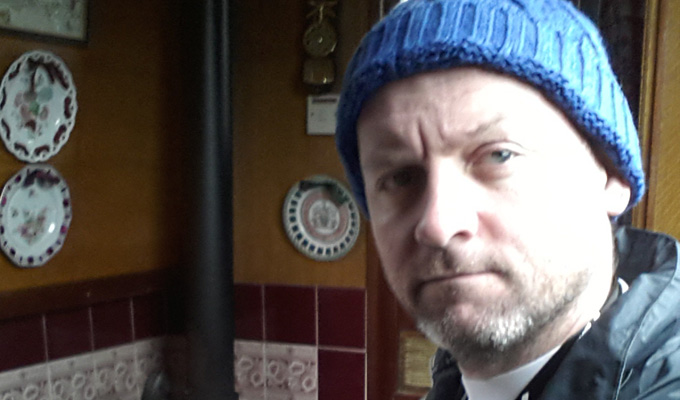
AuthorMichael J Buchanan-Dunne is a crime writer, podcaster of Murder Mile UK True Crime and creator of true-crime TV series. 
Archives
November 2026
Subscribe to the Murder Mile true-crime podcast
Categories
All
Note: This blog contains only licence-free images or photos shot by myself in compliance with UK & EU copyright laws. If any image breaches these laws, blame Google Images.
|
