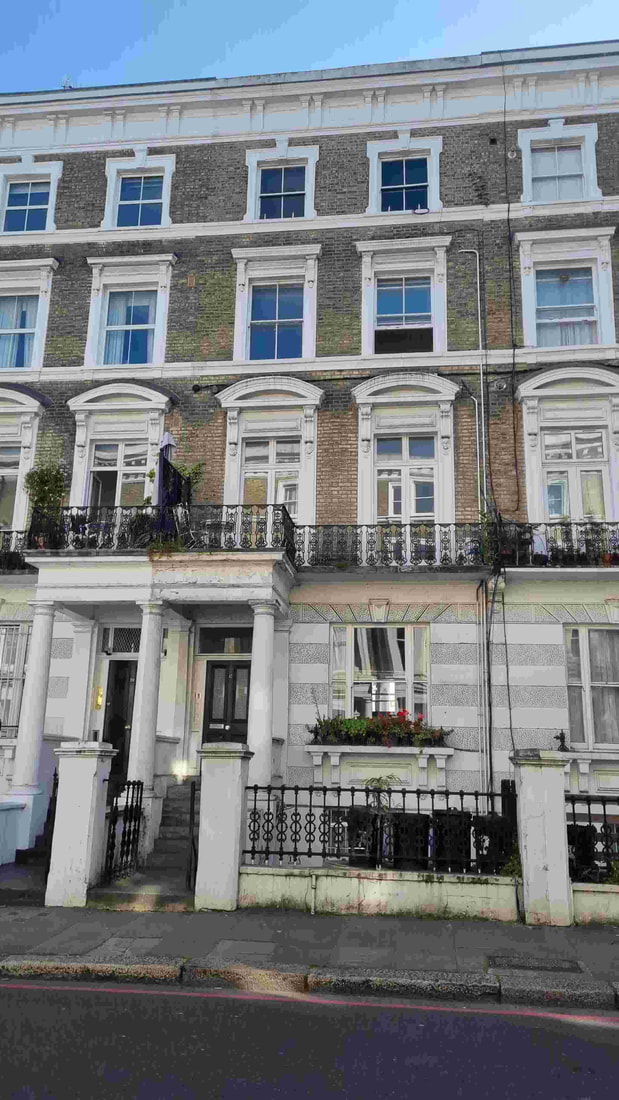
Nominated BEST TRUE-CRIME PODCAST at The British Podcast Awards, 4th Best True Crime Podcast by The Week, The Telegraph's Top Five True-Crime Podcasts, The Guardian and TalkRadio's Podcast of the Week, Podcast Magazine's Hot 50 and iTunes Top 25.
EPISODE TWO HUNDRED AND TWENTY-TWO:
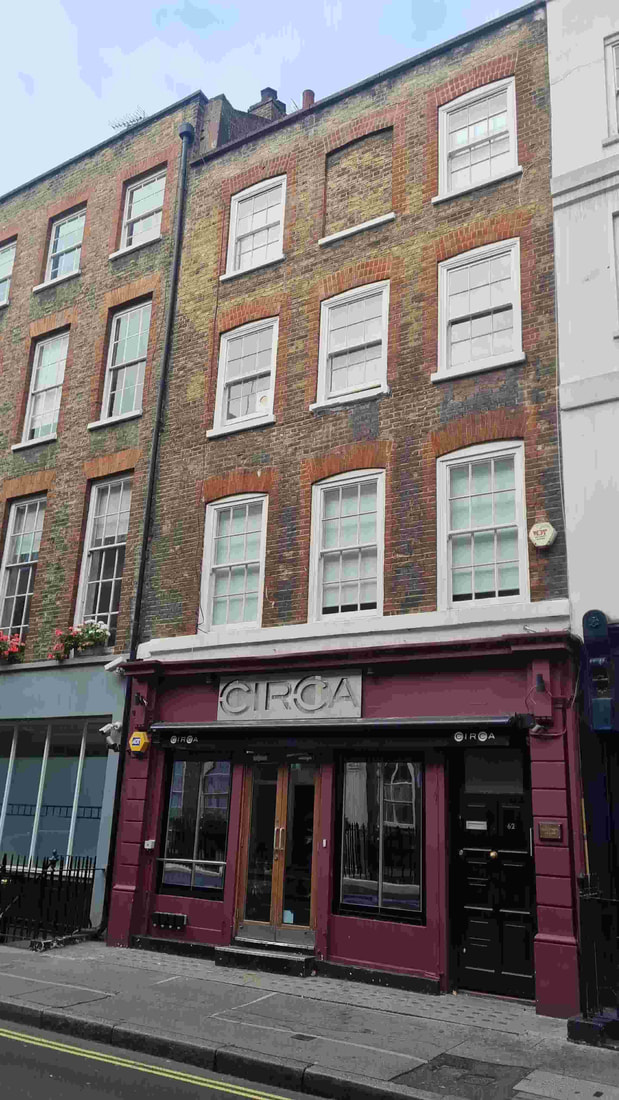
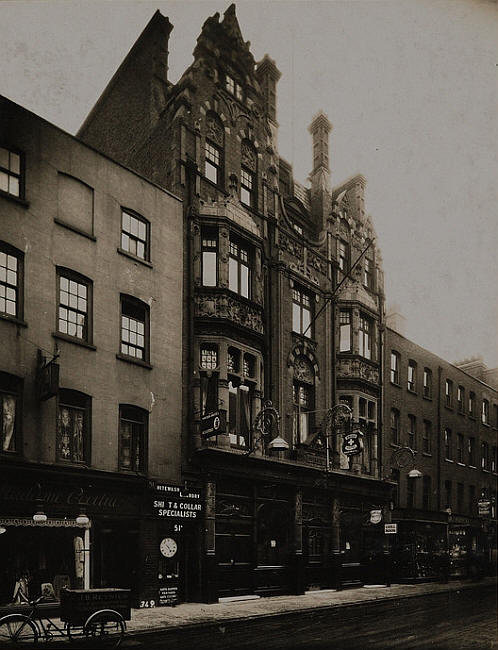
On Thursday 23rd of November 1967 at just shy of midnight, Eric Simmons and David Williams entered GiGi’s, a low rent striptease at 62 Frith Street in Soho. They paid their money, they had a drink, they watched the show, and then seven words were spat. A few minutes later, one of them would be dead.
CLICK HERE to download the Murder Mile podcast via iTunes and to receive the latest episodes, click "subscribe". You can listen to it by clicking PLAY on the embedded media player below.
THE LOCATION
As many photos of the case are copyright protected by greedy news organisations, to view them, take a peek at my entirely legal social media accounts - Facebook, Twitter or Instagram.
The location is marked with a lime green exclamation mark (!) near the words 'Soho'. To use the map, click it. If you want to see the other maps, click here.
SOURCES: This case was researched using some of the sources below.
MUSIC:
UNEDITED TRANSCRIPT OF THE EPISODE Welcome to Murder Mile. Today I’m standing on Frith Street in Soho, W1; a few doors down the café where the Terror of Malta didn’t pay for a cup of tea, a few doors up from the Blackout Ripper’s floppy penis, a few doors opposite of the infamously boring death of William Hazlett, and several doors up from the so-called battle of Frith Street, where two sad little street-toughs – Albert Dimes and Jack Spot - had their petty spat ended by a lady greengrocer who whacked these prize dick-heads over the bonce with either a vase, a ladle or some weighing scales - not coming soon to Murder Mile, because it’s a load of old crap. At 62 Frith Street currently stands Circa, a small ground-floor club in a four storey Victorian terrace. Described as ‘Soho’s leading gay bar’, it boasts a long line of red-cheeked men sucking hard on thick pink straws, a chorus of excitable bums squeaking eagerly on waxed leather seats, a resident DJ (who many reviews state gets a tad tetchy should anyone dares make a request – like ABBA), and – what their website hails as – ‘the hottest boys around’, although that could be down to the faulty air-con’. Every business has rules; some are fair, some are unjust, and some are fatal. In the late 1960s, at 62 Frith Street stood GiGi’s, a classic Soho strip club where drunk men paid over the odds to sit in the dark and leer at a bored-looking lady undressing, in the hope of seeing a nipple. On Thursday 23rd of November 1967 at just shy of midnight, Eric Simmons and David Williams entered GiGi’s. They paid their money, they had a drink, they watched the show, and then seven words were spat. Three strangers met that night; one with a job to enforce a futile rule, two who were furious over a pointless principle, and with no-one benefitting either view, nobody won, and a life was lost. But what seven words were so bad, that it caused the manager to commit murder? My name is Michael, I am your tour guide, and this is Murder Mile. Episode 222: The Five Shilling Striptease. On 12th December 1967, at Great Marlborough Street police court, 29-year-old Alfred Saliba, the new manager of Gigi’s striptease was charged with the murder of a customer in his club. Only, he didn’t have a history of violence and he wasn’t defending a friend; he was just an ordinary man doing his job. Alfred Joseph Saliba was born on 13th September 1938 in Birkirkara, a prosperous city in central Malta. As the fifth youngest of eight children with four brothers and three sisters, he said his childhood was happy and uneventful. Educated to a semi-literate level to the age of nine, for two years this sturdy little boy sold peanuts on the street and worked on building sites as a labourer to support his family. Seeking better prospects, in February 1954, the Saliba’s emigrated to Perth in Western Australia. And where-as by the time most kids left school and had no idea what a hard day’s work even was, aged sixteen, Alfred had been grafting for seven years, and was skilled as a hod-carrier, a tiler and a roofer. In 1958, keen to carve out his own career, alongside his brother Charles, they started trading as ‘C & A' Ltd, doing wall and floor tiling from their parent’s home in Secondary Avenue, Bassendean in Perth. Alfred was hard-working and proud, but this was not to say that he didn’t drift a little wide of the law or subtly skip an odd rule or two when it suited him. Far from being a big-time criminal – like most people – he saw a little fib or a cheeky slight-of-hand as nothing more than doing right by his family. On 16th July 1957, at Perth police court, Alfred was fined $5 for stealing bicycle spares. On 4th August 1958, he was fined $10 for larceny. On 20th May 1963, he served a month in prison for driving while disqualified. And on 5th January 1967, he was fined $142 for stealing building materials from houses which were under construction. Two months later, his company folded, and he was left penniless. Aged 28, with no job, no home and a criminal record hanging over his head, returning to his homeland of Malta to visit his relatives and do a little bit of work on a cash-in-hand basis, after six months he decided to try his luck elsewhere, in the far less-sunny windswept isle of gloomy old Britain. Arriving on 28th of August 1967, amidst a wall of perpetual drizzle, the drone of factory-produced pop hits and food redefined as an endless slew of pig’s bits and fried shit swimming in a sea of grease, still sporting the scars of the blitz and the whiff of free love (but mostly BO), London would be his home. Unlike many who had snuck in dishonestly, Albert did it right; he had a passport, a visa and a six-month work permit, so once he’d made enough money, he planned to return to Australia to rebuild his life. So, why did he travel half-way across the world, just to find work in Soho? Soho in the late 1960s was far from the gentrified carbon-copied haven for hipsters that it has become; a puke-inducing hermetically sealed series of ‘unique boutiques’ – like ‘an S & M shop where they sell gimp masks made of Fair-Trade humus’, ‘an ethically-sourced sanctuary for homesick avocadoes’, and a ‘pedal-powered cyber-punk manscaping shop titled Hairy Junk - for tossers called Tarquin & Fenella. This Soho was a grim and grimy cesspit of squalor set in a rabbit’s warren of dark and dingy dives which wreaked of stale beer, salty piddle, steamy plops (of both dog and human varieties) and often semen. And although unemployed for the first five months, I’m sure that far from the top of his preferred list of jobs was to be racially abused by drunken deadbeats staggering from titty-bars with empty pockets, a rancid liver, and their perky little pink Percy pointing the way to a prostitute’s boudoir. Who would? But then again, Soho had a very rich and vibrant community of Maltese ex-pats who worked in bars, clubs and restaurants, who spoke his language, maybe knew his name, and could help out with a job. Living in a small furnished room at 132 Warwick Way in Pimlico for £5 per week, willing to do anything to pay his rent and to set aside a few quid in savings, having first worked at the Taboo strip-club on Dean Street, on the 15th of November 1967, Alfred Saliba managed GiGi’s striptease at 62 Frith Street. Alfred had only been in the job for one week… …when seven words spat would lead to a murder. GiGi’s wasn’t anything special. Far from being on par with Paris’s most infamous burlesque show at the Folies Bergere, GiGi’s was just a run-of-the-mill Soho strip club. Set between an Italian eatery, a gent’s outfitters and sharing half of the ground-floor with a hairdresser’s and a mucky bookshop, it had all the discretion of a drooling man wearing a sandwich board which read ‘I’m here to see titties’. As a thin entrance of just four-foot-wide; to the right were a set of dark steps leading to the basement club below, and to the left - visible to the whole street, regardless of who was walking by, whether a kid, a nun, an incensed prude or a part-time gynaecologist – sat a booth where the pissed-up punters parted with their hard-earned coinage to cop an eye at a jiggling lady’s jugs… and its unsubtle signage. Surrounding the door, with its text in gaudy colours and a cartoon of a naked lady suggestively showing a slice of bum and a sliver of side-boob, GiGi’s proudly declared that - for just 5 shillings (or £6 today) – come and see ‘the most daring show in Soho’ featuring ‘16 lovely ladies from all over the world’. Oh yes, exotic girls from such far-flung places as Grimsby, Dumfries, Swansea and even Croydon in ‘a fully produced lavish spectacle… with continuous shows from 1pm to 1am’. Available from weekday lunchtimes for those whose digestion is ruined if they can’t see a stunner’s chest-sacks as they munch on a sandwich, up until 2am on Saturdays for those who can’t get sleepy unless they’ve gawked at some jiggling norks, and - respectfully – starting later on Sundays, so the reverend doesn’t miss Mass. And if you were like ‘what is this place’, there’s at least ten photos of ladies’ boobies and bottoms. Given its clientele of sad perv’s and seedy drunks, Albert was hired as being reliable, hard-working and a well-built man of 5 foot 10 inches tall and 15 stone in weight, if he had to, he could handle himself. And in a place and an era like this, far too often, he would have to. GiGi’s was one of several Soho strip clubs owned by ‘Big Frank’ Misfud. Weighing as much as an ox, being as surly as a braised beef, and as prone to explosive outbursts as a knackered banger, Frank was leader of ‘The Syndicate’, a criminal gang - who from the 1960s to the 1980s - ran the bulk of Soho’s sex clubs, gambling dens and prostitution rackets, by bribing the Police and engaging in gangland war. 1960s Soho was a volatile place, made worse - as since the expulsion of the Messina brothers, and the deaths of Red Max Kassel & Roger Vernon - rival gangs had picked over the carcass of Soho’s sex trade, and where-as once one-eyed Tony Cauchi had been Big Frank’s partner, now they were bitter enemies. In a campaign of terror between these two over-caffeinated tosspots with high-blood pressure, sore knuckles (owing to them scraping along the floor) and statistically very small penises, Cauchi initiated a series of fire-bombs to take-out his rivals’ clubs, including three which were owned by ‘Big Frank’. In February 1966, a petrol bomb set the America Club ablaze on Greek Street, forcing nine people to jump from the 2nd floor windows, none of whom were gang-members. Three months later, a bomb ripped apart the Luigi Club also on Greek Street, injuring three punters and a dancing girl. On 25th November 1966, a blast at the Keyhole club on Old Compton Street damaged the neighbouring flats. And unironically on the bonfire night of the 5th November 1966, GiGi’s on Frith Street was firebombed. Thankfully no-one was hurt, but with the club being gutted, tensions remained high, as the bombings continued across Peter Street, Rupert Street, Dean Street, Meard Street and the deaths mounted up. On 18th February 1967, Tony Cauchi was arrested. Tried at the Old Bailey, he was convicted of causing malicious damage, unlawfully possessing explosives, and Big Frank told the court that he lived in fear. So, by the time that Alfred Saliba had begun working as the manager of GiGi’s, although it had been renovated, it was barely one year since the bombing and just nine months since Cauchi’s conviction. Nerves were rightfully rattled for any worker at one of ‘Big Frank’s strip-clubs … …only, it wasn’t a firebomb, a gangland feud or a petty spat between two twats of the Maltese Mafia which ignited this fuse of murder, but a grey area of the law which the police weren’t bothered about. Squeezed into a suit jacket, a pair of dark trousers, a blue shirt and a set of suede shoes, as the newbie, Alfred was keen to impress, to do a good job, to enforce the rules, and to take no shit from the slew of drunken deadbeats who would stagger in, looking for boobs, booze and hopefully get a boner, only to get all bent out of shape when they realise it was a con, even though everybody knows that. The swizz was simple. Outside, there were several signs all of varying shapes and sizes; one read ‘entry 5 shillings’, which was true, as entry into the club was 5 shillings; and another read ‘the most daring show in Soho’, which is a slight fudge of the facts, but who’s going to quibble over what’s daring when (as a saddo who probably tugs his pud’ to the bra section of the Freeman’s catalogue) a sexy strumpet with all the fleshy goodness that God provides is dazzling his eager peepers by waggling her danglers. The sign says it all – ‘5 shilling entry’, ’16 lovely ladies’ and ‘striptease’. Of course, once this desperate punter has parted with 5 shillings to gain entry, what they didn’t know was that everything else costs money; whether that’s the over-priced lukewarm piss they dare to call beer, access to the world’s grubbiest loo (still speckled with a plethora of plop from the Jurassic era), and – as they descend the dark grubby stairs to the saddest little room which consists of twenty folding chairs, a spotlight and London’s most lacklustre stripper slowly removing more clothes than probably exists in her whole wardrobe - they either pay more in the hope of seeing an ankle (phwoar), or leave. It preys on two types of shame; the first is to pay to sit alone in a dark room with a hard-on surrounded by six other sad gits sporting boners they daren’t touch while a bored lady swings her milk-makers to music, dreams of a better life than this shit and glares at them with absolute contempt; or two, they walk in, realise they’ve been conned, and stand there like prize prunes with nowhere to go, but out. Legally, the club doesn’t have to dole out a refund, as with the dubious wording and their terms and conditions perched behind the ticket booth where a gruff unsightly doorman growls, they know no-one will read them when they’ve got a raging pocket rocket, and an overwhelming need to see areolas. It’s a con, but it’s not strictly illegal. Thursday 23rd November 1967 was an ordinary night at GiGi’s on Frith Street, as being cold and wet, it wasn’t particularly busy. Inside, under the hot lights, a heady stench of sweat rose as a thin line of slightly soggy men in woollen suits slowly dried, as they tried to get their 15 shillings worth of titties. That night, two new punters to visit this pokey little cesspit of pseudo-sex in Soho’s seedier parts were 46-year-old David Cynfal Williams and his pal 48-year-old Eric Thomas Simmons. As singletons who shared a lodging at Cromwell Road in Hayes End, they often came into town for beers and a bit of fun. Employed as an engineer, having served as a merchant seaman during the war, David lived for a while in New York where it is believed he met Eric. And being a thin man with natty moustache and a crown of hair, he was no bother to anyone – as like his pal – he didn’t get bladdered and wantonly start fights. Eric was a local lad who was born in East Sheen, Richmond on the 21st of October 1919. Being the same height but solidly built, Eric was a salesman for Wigglesworth & Co, a fibre merchants in the city, who specialised the sale of natural fibres, like Sisal, Abaca, Jute and Flax. And with neither man having kids nor being married, although there’s nothing less heterosexual than sitting next to your best pal while your plonker gets hard, why they chose to come to GiGi’s that night would be no real mystery. Only this time, seven words would end in murder… …and it was all because of a pointless rule. David would state “we arrived there about midnight”, and having each paid their 5-shilling entry fee, with nothing mentioned about ‘any additional extras’, the two men descended the stairs. The hallway down to the basement was like a descent into hell, if hell had hired a blind bookie to decorate it with dirty walls, broken tiles and maggot’s nest of spent cigarette butts like a distress call in Morse code. Being a venue about as erotic as off-yoghurt, as they entered the basement, they would have been hit by the funk of spilled beer and men’s stains owing to the spotlights being on for the last eleven hours. And with the floor sticky and the chairs even stickier, although a renovation was made since a petrol-bomb had gutted it, it may have been better to set fire to it again, incinerating the swarms of bacteria. David told the court “we went downstairs and watched a show”, as a girl - possibly performing under the stage name of ‘Fifi from Paris’, who was probably called ‘Mildred from Milford Haven’ – titillated a sweaty line of desperate losers by showing a bit of shoulder (phwoar) or maybe a thigh (cor lummy). For ten minutes they sat, admiring Mildred’s knees, and neither man was harassed… …until Alfred, as the club’s new manager enforced a rule. Alfred would state “I walked over, and said ‘excuse me sir, I make one a member and one a guest’, as unless one of them paid the club’s membership fee, they couldn’t continue watching the show they were already watching. Both said ‘no’. According to Alfred, “the moustache man said to me ‘gimme a smoke’”, which David denied he did, and refusing to pay up, allegedly “he start laughing in my face”. David denied all of this, Alfred denied arguing, and although both men stated that a fight downstairs never occurred, Thomas Town, who was watching the show said “my attention was attracted to a scuffle by the stairs” between David and Alfred, “they were slapping one another. It went on for about two or three minutes, and then they went upstairs”. Which is riveting stuff, I’m sure you’ll agree. By that point, David and Eric had had enough; the striptease was as arousing as cat-litter, the beer was as boozy as a Buddhist’s drinks cabinet, and the customer service about as welcoming as foot fungus. Eric and David were done; they were fed up, they were leaving, they couldn’t be arsed with arguing over a refund, they were just going to head home, grab a takeaway, grumble about it on the train, and then wake up in the morning with a hangover, a few bruises and an anecdote to trot out when needed. But - as a matter of principle and doing a good deed by not wanting others to be conned as they had - seeing four men (George Wilson, ‘Vince’ Thomas, Gordon Jenkinson & ‘Sandy’ Douglas) at the booth about to fork over their 5-shillings each to the doorman, David Williams uttered seven fateful words… … “don’t go in there, it’s a con”. That’s it. Nothing more. Alfred told the court “the two men challenged me. They called me ‘chicken’ so that was it. We started fighting the three of us. I was in the middle. One punch comes towards me and then I start punching with my left, you can see I’ve hurt my hand. I was swinging at them. I hit one of them on the eye”. Only, neither of the men recalled any of that. George Wilson reported “(Eric and David) walked down the street, (Alfred) ran after them and started punching as the two men fell to the ground”. Knocked out in a single punch as he bounced off a parked car, Alfred struck David with a second fist to the face, so by the time he came to, the Police were tending to his injuries and his memory was blank for a bit. But attacked by one heavy punch to the jaw which floored Eric, having fallen to the pavement with a hard thud, it wasn’t much of a fight as neither of the men fought back, after which Alfred then fled. Except for a small bruise to his jaw, Eric didn’t seem to be hurt. George would state “he was just lying there. It appeared to me he was drunk. He moaned as if he was snoring. We move him to the railings”. A policeman arrived within seconds and called an ambulance, but by then, the damage had been done. Arriving at Middlesex Hospital at 12:30am, although Dr Wingate found very few bruises, efforts were made to resuscitate him, “but within minutes, he was dead”. An autopsy would confirm that he had suffered a “subarachnoid haemorrhage to the surface of the brain and the upper spinal cord”, having been knocked unconscious in one punch, the impact with the pavement resulted in his death. (End) Alfred was arrested three hours later at The Golden Egg restaurant on Oxford Street. A little heartlessly having been told ‘tonight at Frith Street, a fight occurred and as a result a man has died’, he asked the two officers who had come to arrest him, ‘can I finish my meal? I’ll only be a minute’ – only he didn’t. Interviewed at West End Central police station, he gave a statement which was partially true according to his view, but with at least ten witnesses to everything that happened, at 4:28pm he was charged. Tried before Mr Justice Lyell on 26th February 1968, having initially been charged with the murder of Eric Simmons and causing GBH to David Williams, later pleading guilty to manslaughter on the grounds of provocation (which was accepted by the court), Alfred Saliba was sentenced to 18 months in prison. Passing sentence, Mr Justice Lyell would conclude “If you conduct your business like this, customers are likely to become dissatisfied. Having got Mr Simmons and Mr Williams out of your club, you ran after them. You are young and strong, and you hit them with real violence in a brutal attack”. And that’s what’s so tragically pointless about this case, as none of it needed to have happened. As the rules that Alfred was enforcing wasn’t his, just as the club wasn’t either. By speaking his mind, David was merely trying to make sure that no-one else was conned like they had been. And as a man who – it was stated – hadn’t said a word to anyone, Eric lost his life over a futile rule, a pointless principle, and a five-shilling striptease. The Murder Mile UK True Crime Podcast has been researched using the original declassified police investigation files, court records, press reports and as many authentic sources as possible, which are freely available in the public domain, including eye-witness testimony, confessions, autopsy reports, first-hand accounts and independent investigation, where possible. But these documents are only as accurate as those recounting them and recording them, and are always incomplete or full of opinion rather than fact, therefore mistakes and misrepresentations can be made. As stated at the beginning of each episode (and as is clear by the way it is presented) Murder Mile UK True Crime Podcast is a 'dramatisation' of the events and not a documentary, therefore a certain amount of dramatic licence, selective characterisation and story-telling (within logical reason and based on extensive research) has been taken to create a fuller picture. It is not a full and complete representation of the case, the people or the investigation, and therefore should not be taken as such. It is also often (for the sake of clarity, speed and the drama) presented from a single person's perspective, usually (but not exclusively) the victim's, and therefore it will contain a certain level of bias and opinion to get across this single perspective, which may not be the overall opinion of those involved or associated. Murder Mile is just one possible retelling of each case. Murder Mile does not set out to cause any harm or distress to those involved, and those who listen to the podcast or read the transcripts provided should be aware that by accessing anything created by Murder Mile (or any source related to any each) that they may discover some details about a person, an incident or the police investigation itself, that they were unaware of.
0 Comments
Nominated BEST TRUE-CRIME PODCAST at The British Podcast Awards, 4th Best True Crime Podcast by The Week, The Telegraph's Top Five True-Crime Podcasts, The Guardian and TalkRadio's Podcast of the Week, Podcast Magazine's Hot 50 and iTunes Top 25.
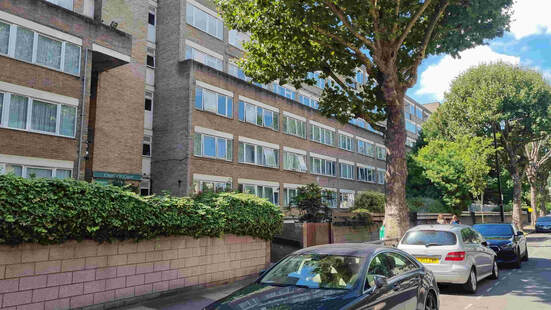
the former location of 2 Shirland Road
Welcome to the Murder Mile UK True-Crime Podcast and audio guided walk of London's most infamous and often forgotten murder cases, all set within and beyond the West End.
EPISODE TWO HUNDRED AND TWENTY-ONE: On Saturday 8th of October 1949, 27-year-old Denis Wilfred Barrett invited 19-year-old Kathleen Mary Rosam back to his lodging at 2 Shirland Road, W9. As a homeless girl who had resorted to prostitution to survive, he was desperate to save her from a fate worse than death... …only, having witnessed unspeakable horrors, what he needed was saving from life.
CLICK HERE to download the Murder Mile podcast via iTunes and to receive the latest episodes, click "subscribe". You can listen to it by clicking PLAY on the embedded media player below.
THE LOCATION
As many photos of the case are copyright protected by greedy news organisations, to view them, take a peek at my entirely legal social media accounts - Facebook, Twitter or Instagram.
The location is marked with a yellow exclamation mark (!) near the words 'Maida Hill'. To use the map, click it. If you want to see the other maps, click here.
SOURCES: This case was researched using some of the sources below.
MUSIC:
UNEDITED TRANSCRIPT OF THE EPISODE Welcome to Murder Mile. Today I’m standing on Shirland Road, off Little Venice, W9; three streets south-west of Timothy Cotter, the 16-year-old killer convicted by his own mother, two streets west of the scattered remains of Hannah Brown, one street north of the suitcase stuffed with Marta Ligman’s body, and a few miles downstream of the torso and the legs that no-one could identify - coming soon to Murder Mile. At the back of the Grand Union Canal sits Charfield Court, a seven-story housing estate from the 1970s. Constructed of 105 unimaginatively identical flats made of glass and concrete, it’s possible it was built as a police initiative to cut crime by making it impossible for any burglar to recall which flat was theirs. Demolished during the 1960s slum clearances, on this spot, at the corner of Formosa Road once stood 2 Shirland Road, a three-storey Victorian lodging house into which a quiet inoffensive man called Denis moved in. Missing some much-needed love in his life, he had fallen for Kathleen; a girl with no home, no life and (what he saw as) no future. But desperate to save her from a fate worse than death… …what she needed saving from was him. My name is Michael, I am your tour guide, and this is Murder Mile. Episode 221: The Saviour. Few who knew him ever thought that Denis was the type of man to commit a murder. Born in the Irish city of Cork on the 12th of October 1922, Denis Wilfred Barrett was one of six siblings to two hard-working parents from a respectable family. Raised as a Roman Catholic, although a little quiet and a little shy, he was a good boy who got on well with everyone, whether sinners or saints. Aged 8, his father died leaving his mother a widow. And although this heartbroken family struggled on in the grip of the Great Depression, together they got through it. So, it’s no surprise that there was nothing in his childhood which forewarned anyone of the crime he would commit. Or maybe it did? As an ordinary boy who was scruffy, a little uncouth but undeniably loving and thoughtful, he would blossom into a ‘tall, powerfully built Irishman’; with hands like shovels, legs like ham-hocks, and a heart as big as an ox, whose pale face and red-cheeks were decorated with a natty little moustache. And keen to see the world and to do his mother proud, aged just 16, he enlisted in the Royal Navy. The date was May 1939, and the world was at war. (sirens) Trained at the Naval School in Sheerness, he suited being a sailor, as whether he was chatting with a captain or a cleaner, “he always made friends with the flotsam and jetsam of the streets”. Beginning his career as a ‘boy’, on the 21st of November 1939, he set sail on the Royal Navy cruisier - HMS Drake. For this boy from Cork, his new life was exciting and dangerous, and qualifying as an electrician, across his career he rose from a lowly boy to an ordinary seaman, all the way up to Leading Torpedo Operator. Only, like so many young boys who had signed up to fight, his teenage years would take a tragic turn. In February 1940, he was transferred onto HMS Hermes, a 600-foot aircraft carrier with 566 crew. Fitted with 20 fighter aircraft, three-inch armour and six 5 and a 1/2-inch guns, it hunted down German blockade runners off the coast of France before progressing to the Persian and East African campaigns. But in April 1942, while preparing for Operation Ironclad, the British invasion of Madagascar, as HMS Hermes berthed in Trincomalee in west Sri Lanka – with repairs underway, the stores being resupplied, and their fighter aircraft assigned elsewhere to another mission – they received a warning. Spotted by an enemy scout plane, a sortie of Japanese warships were steaming their way, to destroy them. Caught off guard, HMS Hermes was a sitting duck - but with no time to rearm its guns, its 11000-tonne bulk limited to a maximum speed of 25 knots, and its air-cover of an RAF squadron of just six Farley Fulmar fighters being too far away, of which they would be outmanned by the impending swarm of 85 Aichi D3A dive bombers and 9 Mitsubishi Zero fighters – only at sea, would they stand a chance. Being left open and exposed, as this wave of firepower later headed north, destroying the Athelstone, the Hollyhock, the SS British Sergeant oil tanker, the SS Norviken and their escorts, by the time that British fighters were seen overhead, the HMS Hermes was sunk. Of its 566 crew, 307 men were lost. Inside its steel hull, some men were ripped-apart by the blast, some burned to death as fuel ignited, some drowned as the ship quickly sunk, and on that day – 9th April 1942 – many died a terrible death. Somehow, Denis survived the explosion, and as he swam as hard as he could as the sinking ship pulled many survivors under, as it sunk taking his friends to their watery graves, this 20-year-old was left clutching to an upturned raft – burned and bleeding - in a vast expanse of oil slicks and dead bodies. Many died a horrible death that day, but it would be worse for those who survived, as across the next five hours - as he swam through a sea of steam, corpses and fiery waves - Denis watched in terror as his pals’ dissected limbs were picked-at by fish, swirling sharks sought a free feast of human flesh, and – unwilling to take any prisoners – those who hadn’t drowned were machine-gunned from the air. Along with the other survivors, Denis was picked up by the hospital ship Vita… …only his nightmare had just begun. With this being war, he was given no time to grieve or get over his trauma, as being told ‘to buck up or get out’, the very next day, he was assigned to the crew of HMS Drake, a heavily armoured monitor ship. But that experience had changed Denis; gone was the quiet burly man, replaced by a terrified boy whose nights were spent gripped with sweats, terrors and horrifying dreams of a swirling red sea. No longer the seaman he once was, he was bounced from HMS Drake to HMS Defiance to HMS Drake IV, but by August 1943 - owing to what they described as his “peculiar behaviour” – he was put ashore. Posted to the Mediterranean island of Sicily, Denis wasn’t there for rest and recuperation, as assigned to LST 425 (a landing ship tank), with a rifle in hand, his superiors sent him from one horror to another, as part of the invasion of Sicily. Codenamed Operation Husky, it was one of the most brutal land battles of World War II, into which Denis fought a series of street-fights, as the walls ran red with blood. After six weeks, the Allies had stolen this strategically vital island from Fascist Italy and Nazi Germany, but the day that Sicily was won, being physically exhausted and mentally spent, Denis broke down. With an officer spotting his ‘strange behaviour’, Denis was sent to B Base Psychiatric Centre at the 54th General hospital. Described as “self-absorbed and emotionally dull”, when they examined him, they found two scars, where – twice in the last few weeks – he had attempted to stab himself in the heart. “Recommended for return to the UK for further observation”, Denis was shipped back to England and admitted to Barrow Gurney Naval Hospital in Bristol, where he said he heard voices, saw visions, and his movements and thought processes were so slow, that at times, doctors stated “he was like statue”. Believing that he was suffering from “possible schizophrenia” rather than the trauma of war, deemed unfit for naval service, on the 9th February 1944, he was discharged and given half his military pension. As he was no longer the Navy’s concern, he tried to live as normal life as possible… Released from hospital on the 10th of March 1944, he returned to Cork and to his family, far away from the cacophony of blitz bombs and V1 rockets which riddled most Allied cities. As a quailed electrician, he got his union papers and coped with his trauma by working regular hours and making a good living. Given his history, it’s remarkable that Denis didn’t go off the rails, but then again, he was never bad or mad, he was just shy and a quiet. Sometimes described as “a little distant”, he was never violent, he didn’t have a criminal record, and apart from frequent bouts of depression, he was doing well. One of the reasons, it is said, was that he had found love. How they met he never divulged, but being as the daughter of a fellow electrician, it’s likely that Denis met Elizabeth Millard known as ‘Bette’ at one of the businesses in Cork he either worked for, or at. As a small-featured petite blonde with a sweet smile and quirky mannerisms, being smitten from day one he quickly married her and both moving to Gillingham in Kent, they married on the 2nd January 1946. Life was good; he was married, employed, and they soon had two children; Ingrid age 3 and Noel age 2, and kept busy as an electrician at Royal Victoria Docks, soon the horrors of his past were fading. Only, the good times were coming to an end, as Denis’ trauma crept back in. In February 1946, he was sacked from the dockyard as his workmanship wasn’t up to standard. A few short-term jobs followed, but he was discharged for bad timekeeping. And in January 1949, with their marriage in tatters as he sunk deeper in despair, his beloved Bette moved back to Cork taking the kids. Separating amicably in June 1949, although he struggled to retain his job as a kitchen porter in London, he tried to pay her £3 per week as agreed, but only able to give her £1, their relationship soon soured. On the 18th September 1949, 27-year-old Denis moved into a small bed-sitting room on the first floor of 2 Shirland Road in Maida Vale. Working nights as a kitchen porter at J Lyons & Co in Marble Arch, the landlady Mrs Herta Pusztai said he was “quiet and kept to himself”, he never made a mess, and as a devoted father who spoke lovingly of his wife, he sent what he could to his family back in Ireland. Only, his shy ways and statue-like stillness hid not only his trauma, but a deep pain in his heart. Often sat alone, as he stared at the bare walls, he began to drink. At night, when the terror returned and the sight of burning bodies haunted his dreams, he had no-one to cuddle him to sleep. And as those dark thoughts loomed, once he told his brother Edward “I often think of falling in front of tube trains”. Denis was done, as in his diary he would scrawl “our anniversary Bette. This was all for you”. In another entry he would leave his worldly goods to his loved ones. And in a third “My love as always to Bette”. With nothing left, no-one would come to Denis’ rescue… … but it was then that he found Kathleen. Born on the 28th September 1930 in the Hertfordshire town of Bushey, Kathleen Mary Rosam had lived with her mother Kathleen and her stepfather John, since her father’s death when she was only three. Raised with her brother at 5 Bushey Hall Farm Cottages, she was described as “a healthy girl, who was never in trouble”. Since leaving school, she’d worked at a printing factory, she’d done her bit for King & Country having joined the Land Army, she had just started work at a biscuit factory in Watford, and although “a steady girl who liked her home life but didn’t go out much”, suddenly, she went missing. Dressed in a black coat, a flower-pattered dress and wedge-shaped shoes, on the morning of the 17th of September 1949 - for no known reason what-so-ever - this 19-year-old vanished from her home… …three weeks later, she would be dead. On Tuesday 4th October, Denis met Kathleen, we know this as he wrote it in his diary – “met Kathleen”. At roughly midnight, on Randolph Avenue, two streets from his lodging, the two got chatting. Whether he was looking for a prostitute is unknown, but she said she was ‘on the game’ and her price was £1. Instantly, he liked her, as although just 19-years-old, it was who she reminded him off which attracted him most. As being a small-featured petite blonde with a sweet smile and quirky mannerisms, he’d later tell the prison psychiatrist “the resemblance between my wife and Kathleen was remarkable”. And although Bette was out of his life, she never out of his thoughts. That night, having had a delightful walk in Paddington Park, Denis would admit “I told her I didn’t have much money. She asked me if I could take her to my lodgings. I said I could, and at about 1am we got to 2 Shirland Road… she stayed the night with me in my room and she did not ask me to pay her”. Maybe she forget, maybe she pitied him, or maybe (being homeless) she needed a place to stay? Either way, although brief, their relationship was caring and friendly, as Kathleen saw a softness within this burly man, and within her, he saw the woman he had always loved, but could no longer be with. Denis would state “we left my room at about 2pm on the Wednesday, we went and had a drink, and then I took her to a chemist in Kilburn High Road to have her eye seen to”. Sporting a sore but fading black eye - possibly at the hands of a punter who wasn’t as gentle and caring as Denis – “I bought her an eye shade. I then took her up Edgware Road and we had a good feed and then went to the pictures”. As far as we know, a nice time was had by both – “after that we went to a couple of pubs. She told me she had to go and see a pal, and I promised to meet her about midnight in a pub on the Clifton Road”. There was no denying that he liked her, he maybe loved her, or at least the woman she reminded him of, “but I waited in there, and around the streets till about two in the morning, but she did not return”. In his diary, he would write for that night: “she went to see her friend and never returned. Stayed out until 2am, to try and find her. Impossible!”. And being desperate to see her, over the next two days – Thursday 6th and Friday 7th – he wrote three words in his diary “searching for her”, nothing more. Knowing her for just four days, it wasn’t until the fifth day that Denis tried to save her… …ironically, from a ‘fate worse than death’. It’s uncertain how many hours he waited and how many streets he searched, but on Saturday 8th, he found her. We know that, as he wrote it in his diary: “found her Sat’ night 9pm”. Being on Clifton Road, her usual patch, although “she was getting off and fixing up business… she agreed to go out with me”. It was like it was before, as they strolled hand-in-hand through Hyde Park and went to a café for a cup of tea; her a petite little thing in a bright yellow dress like a canary, him in a dark blue suit like a cat. Their time together was only brief, but as Denis would state “during this time I had known Kathleen, I had become somewhat attached to her and had suggested to her that she should come off the game”. She was only young, she was only little, and she had her whole life ahead of her: “I urged her to give up the game”, he told the prison psychiatrist, “I thought of her future, her life as a prostitute” - disease, alcoholism, degradation and danger - “but she refused to”. So it’s kind of ironic that, having wanted to save her from a life lived so shamefully, at roughly 1am, they returned to his lodging… and had sex. The house was quiet, and with the rules being ‘no guests allowed’, they did the dirty silently. A short while afterwards, as they lay in his bed, the drab chintz curtains closed and the door locked, curled-up together in each other’s arms, “I kissed her, and she then went off to sleep. I lay thinking of different things. I felt pity for the girl, and I realised what she would become if she continued in her way of life. I knew I couldn’t have her living with me… and I thought of my wife. Then I went to sleep”. Whether this is true, only he would know, but suddenly his mood would change. In one retelling, they were both awake: “She didn’t want to come off the game so I thought it would be better if she was out of it altogether, so I suddenly took hold of her throat with my hand and we struggled. We fell off the bed together and I had hold of her throat all the time until she was dead”. In another, he awoke and found himself in a fit of anger: “The next thing I recall I was on the floor. I asked the girl what we were doing, she did not answer. I cannot say for certain, but I believe my hands were at her throat. I shook her. I felt her heart and her pulse, but her face was blue… she was dead”. Asked in court “did you intend to harm this girl?”, Denis replied “no, I only intended to help her”. In a fit of panic, “I tried to put her in the cupboard, but couldn’t”, as although he was only small, the girl didn’t fit, “so I put her back on the bed and covered her up with the bedclothes”, as if by making her corpse more comfortable, that maybe God would forgive him. But would he? For many hours there she lay. “Several times I knelt down and prayed. And when the morning came, I left the house”. In his diary, Denis wrote “Sunday 9th October, 2:30am. Kathleen died”. Far from being a crazed killer, it was what happened next which best sums up Denis, as feeling terrible (not just having taken a young girl’s life but) having broken the house rules: “I went downstairs and spoke to the landlady and told her I was sorry, I had broken her rules by bringing a girl into my room”. It’s unlikely he had a plan of what to do, as for the next few hours he would wander the streets in a daze, and keen not to be discovered “I told her, I’m going out for ten minutes to get a taxi and we’re leaving. Don’t go into the room. Don’t disturb the lady she is undressing”, which she agreed to do. But as minutes turned into hours, the landlady became concerned. Herta would state “at 12:25pm, I knocked, went in, and saw a woman with long fair hair lying in the bed, fully covered by the bedclothes. I thought she was asleep, so I decided not to wake her”. And there the corpse remained, cold and still. By 4pm, although usually placid, Denis was fit to burst with emotion. Visiting his brother Edward, he knew he had no choice but to admit the truth, stating “I want to tell you something… I’ve done a girl in”. His brother didn’t believe him, who would, and so giving him his diary, Denis told him everything. At 11:30pm, Denis telephoned Scotland Yard, and as directed, he returned to 2 Shirland Road… …but by then, it was too late, as Kathleen had already been found. At 11:45pm, as Denis approached his lodgings, Inspector Sercombe & Chief Inspector Berkell exited, asking “are you Denis Barrett?”, he replied “yes, I shan’t run away…”, and stating “I did it. Oh yes, I admit it”, having been cautioned, he’d state “I’ve got a long story to tell you. It starts off with my wife”. Found at 4pm by the landlady, the scene was remarkably ordinary; her clothes on the armchair suggested that she had undressed herself, her handbag undisturbed implied she hadn’t been robbed, and a small black suitcase full of her possessions gave the impression of a lost girl with nowhere to go. Her injuries were equally as unremarkable; an old bruise to her left eye (which Denis insisted “I had nothing to do with”), and abrasions to her neck matching his fingers as he had strangled her to death. Giving a full and frank statement to the detectives at Harrow Road police station, knowing he had hurt so many, the last thing Denis wrote in his diary was this: “Dear mum. Please forgive me. Denis”. (End) Received at Brixton Prison, Denis was assessed by the prison psychiatrist, and told a story of the life of an ordinary boy; a little shy and a little quiet, who had done his bit to serve his country and to make his mother proud, but – amidst a sea of blood and fire - had witnessed some unspeakable horrors. But mostly, he spoke of the wife he had loved, he had lost, and hoped - one day - to rekindle his love with. Admitting to bouts of depression, but nothing more, Denis was declared fit to stand trial. Tried at the Old Bailey on the 24th and 25th November 1949, against their advice, he refused to allow his solicitors to use the defence of insanity, as he felt he was sane, even though if the unmistakable evidence were to find him guilty, that would have guaranteed that he would be sentenced to death. With Dr Rowland Hill of the West End Hospital for Nervous Diseases stating that “he was suffering a form of schizophrenia”, the decision was no longer his, and pleading ‘not guilty’, it was ruled that at the time of the murder, “by reason of a defect of reason, he was not responsible for what he did”. Retiring for 30mins, the jury returned with a verdict and Mr Justice Cassels declared that Denis Barrett was guilty of murder by insanity. Later detained at Broadmoor Psychiatric Prison, his fate is unknown. Denis Barrett was a troubled man who sought to save girl from a fate worse than death… …only, having witnessed unspeakable horrors, what he needed was saving from life. The Murder Mile UK True Crime Podcast has been researched using the original declassified police investigation files, court records, press reports and as many authentic sources as possible, which are freely available in the public domain, including eye-witness testimony, confessions, autopsy reports, first-hand accounts and independent investigation, where possible. But these documents are only as accurate as those recounting them and recording them, and are always incomplete or full of opinion rather than fact, therefore mistakes and misrepresentations can be made. As stated at the beginning of each episode (and as is clear by the way it is presented) Murder Mile UK True Crime Podcast is a 'dramatisation' of the events and not a documentary, therefore a certain amount of dramatic licence, selective characterisation and story-telling (within logical reason and based on extensive research) has been taken to create a fuller picture. It is not a full and complete representation of the case, the people or the investigation, and therefore should not be taken as such. It is also often (for the sake of clarity, speed and the drama) presented from a single person's perspective, usually (but not exclusively) the victim's, and therefore it will contain a certain level of bias and opinion to get across this single perspective, which may not be the overall opinion of those involved or associated. Murder Mile is just one possible retelling of each case. Murder Mile does not set out to cause any harm or distress to those involved, and those who listen to the podcast or read the transcripts provided should be aware that by accessing anything created by Murder Mile (or any source related to any each) that they may discover some details about a person, an incident or the police investigation itself, that they were unaware of.
Nominated BEST TRUE-CRIME PODCAST at The British Podcast Awards, 4th Best True Crime Podcast by The Week, The Telegraph's Top Five True-Crime Podcasts, The Guardian and TalkRadio's Podcast of the Week, Podcast Magazine's Hot 50 and iTunes Top 25.
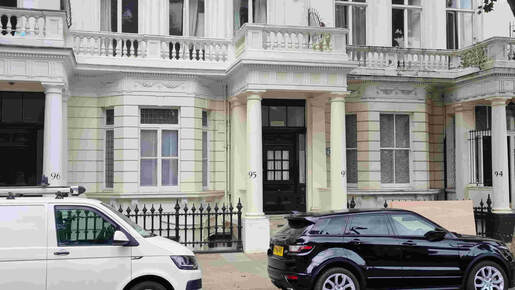
Formerly the Claremont Hotel at 95 Queens Gate, Kensington
Welcome to the Murder Mile UK True-Crime Podcast and audio guided walk of London's most infamous and often forgotten murder cases, all set within and beyond the West End.
EPISODE TWO HUNDRED AND TWENTY:
On Monday 13th July 1959, just a few streets south, Detective Sergeant Raymond Purdy was shot dead by 30-year-old blackmailer Gunther Podola, who was on the run. Being hunted by Chelsea CID, just three days later on the 16th July, the grieving colleagues of DS Purdy had tracked Gunther down to a third floor room at the Claremont House Hotel at 95 Queensgate, barely a five minute walk from the shooting. At 3:45pm, eight CID officers and a police dog would storm into Room 15… …half an hour later, Podola was escorted from the room, with a black eye, a cut to his forehead, and diagnosed with amnesia, he couldn’t remember the shooting, his life, a possible beating by the police in his hotel, or any evidence which may help his defence, when he was tried in court for murder.
CLICK HERE to download the Murder Mile podcast via iTunes and to receive the latest episodes, click "subscribe". You can listen to it by clicking PLAY on the embedded media player below.
THE LOCATION
As many photos of the case are copyright protected by greedy news organisations, to view them, take a peek at my entirely legal social media accounts - Facebook, Twitter or Instagram.
The location is marked with an orange exclamation mark (!) near the words 'West Brompton'. To use the map, click it. If you want to see the other maps, click here.
SOURCES: This case was researched using some of the sources below.
MUSIC:
UNEDITED TRANSCRIPT OF THE EPISODE Welcome to… erm… uh. (as before). As Gunther Podola stood in the dock at the Old Bailey - diagnosed with amnesia, possibly owing to a head injury, probably caused by police brutality - he couldn’t give evidence to defend himself of a crime which would warrant his sentence of death. So, instead he read this pre-prepared statement: “Your honour, members of the jury. I stand before you accused of the murder of a man. I cannot put forward any defence. The reason is that I have lost my memory of all these events. I cannot remember the crime. I do not remember the circumstances leading up to the events or to this shooting. I do not know if I did it, whether it was an accident, or an act of self-defence. I do not know if at the time I realised the man was, in fact a detective. I do not know, in fact, whether I was provoked in any way. For these reasons I am unable to admit or deny the charge against me. Thank you, my Lord,”. With the evidence resting on whether the jury believed that Gunther had wilfully murdered Detective Sergeant Raymond Purdy - a crime still punishable by death – as there were no independent sightings of the shooting and Gunther had no memory, the only witness was DS Sandford, Purdy’s partner. The case of Gunther Podola was unique, as usually the accused would plead insanity, but here pleading amnesia, the jury had an impossible task; to decide who was telling the truth, the killer or the copper? (Loop/fade/white noise) For the prosecution, it wasn’t difficult to prove that Gunther was a liar; being a criminal with three aliases, a history of theft, fraud and blackmail, a cowardly man who had abandoned his girlfriend and his child in a refugee-camp in war-torn Berlin, and a fabricator of such magnitude that he had even read out that statement you have just heard, in a North American accent, even though he was German. His life was a lie, a fantasy concocted to please himself, fueled by delusions to flee from his problems. In the statement made by Roland Gray, a former sergeant in the Intelligence Corps who had arrested Gunther in 1949 trying to blackmail an unnamed widow having “recognised Podola...” and his cunning ploy of “a defence of amnesia”, he would state “Podola was detained for 14 days… he refused speak at all; he put on a vacant expression and grinned as if he was stupid or mentally deficient… throughout he spoke with a strong Slavic accent, which suggested he was either Russian, Polish or Yugoslavian”. His con was simple, as by claiming memory-loss, the less he told the British Authorities of his crime or his identity, the more they would struggle to charge him. Only this lie would come back to bite him. Having claimed to be Major Karanov of the NKVD, “I told him we believed his story… and were going to hand him over to the Russian authorities”. And therefore, having been caught impersonating a Russian official, he would most likely be sentenced to a life of hard labour in a Siberian gulag, or death. “As we escorted Podola to a waiting car, he broke down and told us that he was German… Podola changed completely and answered all of my questions… in an ordinary German accent”. Although, prone to lying, “he told me his real name was Junkersfield but used the aliases of Podola and Fisher”. So, it’s no surprise that being accused of a policeman’s murder, that he would adopt that same ploy. On Thursday 16th July 1959 at 3:45pm, four days after the murder, Gunther stood inside Room 15 of the Claremont House Hotel, where this wanted man had held-up since the shooting of DS Purdy. It’s likely he heard the officers coming, as how silent could eight heavy-footed detectives and a police dog be, having rapidly parked up several cars outside of a half-empty hotel on a weekday afternoon? He’d have heard the engines, the boots, the barking and an abrupt silence outside of his door, followed by a hard knock, an order “police, open up” and the door being forced. With his gun in the attic and his only escape route being a window with a thirty-foot drop, he would have known he was cornered, so - outmanned and overpowered – he did as he always did and concocted a tried-and-tested lie. As if feigning amnesia wasn’t his plan, then several elements of what follows don’t make sense. If he didn’t want the officers to force their way in, why didn’t he block the door with his bed? If he didn’t want this eight-man team to barge inside causing havoc, why did he ignore their repeated commands to “open up”? And if he didn’t want them to gain entry, why did he unlock it with a key? When DS Chambers broke down the door, he would state “I caught a glimpse of the prisoner… he was bending forward… as the door hit him in the face”. Which is an odd position to be in, given that a 17-stone detective was forcibly attempting to break the door down, and Gunther had just unlocked it. Why would he be anywhere near that door, at that very moment, unless he wanted a head injury? This impact resulted in a wound which didn’t fracture his skull, it caused minor bleeding on the surface of the brain, a black eye and a half-inch scar (all of which were temporary), and when Dr Larkin was asked “could that concussion account for his loss of memory in its depth and extent?”, he replied “no”. In fact, according to DCI Acott: “afterwards, Podola struggled violently for three or four minutes”. So maybe, being trapped in a private room with no independent witnesses to verify what happened, using the Police’s well-publicised history of brutality against them, he adopted a very familiar ploy? DS Chambers would testify “I felt him go limp under me, he stopped his struggles… he appeared to be senseless… I got off him and DCI Acott ordered the officers to move him to the bed”, where he was made comfortable and his injuries (a small cut and a swollen eye) were treated using basic First Aid. If this was police brutality - as the rival Press and a Labour politician had asserted to the Conservative Home Secretary shortly before a General Election – why did he have only the most minor of injuries? When examined, he had no burns, slashes, fractures, breaks nor signs of suffocation or strangulation, as you may expect from eight angry officers trapped inside a room with the killer of their colleague. If he was beaten up by the police, where were the bruises? Having supposedly ‘gone limp’ owing to 30 stone of burly officer on top of this 12-stone weakling for almost five minutes - a weight which would surely have left him aching and sore, at least - DS Chambers would state “after a few minutes, he came round and was able to sit up on the edge of the bed”. He didn’t wheeze, cough or grumble, in fact “he sat up on the bed and watched every movement in the room. I felt he might be shamming”, DCI Acott said “so for safety, I had the prisoner handcuffed”. Through-out the 30-minutes they were inside Room 15, in which eight supposedly corrupt CID officers with a deadly axe to grind inflicted a terrifying ordeal on a suspect which ended in his amnesia, why did no-one hear him shout, cry out or scream? In fact, “he said nothing, and he showed no emotion”. At 4:15pm, as Gunther was escorted from the hotel, the officers would confirm “I saw Podola going down the stairs himself… he walked in the normal way” as confirmed by the photographs taken by the awaiting press, “but it was only when he was seen by the medical staff that he ‘needed help’”. But was he injured, declining, or was he faking his symptoms? By 4:30pm, Gunther arrived at Cheslea Police Station. As before, “he walked up the steps to the charge room” unassisted and owing to “fainting spells” (which couldn’t be disproved) windows were opened, the fan was switched on, and - deemed “unfit to be charged, arrested, give testimony or see a solicitor, the Duty Officer phoned the police surgeon” – Gunther was placed in a cell until he could be examined. When arrested, many criminals use this moment to abuse the officers and when questioned they state ‘no comment’ which affords the police no evidence but comes across badly in a court of law. Where-as amnesia is a much more sympathetic way of saying ‘no comment’ without being seen as obstructive and giving the criminal a better chance of being found guilty of a lesser charge, or even acquitted. When examined by Dr John Shanahan, the Police Surgeon, “although he appeared dazed, frightened and exhausted”, physically he was okay, “including his reactions to light, his tendon flex, his heart rate, his temperature was normal, his pulse rate was 86 and his blood pressure was a regular 140/80”. But any mental impairment would be hard to disprove and easy to fake; whether he was passing out, going limp, shaking or simply falling silent, it takes effort, but it also needs consistency, which was a problem as the symptoms of this convicted thief and blackmailer were intermittent and convenient. Moved to Cell No1, PC’s Hannagan & Hall stated: “he slept a lot”, which may have been a symptom of his supposed head injury, his need to say less and to provide nothing, or his cruel callousness having shot a policeman dead? And as Dr Brisby would state “even people on grave charges sleep well”. It could also be that – by struggling to walk, to sit up, to stand, and even undertake the most basic of tasks like going to the toilet unaided – given that the Police had a duty of care for his welfare whilst in their custody, maybe part of his petty revenge against them was to make these officers wipe his arse? With Gunther remaining silent, sleeping and shaking intermittently, unable to diagnose the cause, at 12:30am, he was removed by stretcher to St Stephen’s hospital… …where he would be assessed by experts. Back in Berlin, when it was said that Gunther had been detained for 14 days by British Intelligence, as a sergeant with no experience of amnesia, Roland Gray was out of his depth. But these doctors were trained to diagnose a patient who couldn’t talk, couldn’t think or wasn’t conscious. They could filter the truth from the lies to wheedle out an honest sick-note seeker from a workshy layabout, the chronic from the malingerers, and a death row prisoner with a convenient memory lapse. Transferred to Ward B5, Gunther would spend the next four days bedbound, bored and immobile with his left wrist chained to the bed and only able to move if – aided by an officer – he needed to pee. It may seem like all he had to do was sleep, but brains need activity and boredom can be torture, as 24-hours-a-day, three shifts of officers would watch his every move and eagle-eyed nurses would report on the tiniest change in their patient, as several doctors poked and prodded the recesses of his brain. If Gunther was lying about his amnesia, so far, he had been a good liar… …but even the best liars can make simple mistakes. When first admitted into Casualty, on initial observation, Dr Latham would state “he appears semi-comatose and responds to simple commands, his pupils are reactive, and his reflexes are present. I diagnose exhaustion, terror and concussion” but with no brain injury, he would conclude “he is not an amnesiac”, as when they offered him Nembutal, he declined, proving he knew what this sedative was. Of course, with amnesia often being selective, maybe this detail remained in his brain? Assessed by Dr Ashton, he would struggle to decide if Gunther had amnesia or not, “as it is difficult to assess this patient because he is uncommunicative and also because his head injury and associated circumstances have obscured his personality. For what it’s worth, I’d label him a schizoid psychopath”. But then again, his girlfriend Ruth would describe him as “conflicted” and “emotionally cold”? And when assessed by Dr Harvey, although a diagnosis of “severe retrograde amnesia” was stated, he would qualify “it’s patchy and breaks up as he improves”… and as retrograde amnesia affects the memories formed before the incident that caused the amnesia “not the stored memories from years ago”, it made sense (if conveniently) that he couldn’t recall the murder… but not the rest of his life. To assess his mental capacity or lack of, every detail of Gunther’s day was noted and assessed. On Friday 17th July 1959, the day of his admission, three teams of two officers in rotating three-hours shifts sat at Gunther’s bedside kept guard and watched him as he was examined by doctors and nurses. Up to 9am, the PC’s would state “he slept soundly”, which could have been a simple ploy as silence is a sign of the most sinister of symptoms, although the sickest of patients are usually the most silent? At 10am, “he asked for water” by whispering just the word ‘water’ and pursing his mouth as an officer bottle-fed him like a baby. And yet, hours earlier in Room 15 of the Claremont House Hotel, “he had greedily guzzled cup after cup” without assistance, but maybe his amnesia was worsening by the hour? At 10:35am, he needed the toilet and indicated this need by one word ‘toilet’, at which the two officers “removed his trousers and pants” as he royally emptied his bowels in their presence. Which was odd, as even when a toddler is toilet-trained, once they know how to do it, they never forget it. But he had. At 11:07am, muttering the word ‘smoke’ like he’d forgotten the name of his slave, PC Plowman lit him a cigarette and held it as he smoked. With Gunther supposedly incapable of the most basic tasks, he ordered his flunkies with a curt word of ‘food’, ‘smoke’ or ‘toilet’, only when a nurse washed him “he answered all of her questions by nodding, he assisted her in drying himself and cleaned his own teeth”. Maybe he was faking amnesia, or as Dr Colin Edwards would testify, maybe this was his ‘sheet anchor’? “A person suffering from amnesia needs a form of memory to hang onto… in great emotional conflict, such as might be aroused by fear, the mind protects the patient by shutting off recollections which gave rise to the conflict”. In this case, a beating by the Police could cause him to lose his sheet anchor? On Saturday 18th July, his second day in hospital was a copy of the first, as he said little and did little, but with PC’s Plowman and Hucklesby doing puzzles to pass the time, “he took a great deal of interest in the jigsaw”, as being mentally starved of any excitement, even a kid’s toy would look mesmerising. By Sunday 19th July at 5:45pm, 65 hours into his confinement to a hospital bed, either he was mentally improving, or – forced to see only the same four walls and the same few faces - boredom had set in. Whilst having his ears syringed, Gunther - who said he couldn’t recall his name, his age, his family or his past – began talking in fluent French to the nurse, and later in perfect German to the doctor, having only muttered the most basic of words in English. Was this a mistake, or was his brain recovering? After this revelation, now able to converse fully in English, “he ate a full meal – soup, salad and ice-cream, with seconds” and took an interest in the puzzle an officer was doing. PC Hind would state “he said ‘there’s an easy way to do it. The other men did it this morning’. He completed both puzzles in half an hour. They were difficult and had been attempted by several officers but without success”. Monday 20th of July would be his fourth and final day in hospital. As PC’s Burke and Hucklesby played chess, “Podola laughed when an officer was foolish enough to let his queen be taken by a pawn”. Later examined by Dr Latham, who was beaten by Gunther in a chess match “in which he told me he’d learned to play in Germany… and played a faultless game pointing out my mistakes and alternatives”. So at 2:10pm, with Gunther declared “fit to appreciate the nature of a charge, but not fit enough to provide testimony”, he was arrested and transferred to Brixton Prison to await his trial for murder. So was Gunther lying about his amnesia, or was it real? On this matter, the medical professionals would be split. Dr F R Brisby, Medical Officer of Brixton Prison would state “psychiatry is widely discussed in the press, movies and books, so even a layman could acquire the basics”. With Edgar Wallace being Gunter’s favourite mystery writer, it was noted that “several of his stories have a character who has amnesia”, but potentially using this source as a basis for his knowledge of amnesia, he had made many mistakes. His first was to claim a loss of memory (not just for the incident but) for his whole life, “as that kind of amnesia would be very rare and would result in his entire personality being erased” - which it hadn’t. Tested on his knowledge, Dr Brisby would state “he couldn’t recall his family, his friends, his nationality or his occupation, but he could remember details of New York and Montreal…”. The same was said by Dr Leigh of Maudsley Hospital, who found that Gunther couldn’t recall his child’s name “but was able to name the Monarch, the Prime Minister, the German Chancellor and the President. He even corrected me that Herr Ulbricht was the East German Communist Party Chief and not the Premier”. His memory was inconsistent. He couldn’t say where he was born, but he spoke German. He had no idea how he injured his head, but (when asked by the doctors) he knew he wasn’t on any medication. He had no knowledge of his career, but spoke freely about modern aerodynamics having worked (as an investigation would prove) as an apprentice draftsman at the Heinkel factory in Rostock. And yet, his memory of his girlfriend Ruth and their child Michael, who he called “Mickey” was hazy at best. But when antagonised by Dr Brisby about his Nazi past, Gunther barked that he wasn’t in the SS, as “being too young to fight, I was in der JungVolk and later in the Hitler Youth” – which was true. His second mistake – Dr Brisby said - was to lose his ability to do basic tasks. Described by Dr Stafford Clark as ‘hysterical amnesia’, trauma can cause selective physical amnesia, “but recovery often occurs within a few hours and is usually connected with the traumatic circumstances”. In this case, if Gunther was assaulted by the police, it would occur in things associated to Room 15, but not everything. His third was to be deliberately cautious when asked about the murder and possible assault, as when asked how he knew various details, he’d either state “my solicitor told me”, “I read it in a statement”, “I don’t know, I just know”, or his answers would be painfully vague like “they said I’d killed someone”. And yet, “after the initial police court proceedings, he gave me a very intelligent, detailed and coherent narrative with a keen appreciation of what he thought were the discrepancies in the evidence”. Asked in court “do you accept that this alleged case of hysterical amnesia is genuine”? Dr Brisby replied “No. There are no consistent symptoms”. Dr Colin Edwards, Dr Michael Ashby & Dr Phillip Harvey said it was, Dr Stafford-Clark claimed it was fright, and Dr Leigh testified “he is feigning his amnesia. There is no evidence of any impairment now or at the time of his alleged crime, and he is fit to stand trial”. Six specialists in neurology and psychiatry, but all with differences of opinion. Only it was two seemingly insignificant pieces of evidence which would be bring into question the recollections of those involved, which would prove so devastating to the prosecution and the defence. One was by Gunther himself… an amnesiac who couldn’t recall his own name, his friends or any of the places he had stayed at or things he had done in the seven weeks of freedom he had spent in England. And yet, on the 28th of August from Brixton Prison, Gunther wrote a letter in reply to his friend – Ron Starkey of Southsea – writing in perfect English and beginning “Dear Ron”, as he asked how he was, requested “some smokes” being sent to prison as he had ran out, and ending it with “yours cordially”. But later realising his grave error, Gunther asked the prison officer to retrieve this letter from the post box, which he did, but realising its value in the impending criminal trial, it was used against him. Where-as the second …? It wasn’t a recollection by DS Sandford, the late DS Purdy, or any of the CID officers of Chelsea Police Station, as although inconsistent, their statements were believed. It was the evidence of Roland Gray, the British Intelligence officer who was said to have arrested and detained him on the charge of blackmail in 1949 and – from a newspaper report - “had recognised Podola who is charged with the murder of Detective Sergeant Purdy and is putting forward a defence of amnesia”. From what they knew of Gunther, it all matched… a 20-year-old German blackmailer and fraudster who had a history of using aliases like Fisher, was prone to fleeing when cornered, had a willingness to shoot without any hesitation, a habit of feigned amnesia when detained, and – when confronted with a death sentence, like being handed over to the Russians – he would suddenly admit the truth. The prosecution needed this evidence to be rock-solid, but when Interpol investigated, it turned out that Roland’s memory of the events a decade ago were mistaken, as that was not Gunther Podola… …but somebody else. Deemed fit to stand trial, but not to provide testimony, on the 23rd September 1959, he pleaded “not guilty” to the murder of Detective Sergeant Raymond William Purdy and would call no witnesses. Assessed as “an intelligent man with an IQ of 115”, Gunther’s demeanour was described as “cool and cold”, as he handed his solicitor handwritten notes as each witness spoke - their contents unknown. And although he said he couldn’t remember the murder; the evidence of his crime was concrete. While the jury deliberated whether “this was a deliberate shooting by the accused?”, Gunther sat in his cell, calmly munching a nice lunch of German sausage, luncheon meat, salad and coffee. Returning just 37 minutes later - as Gunther had in the hospital - the foreman replied with one word – “guilty”. Donning his black cap, Justice Edmund Davies proclaimed “you have been convicted of the murder of Raymond William Purdy, a police officer acting in the execution of his duty. For that foul and terrible deed but one sentence is prescribed. It is that you suffer death in the manner authorised by law”. Appealing his sentence, on 15th of October 1959, with his appeal dismissed as the Medical Committee had determined that “his amnesia was faked”, suddenly - with his execution looming – Gunther had a change of heart, he would state that his memory had miraculously returned and that “at the time of the murder I was house-breaking”, and for the shooting, he blamed it on “a double called Bob Levine”. Rightfully investigated, his burglary and look-a-like claims were debunked and on the 5th of November 1959, four months after the murder, 30-year-old Gunther Podola was hanged at Wandsworth Prison. Today, a memorial stands outside of 95 Queensgate where DS Purdy was murdered, and although his killer would feign amnesia to escape the hangman’s noose, Gunter’s only claim to fame was that he was last person executed in England for the murder of a police officer. His cowardly crimes do not warrant any praise, so let’s afford him the respect he granted his victim by forgetting his name, his details and his history, as if he has already been erased by a shattered memory. (same sound as start). The Murder Mile UK True Crime Podcast has been researched using the original declassified police investigation files, court records, press reports and as many authentic sources as possible, which are freely available in the public domain, including eye-witness testimony, confessions, autopsy reports, first-hand accounts and independent investigation, where possible. But these documents are only as accurate as those recounting them and recording them, and are always incomplete or full of opinion rather than fact, therefore mistakes and misrepresentations can be made. As stated at the beginning of each episode (and as is clear by the way it is presented) Murder Mile UK True Crime Podcast is a 'dramatisation' of the events and not a documentary, therefore a certain amount of dramatic licence, selective characterisation and story-telling (within logical reason and based on extensive research) has been taken to create a fuller picture. It is not a full and complete representation of the case, the people or the investigation, and therefore should not be taken as such. It is also often (for the sake of clarity, speed and the drama) presented from a single person's perspective, usually (but not exclusively) the victim's, and therefore it will contain a certain level of bias and opinion to get across this single perspective, which may not be the overall opinion of those involved or associated. Murder Mile is just one possible retelling of each case. Murder Mile does not set out to cause any harm or distress to those involved, and those who listen to the podcast or read the transcripts provided should be aware that by accessing anything created by Murder Mile (or any source related to any each) that they may discover some details about a person, an incident or the police investigation itself, that they were unaware of. Murder Mile UK True-Crime Podcast - #219: Shattered Memory (The Trial of Gunther Podola) - Part Two19/7/2023
Nominated BEST TRUE-CRIME PODCAST at The British Podcast Awards, 4th Best True Crime Podcast by The Week, The Telegraph's Top Five True-Crime Podcasts, The Guardian and TalkRadio's Podcast of the Week, Podcast Magazine's Hot 50 and iTunes Top 25.
EPISODE TWO HUNDRED AND EIGHTEEN:
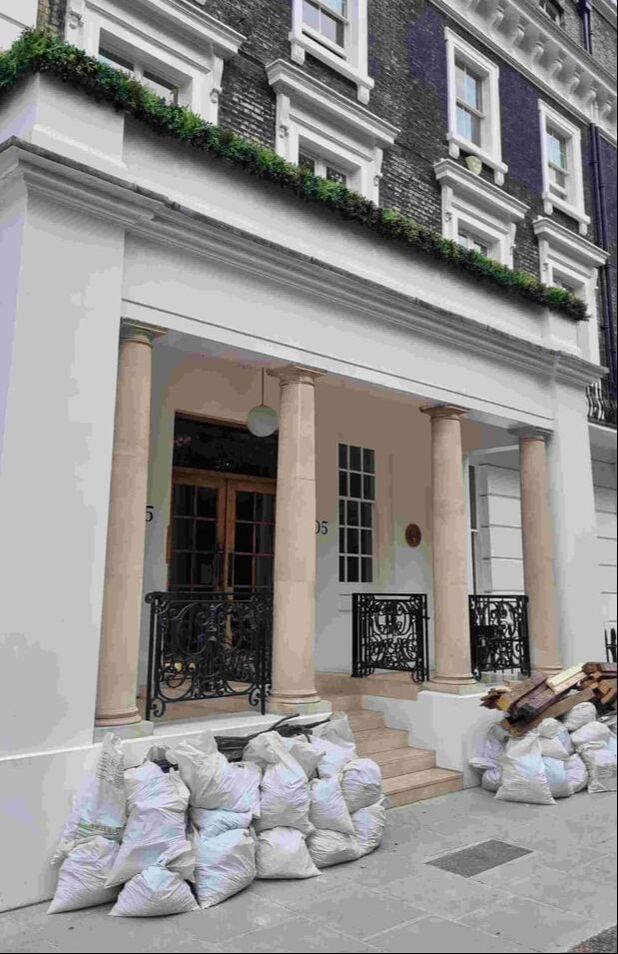
On Monday 13th of July at roughly 3:45pm, in the hallway of 105 Onslow Square in Kensington, SW7, 30-year-old German national Gunther Podola shot Detective Sergeant Raymond Purdy dead. Traced to a nearby hotel at 95 Queen’s Gate, CID detectives and colleagues of the dead officer charged into Gunther’s room… thirty minutes later, he was escorted out, suffering bruises, weakness and amnesia. With one officer dead and the culprit with no memory of what he was being charged with, the whole crux of the trial would be ‘who is telling the truth’, the vengeful officers or the killer with no memory.
CLICK HERE to download the Murder Mile podcast via iTunes and to receive the latest episodes, click "subscribe". You can listen to it by clicking PLAY on the embedded media player below.
THE LOCATION
As many photos of the case are copyright protected by greedy news organisations, to view them, take a peek at my entirely legal social media accounts - Facebook, Twitter or Instagram.
The location is marked with a darker red exclamation mark (!) near the words 'West Brompton', right in the midst of all the icons. To use the map, click it. If you want to see the other maps, click here.
SOURCES: This case was researched using some of the sources below.
MUSIC:
UNEDITED TRANSCRIPT OF THE EPISODE Welcome to… erm… uh. (as before). As 30-year-old Gunther Podola sat in the dock of the Old Bailey, the ghost of a cut still lingering above his left eye, he was not the only man on trial in the murder of Detective Sergeant Raymond Purdy. As so was the testimony of his partner DS John Sandford and the recollections of the eight CID officers who stormed Room 15, and – it is said – caused the culprit’s amnesia whether by accident or brutality. Justice Davies forewarned the jury “you will have to ask yourselves, do you believe Detective Sergeant John Sandford’s evidence and regard him as honest, accurate and reliable?”, as with no independent witnesses to either the culprit’s ‘assault’ or the officer’s murder, testimony was based on an amnesiac with a death sentence hanging over his head and eight celebrated CID officers keen to protect their careers, their colleagues, their reputations and the memory of an officer shot down in the line of duty. But was Gunther’s amnesia an excuse, an accident, or police brutality? (loop/fade/white noise). Thursday 16th July 1959, on the third floor of the Claremont House Hotel at 95 Queen’s Gate, all eight CID officers would clarify “at 3:45pm, we took up position facing the door of Room 15”; a small room barely big enough for one man, comprising a bed, a chair, a wardrobe, and no exits except this door. Inside, as he washed, unaware that he was cornered, Gunther was believed to be armed and deadly. With the hotel’s residents moved somewhere safe, this incident can only be based on the testimony of those eight CID officers standing outside of Room 15; Superintendent Hislop, Chief Inspector Acott, Inspector Vibart, DS’s Chambers & Davis, DC’s Morrisey & Vaughn, PC Collet and his police dog ‘Flame’. …but when you examine the evidence, some of the details don’t make sense. As expected, their statements describe a by-the-book operation by unflustered professionals in the midst of extraordinary circumstances; being tasked to apprehend a suspect, to preserve evidence, and to protect the lives of the public, themselves and the culprit who was yet to be proven guilty. There was no confusion of orders, no impatience to get it done, and - interestingly - no frustration or anger. And yet, this wasn’t an ordinary blackmailer, this was the killer of their friend who just 48 hours earlier had been gunned down in cold blood; some saw him die, some were at his autopsy, and some would comfort his weeping widow and crying kids, in a callous murder which had caused so much outrage that a fund was set-up and many people sited this case as a reason not to abolish the death penalty. They were professionals, but they were also human, whose judgement can be clouded by anger when standing before the room of the man who murdered their pal whose body lay on a cold mortuary slab. In court, they would testify “we were issued with revolvers and truncheons”, which made sense as the unseen occupant of Room 15 was an armed suspect fleeing a policeman’s brutal murder, and yet they would all clarify “but neither were used or drawn”, which seems odd given the threat to their safety. As their training decrees, it was said that DI Vibart announced their presence by hollering “Police, open this door”, which they had to being eight officers in plain dark suits. And yet, in their statements, none of the residents three floors below would report hearing the officer holler “Police, open up”, or even his name “Gunther Podola!” or any of his aliases to make him aware that it was him they were after. Was this why Gunther didn’t reply, was he afraid, or did he not know it was the Police? But that still leaves an unanswered question; with all of the officers stating, “the door was shut”, why did they choose to open it by force, when they could have unlocked it with the hotel’s master key? The door was strong, so having given it a good run-up, when DI Vibart barged it with all his weight, the lock didn’t break and the jam didn’t splinter, it held firm and didn’t budge - everyone confirmed that. But when DS Chambers was requested to “break it down”, with the officers all confirming that they heard “a voice inside” and the “faint metal click of the door lock”, why did he barge the door? DS Chambers described it as “a terrific crash” as the door smashed open (crash, screams, shouting)… …again, the wood didn’t splinter and the lock didn’t snap, as Gunther had already opened it. The Police’s lawyers would claim that his amnesia – if it was real – occurred when he hit his head on the door as the officers stormed in, as confirmed by “his left eye swelling and the cut above it was bleeding”. But with Gunther seen not being bent forward as the Police barged in, Dr Larkin confirmed “that slight concussion could not account for his amnesia”, and the door was unlikely to be the cause. DS Chambers who forced the door would state “Podola staggered backwards, he fell over a chair and finished up lying face up the floor with his head in the fireplace”, as the other officers followed him in. It was a tiny room for eight officers, a police dog and a suspect, and yet, the crime-scene photos show no signs of a disturbance, nothing broken, and even a small wastepaper bin beside the fireplace where there the struggle took place being upright, as are the curtains, the wardrobe, the chair, and the bed. DS Chambers stated “I fell on him with my full force, I held his arms down forcibly to stop him using a weapon” - only later finding his gun, not in the room but hidden in the attic, so Gunther was unarmed. Dressed only in a vest and a pair of trousers, with the full 17 stone bulk of DS Chambers on top of this 12 stone weakling, “with Podola on his back struggling violently and continuing to resist for about 3 to 4 minutes”, two more officers fell on him “to assist in restraining the prisoner”. Held with his hands behind his back, his feet held together, and several burly coppers – weighing “at least thirty-stone” - forcing down upon him, Dr Ashby told the court “I do not know whether he lost consciousness from a head injury, a hysterical stupor or such a weight upon his chest”, but all agreed “Podola went limp”. DS Chambers said “I felt him go limp under me, he stopped struggling. I drew DCI Acott’s attention to this and got off him, saying ‘I think he’s been knocked out. He’s had a bang over his eye’”. In total, “he was unconscious for not more than a few minutes”, although – having suffered a head injury, shock and suffocation with possibly oxygen starvation - no-one called for an ambulance, no-one checked his pulse or breathing, and he would be denied professional medical attention for at least the next hour. Only, no-one would know anything of this, except the officers… and Gunther who now had amnesia. Some may say that what happened next shows the Police’s professionalism, as just 48 hours after their colleague’s killing they cared for his killer’s culprit, whereas others may simply call it a whitewash. DCI Acott ordered the bed stripped and searched for weapons, which was why blood was found on the mattress. “We put Podola on the bed, a blanket around his shoulder and a pillow behind his back”. Of course, these sheets could be used to muffle sounds and aid suffocation, but that’s just conjecture. “DI Vibart, DC Morrissey and I (DS Chambers) gave him first aid. We bathed the cut over his eye… took him to the washbasin and gave him a good sluice round his head and neck”. He couldn’t do it himself as he was handcuffed with his hands behind his back. But was he being washed or waterboarded, as being a lone suspect in a room full of officers and no other eyewitnesses, who would know different? It was then that Gunther began to suffer a slew of unusual intermittent symptoms. “Shortly afterwards, Podola began to shake violently” like he was having a seizure, only again no-one called for a doctor. Instead, blaming it on shock or his head injury, they kept him warm until it ceased. When his convulsions settled, having said that he was thirsty, with his handcuffs briefly removed, “he greedily gulped down several glasses of cold water”, and although some officers remarked that “I felt he might be shamming”, “this was a ploy”, that could explain why his face and head were soaking wet? At 4:15pm, a full 30 minutes after Room 15 was forcibly entered, although he had trouble standing up, Gunther was escorted from the Claremont House Hotel and into a police car, aided by two officers. His movements were slow and unsteady, at no time did he speak or make a sound or statement, and keen to “protect his identity” or maybe to disguise his wounds “I had his head covered with a coat”. With the killer of Detective Sergeant Purdy caught, this photo was front page news… …and yet, he hadn’t been cautioned, charged or arrested. Recollection and written record are very different things, as would be proved by the damning testimony of Roland Gray that, in post-war Berlin, Gunther Podola had blackmailed a grieving widow. It was the evidence the prosecution needed, but it was littered with problems, as with every statement destroyed, they couldn’t confirm if his confession had been acquired under duress, coercion or assault. The storming of Room 15 had some similarities, as although the officers were issued with notebooks for the purpose of recording the details to ensure a thorough record, “they had failed to take accurate notes of the events”, and even though eyewitnesses gave their statements that day, many officers did not submit theirs for at least a week, by which time they were suspiciously similar in style and tone. Which takes us back to the events prior to the murder of Detective Sergeant Raymond Purdy. On Monday 13th July 1959 at 3:40pm, DS’s Sandford & Purdy approached a phone-booth in South Kensington station to apprehend a blackmailer known as Mr Fisher, an alias of Gunther Podola. But with Purdy dead and Podola an amnesiac, all we have is the testimony of DS Sandford, who the judge would ask the jury, “do you believe his evidence and regard him as honest, accurate and reliable?”. If we re-examine those moments through Gunther’s eyes, they appear very different, As how did he know they were police? Being cornered, it is said that DS Purdy declared: “we are Police Officers, who are you, what are you up to?”. But what if they didn’t, or what if he didn’t believe them? Gunther was German, a much-maligned nationality in post-war Britian, who as a fervent Nazi had fled Canada owing to his criminality, had possibly been brutalised by British Intelligence officers in Berlin, and a blackmailer who was operating in another criminal gang’s turf. How did he know? As being dressed in dark suits so they could blend in, all he had was the word of these plain-clothed officers. Again, DS Sandford’s notebook was incomplete, and his statement taken a week later, having adopted CID’s lazy habit in which they would finesse and fudge any details over a cuppa with their colleagues. It is stated that DS Purdy said: “we are taking you to Chelsea Police Station on suspicion of demanding money with menaces from Mrs Schiffman”, at which he was cautioned and made no reply. But why? At that point, he wasn’t arrested or charged, he wasn’t handcuffed or searched, so did this spook him? And as he was escorted by two men in dark suits to their car, spotting that it wasn’t a marked police car but a black Wolseley saloon, did this fill him with dread, is this why he ran, and being cornered in the hallway of 105 Onslow Square, is this why he made the fateful decision to shoot his way out? It doesn’t excuse his actions, but it could explain them. 1959 was a bad year for the Police, especially in Britain, and unequivocally in London. So bad were the beatings of “blacks, old lags and the poor by officers in private rooms with fists, truncheons, straps and boots”, that in May 1959, the National Council for Civil Liberties asked for a public inquiry. As just three examples of Police brutality by London officers in 1959: A Cypriot in Soho testified that “two officers in the presence of an inspector had beaten him black and blue with a stick” – the officers were not charged. In August, at Chelsea police station, a ‘black stoker’ was kicked and strangled in the cells – no charges were brought. And an RAF officer was “beaten for two hours with a ruler”, only for the officers to state “he got violent and slipped when we chased him”. The Police in the 1950s had become too powerful and too corrupt. Sir Robert Mark, the Met’ Police Commissioner would openly state “the CID were the most routinely corrupt organisation in London”, with many “being bent for the job” by taking bribes, dealing drugs, turning a blind-eye for profit, fitting up suspects and closing ranks when their crimes were queried. By the late 1970s, Operation Countryman investigated hundreds of City of London police officers who had facilitated a series of armed robberies, with one cop stating, “all the blokes on the robbery squad had a drink in it, going right to the top”. Only every officer was acquitted as no-one would speak. So common was this corruption, that Sir Paul Condon, Head of the Met in the 1990s coined the phrase “noble cause corruption” – as with cops too keen to nail the accused without enough proof – it was said “at every station there would be guys who excelled as scriptwriters… and the officers would leave their notebooks blank until a ‘scriptwriter’ provided everyone with “a carbon copy of the statement”. Which is not to say that Gunther was framed for murder, he wasn’t… …only the judge would ask whether the jury should take the Police’s statements as fact. At 4:30pm, at the rear of Chelsea police station, Gunther ascended the steps to the charge room. Chief Inspector Haxby recalled “he was taken to the DI’s office for two minutes until the charge room was cleared… his left eye was swelling, he had a small cut over his eye and he was in a shocked condition”. Although lightly dressed in vest and trousers with no shoes or socks, “as he kept fainting, all doors were opened and the fan switched on”, and being deemed “unfit to be charged, arrested or see a solicitor, the Duty Officer phoned the police surgeon, while two officers remained outside of his cell”. At 5:10pm, one hour and forty minutes after his head injury and possible suffocation, Gunther was assessed by Dr Shanahan as “dazed, frightened and exhausted… suffering from a withdrawal reaction” (where shock causes the patient mentally shutdown) “but physically he was normal… he had a few minor scratches to his back and face… he was fit to be detained… but he was not fit to be charged”. Moved to Cell no1, Gunther was “prescribed bed rest”, and not hospitalisation… …but as he mentally shut down and his eye swelled further, physically he seemed to deteriorate. PC’s Hannagan & Hall stated: “he slept a lot”, which may seem odd that a wanted a cop-killer held in an isolated cell in a police station known for its corruption and brutality would take a snooze, but was that symptomatic of his lack of empathy, a resignation to his fate, or was he slipping into a coma? Chief Inspector Haxby testified “at no time did he speak or suffer any interrogation whatsoever”. In fact, according to his guards, “the only time he talked was when he requested to go to the toilet”. Only, being unsteady on his feet, “he was assisted by PC Hind and myself to the toilet in the cell, where his trousers and pants were removed, and he was placed on the seat”, the PC’s would state. But oddly, with the Inspector Burdett “suggesting he had wet himself, the prisoner was stripped of his clothes”. Of course, with the charge room cleared, the only witnesses to what happened were the officers… …until at 12:30am, as seeing “a decline in his health”, Gunther was removed to hospital by stretcher. Denied medical attention for two hours, hospitalisation for ten, and confined to a cell for six hours without a solicitor, his treatment caused such an outcry that it was debated in the House of Commons by Baronet Reginald Paget, a highly respected barrister and Labour MP, to Home Secretary Rab Butler. (House of Commons sounds): Mr Paget: “I ask the Home Secretary what happened to Guenter Podola during the six hours at Chelsea Police Station which necessitated his removal to hospital on a stretcher… my concern is not whether he was charged, but on those officers who beat him unconscious”. To which Mr Butler retorted “Mr Paget has no right to say that Podola was beaten unconscious, and he had no proof that is so…”, as according to the police he was simply “resting” and was hospitalised owing to “mental exhaustion”. Mr Paget would fight on “with respect, the people should be safe in British police stations, and that the idea that either vengeance or beatings occur in British police stations is utterly unacceptable”. When questioned, Detective Superintendent Hislop denied that anything was being “hushed up”. At 12:50am, on Friday 17th July 1959, Gunther was admitted to St Stephen’s Hospital. According to Dr Latham, whose notes (along with his colleagues were exceptional and as independent witnesses would provide the backbone of the medical testimony) would state of his physical wounds “he had a ½ inch laceration over left eyebrow, a ½ inch bruise over left forehead, a slight swelling over left jaw, minimal bruising to his upper arm and blood in nostrils”, but no evidence of skull fractures. Moved to Ward B5, Dr Ashton would state “It is difficult to assess this patient because he is completely uncommunicative and because of his head injury it has obscured his personality”. That day, Dr Phillip Harvey, consulting physician at St Stephen’s sent a letter to the police reporting “Mr Podola is suffering from the after-effects of concussion and a cerebral contusion…”, a bleeding on the surface of the brain, “I anticipate the need for a further two to three days here… as his recovery will be slow”. And it was. Guarded by three shifts of two officers twenty-four hours-a-day over the next four days whilst chained to the bed, Gunther needed help from the nurses and the officers to do even the simplest of things; to walk, to stand and to sit; he had difficulty raising a spoon of food, smoking a cigarette, and again, this 30-year-old man needed two adults to remove his pants and to sit him on the toilet, like a baby. Repeating the same basic phrase to the doctor, “what happened to me?”, Gunther had no memory of his injuries, the assault or the murder, he would have no memory of his four days in hospital, or even of the life he had lived up until that point, except for a few fragments which flashed before his mind. When asked, he didn’t even know his name. Dr Harvey confirmed “it was clear that severe retrograde amnesia was present”, where you can't recall memories formed before the incident that caused the amnesia, but that “he is fit to be interviewed and to understand the nature of the charge, but he is not able at this moment to act in a testamentary capacity regarding events leading up to his admission because of the presence of retrograde amnesia”. His bruises and cuts would heal, but so painfully slow was his mental recovery, that even eight weeks later when Gunther stood trial at the Old Bailey for the murder of DS Purdy, although nine days of the eleven-day trial was solely to decide if he was fit to stand or give evidence, he could recall nothing. On Monday 20th of July, four days after the incident, Mr Williams, Gunther’s court-appointed solicitor was permitted to speak to his client, but so damaged was his memory that when he was handed a document to sign, he had no idea what it meant, and his solicitor had to spell his name for him. At 2:50pm, back at Chelsea Police Station and this time with his solicitor present, Gunther was formally charged by Superintendent Hislop for the murder of DS Purdy. He was cautioned but made no reply, before being committed to criminal trial following a hearing at West London Magistrates Court. Tried at the Old Bailey for a crime he couldn’t recall, the police would deny any accusations of brutality, statement-doctoring or a cover-up. Their defence was that – laughable as it may seem – that Gunther’s state of amnesia was merely a convenient ploy to escape a death sentence, at the hangman’s noose. Gunther was unable to testify against these eight celebrated CID officers keen to protect their careers, their colleagues, their reputations and the memory of a police officer killed in the line of duty. It was a case which Justice Edmund Davies would state was reliant on whether the jury believed them “and could or should regard DS Sandford (and his colleagues) as honest, accurate and reliable”? Recollection and written record are two very different things, but if the Police’s statements were an accurate report of the events, as they would vehemently claim, that left the jury with an odd quandary. If the Police were telling the truth… …then Gunther Podola was lying. Part Three of Three of Shattered Memory continues next week. The Murder Mile UK True Crime Podcast has been researched using the original declassified police investigation files, court records, press reports and as many authentic sources as possible, which are freely available in the public domain, including eye-witness testimony, confessions, autopsy reports, first-hand accounts and independent investigation, where possible. But these documents are only as accurate as those recounting them and recording them, and are always incomplete or full of opinion rather than fact, therefore mistakes and misrepresentations can be made. As stated at the beginning of each episode (and as is clear by the way it is presented) Murder Mile UK True Crime Podcast is a 'dramatisation' of the events and not a documentary, therefore a certain amount of dramatic licence, selective characterisation and story-telling (within logical reason and based on extensive research) has been taken to create a fuller picture. It is not a full and complete representation of the case, the people or the investigation, and therefore should not be taken as such. It is also often (for the sake of clarity, speed and the drama) presented from a single person's perspective, usually (but not exclusively) the victim's, and therefore it will contain a certain level of bias and opinion to get across this single perspective, which may not be the overall opinion of those involved or associated. Murder Mile is just one possible retelling of each case. Murder Mile does not set out to cause any harm or distress to those involved, and those who listen to the podcast or read the transcripts provided should be aware that by accessing anything created by Murder Mile (or any source related to any each) that they may discover some details about a person, an incident or the police investigation itself, that they were unaware of.
Nominated BEST TRUE-CRIME PODCAST at The British Podcast Awards, 4th Best True Crime Podcast by The Week, The Telegraph's Top Five True-Crime Podcasts, The Guardian and TalkRadio's Podcast of the Week, Podcast Magazine's Hot 50 and iTunes Top 25.
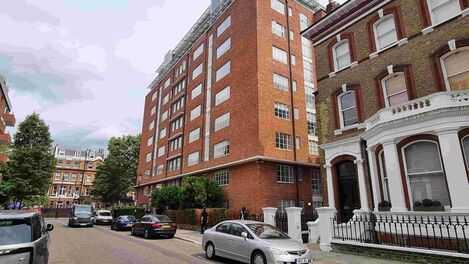
Roland House, demolished, scene of the burglary/blackmail of Verne O'Hara which led to the shooting of DS Purdy
Welcome to the Murder Mile UK True-Crime Podcast and audio guided walk of London's most infamous and often forgotten murder cases, all set within and beyond the West End.
EPISODE TWO HUNDRED AND EIGHTEEN:
This is Part One of Three of Shattered Memory. On Monday 13th of July at roughly 3:45pm, in the hallway of 105 Onslow Square in Kensington, SW7, 30-year-old German national Gunther Podola shot Detective Sergeant Raymond Purdy dead. Traced to a nearby hotel at 95 Queen’s Gate, CID detectives and colleagues of the dead officer charged into Gunther’s room… thirty minutes later, he was escorted out, suffering bruises, weakness and amnesia. With one officer dead and the culprit with no memory of what he was being charged with, the whole crux of the trial would be ‘who is telling the truth’, the vengeful officers or the killer with no memory.
CLICK HERE to download the Murder Mile podcast via iTunes and to receive the latest episodes, click "subscribe". You can listen to it by clicking PLAY on the embedded media player below.
THE LOCATION
As many photos of the case are copyright protected by greedy news organisations, to view them, take a peek at my entirely legal social media accounts - Facebook, Twitter or Instagram.
The location is marked with a red exclamation mark (!) below 'West Brompton'. To use the map, click it. If you want to see the other murder maps, click here.
SOURCES: This case was researched using some of the sources below. Defendant: PODOLA, Gunter Fritz Erwin. Charge: Capital murder
MUSIC:
UNEDITED TRANSCRIPT OF THE EPISODE: Welcome to… erm… uh. (Same sound rewound and replayed on a loop, but more distorted). As this pale and sullen-eyed German sat in court one of the Old Bailey, even as a death sentence was dangled over his low-hung head; he couldn’t give a word of testimony as an alibi, he couldn’t provide an ounce of evidence in his defence, nor could he rip-apart any witnesses as to their own recollection. Diagnosed with amnesia, Gunther Podola had no memory of the policeman he had murdered. Tried before Justice Edmund Davies, of the eleven days spent giving evidence, nine were to decide if Gunther was fit to stand trial or give testimony. Beginning on 8th of September 1959, “Gunther Podola you are charged that you did murder Detective Sergeant Raymond William Purdy. How do you plead?”. The defence being that – owing to the brutality of those same officers whose colleague Gunther had shot dead – he had no memory of the murder, his assault, his arrest, or his hospitalisation. But also, the bulk of the life he had lived – his girlfriend, his child or his upbringing – everything was a blank. But with the killing of an officer being one of the few crimes still punishable by death in an era where executions were being abolished, with the prosecution seeing his amnesia as nothing more than a charade, as how could a jury send a guilty man to his death, if he had no memory of the murder? With one officer dead and the reputation of the police on the line, a man’s life hung in the balance... …but was his amnesia an excuse, an accident, or caused by police brutality? (loop/fade/white noise). Gunther Fritz Edwin Podola was born on 8th February 1929 in Berlin, Germany. Of course, he wouldn’t know that, as all he could recall were fragments of a life he didn’t know if they were real or imagined. As the only child to Elisabeth a housewife, and Werner a barber, Gunther was raised in the working-class sprawl of Alexanderplatz in Berlin’s inner city. Described as a solitary boy with a short fuse, few friends and a quick temper, he lacked the concentration to study and the patience to earn a living. Being restless, to occupy his time, he engaged in petty thievery, and perused gun catalogues, crime magazines and the mystery novels of Edgar Wallace, believing that one day, he would be a gangster. Only being too thin, too weak and being “an odd little thing”, Gunther had no gang to rule but himself. In flashes of lost memories, Gunther would state “I was a dead-end kid”, a ragged youth who lived by his wits amongst the blackened smoking ruins of a broken Berlin, making enough to eat by salvaging scrap metal, black-marketing and – he claimed - wartime smuggling. No-one can verify this, as he was an ‘alleinganger’, one who works alone. But was this a fact or a fantasy concocted by his injured brain? By 1939, with Germany descending into war, like all German boys of Aryan appearance (even though his family were Czech) 10-year-old Gunther was initiated into der JungVolk, being four-years too young to join the Hitler Youth. But having already disavowed God, Gunther worshipped his country’s leader and because of his doctrine, he believed that the Fuhrer was the greatest man alive, telling a friend – “my only regret was that I was too young to fight for the Fatherland and to die for Adolf Hitler”. In 1943, with his conscription still five years away, he said he trained as an aircraft draftsman at the Heinkel factory. That same year, his father was killed serving in the Wehrmacht on the Russian Front. And yet, for many citizens of this shattered city, even amongst such death, they could still find love. Just one year his junior, he had known Ruth Quandt since his childhood and later living in same block in Neue Konigstrasse, this solidly-built blonde Berliner was his first and possibly his only ever girlfriend. Ruth & Gunther made an unusual pair, a little distant and loveless, as with her describing him as “sombre and conflicted”, although he wanted to marry her, he would claim she always forbade it. So, maybe she didn’t love him, maybe she was afraid of him, or maybe she was traumatised by her past? As with the war coming to an end and Hitler having taken his life as the Red Army surrounded this blood-soaked city, across a two-week battle as Russian soldiers occupied Berlin, in the flats that they lived in, all the women were raped including Ruth who was only 14, and all of the men were shot… …only somehow Gunther escaped. The post-war years left great holes in the history of many ordinary people, but for Gunther it also left him with a hatred of authority, a need to flee, and a desperation to fight if cornered. And yet, one witness to his early life would give an incredible account of the man with almost no memory of himself. On 10th September 1959, as Gunther sat in the dock of the Old Bailey, Roland Gray, a former sergeant in the British Intelligence Corps stationed in post-war Berlin would state “I recognised Podola who is charged with the murder of Detective Sergeant Purdy and is putting forward a defence of amnesia”. In a brief statement, he gave a recollection which had uncanny parallels to Gunther’s crimes. “At the end of March 1949, as a result of an anonymous phone call to Intelligence Headquarters at Charlottenburg, West Berlin, I & Sergeant Whitehorn went to a villa” (its name redacted) “where an armed Russian civilian was alleged to be inside the house” - only the man wasn’t Russian, but German. “As we arrived, he escaped through the backdoor” being a cowardly sort of boy who was prone to fleeing at the first sight or sound of authority - “British Army! Stop! Or we’ll shoot!” – but after a very brief chase, he was swiftly apprehended, and having been searched for weapons, none were found. Held in detention for ten days, this weak-looking slip-of-a-boy with dark sullen eyes was interrogated and gave his details as Major Karanov of the NKVD (the Russian Secret Police) stationed at Karlsthorst”, which made no sense as “he was in civilian clothing and looked barely 20 years old”. It seemed like a story made up by a fantasist living the life of one of his criminal heroes in an Edgar Wallace novel. In truth, having read in the paper that the villa’s occupant was trying to find her missing husband, this deluded little boy had spun a web of lies to make her think he could spring him from a Siberian prison for 6000 Marks. But proven to be a liar, panicking as his plan fell to pieces, with a 9mm pistol (never recovered) he had threatened to shoot the woman, her friend, his own accomplice and even himself. Handed over to West German Police, with no evidence of blackmail, he was released without charge. And although he carried no ID, he said his real name was Mr Fisher - a known alias of Gunther Podola. Gunther was a delusional, selfish, money-obsessed wannabe-gangster with no morals… …even amongst those he claimed to love. According to Ruth, on the 28th of October 1951, their son Michael was born. Seeking a better life, far from the austere confines of East Berlin, on the 16th June 1952, Gunther reported to the West German authorities as a refugee. Seeking passage to Canada to work as a farm labourer, his immigration visa was approved, and having set sail on from Hamburg on 4th August, he arrived in Halifax ten days later. Hearing the good news that Gunther had made it to Montreal to find work, Ruth and her baby crossed the heavily guarded border into West Berlin, and as planned, waited for Gunther to send for them. Only it was whilst there - being cold, hungry and scared - that Ruth received a telegram. It said he had made it to safety, and his new life was good, “but I want nothing more to do with you or your child”. Months later, Ruth was able to leave the refugee camp and return to East Berlin, but being a single mother struggling to live in a post-war world, unable to cope, Michael was placed into foster care. Gunther on the other hand was living the life of a man without a care in the world… Initially he worked as a farm labourer in Huntington, only to lose his job “when he attacked a small girl who had squirted him with a water pistol”, and unable to afford the fancy lifestyle he felt he deserved being a shipper of gowns and a welder at Canadair Airlines, he supplemented his income with crime. In March 1957, having served ten days in prison for burglary, that same month, he was sentenced to two years for six counts of car theft, two of burglary and two of deception. Upon his release, Gunther was promptly deported back to Germany, but being unwelcome there, instead he moved to England. On the 21st of May 1959, 30-year-old Gunther Podola arrived at London Airport from Frankfurt. As a German citizen travelling on his own passport and seeking work as a welder, his crimes were unknown to the British authorities, and he was legally intitled to carry in a holster his black 9mm Lugar pistol. During his brief life in West London, he didn’t work, he moved between hotels, he visited many sex-workers, and – like a pretend gangster – he used the aliases of Mike Colato, Paul Camay and H R Fisher. Seven weeks later, being cornered, he would shoot a police officer dead… …and it all began with a little bit of burglary and blackmail. Malvina Joan Schiffman was a 30-year-old fashion model and actress who went by the stage name of Verne O’Hara. In fact, so guarded was she of her privacy that few people knew her real name, she kept her work and social schedule a secret, she had only moved into the top floor flat of this secure block at 84 Roland House one month earlier, and her phone number of Fremantle 0919 was ex-directory. But often safety is only an illusion, as even though her flat was five-stories off the ground, while she was at a rehearsal for the TV show ‘Double Your Money’, someone broke in and took a mink stole, a camera and jewellery worth £2500, as well as the passports for her herself, her husband and her young child, but also – most sensitively of all – a set of private letters supposedly from her “secret lover”. On 7th July, Detective Sergeant John Sandford of Chelsea CID came to the flat, had fingerprints taken, made a report and as required, logged any actions or statements pertinent to the case in his notebook. The next day, at 11:30am, having received an Express Letter addressed Mrs Malvina Joan Schiffman, a private detective known only as ‘Levine’ threatened to expose “any pictures, writings and recordings I have”, possibly to her husband, a New York shipping executive, “or I can sell them to you for $500”. Malvina was shocked and scared, but Chelsea CID were not, as they would inform her “there’s been a string of local robberies in which attempts at blackmail have been made owing to stolen documents”. Only this time, knowing this blackmailer would call back, the Police would set a trap. Sunday 12th July just before 1pm, her phone rang. “Mrs Schiffman? This is Mr Fisher acting on behalf of Mr Levine”. Having been briefed by the officers on what to say – even though her secret love affair “did not exist” – she agreed to pay him the money and she would await her blackmailer’s instructions. Keeping several steps ahead of this thief, the detectives tracked the letter to a post office on nearby Exhibition Road, and knowing that his call had come through the Fremantle telephone exchange, the second he called to ask for his money, an operator at the exchange would be able to trace the call. The call was made on Monday 13th of July at roughly 11:30am. Being on shift, it was random which officers were on duty, as right then it was Detective Sergeant John Sandford and Detective Sergeant Raymond Purdy, a 43-year-old veteran Police officer and a married father of three, with three commendations for bravery in the line of duty, his last just one year prior. (Phone ringing) “Mrs Schiffman? This is Mr Fisher”, “I agree to pay the $500”, “Good. Go to the bank and I’ll call you back at 2:30pm”, which she did in case he was watching. Only when he called back, she signalled her neighbour to call CID “Detective Sergeant Sandford? She’s on the phone to him now”. DS Sandford & Purdy were perched at Chelsea police station. In the pockets of their vague grey suits were a set of handcuffs and a pair of notebooks, as these plain-clothed officers sat in a black four-door Wolseley saloon, waiting. But before the operator could trace the call, he’d hung up. The blackmailer was being cautious, so to catch him in the act, the detectives needed his mark to “keep him talking”. At 3:15pm, he called again, and the operator had him: “he’s in a phone-box on Pelham Street”, but although the plain-clothed officers had raced to the scene, by the time they’d got there, he was gone. The blackmailer was always one-step ahead and within a hairsbreadth of their grasp… …but at 3:40pm, with the same man making a call to Malvina from Knightsbridge 2355, “it’s a phone-box in South Kensington station”, they floored the engine, pulled-up in 90 seconds flat, and ran down to the entrance hall on the lower level to see a bank of five phone booths, but only one was occupied. DS Sandford would state “We got there about 3:50pm, a man was in the phone box”. Described as 25 to 35, 5 foot 10, slim build, cropped hair, wearing a light sports jacket and trousers, a white shirt, grey suede shoes and green sunglasses, although he spoke “in an American accent”, it sounded fake. And as he noisily flipped over the pages of a black notebook suspiciously close to the phone’s mouthpiece, his conversation to an unheard woman was about his money and “the evidence I am going to sell you”. Mr Fisher thought he had won, and that the money was his… …but as the sturdy frame of DS Purdy loomed large leaving this waif-like villain trapped by two burly coppers, before Gunther even knew that he was cornered, DS Purdy grabbed the phone, spoke into it “Mrs Schiffman? This is Sergeant Purdy. Please remember my name” before he hung up, as he knew that this was a crucial moment in this case of blackmail for when it would – undoubtably – go to court. Gunther had nowhere to run, and even as DS Purdy announced: “we are Police Officers, who are you, and what are you up to?”, unsure which lie to tell or alias to use, he said nothing as was his legal right. And with that, having not resisted arrest, DS Purdy stated: “we are taking you to Chelsea police station on suspicion of demanding money with menace”, at which he was cautioned but made no reply. And with insufficient evidence to arrest him, being only a suspect, he was neither searched nor handcuffed. By all accounts, it was a standard apprehension of a suspected blackmailer by two seasoned officers, and seizing the suspect’s black notebook, DS Purdy placed this vital evidence inside his jacket pocket. …or at least it should have been. As the two unarmed plain-clothed detectives left the tube station and walked the short distance to their unmarked police car on nearby Sydney Street - without warning - Gunther suddenly fled. DS Sandford later gave the statement: “we chased after him, but as DS Purdy reached the centre of the road, he fell heavily… I continued to chase the suspect along the north pavement of Onslow Square in a westerly direction… just then, Sergeant Purdy drew level with me in a taxi. I jumped on the running board, and we followed the man, who was seen to run into the hallway of 105 Onslow Square”. Being fitter, Gunther could have kept running, but instead he would make a fatal mistake, as with this five-storey Georgian terrace being split into private flats, the spacious empty hallway offered him few options; dash up the stairs into uncertainty, wait for the lift like a prize prune, exit the door and end-up bundled to the floor by two coppers weighing 16-stone each, or – childishly - hide behind a pillar. Oddly, he chose the pillar, so with a slightly bruised and rather sweaty DS Purdy collaring him – being unwilling to play this boy’s silly games – DS Purdy barked: “sit in that windowsill and behave yourself”, which Gunther did, as DS Sandford began to head out to fetch their police car. In court, DS Sandford stated “I noticed nothing peculiar about him. He was perfectly ordinary, just a sullen type of attitude”. Only both detectives had badly misjudged their suspect, as when cornered, Gunther would panic. DS Sandford would later tell the jury: “I saw the man slide off the windowsill and turn to DS Purdy who was standing very close to him. The man put his hands inside his left side of his jacket, and to Sergeant Purdy I shouted, ‘watch out, he may have a gun’”, but by then, it was too late. “No sooner were the words out of my mouth, I saw the man pull a large black automatic pistol from the inside of his jacket, point it at Sergeant Purdy’s body and fire at point blank range, as Sergeant Purdy fell gasping - ‘ah’”. Shot from just three inches away, the gunpowder scorched the left-side of the officer’s grey suit as a single 9mm bullet punctured his heart, ripping opening his aorta and filling his body cavity with blood. DS Sandford gave chase, but having lost the suspect, he returned to help his bleeding partner. But owing to his extensive injuries, Detective Sergeant Raymond Purdy was pronounced dead at 4:08pm. Of the tenants staying at 105 Onslow Square that day, only two heard the shot and yet no-one saw the shooting, so the only witnesses to the killing were DS Sandford who admitted in court “at times, had my back to the suspect”, DS Purdy who had died at the scene, and the suspect - Gunther Podola… …who would have absolutely no memory of the murder. Buy why? The hunt for the killer of DS Purdy was not a complicated one, as although they didn’t know his name, they had a description; although they didn’t have his gun, they had spent bullets and casings; although they hadn’t any eyewitnesses to place him at the crime scene, they had his fingerprints in several phone boxes and on the windowsill at 105 Onslow Square; and a later search would unearth the gun, his clothes, several identical rounds of ammunition, a mink stole and Malvina’s three stolen passports. And yet, although he was dead, it was DS Purdy who would lead the detectives to Gunther Podola. Held at Fulham Mortuary, it was whilst observing his colleagues’ autopsy that DS Holford found the black notebook, taken from the suspect, which DS Purdy had placed in his jacket pocket as evidence. Only this wasn’t any ordinary notebook, as inside – as if the author was dictating his life into a mystery novel – he had listed every building he had cased, every person he had blackmailed, every call he had made, every flight he had taken (from Canada to Germany to England), as well as every alias he used, and every hotel he had stayed at since his arrival in West London… including his current hideout. Under the alias of a Swiss/Canadian photographer called Paul Camay, Gunther had laid-low in a small room at the Claremont House Hotel at 95 Queen’s Gate, barely a five-minute walk from the shooting. On Thursday 16th July at 3:30pm - having pre-warned the hotel’s managers, ushered any civilians to safety and clarified that the suspect Gunther Podola was currently in his room - eight officers from Chelsea CID ascended the stairs to the third floor, and silently held their position outside of Room 15. All armed with revolvers, they were Detective Superintendent Hislop, Chief Inspector Acott, Inspector Vibart, DS’s Chambers & Davis, DC’s Morrisey & Vaughn, with PC Collet and his police dog ‘Flame’. As inside, being three floors up and busy washing, unaware of the officers, again Gunther was cornered. The officers stated “at 3:45pm, we took up position facing the door of Room 15”. In a loud voice, DI Vibart hollered “Police, open this door” as an officer banged sharply. Only the occupant did not reply. Wisely standing to one side, as inside was the same armed assailant who had killed one of their own in cold-blood just 48 hours earlier, DI Vibart repeated “Police. Open the door”. Only no-one replied. Making the decision to force it and storm the room, DI Vibart walked to the top of the stairs to give himself a run-up, and with all of his bulk, he charged hard against the door, only it wouldn’t give way. Unable to enter this inaccessible room with possibly a gun-toting maniac hidden within, as the officers stood ready to strike and the dog barked ferociously, hearing what they would later state was “a voice inside” and a “faint metal click”, instead, the heftier 17-stone bulk of DS Chambers took a run-up… …and the door crashed open. (crash, screams, shouting, descend to loop/fade/white noise, as at start). Except for those officers, there were no witnesses to what happened inside of Room 15. Gunther could remember little of what you have just heard, of his past, the blackmail, the shooting and that moment. Tried at the Old Bailey, the jurors would spend nine days not deciding whether he had killed DS Purdy, he had, but whether his amnesia was a convenient excuse to escape a death sentence, an accident which occurred in the heat of the moment, or police brutality for the revenge of their fallen comrade? Part Two of Three of Shattered Memory continues next week. The Murder Mile UK True Crime Podcast has been researched using the original declassified police investigation files, court records, press reports and as many authentic sources as possible, which are freely available in the public domain, including eye-witness testimony, confessions, autopsy reports, first-hand accounts and independent investigation, where possible. But these documents are only as accurate as those recounting them and recording them, and are always incomplete or full of opinion rather than fact, therefore mistakes and misrepresentations can be made. As stated at the beginning of each episode (and as is clear by the way it is presented) Murder Mile UK True Crime Podcast is a 'dramatisation' of the events and not a documentary, therefore a certain amount of dramatic licence, selective characterisation and story-telling (within logical reason and based on extensive research) has been taken to create a fuller picture. It is not a full and complete representation of the case, the people or the investigation, and therefore should not be taken as such. It is also often (for the sake of clarity, speed and the drama) presented from a single person's perspective, usually (but not exclusively) the victim's, and therefore it will contain a certain level of bias and opinion to get across this single perspective, which may not be the overall opinion of those involved or associated. Murder Mile is just one possible retelling of each case. Murder Mile does not set out to cause any harm or distress to those involved, and those who listen to the podcast or read the transcripts provided should be aware that by accessing anything created by Murder Mile (or any source related to any each) that they may discover some details about a person, an incident or the police investigation itself, that they were unaware of.
Nominated BEST TRUE-CRIME PODCAST at The British Podcast Awards, 4th Best True Crime Podcast by The Week, The Telegraph's Top Five True-Crime Podcasts, The Guardian and TalkRadio's Podcast of the Week, Podcast Magazine's Hot 50 and iTunes Top 25.
EPISODE TWO HUNDRED AND SEVENTEEN:
On Thursday 29th October 1883, William Crees had married Eliza Horsman having known each other for just a few weeks. Initially it seemed like they were very much in love, but with William being a man with a few secrets, Eliza should have been worried. But everything would come to a head, just two weeks after their wedding, as William was also harbouring a deadly disease, which would not only take the host, but also the lives of those he (claimed to) love.
CLICK HERE to download the Murder Mile podcast via iTunes and to receive the latest episodes, click "subscribe". You can listen to it by clicking PLAY on the embedded media player below.
THE LOCATION
As many photos of the case are copyright protected by greedy news organisations, to view them, take a peek at my entirely legal social media accounts - Facebook, Twitter or Instagram.
The location is marked with a rum and raisin exclamation mark (!) near the words 'Soho', right in the midst of all the icons. To use the map, click it. If you want to see the other maps, click here.
SOURCES: This case was researched using some of the sources below.
MUSIC:
UNEDITED TRANSCRIPT OF THE EPISODE: Welcome to Murder Mile. Today I’m standing on Greek Street in Soho, W1; a few doors south of the disgruntled dishwasher who shot dead his fiery chef, a few doors north-east of the shooting at the Golden Goose arcade, and just a few doors north of brutal street attack by two good Samaritans - coming soon to Murder Mile. At 55 Greek Street currently stands a four-storey terrace built in the 1980s as the original building was destroyed during the blitz. With offices above and a café on the ground-floor, a smattering of outside seats are often occupied by fed-up couples sitting in silence; scowling like bulldogs with piles, as they dream of this ‘half-wit they once loved’ choking on a shortbread or being scolded by a cappuccino. Which is why ‘all-you-can-eat’ buffets are so popular among couples, as unwilling to do time for the other’s murder, ladles of fatty food piled high means less reason to talk but also a much crueller death. Back in 1883, on the third-floor in a front-room at 55 Greek Street lived saddle-maker William Crees and his new bride of just two weeks, Eliza. Technically, this was their honeymoon, a twee period where most couples still kiss, cuddle and say, “I love you”. But with a very common illness plaguing his insides, something nasty which had festered and lain dormant for possibly decades would soon arise. My name is Michael, I am your tour guide, and this is Murder Mile. Episode 217: Eliza Crees and the Honeymoon from Hell. It was said that syphilis spread across Europe sometime in the 14th century. Where it came from is unknown, but with every country blaming their neighbour – as we call it the French disease, the French call it the Italian disease, the Italians call it the Spanish disease, and so on and so forth – although we all give it the euphemism of ‘cupid’s sickness’, syphilis is the most patient of cold-blooded killers. Many people may not even realise that Syphilis still exists. It’s one of those oldy-worldy diseases which you may imagine only a dapper-dressed dandy with a hanky having, alongside consumption, quinsy or gout. Since the discovery of penicillin in 1928, diagnosed cases of syphilis in the UK remain at 7000 per year. Most of which are treated at primary and secondary stage, rarely reaching the tertiary stage. As a bacterial infection, syphilis can be contracted through sex, birth or by touching an infected sore. Sex is the most common vector with the disease usually passed through intercourse (anal and vaginal), kissing, oral sex and anything where there a blood/fluid transfer. Sadly, with these infected sores often being small and painless, they are not easy to spot, and often the host won’t know they have syphilis. But by the 19th century, records state that one-in-five Londoners had syphilis, and - as with STDs like VD, gonorrhea, or chlamydia on the rise - syphilis had become so common, it was accepted as normal. Unlike consumption with its symptom of a hacking cough, syphilis was very much a silent killer, as it arrived like a thief in the night, but like a burglar who secretly covets your home, it hides inside. There are four stages of syphilis: Primary; which lasts six-to-eight weeks, beginning with painless sores at the point where the bacteria entered the body, which lasts up-to six weeks, before this chancre erodes into a painless grey ulcer. Many don’t know they have syphilis as with the sores not bleeding nor irritable, who thinks to check. In the Victorian era, these sores (also called chancres) were often burned off with acid or treated with mercury. Considered more of an art than a science, doctors freely administered highly toxic mercury at levels of their own discretion, with some quacks administering it as a pill, an ointment, a steam bath or injected directly into the urethra, this treatment was often more deadly than the disease itself. Even with treatment to cauterise the sores, the second stage of syphilis usually occurs ten weeks after the initial infection, appearing as painless rashes where the grey healed sore now sits, as well as on the palms of the hands or the soles of the feet, but as they don’t itch, again, no-one thinks to check. And as the bacteria begins to infect the rest of the body, other more obvious symptoms develop, like fever, swollen glands, headaches, fatigue, weight loss and hair loss, as well as muscle and bone ache. This escalation of symptoms is something we see with many diseases, as when the bacteria ravages the body and even our own defences are unable to cope, the host often only gets sicker and weaker. But syphilis is sneaky and it’s subtle, as acting like a seasonal disease like the flu, it arrives, it infects, it announces its presence in a big way, and – regardless of whether the host gets treatment or not – the symptoms clear-up, as if the infection has gone. Or at least, that’s what it wants you to think. But without penicillin, the infection may move onto the latent and possibly tertiary stages of syphilis. Latency is the third stage of syphilis, during which as the disease lays dormant inside the host’s body with no symptoms; no cough, no fever and no chancres. The disease is entirely silent, to the point where the patient may have forgotten that they had syphilis or mistakenly believe they’ve been cured. But the latency can last a few months, usually a few years, but in some cases, it can fester for decades. Without treatment, 15% up to 40% of those infected developed the final stage - tertiary syphilis. Like the grim reaper itself, it never warns of its arrival until it’s too late. As before, ulcers appear, only as these painful chancres begin to burrow deeper into the soft skin and the brittle bone, eating away at the fleshy extremities like the nose and riddling the body with ugly lesions and unsightly growths, it leaves its breathing host with the hollow bony skull of someone who looks dead, but is still alive. But it’s not just the body that it attacks, but also the nervous system and the brain. Often developing into neurosyphilis, patients suffer from confusion, memory-loss, paranoia and changes in personality, as well as blindness, paralysis and dementia, as the host’s body, brain and soul is eaten from within… …driving them to insanity, suicide and – and in some cases - even murder. It was uncertain when William Crees contracted syphilis, or when the symptoms took hold. William Sellick Crees was born in 1845 in Blandford, Dorset on the south-west coast of England. As the son of a Navy Excise Officer, they moved to be nearer the shipyards, and as a solid hard-working family, every one of his siblings earned an honest wage, as a clockmaker, a seamstress or as a glovemaker. By 1861, with his mother Jane having passed-away, even as the youngest of seven, 16-year-old William made his way as a saddler’s apprentice, learning the leather crafting skills of making horses saddles, bits and bridles, as this grieving family moved to Great Torrington, a market town in north-west Devon. Over the next ten years, it’s uncertain what he did, as although some reports incorrectly state that he joined the Navy – possibly as a lazy way to suggest how he contracted syphilis – he remained in Devon. In early 1872, aged almost 30, William married Lucy Werry, a local girl from Great Torrington. As was the tradition, they set about building a family and a happy home in their birthplace, with four children following who – as a symbol of his pride or possibly arrogance - took William’s middle name as their own; Sidney Sellick in 1873, William Sellick in 1874, Thomas Sellick in 1876 and Lucy Sellick in 1879. This should have been the epitome of a good life; a loving wife and four healthy children helped by his wife’s widowed mother all living in a little cottage at 11 Castle Street in Great Torrington, with enough money brought in by William whose skill as a saddler meant they were never without. Life was good. But for inexplicable and unexplained reasons, just as his youngest was being born, William left. He left his job, his left his home, his left his wife and four children, and having fled the county, he would never return. Like the selfish shit that he was, he wouldn’t provide them with a single penny to aid their upbringing, he kept moving so they couldn’t track his whereabouts, and – as he had refused to divorce Lucy – this single-mother was left without any hope of finding a legitimate father for her children. And yet, as a strong independent woman who earned a living as a glovemaker, without William in her life, she made a good life for herself, her children, and in 1911, she was technically listed as a widow. So, maybe we could say that Lucy Crees, the first wife of William, had a lucky escape. By April 1880, William had moved to Kingston-upon-Thames in south-west London. Having found work as a saddle-maker to a Mr Webster, before his youngest child was even one year old, he had already bigamously married a local girl called Harriet Potter, and the two had begun a new life together. With the first Mrs Crees abandoned - unaware of his history - it seems unremarkable that the second Mrs Crees wouldn’t find the happiness denied the first; as with William now more selfish than ever and being prone to fits of anger and jealousy - although he wasn’t a drinker – violence would follow. On the 1st of October 1880, a few months after their marriage, the new Mr & Mrs Crees travelled down from Kingston to the seaside town of Eastbourne in search of work, as William had lost his job. Lodging cheaply at the pokey little home of Mrs Bourne at 8 Maybury Terrace, as they hadn’t a single penny to pay their rent, without her permission, he pawned this seamstresses’ sewing machine (being their last hope of making any money) making just 14 shillings, as well as most of her clothes for 12 shillings. As a ragged woman who officers stated was “literally starving to death”, Harriet begged her husband for just one of those shillings to give her body an ounce of strength, as by the 7th, all she had eaten was a small potato and a stale piece of bread. But having taken umbrage at her daring to question his authority, he unleashed a barrage of foul hurtful barbs and had threatened to “stab her in the heart”. It was a marriage which began in love, and ended in fear, so being too terrified to return to her home, Harriet Crees did the right thing and – aided by her sister – she appealed to the Police for protection, she obtained a warrant to have him arrested, and she asked for the police to accompany her back. In the front-room of 8 Maybury Terrace, Harriet sat with PC James Gambrill giving a statement, as Mrs Bourne, the landlady looked on. The house was quiet, until at 4:15pm, the doorbell rang, Mrs Bourne answered it, and in the hallway high words and a brief scuffle were heard, as William stormed in, his eyes fixed on his cowering wife, as his snarling mouth firing a furious torrent of rage in her direction. Constable Gambrill would state “he did not say a word to me, not one. Suddenly without the slightest provocation, he brandished a butcher’s knife, and stabbed me in the neck”. But dodging the blow and with the blade embedding into this copper’s stiff leather collar, although it was stated “an inch higher and the officer’s head would have been severed”, the tip barely left a puncture wound in his neck. With the officer briefly startled, William tried to stab – as he had promised – Harriet in her heart, but although weak with hunger, as she dodged his blade and fled the house, before he could strike again, the Constable swung the heavy cast-iron handcuffs at William’s wrist causing him to drop the knife. Bundled onto the floor by three passing constables who Harriet had fetched, William was arrested. Seen as a premeditated attack as he had purchased the butcher’s knife that day using the money made from his wife’s pawned possessions, he was swiftly charged with two counts of attempted murder. On 6th November 1880, William Crees was tried at Maidstone Petty Sessions for a crime which should have seen him executed or sentenced to a life of hard labour. But with Mrs Bourne the landlady being too ill to attend and unable to prove her illness – on a technicality – William was found not guilty of attempted murder, but guilty theft and dishonesty, and was sentenced to three years at Lewes Prison. Having served six months, he never came searching for Harriet, instead he abandoned her. So, maybe we could say that – just like Lucy - Harriet Crees, the second wife of William, also had a lucky escape… …only that luck would run out for his third wife. Born in 1861, Eliza Ann Horsman was the eldest daughter of John, a confectioner from Worthing. How they met was unrecorded, but living in an era where an unmarried woman was frowned upon, Eliza’s options were limited, the courtship was short, and her father hadn’t met William before the wedding. On 22nd October 1883, William Crees & Eliza Horsman moved into a front third floor at 55 Greek Street in Soho; a small squalid sparsely furnished room with a box bed and horsehair mattress, a washstand, a wooden table with two chairs and a fireplace. As one of the cheapest of hovels in this decrepit sea of vice, voices of disquiet echoed up its rickety stairs, as a chilly wind blew through a broken window. Only William hadn’t come here for work, in fact he hadn’t done a solid day’s work in years and having pawned off most of what they owned to pay the rent, he spent most of his days sat lost in thought. William chose Soho for one reason, as describing his head as “affected”, although there was no record of William being afflicted by such tertiary stage deformities as sunken eyes, festering sores and a hole in his face as if his nose had been eaten whole - possibly as these deformities were so commonplace – William was a frequent patient at two psychiatric hospitals, The Westminster and The Charing Cross. Suffering with confusion, headaches, paranoia, rage and hallucinations, back then there was no known cure for tertiary syphilis, except for a miraculous recovery, confinement to a workhouse infirmary, or a long slow and painful death – which may explain some of William’s bizarre actions, but not all. On the evening of Thursday 29th October 1883, William & Eliza attended the Promenade Concerts, a series of classical concerts in London’s royal parks, where the public could stand or stroll whilst taking a picnic and listening to the William Tell Overture by Rossini, Largo by Handel, and Don Carlos by Verdi. It should have been a romantic day for this unwed twosome as William had proposed to Eliza, but with this special moment having descended into ranting over the simplest of things, their love was hurt. So it’s odd, that alongside their escalating fights, with no money and no prospects, that William & Eliza wrote to her father announcing their impending marriage just five days before the wedding. A speed which either suggests coercion, a legal necessity, or maybe a moral obligation if Eliza was pregnant. On the morning of Wednesday 14th November 1883, William Crees met Eliza’s father at London Bridge station. Dressed in his one good suit, John Horsman said that he presented himself well as a saddle-maker and a lover who “felt happier” having met Eliza - not mentioning that he was still bigamously married having never divorced, that one wife he had abandoned and the other he had tried to kill. Having guided his father-in-law to be to a small service at St Ann’s church on Soho’s Dean Street, as John Horsman proudly gave away his eldest daughter, he was unaware that just two weeks later… …that hall would host the inquest into her death. The morning of Friday 30th of November 1883 began as moody and brooding as a bruised winter sky. Although still on their honeymoon, which they spent in their squalid lodging, being married for two weeks, lodgers for five and a couple for just two months, this day began as they all did - with a quarrel. Their fight was over the ring itself, although quite what the spark was will never be known. Maybe he had planned to pawn it? Maybe this band was only made of brass? Or maybe, through the murmurings of two former wives with a warning to share, word had got out that their marriage was null and void? At 8pm, William came home, and found that Eliza was out, drowning her sorrows in the Carlisle Arms. One hour later, slightly sozzled but little more than a bit tipsy, Eliza asked the landlady if a letter had arrived for her, there hadn’t been, but witnesses would state “she seemed well and in good spirits”. Shortly after this, at roughly 9:50pm, having reluctantly ascended to the squalid room she shared with her new husband who harboured a deadly disease and a festering rage, the neighbours all state that they heard William & Eliza arguing. Only this didn’t cause them concern, as their fights were so often. Louisa Brigne, a lodger in the backroom of the top floor stated “the fight lasted about ten minutes. I went downstairs to tell the landlady; I ask her to tell them to be quiet and then everything went quiet”. Suzanna Plantin, a lodger on the 2nd floor said “I heard a noise as if someone got up from a chair in the room above, ran to the door, and then fell. A little before the fall I heard three of four awful screams”. It was a woman’s screams, which echoed the house, as she fought for her life, but no-one came. Moments later, William left 55 Greek Street, taking the key and never to return. It is uncertain where he went or what he did for the next hour… …but at 11:10pm, on Moor Street, just off Old Compton Street, PC Henry Dyer saw William “behaving strangely”. Catching hold of the officer’s cape, William danced about, his eyes wide as they “protruded from his head” as he muttered “the doctor told me to do it, it is a glorious deed”. Asked what he had done, although sober, William would only repeat those same few words “the doctor told me to do it”. But looking down and seeing that the man’s clenched fists and tatty clothes were sopping with slowly congealing blood - as he hadn’t any obvious injuries of his own - PC Dyer arrested him on the charge of being “a lunatic at large”, and this strange and peculiar man was held at Vine Street Police Station. At 2am, with William committed – at the Police Surgeon’s orders - to the workhouse asylum and saying nothing but those seven fateful words, PC Dyer attended 55 Greek Street to find the blood’s origin. Inside, tenants spoke of shouting, of screams, and then silence, before William stormed away. Knocking on the door, he got no reply. Trying the handle, although the key was missing, the door was not locked. But as he opened it wide, instantly he was aware of what he was witnessing. There was no disarray in the room, suggesting there was also no struggle. By the fireplace was a chair on which a poker, a brass candlestick and a knife had been placed. And although the candlestick was untouched, the knife was thick with a still-sticky blood, and the heavy cast-iron poker was badly bent. Found lying on the hard-wooden floor before the door, although she was cool to the touch, PC Dyer sent for Dr Farquhar Matheson of 11 Soho Square, who determined her life as very much extinct. Fully dressed and lying straight with her hands over her breast, it looked as if she had been posed to be placed into her coffin, and yet her death may not have been obvious had it not been for the blood. Lying with a deep red halo about her head, Dr Matheson would state “she had been stunned fast”, as with two hard fast blows William had struck her over the back of the head, smashing her skull into sharp shards of jagged bone which embedded into the soft spongy matter of her brain. It was overkill. As witnesses had correctly heard, Eliza had fallen, but with her barely conscious and yet still alive, with the knife William slashed a great gash across her throat, tearing at all the structures from the skin to the spine, as the blade severed her muscles, her windpipe, her jugular vein and her carotid artery. It was this wound which would take her life, only he had not finished in his frenzy. With the knife, he stabbed her three times in the side, piercing her lung, kidney and heart. To her left arm, a hard blow had fractured the bone. But with his rage brewing further, with the knife as a fist, he smashed in her nose “shattering the bones… cutting the right nostril till it bent backwards, slicing up her left eye”, and – with repeated blows – he broke every bone in her face, as if to destroy it forever. Informed at St James’ workhouse that he was being arrested for murder, he seemed not to be aware of the words and made no reply. Charged at Marlborough Street Police Court, having put a towel on his head, he asked no questions, made no comment and seemed not to know what was going on. Examined by Dr John Kemp, seeing that William’s eyes did not constrict when exposed to a light (which they should), the Divisional Police Surgeon deduced that William was suffering from Argyll Robertson pupils, a known symptom of neurosyphilis, and one of the later stages of tertiary syphilis. (End) With William deemed to be “in a very bad state of health”, on Tuesday 4th December 1883 at St Ann’s church where he and his victim had been married just two weeks before, the jury returned a verdict of willful murder and he was bound over to appear at The Old Bailey on a criminal charge. With William being too ill to attend court, although there was no refuting his guilt, William was found guilty but insane, and was committed to Broadmoor where he was detained at Her Majesty’s Pleasure. As one of the hardest parts of the investigation, Eliza’s father John had to identify what remained of his daughter’s body, but with her face and head barely recognisable, he could only confirm that it was her; first by her dress, then by a birthmark, and finally by the cheapness of her wedding ring. Committed to Broadmoor Criminal Lunatic Asylum, which specialised in the mental unwell, although (at the time of the crime) 38-year-old William Sellick Crees was struggling with late-stage syphilis, it is uncertain – with penicillin yet to be discovered – how he lasted so long. On Tuesday 15th November 1932, 49 years after the murder, William died at Broadmoor, aged 85, he was said to have been in good health in his last week, but owing to senile decay, it was determined he died of natural causes. Syphilis is a deadly disease, a silent killer which arrives without warning, vanishes without a trace, lies dormant for months, years and even decades, and – like a rabid dog - springs forth and attacks. But were his actions the disease’s fault, did it exacerbate who he was, or was he always a crazed killer? The Murder Mile UK True Crime Podcast has been researched using the original declassified police investigation files, court records, press reports and as many authentic sources as possible, which are freely available in the public domain, including eye-witness testimony, confessions, autopsy reports, first-hand accounts and independent investigation, where possible. But these documents are only as accurate as those recounting them and recording them, and are always incomplete or full of opinion rather than fact, therefore mistakes and misrepresentations can be made. As stated at the beginning of each episode (and as is clear by the way it is presented) Murder Mile UK True Crime Podcast is a 'dramatisation' of the events and not a documentary, therefore a certain amount of dramatic licence, selective characterisation and story-telling (within logical reason and based on extensive research) has been taken to create a fuller picture. It is not a full and complete representation of the case, the people or the investigation, and therefore should not be taken as such. It is also often (for the sake of clarity, speed and the drama) presented from a single person's perspective, usually (but not exclusively) the victim's, and therefore it will contain a certain level of bias and opinion to get across this single perspective, which may not be the overall opinion of those involved or associated. Murder Mile is just one possible retelling of each case. Murder Mile does not set out to cause any harm or distress to those involved, and those who listen to the podcast or read the transcripts provided should be aware that by accessing anything created by Murder Mile (or any source related to any each) that they may discover some details about a person, an incident or the police investigation itself, that they were unaware of.
Nominated BEST TRUE-CRIME PODCAST at The British Podcast Awards, 4th Best True Crime Podcast by The Week, The Telegraph's Top Five True-Crime Podcasts, The Guardian and TalkRadio's Podcast of the Week, Podcast Magazine's Hot 50 and iTunes Top 25.
EPISODE TWO HUNDRED AND SIXTEEN:
On Tuesday 17th of April 1951, Earl de Wolfe requested that Police break into his home at 19 Manchester Street in Marylebone, as he was worried about his wife Gabrielle and their four-year-old daughter Cherill. Having suffered a breakdown, Gabrielle’s mental health was being overseen by the psychiatrists in London, but being treated as a guinea-pig rather than a patient, her emotional decline would lead to chaos and a murder.
CLICK HERE to download the Murder Mile podcast via iTunes and to receive the latest episodes, click "subscribe". You can listen to it by clicking PLAY on the embedded media player below.
THE LOCATION
As many photos of the case are copyright protected by greedy news organisations, to view them, take a peek at my entirely legal social media accounts - Facebook, Twitter or Instagram.
The location is marked with a yellow exclamation mark (!) below 'Regent's Park'. To use the map, click it. If you want to see the other murder maps, click here.
SOURCES: This case was researched using some of the sources below.
MUSIC:
UNEDITED TRANSCRIPT OF THE EPISODE: Welcome to Murder Mile. Today I’m standing on Manchester Street in Marylebone, W1; one street east of the last sighting of Rene Hanrahan, two streets south-east of the SOE HQ where Churchill’s superspy was recruited and cruelly dismissed, two streets south of the luring to death of William Raven for the sake of a clean pair of underpants, and one street north of the man who couldn’t drown - coming soon to Murder Mile. Along this long line of four-storey brown-bricked Georgian terraces with white sills and black wrought iron railings, stands 19 Manchester Street. Like many buildings in this era, it currently occupies private flats and commercial offices. Some are respected, but others like the solicitors just two doors down are not. As with their Google reviews littered with phrases like “rude”, “arrogant”, “unprofessional”, and “he needs a lesson in basic human decency”, it’s a giggle to read if you’ve got a minute to spare. Thankfully, we live in a world where everybody has a voice, and every piece of praise or grievance can be heard by others. But back in the 1950s, if you wanted a professional’s help, you had to rely on word of mouth and trust. But for many, a posh office, a fancy title and a wall full of diplomas was enough. Back in 1951, the attic flat at 19 Manchester Street was the home to 36-year-old Gabrielle de Wolfe, her husband Earl, and their four-year-old daughter Cherill. With psychoanalysis in its infancy, many doctors clutched at straws, hoping that any improvement of the patient could aid their understanding. One such patient was Gabrielle de Wolfe… …what she needed was help, but what she got was guesswork. My name is Michael, I am your tour guide, and this is Murder Mile. Episode 216: The Good Mother. Gabrielle de Wolfe was born Gabrielle Isabella Dane on the 1st October 1914 in Balaarat in the central highlands of Victoria, Australia. As the second oldest of four siblings – alongside Paul, Charmian and Winsome – it was no surprise that Gabrielle turned out well-rounded, loving and said to be “of superior intelligence”, being the daughter of Dr Paul Greig Dane, one of Melbourne’s leading psychiatrists. Psychiatry and psychoanalysis were still relatively new and unexplored medical sciences, especially in the windswept wilds of Australia, so as an early adopter of this form of mental health care, along with his family, Paul travelled the world to find the best psychoanalysts across America, Asia and Europe. For Gabrielle, she was blessed with a solid education, loving parents, the benefits of world travel and having graduated aged 17, she worked several sales positions in Melbourne for two years whilst gaining life experience, before she attended Melbourne Technical School to study photography. Many young girls would dream of having such a wonderous upbringing; a loving family, a steady home, a chance to see the world, to eat fine foods, and to sample a wealth of history, culture and people. Only she would never get to fulfil her dream of becoming a professional photographer, as by the age of 23 when she graduated with a diploma, something had happened inside of her mind. Having suffered a nervous breakdown, with her father being a specialist in psychiatric therapy, he knew that Australia had some good facilities (including his own clinic) to treat her ailment, but that he also knew that the best facilities and the best people in the world for her were currently in London. In 1937, having agreed that his daughter Gabrielle would be treated by one of the best psychoanalysts, Anna Freud, a pioneer in the treatment of childhood trauma and the daughter of Sigmund Freud, she moved to London to be close to Anna’s clinic, so she could be treated on a regular basis, until well. Anna Freud would be Gabrielle’s analyst for the next decade… …and although she was surrounded by the best specialists imaginable, London in the late 1930s was not the best place to be, especially for a woman who had suffered a mental collapse. From the 7th of September 1940, for the next eight months and five days, the Luftwaffe unleashed an endless barrage of incendiary bombs, land mines and high explosives from the brooding skies, hoping to pummel, not just the British industrial complex into submission, but also its innocent people. Today, we still herald the bravery of those who survived it by praising their ‘blitz spirit’, as being the victors, we chose only to record those who died (or sacrificed their lives). But – as was the way of the era – we still fail to acknowledge the many thousands whose mental health had been affected during and after the bombardment, as every day, a fear of death or dismemberment would haunt their eyes. But there was no denying that, once you remove the rose-tinted spectacles of historical bias, the blitz must have been a terrifying experience, as an unrelenting cacophony of bangs erupted about your ears – day and night – as a series of faceless strangers tried to kill you for something you hadn’t done. History has chosen to recall the scars of our past through joyous photographs of crowds of Londoners having a good old singsong in tube tunnels and air-raid shelters, like a flipped mid-digit to Hitler. But in reality, many couldn’t rest or sleep in these concrete coffins, as with the tunnels echoing to the sound of deadly explosions, many occupants never knew if they would come out alive, and if, what or who they had left behind could be found in one piece amidst the shattered remains of their lives. That said, with the help of therapy, Gabrielle came through it… …and having found a sense of wellbeing and happiness, she also found love. How and where they met is uncertain, but with 30-year-old Earl Felix Sylvester de Wolfe being a theatrical agent with a premises at 4-5 William the Fourth Street just off The Strand, which he ran with his partner Richard Stone, they may have met at a private function, and there, the two fell in love. Being charming, handsome and charismatic, Gabrielle’s mood was buoyed by his attention, and as an entrepreneur with big dreams of running West End shows once the war was over and the theatres re-opened, until then, he would do his bit as an entry level aircraftsman, an AC2, with the Royal Air Force. In July 1942, amidst the smouldering ruins of Paddington, they married, and Gabrielle became Mrs de Wolfe. But as with many wartime romances, being enlisted to serve his country and be sent overseas as and when decreed, for the first four years of marriage, they spent more time apart than together. With the war over, as Earl returned to the theatres, Gabrielle discovered that she was pregnant. This pregnancy marked an uncertain time for them both, as with Gabrielle often gripped with stinging bouts of paranoia, depression and anxiety, no-one really knew how she would cope with something inside her; a parasite of love who wriggled and kicked her from within, who made her sick and wheezy, and with no control over its movement, it kept her awake at night, and it dominated her entire day. Pregnancy is both a beautiful and a demonstrative thing, but oddly for Gabrielle, it gave her something to focus on but herself, a mission beyond her troubled marriage, and a distraction from her anxieties. On the 8th of December 1946, Gabrielle gave birth to a daughter who she named Cherill. Being a good weight and with all her limbs, this baby girl was healthy, happy and nursed by a woman who everyone who knew her described as a ‘loving and devoted mother’. Mothering had remade her… …but as the tiny tot became an inquisitive infant, with the wonderous ones giving way to the terrible twos and the troublesome threes, anyone who has experienced it will know that as much as child-rearing is rewarding, it can also be as mentally draining and physically exhausting as being tortured. With no end in sight and no hope of release, weakened by a lack of sleep to the point where forming basic words can be a struggle, many feel like a cash machine forever dispensing notes, a prize heffer trapped in a milking shed, or merely a wet-wiped hand eternally wiping up brown gloop from an anus. Mothering was her greatest joy as she watched her baby grow, but doing this mostly alone – with Earl often at work, having few friends and her family the other side of the world – it was also unrelenting. Apart from her unspecified ‘mental neurosis’, no-one really knew what was wrong with Gabrielle… …and as no-one knew how to treat her, she was as much as guineapig as a patient. Suffering headaches which crippled her body and depression which ravaged her mind, living in an era when GPs recommended smoking as a cure for nerves, and we were yet to arrive in an era where they doled out tablets like a vending machine having been given a full seven minutes to deduce a patient’s medical issues, Gabrielle was blessed to have one of Australia’s core experts in psychiatry on her side. In 1948, concerned for his daughter’s welfare, her father Dr Paul Dane came to London, and knowing only the best specialists to aid Gabrielle’s recovery, he introduced her to Dr Maurice Aubrey Partridge, a consultant in Psychiatric Medicine at St George’s hospital, and she continued to be treated by him. According to Earl, “my wife was highly strung and suffered terribly”, so – as was the wonder surgery of the day which had shown some success – in April 1950, Gabrielle was admitted to the York Clinic at Guy’s Hospital to undergo a leucotomy, as psychosurgery commonly known as a prefrontal lobotomy. Developed in the early 1940s, a lobotomy involved the surgical cutting of the white nerve fibres of the prefrontal cortex (which regulates our thoughts and emotions to the other parts of the brain), as well as the anterior part of the frontal lobes, which regulated our higher cognitive functions, such as our memories, emotions, problem solving, social interactions and our motor functions. With neurologist Antonio Moniz awarded the Nobel Prize for Medicine in 1949 having originated this form of lobotomy, it quickly became the hot operation of the early 1950s, hailed as a breakthrough for many psycho-disorders, with Gabrielle being one of 20000 people who was operated on in 1950. Being a highly invasive surgery with a 5% mortality rate, Gabrielle was kept in for observation at St George’s hospital for the next two weeks, and given the all-clear, she returned to the new flat she shared with her husband and her four-year-old daughter at 19 Manchester Street in Marylebone. The surgery seemed like a partial success, as her mood had begun to stabilise… …but as with many of the survivors of that form of lobotomy, Gabrielle would now be struck by a slew of new symptoms; like confusion, incontinence, weight gain and seizures. A report would state that “the operation had alleviated her distress”, but owing to “severe intracranial bleeding”, this had resulted in epilepsy, anxiety, paranoia and sleeplessness, “as personality changes had taken place”. In a study conducted one year later, Dr Maurice Partridge confirmed that along with a lack of spatial awareness, a foggy thought process and patients becoming emotionally and intellectually blunted, outside of the 5% mortality rate, lobotomy patients also had an above average suicide rate. Therefore in 1952, just one year after Gabrielle’s operation, that form of lobotomy was abandoned in Britain. But once a lobotomy has been done, it cannot be undone. As a woman once described as being “of superior intelligence”, with very little after care, she was left to fend for herself, plagued by her damaged brain in an isolated flat surrounded by a screaming child. Unsurprisingly, by the autumn and following the death of her father from stomach cancer in October 1951, being gripped by suicidal thoughts, she often phoned Earl in his office to demand that he came home at once, as – in her own words – “if you don’t, I shall kill myself, and take the baby with me too”. Those who knew her felt her threat was empty, as being a devoted mother, many thought it was just a cry for help. So to ensure she got the help that she needed, Dr Partridge admitted her to the Atkinson Morley Hospital, a renowned mental health facility in Wimbledon and she remained his patient. It was said that Gabrielle exhibited symptoms such as nerves, migraines, anxiety and struck with fears that she was incurable. With – as her doctor would report - bouts of “severe depression displayed by ideas of hopelessness, frustration, everything going wrong, her husband not wanting her, or her child to have grown up like her…” although she “worshipped her child”, it would later become clear “she felt she could no longer keep trying to get on well mentally, and could not bring her child up properly”. Her report would state “…so severe was the disease of the mind… at the time of the act, the defect of reason was so severe that she would be incapable of knowing that what she was doing was wrong”. Gabrielle was struggling, she was alone and confused… …but it was made all the worse as Earl had applied for a divorce. Tuesday 17th of April 1951 seemed like an ordinary day for Earl, as he returned from a business trip to Bournemouth and went straight to his theatrical office on the Strand. The day before, he had tried to call Gabrielle at 6pm, but getting no reply on the phone, he thought she was bathing the baby. And with her not picking up at 9pm, he guessed she had taken a sleeping tablet and had gone to bed. At 10am, he tried again, but getting no reply, he tried several times across the next two hours thinking she had taken their four-year-old daughter to school. But by 12:30pm, growing concerned, he caught a cab to 19 Manchester Street in Marylebone, being described as “gravely worried” and rightfully so. As he entered the communal door and ascended to the attic flat, Earl would state “I knew something was wrong, as I couldn’t open the door with my keys”, as Gabrielle had bolted it shut from the inside. At 1:40pm, having ran to the nearest phone-box and called the Police, within minutes, Sergeant Cullen and PCs Nichols & Carpenter were met by Earl outside of the building, who stated “I want you to break down the door, I suspect my wife is in danger”. And with Sergeant Cullen placing his nose against the keyhole, getting a strong whiff of coal gas seeping through, they forced the door open and got in. Inside, the officers stumbled down the hall, as fighting back the fumes, their lungs struggled, and their eyes streamed. Being two decades before natural gas was used in kitchens, even a few breaths of 1% carbon monoxide was enough to knock a grown man out, but with coal gas containing 200% carbon monoxide, a psychiatrist at the time would state “every kitchen has an executioner’s chamber”. In the 1940s, 1950s and 1960s, half of Britain’s suicides were by coal gas, but with it being phased out in the 1970s, suicide by gas would drop to almost zero and the suicide rate was reduced by a third. In a small passageway off to the right of the entrance hall, officers entered the small kitchen. Spewing out cubic metres of highly combustible gas, all four jets of the ring cooker were unlit but on full, turning this little room into an airless box of death, as lifegiving oxygen was replaced by a toxic powder-keg. Turning off the jets, the officers could barely see or breathe, as with every side of each window sealed shut with adhesive tape, they had to cut each seal with a sharp knife, simply so they could breathe. But as the gas leaked out and fresh air fed in, it was on the kitchen floor that they saw a mattress. Covered in two blankets like this mother and her baby were just going to sleep, in front of the cooker lay Gabrielle, all still and pale, as in her arms lay her four-year-old daughter Cherill. Dressed in a blue woollen cardigan and a pink flowered dress, having drifted into unconsciousness, the child was dead. In the bedroom, several handwritten letters scrawled in Gabrielle’s hand were found. Described as rambling in nature, with bad grammar and odd spellings (which was unusual for this bright woman), they showed the imbalance of her mind, as she poured out her final thoughts to her loved ones. To Doctor Partridge, she spoke of her motive “I don’t think I can get well or bring up my little girl up as she should be”, some blame “my mother had no intention to come to my aid, and my husband in facing the facts”, and a thank you to him “allow me to express my thanks for all you have done”. To her mother was a fragmented letter written in a stream of consciousness “the little one is terribly intense, inherited from me, it’s nobody’s fault. She is not ill, but may well become if I sent her away. Mummy it is the morning of this terrible thing. I don’t want to do it. I want to fight till I drop”. In several letters, equally as confused, she insisted that her few possessions be shared between her siblings, that a suit (possibly her dead father’s) not to be given to Earl, and in one final request, “we had best be cremated, it’s like me to wake up, after I’m dead or baby, she is so intense, SO DO THAT”. In her letters, although rambling, it was clear that she had intended to take her own life and that of her four-year-old child by gas asphyxiation. But with the officers unwilling to give up until the doctor had arrived, having attempted artificial respiration on both, somehow, Gabrielle was still alive. (End) Brought back from the dead, Gabrielle was taken to St George’s Hospital, where physically she made a full recovery. Committed to Fulham Mental Hospital, having been declared fit to stand trial, upon her release one week later on the 25th April, as was his duty, Detective Inspector Wallis arrested her. When told that she would be charged with the murder of her child, she replied “I understand, she was such a lovely baby. Can you tell me why I didn’t go too?”. Having explained how and why she survived, she replied “the baby felt nothing. I drugged her first, then carried her to the kitchen while she slept”. An autopsy was carried out, it was determined that Cherill had died of carbon monoxide poisoning, with Dr Francis Camps confirming “her body was healthy, well-fed, there was no evidence of abuse”. Six months later, Gabrielle’s case proved a turning point in psychiatric treatment, with the president of the psychiatric side of the Royal Society of Medicine stating “there is a possible lethal complication of leucotomy with three murders committed by leucotomized patients who are now in Broadmoor”. Tried at the Old Bailey, on the 24th May 1951, the jury did not retire to consider their verdict, as the evidence was clear – Gabrielle was found guilty of wilful murder but was declared insane at the time. Seen as mentally ill, she was sent to Broadmoor to be held “until His Majesty’s Pleasure be known”. With Gabrielle declared mentally incompetent, Earl was granted a divorce. He re-married in 1960 and 1967, and as of 2005, he was still living in Paddington, although it was unknown if he was still married. As for Gabrielle, nothing is known about the rest of her life; whether she was released, remarried or had another child, but having been moved to the West Midlands, she died in June 1986, aged 71. …with those who knew her, still holding on the truth that she was “ a good mother”. The Murder Mile UK True Crime Podcast has been researched using the original declassified police investigation files, court records, press reports and as many authentic sources as possible, which are freely available in the public domain, including eye-witness testimony, confessions, autopsy reports, first-hand accounts and independent investigation, where possible. But these documents are only as accurate as those recounting them and recording them, and are always incomplete or full of opinion rather than fact, therefore mistakes and misrepresentations can be made. As stated at the beginning of each episode (and as is clear by the way it is presented) Murder Mile UK True Crime Podcast is a 'dramatisation' of the events and not a documentary, therefore a certain amount of dramatic licence, selective characterisation and story-telling (within logical reason and based on extensive research) has been taken to create a fuller picture. It is not a full and complete representation of the case, the people or the investigation, and therefore should not be taken as such. It is also often (for the sake of clarity, speed and the drama) presented from a single person's perspective, usually (but not exclusively) the victim's, and therefore it will contain a certain level of bias and opinion to get across this single perspective, which may not be the overall opinion of those involved or associated. Murder Mile is just one possible retelling of each case. Murder Mile does not set out to cause any harm or distress to those involved, and those who listen to the podcast or read the transcripts provided should be aware that by accessing anything created by Murder Mile (or any source related to any each) that they may discover some details about a person, an incident or the police investigation itself, that they were unaware of. Murder Mile UK True-Crime Podcast - #215: The Woman in Red - Part Two (George Cyril Epton)21/6/2023
Nominated BEST TRUE-CRIME PODCAST at The British Podcast Awards, 4th Best True Crime Podcast by The Week, The Telegraph's Top Five True-Crime Podcasts, The Guardian and TalkRadio's Podcast of the Week, Podcast Magazine's Hot 50 and iTunes Top 25.
EPISODE TWO HUNDRED AND FIFTEEN:
At 5:40am on Thursday 6th May 1948, on the basement steps of 17 Finborough Road in West Brompton, the broken body of 26-year-old part time waitress and prostitute Winifred Mulholland was found. Missing for four days, and dead for almost one, the position of her body posed a perplexing mystery; as had she been hit by car, had she fallen from a height, or had her killer dumped her in plain sight on a busy street? But why?
CLICK HERE to download the Murder Mile podcast via iTunes and to receive the latest episodes, click "subscribe". You can listen to it by clicking PLAY on the embedded media player below.
THE LOCATION
As many photos of the case are copyright protected by greedy news organisations, to view them, take a peek at my entirely legal social media accounts - Facebook, Twitter or Instagram.
The location is marked with a purple exclamation mark (!) near the words 'West Brompton'. To use the map, click it. If you want to see the other murder maps, click here.
SOURCES: This case was researched using some of the sources below.
MUSIC:
UNEDITED TRANSCRIPT OF THE EPISODE: Welcome to Murder Mile. On Thursday 6th May at 5:40am, as Albert Stamp strode down Finborough Road towards his work at Earls Court Station, he spotted the stockinged feet of a crumpled body dumped upon the stone steps. Found outside of a five-storey white-stone terrace at 17 Finborough Road, it was a place that 26-year-old Winifred Virginia Mulholland didn’t belong, and no-one knew how she had got there, but here lay her folded and broken body on the basement steps, among the household waste and the refuse bins. The post-mortem confirmed several vital details about Virginia’s death: She had initially been attacked a few days prior, but she hadn’t died until a few hours before her body was found, meaning this semi-conscious or fully comatose lady lay motionless for almost three days. Sustaining four injuries to her head and her face, death had occured slowly and painfully having been struck with a heavy blunt object (discovered to be a flat-iron weighing close to a kilo) which shattered her skull, lacerated her brain and caused extensive haemorrhages, paralysis and unconsciousness. And possibly whilst she was collapsed, he had struck her three times across the cheeks with a hammer. Once dead, she was dragged a short distance from where she had lain for three days, with her clothes – a red dress, a white blouse and a rabbit’s fur coat - spattered with long lines of blood droplets which had splashed at the moment of impact from her bloodied face and head, and although her handbag (containing her purse, an ID and a red diary) was near, her red-heeled sling-back shoes were missing. With her secondary injuries – fractures to her lower left femur and the 5th cervical vertebrae of her neck, as well as a dislocated hip and left knee – all occurring during the early stages of decomposition and before rigor mortis had set in, with no fresh blood under her body, although she hadn’t died on the stone steps, at some point she had either fallen or had been dropped from a height of fifteen feet. The Police initially assumed that she had been murdered elsewhere and dumped here, as no killer would be so bold, brazen or bonkers as to dump a murder victim’s body outside of their own home, almost like a grisly calling card or a callous confession to the heinous crime of killing a lone prostitute… …but as the Police swarmed and the neighbours congregated, along the street every curtain was open, every house-light was on, and every tenant was gossiping ten-to-the-dozen, except one. The first floor flat at 17 Finborough Road was in complete darkness, with the curtains drawn, the French windows shut and its short stubby balcony being just a fifteen-foot drop from where her body was dumped. At 6:40am, having arrived and assessed the scene, Detective inspector Albert Webb made his way to the first floor flat rented to George Cyril Epton, a 41-year-old engineer and widower who lived alone. (Knocking) Detective Webb was a seasoned investigator, but even he would be unsettled by George’s lack of empathy, and a demeanour described as chilly. (Door opens) “I gained entrance to the bedroom and saw a man” – who was small, thin, thick necked, with pointed ears and piercing dark eyes, with a thin side-parting and a small stubbly moustache – “who wore a grey jacket and mismatched trousers”. Without prompting, George asked “I supposed you’re here about the murder”, the DI pointedly posed “what murder?” as if to taunt him into a confession, at which he replied “the one outside”, having claimed that he had heard the neighbours gossiping, but that he hadn’t gone down to look, or to help. Knowing the answer, the DI asked “who occupies this flat?”, George said “I do”, at which DI Webb said “I’m going to have a look around. You’d better join me”, which he did. It was an odd flat, as being badly subdivided, you couldn’t enter the front room via the bedroom without accessing the landing. The front-room was barely 17-foot square, with a linoleum rug on the floor, a single sofa in front of a log fire, and a stone mantlepiece on which lay some tatty ornaments in no describable order; such as a clock, an empty medicine bottle, a small statue, and two frameless photographs of his dead wife. With the fire still warm but out, amongst the charred remains of the kindling and coal lay a few bits of detritus later confirmed as a pair of black sling-back toeless shoes with red heels in Virginia’s size. His excuse was “they are my wife’s shoes. I bought them seven months ago”, as a present purchased shortly before she entered the hospital for terminal tuberculosis, “I tried to sell them, but got no sales, so I put them in the grate last night and lit them on fire” – which was a tall tale he had little proof of. The DI headed to the balcony, which overlooked the street, and – being an L-shaped balcony with the largest section, accessed by the right French window, being 7-foot square with a small cast-iron railing surrounding it – Virginia’s body lay directly under this window, fifteen feet to the stone steps below. “The French windows were fastened. I opened them and went onto the balcony. I noticed bloodstains on the balcony floor and broken pieces of a costume clip”; blood which was Group A, the same as the victim’s, with the matching parts of the broken costume clip found on the balcony and under the body. The DI asked George: “when were you here last?”, his reply “we used to come out in the summertime”, DI “how did these bloodstains get here?”, he asked pointing to several dark flaky patches of dried blood determined to be human, to which George replied, “that’s not blood, it’s dirt”. But knowing how to read a suspect and to either illicit the truth or to make them stumble into a mistake, DI Webb left a long and blistering silence, which although only a minute or two long, felt like a lifetime for George. (Silence) Keen to fill the void, George stammered “it might be blood. My wife died of TB. She used to spit blood”, which wasn’t a lie, but having died three months earlier, the recently used cloths found in the scullery at the rear of the landing suggested that a partial if pointless clean-up of the crime-scene had occurred. Returning to the bedroom, which was 11 feet wide by 14 feet deep and consisted of a double bed and a wardrobe, “I noticed bloodstains on the wooden foot of the bed, and I said, ‘what’s that’?”, pointing to a dark flaky pool of blood. George retorted “that’s been there a long time. It looks like red ink”. To say that the DI didn’t believe his lies would be an understatement, as still wearing the same clothes he was wearing on the Sunday before, his grey jacket and mismatched trousers were “heavily stained” with Group A blood, and upon closer inspection, a few hairs from a rabbit’s fur coat were found. When asked why his clothes were bloodstained, George replied “I’ve been having a lot of nosebleeds”. With enough evidence to at least caution him, DI Webb gave George a chance to tell either the truth, or his side of the truth, by asking “I’m making enquiries into the death of a woman who was found this morning on the stone steps of the front of this house. Can you tell me anything about it?”, George replied “No, I don’t know who she is. I’ve never seen her. Someone must have dumped her. That’s the way they do, isn’t it? I heard a car driving away at 4 o’clock this morning after my bell had rung”. Only no-one on the street or in the house heard a bell ring, a body being dumped, or a car speeding away. Enough was enough for Detective Inspector Webb, and at a little after 8am, barely an hour since he had arrived at the scene, he would state “I’m not satisfied with your answers as to why there are bloodstains in your flat, and you will be taken to Chelsea Police Station while I make further enquiries”. And with that, George Epton was cautioned and driven away. On the surface, he didn’t seem like a crazed killer, or a sexual sadist… George Cyril Epton was born on the 22nd April 1903 in Kirkstead, Lincolnshire, as one of three children to George, a farm wagoner and Harriet a housewife, with an older sister and a younger brother. His education was patchy, and although this quiet lonely boy was described as “average”, it was later discovered that he had the IQ of a 10-year-old boy, which may be why - although many said he was helpful and amiable - being prone to bouts of cruelty, he was never listed as certifiably insane or feeble minded, but he would freely admit to leading a careless and an immoral life for some time. Aged 13, he left school, and spent two years as a butcher’s boy. Aged 15, for six years, he worked as a casting packer, and although he told the Police he served in the Army for five years, he never enlisted. In fact, for the next six years, until he was 27-year-old, he drove a tractor at Bardsley’s Farm in Lincoln. In 1930, George married Doris, a local girl and the two had a child. But unable to cope with his ‘cruelty’ and with the law making it impossible for her to divorce him, in 1932, Doris fled to Great Yarmouth, started a new life and meeting a good man who raised their child as his own, she cut all ties to George. George was not a great success in work or in life, so he sought happiness with the ‘ladies of the night’. Prior to his worst crime, he had two convictions committed when he moved to London. On 20th February 1934, he was bound over for 12 months for “being a suspected person” and caught a second time on 31st August 1935, he was sentenced to two months hard labour for picking up prostitutes. A year later, having hidden the fact that he was still married to Doris, he bigamously married 27-year-old Gertrude Bloomfield, and they lived as man-and-wife, until the outbreak of the Second World War. In September 1943, Mr & Mrs George & Gertrude Epton (as they were known) moved into Flat C on the first floor of 17 Finborough Road; consisting of a bedroom, a living room, a scullery and a balcony, and over the five years they lived there, they kept to themselves and rarely spoke to the other tenants. Life was going well for them both, he loved her dearly and frequently – when his miniscule wage as an engineer’s assistant could afford it – he bought her treats like chocolates, tights, and shoes. But with Gertrude’s tuberculosis worsening to the point where she was unable to sit savouring the fresh air on their balcony, being bedbound and coughing up blood across this tiny little flat, Gertrude had to be hospitalised, until her tragic death on the 24th of February 1948 left him alone, lost and broke. Unable to work owing to his depression, for the next three months George signed-on, drawing in benefits of 24 shillings a week, and seeking out the affections of girls, many of whom were prostitutes. How he afforded the services of sex-workers, alongside the cost of his rent is uncertain. According to him, he regularly saw two girls; stating “since my wife died, I’ve been friendly with Fray, a German girl who works at the Milk Bar on Charing Cross Road”. Although, the Police could never identify her, the place where she worked was where Alice Williams, the ‘Madam’ of the Victory Café had previously worked. And the second girl called Dorothy, he also met at The Victory Café, but neither of them - he would claim - he had seen that week, and no other woman had visited his flat. For the Police, George Epton didn’t seem like a crazed killer, or a sexual sadist… …and although he would strongly deny even knowing Virginia, the unshakable evidence found in his flat would lead to the conclusion that he had something to do with her death. But what? Held at Chelsea Police Station, George gave his first of two statements about his whereabouts. On the day Virginia was last seen, went missing, and was most likely murdered, he would state “I left home on Sunday 2nd May at about 4pm. I went to meet Fray” (who Police never identified) “I waited, but she did not turn up. I walked down to the Milk Bar in Leicester Square”, where even he would admit “I did not meet anyone I knew and I spoke to no-one”, and then “I got on a No 14 bus at Piccadilly and went home. I got home at about 10:15pm, and went to bed after making myself a cup of coffee”. The next day, as Virginia most probably lay collapsed, paralysed and bleeding, “I got up at 7am and went to the Labour Exchange at 2pm. I never went out before then”. His landlord visited that morning to collect the rent, stating “he paid £2 2s 10d”, even though he was broke, and confirmed “the sitting room was not in any disorder… and I didn’t go into the bedroom, I had no need to”. After this, George said he went to the Forum Pictures on Fulham Palace Road and returned home at 10:15pm”. Again, he kept no receipts or ticket to prove his movements, and no-one saw him, except his landlord. On Tuesday 4th and Wednesday 5th, as Virginia’s brain swelled with blood, George went to the cinema twice, supposedly with Fray, he visited two pubs and went back to Piccadilly, always getting home at about 10:30pm. Although no-one saw him, and he couldn’t prove as to how he could afford such fun. And at sometime during that night, as Virginia died of her injuries, George said he heard a sound. “At 4am, I was woken by Dr Wallace’s doorbell ringing. Then my bell rung. I heard a car starting off from outside of the house. It seemed to go round the corner. It sounded like a big car. I heard some voices talking outside in the street. I could not hear what they were saying. I went off to sleep again”. With his statement patently a complete fabrication from start-to-finish, a thorough search of the flat unearthed several key pieces of evidence which George had failed to destroy, in what was quite possibly the worst clean-up of a murder scene in history – of which he had four days to do a good job. A trail of evidence proved both his movements and his timings for the murder, but not the motive: Hairs from the rabbit’s fur were shed from her coat to his suit, to the rug where she fell, to the chair where he sat her, to the bedroom where she lay, to the balcony where she was dropped and the steps where her twisted remains were found. With blood spattered by the mantlepiece, the impact of four hard blows sprayed droplets in long lines from her head to her stockinged feet, and with her blood free flowing while she was alive, it stopped when she died, as the dried flakes scuffed the surfaces. In the scullery sink, four damp pieces of cloth were found, still speckled with Group A blood, as he had failed to fully wipe away any traces of her, from the chair, the rug, the wall, the bed, and the floor. In the charred remains of the fire lay the recognisable remains of her shoes. Although blackened and scorched, the leather straps held true, the metal buckles hadn’t warped, the red heel was still visible and although badly burnt, the shoemaker’s mark and the size of the shoe was still visible on the sole. To the side of the fire, where he had dumped it moments after the attack still lay the hammer; its octagonal face identical in every detail to the bloodied indentations left on her shattered cheeks, and the flat steel of its face, all the way to the hammer’s neck, spattered with her fair hair and dried blood. That would have been enough to convict him, but found on the scullery washboard, having left it after a very brief (but ultimately fruitless) attempt to clean-up, lay the one kilo flat iron he had used to cave in her skull. As being so old, rough and rusted, her dried blood had recessed into the deep pits. The evidence against him was irrefutable, as along with his fingerprints, although no-one had actually seen George with Virginia, he might as well have left a map and directions titled ‘how I killed her’. After a sleepless night in the cells and being confronted with the evidence, the next day, on Friday 7th May at 10pm, George requested to see DI Webb and stated “I told you lies. I want to tell you how it happened”. Again, he was cautioned and made a second statement which may be nearer to the truth... …only this statement would make him out to be the victim. George said that he met her in Piccadilly, “it was on Sunday night at about 10:15pm. She smiled at me. I asked her if she would like to come home with me and she said she would as she had nowhere to go. We got the no14 bus… we went home, then we sat on a chair. Then we had, you know, intercourse”. It’s likely this was the truth, as being a prostitute who picked up men there, with George looking small, thin and harmless, she may have had no reason to fear him and its unlikely this was a planned attack. And with semen found inside of her, but no evidence of sexual assault, it’s hard to dispute this part. But it was after the sex, that something happened, and the mood changed. “I went into the bedroom”, George would claim “and realised I was missing £9 from my hip pocket”. With no proof that George even had £9 (£450 today), all we can do is assume that either it was his and that she had robbed him, that he had paid her and he wanted it back, or that with no income of his own and Virginia making £4 per punter, he saw her money hidden in her shoe and tried to rob her. “I asked her whether she had taken my money. She said ‘no’ with a grin”, he would claim, suggesting that his attack (provoked by her) was warranted, as this woman who made her income by illegal means sought to cheat him. Although, as far as we know, she had no known history of defrauding her punters. Suggesting that he gave her a second chance to admit her mistake, “I asked her again and she still said ‘no’”. Only, with no witnesses to any of this, it was only the two of them who saw what happened; but being alive, he had everything to lose, and being dead, she had no-one to tell her side of the story. “I got hold of her and hit her on the back of the head”, he would claim, ignoring the fact that she was hit on the forehead, and making no reference to the flat iron, which he had earlier admitted “belonged in the kitchen” which was at the back of the flat and could only be accessed via the communal stairwell. “She fell down”, and as she did, seeing the £9 fall from her shoe as it dislodged in the assault, “I picked it up, and hit her two or three times on the face with her shoe”. Although, as we know, the marks on her cheeks were made by the hammer’s 3cm octagonal face, rather than her shoe’s 1 cm oblong heel. His lack of empathy was staggering, even by his own admission, “I thought she was still bluffing as she lay on the floor…”, as blood poured down her face and pooled about her head. “I pulled her into the bedroom, she was dying” he would state in court, but caring not a jot “in there, I had a cup of tea”. “After I had thrown two cups of water in her face to revive her, I pulled her beside the bed, she was alive, as I pulled the blanket over her, and she lay beside me”. Which, although deeply creepy, made no sense, as in order to move her to the bedroom, he had to drag this comatose and bleeding woman out of the front room, along the communal landing and beside the shared staircase, he risked being seen by the tenants, just so he could hide her in his bedroom, when only he had the key to both rooms. And having admitted that he slept in bis own bed, he also spent three days with a dying woman at the foot of his bed, until – with the swelling of her brain having peaked – she slowly died of haemorrhaging. The death of Virginia was long and torturous, as her swelling brain was punctured by the shattered bony fragments of her skull, until the pressure constricted every air molecule and every cell of blood. Only George didn’t care, as the callousness of his confession would confirm: “I went into the bedroom and she was dead. I pulled her in the front room, onto the balcony and threw her over”, as falling 15 feet her body slammed on the hard stone steps, a twisted mess of limbs which dislocated and snapped. “I threw her bag over and burnt her shoes”, as being out-of-sight and out-of-mind, he wasn’t a criminal genius, thinking that such a brazen disposal by dumping the woman he had killed on his own doorstep was the one place the police wouldn’t assume that a killer would dump a body, he just didn’t care about this woman, as having done what he wanted with her, he disposed of her, like household waste. And having had a quick stab at cleaning up the mess, he had cup of tea and went to sleep. (End) Assessed at Brixton Prison as “being of a low IQ, but not insane or feeble-minded”, he was deemed fit to stand trial, which began at the Old Bailey on the 15th of June 1948, just six weeks after the murder. Arraigned before Mr Justice Burkett, Mr Hawke for the prosecution stated this was a cold-blooded murder, whereas Mr Morris for the defence would claim “her injuries were caused by accident”. Found guilty of murder by a unanimous jury, although Justice Burkett donned a black cap to pronounce a sentence of death - with the House of Commons having implemented a ‘no hanging vote’ on the 14th April which began our journey to abolish capital punishment like any other civilised country – he would not be executed, but instead would be given a life sentence, to be served at Wandsworth Prison. But with his sentence commuted to life, being his first violent offence and with the wardens stating he was “a good man of quiet disposition, respectful and co-operative”, he served his time tending to the prison gardens without supervision. After ten years inside, in December 1958, he was released and returned to Lincolnshire to live with his mother. He died in August 1990, and lived till he was 87. Up to his death, he stuck to his story that he had been robbed by Winifred Virginia Mulholland, and that he had justifiably taken her life. but also her dream as sought to seek out a new life in Canada. The Murder Mile UK True Crime Podcast has been researched using the original declassified police investigation files, court records, press reports and as many authentic sources as possible, which are freely available in the public domain, including eye-witness testimony, confessions, autopsy reports, first-hand accounts and independent investigation, where possible. But these documents are only as accurate as those recounting them and recording them, and are always incomplete or full of opinion rather than fact, therefore mistakes and misrepresentations can be made. As stated at the beginning of each episode (and as is clear by the way it is presented) Murder Mile UK True Crime Podcast is a 'dramatisation' of the events and not a documentary, therefore a certain amount of dramatic licence, selective characterisation and story-telling (within logical reason and based on extensive research) has been taken to create a fuller picture. It is not a full and complete representation of the case, the people or the investigation, and therefore should not be taken as such. It is also often (for the sake of clarity, speed and the drama) presented from a single person's perspective, usually (but not exclusively) the victim's, and therefore it will contain a certain level of bias and opinion to get across this single perspective, which may not be the overall opinion of those involved or associated. Murder Mile is just one possible retelling of each case. Murder Mile does not set out to cause any harm or distress to those involved, and those who listen to the podcast or read the transcripts provided should be aware that by accessing anything created by Murder Mile (or any source related to any each) that they may discover some details about a person, an incident or the police investigation itself, that they were unaware of. Murder Mile UK True-Crime Podcast - #214: The Woman in Red - Part One (Winifred Virginia Mulholland)14/6/2023
Nominated BEST TRUE-CRIME PODCAST at The British Podcast Awards, 4th Best True Crime Podcast by The Week, The Telegraph's Top Five True-Crime Podcasts, The Guardian and TalkRadio's Podcast of the Week, Podcast Magazine's Hot 50 and iTunes Top 25.
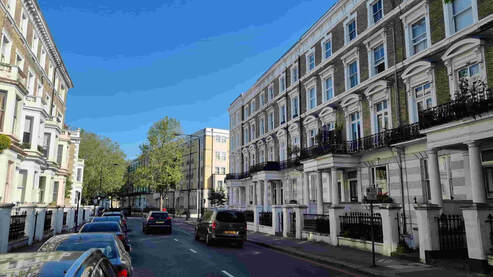
The balcony at 17 Finborough Road, SW10 from where Winifred Mulholland's body was dumped is on the right
Welcome to the Murder Mile UK True-Crime Podcast and audio guided walk of London's most infamous and often forgotten murder cases, all set within and beyond the West End.
EPISODE TWO HUNDRED AND FOURTEEN:
At 5:40am on Thursday 6th May 1948, on the basement steps of 17 Finborough Road in West Brompton, the broken body of 26-year-old part time waitress and prostitute Winifred Mulholland was found. Missing for four days, and dead for almost one, the position of her body posed a perplexing mystery; as had she been hit by car, had she fallen from a height, or had her killer dumped her in plain sight on a busy street? But why?
CLICK HERE to download the Murder Mile podcast via iTunes and to receive the latest episodes, click "subscribe". You can listen to it by clicking PLAY on the embedded media player below
THE LOCATION
As many photos of the case are copyright protected by greedy news organisations, to view them, take a peek at my entirely legal social media accounts - Facebook, Twitter or Instagram.
The location is marked with a purple exclamation mark (!) near the words 'West Brompton'. To use the map, click it. If you want to see the other murder maps, click here.
SOURCES: This case was researched using some of the sources below.
MUSIC:
UNEDITED TRANSCRIPT OF THE EPISODE: Welcome to Murder Mile. Today I’m standing on Finborough Road in West Brompton, SW10; one stop west of the stabbing of Countess Lubienska, three streets east of the last killing by the sadistic drummer boy, and a few streets north-east of where Police brutality possibly led to a suspect’s amnesia – coming soon to Murder Mile. Typical for this area, Finborough Road consists of a long-line of five-storey white-stone terraces with each floor off-set, so from the basement all you can see is feet, tyres and poodle turds, and (to truly infuriate the disabled) simply to get to the ground floor you have to first ascend a set of stone steps. With no front garden, just a sharp descent down a set of hard stone steps to the basement, it’s the balconies where the tenants tend to dump their crap; whether a broken pram, a burst bouncy castle, an excess of empty booze bottles, the gym equipment they only used once, the cardboard box for a posh telly so the burglars know which flat to break into first, and an over-sized patio set for the one summer’s day they can sit and sup wine (like they’re in Venice) as they inhale the fumes of fifty trucks. But at 5:40am on Thursday 6th May 1948, on the basement steps of 17 Finborough Road, the broken body of 26-year-old part time waitress and prostitute Winifred Mulholland was found. Missing for four days, and dead for almost one, the position of her body posed a perplexing mystery; as had she been hit by car, had she fallen from a height, or had her killer dumped her in plain sight on a busy street? But why? Being easy to identify by her rabbit-fur coat and the deep red heels to her shoes, the biggest mystery about the death of Winifred Mulholland was how did she ended up here, and why she died? My name is Michael, I am your tour guide, and this is Murder Mile. Episode 214: The Woman in Red – Part One. There wasn’t any rhyme nor reason why Winifred Mulholland would be murdered. She lived a modest life, she had a few debts, and she didn’t cause trouble, as alongside thousands of other single women struggling in the post-war era, she made the best of what she had, and she had big plans for the future. But there was a piece of her life which was missing, and this hole she filled with little white lies. Born on 11th July 1922 at Elizabeth Hospital in Birtley, Gateshead in the north-east of England, Winifred Virginia Mulholland was one of two children to Florence & James Mulholland. Raised in a poor mining community, living a hand-to-mouth existence, even though it was said by Florence & James that their marriage was not a happy one, being unable to pay for a divorce, they plodded on as best they could. Maybe this unhappy upbringing was the reason Virginia (as she preferred to be called) would remain an eternal child, always drifting from daydream to nightmare, and fleshing out her life with fantasy. Across her 26-years alive, Virginia would retain a sweetness about her; being a dainty 5 foot 2 inches tall and barely 8 stone, her fair hair was as light and airy as candy floss, her eyes twinkled as if only innocent thoughts buzzed her brain like a bee seeking out pollen, and shining like dunes on the whitest of beaches were two apple-blossom cheeks protruding as if a naughty word was perched on her lips. Years later, Lillian her landlady would state “she was a quiet babyish sort of girl, who was very fond of dancing to my wireless at home”, but she didn’t truly know her as “I thought that she was Canadian”. Why Virginia chose to pretend to be a Canadian is anyone’s guess, but she did. In 1936, aged 14, she moved with her parents and brother to London seeking better work and brighter prospects, but as happened to many families, they found the pay was higher but so were the costs. Having finished school with a basic school certificate, her options as a working-class girl were limited, and as she hadn’t the skills to become a secretary, she earned a modest wage by waitressing in cafes. And that was her life; she worked long hours to earn a pittance, she had no plans for the future, and then she went home to witness the bickering and sniping of her arguing parents. With her only escape being music, dancing and friends – her days were as typical as any other young person in that era. By 1940, being a few months into the Second World War and at the start of an eight-month bombing campaign of British cities by the Luftwaffe, with her brother sent to boarding school, Virginia and her family moved into a small cottage in the remote village of Wadhurst in Kent, 50 miles south of London. It should have been a place of safety far away from the bombed-out ruins of the West End, but being stuck alone with her warring parents – whose relationship was so bad, they lived in separate parts of the cottage - she often came home to more screams and explosions than she had heard in the city. Throughout the war-years, Virginia occupied her time and served her country by assisting the nurses at the Westminster Hospital through the Woman’s Auxiliary Air Force, but - for reasons we shall never know – her father forbade her to come home, so she took up a lodging, alone amid the bombings. In 1945, with the war finally over and a sense of normality returning, as Virginia had been struck down with an unidentified gastric disease, she returned to her parent’s cottage for two years, but then left… …only to encounter her very first brush with murder. It’s an odd link which no-one has ever connected, but in 1946, Virginia worked as a waitress at The Victory Café at 266 Edgware Road in Paddington. For two years, she was employed by the café’s manager Alice Williams who all of her staff would call ‘Madam’, as previously reported in Episode 162. Nothing could be proven, but it was suggested that although Alice supplied employment and support to many young women in a difficult situation, she was potentially also a madam; who took possession of their official papers, who got girls into sex work, and who may have taken a cut of their earnings. But on Boxing Day 1950, just 19 months after Virginia went missing, Alice was stabbed to death in the café’s kitchen by June McKechnie, a friend, a customer and a prostitute in an argument over money. It is uncertain if Alice got any of her waitresses into prostitution, but around that time Virginia received the first of four convictions for soliciting, with the last on 28th January 1948, shortly before she left. That said, there is little information about what type of prostitute she was. For Virginia, sex-work wasn’t a career option, but a casual habit she hopped into to supplement her very meagre income. As with many women in the late 1940s, the war had provided them with job opportunities unavailable prior; such as better pay and higher skills by making munitions for the war-effort. But with conscription over and many such jobs being reserved for ex-soldiers, several forms of prostitution filled the gap. It wasn’t always sex that she provided, as being an attractive and affable young lady, she sometimes escorted men on trips to the cinema, on dates at affordable restaurants and provided companionship like she was a surrogate ‘girlfriend’. And yes, she gave them full sex if they wanted it, but also a grope, a fondle, some hand relief, or a little kissing if they were that way inclined. For her services, they paid in cash, but also often with a hot meal, a warm bed, and black-market items liked chocolate and tights. With the rift between Virginia and her father ongoing, and being ashamed of her occupation, she kept a distance from her family in those final years, writing regularly to her mother, but rarely visiting. One of the last known addresses she was known to live at was the home of Mr & Mrs Evans, at a three-storey terrace at 87 Winchester Street in Pimlico, where she lodged alone in a small second floor room. It should have provided her with security, but with the Evan’s treating her with suspicion and a violent argument having erupted just shy of Christmas 1947, Virginia risked injury, poverty and homelessness owing to the unwanted affections of their son, who was described as “a little vacant”. Taking his side, Mrs Evans had threatened “to do me an injury if I did not go out with him” Virginia confided in a friend, and having paid £39 (£2000 today) in rent in advance, she risked losing it all over a sad little boy. With her contract hardly worth the notepaper it was scrawled on, Virginia left the lodging quietly, but agreed to take Mrs Evans’ rabbit-fur coat as payment for any monies lost. This was the coat she would be found dead in, but there would be nothing to connect the Evanses to the dumping of her body. In the last letter sent to her mother just a few weeks before her death, Virginia would write “my life is hard, but I hope with God on my side, I can get through it”… …only if God was watching over her, he must have blinked. It’s understandable then, that around this time, realising that Britain held nothing for her, she decided to move overseas and was in the process of applying to live in Canada. So determined was Virginia that she even adopted a Canadian accent, and – to Mrs Lillian Hall, her new landlady at 8 Bramah Road – ‘Mrs Virginia Mulholland’ of Ottawa as she called herself, said she was returning to Canada soon. For the modest price of 38 shillings-a-week for a furnished ground floor room in a Camberwell house along with breakfast and high tea if she desired, Lillian would state “she agreed to occupy the room alone”, which she did and although Lillian thought she was a waitress, no men were brought back. Quite why she lied about being a Canadian in uncertain, but these little flourishes to her life didn’t have a malicious streak – as she wasn’t running from bad men, large debts or dirty secrets – so it could simply have been her immaturity or a desire to make her dull life seem that little bit more thrilling… …but if it was a thrill she wanted, then the climax to her life was about to begin. Sunday 2nd May 1948 was an ordinary day for Virginia. As a woman who wasn’t much of a drinker, rarely argued, and was harassed by men no more than any other attractive woman, her landlady Lillian would state “she told me she worked in a café near Fleet Street, she left at 6:30pm every evening, or sometimes at 4pm she’d go to the pictures and used to arrive home at 6am. She always kept herself-to-herself and I never saw her with anybody during her stay… she’d stop away for nights, or a day or two saying she was staying with a young woman…”. That said, the café where she worked was never found and neither was the young woman, but that didn’t mean they didn’t exist, just that the details the police were given were too scant to find them. At 4pm, Lillian would state “she left my house in Camberwell and said she was going out”, although she didn’t say where she was going which wasn’t unusual. Across her shoulder was slung a string handbag containing her purse and a small red diary (into which she noted her clients and the monies they paid), she wore a rabbit’s fur coat with a mend on the hem that Lillian had recently repaired herself, and on her feet, a pair of black ‘toeless’ sling-back shoes with red heels to match her red dress. That was the last time she was seen alive. With no known place of work, no close contact with family and no regular routines with friends, being the type of girl who did her own thing and could easily be gone for days, no-one reported her missing. Four days later and 4 and a ½ miles west of Camberwell, on Thursday 6th May at 5:40am, Albert Edward Stamp, a millwright was walking to work when he cut through Finborough Road, as per usual. Strolling along the north-side of the pavement, as he passed 17 Finborough Road, he spotted a stockinged foot of what he thought was a discarded mannequin peeping out of the wrought iron railings, its toes up. Peering over, the left leg was buckled underneath, twisted at an unnatural angle as if the hip had been dislocated or the knee had been snapped 90 degrees left, as long splashes of blood ran vertically along the length of both legs. Being the wrong size and shape, he knew it was too realistic to be a dummy. With her legs splayed over the stonework, her torso sprawled across the length of the top step, and her head hanging backwards over the lower step, facing the basement with her body facing skywards, either she had been hit by a car and landed in a heap, had fallen from a height, or had been dumped by someone who saw her as nothing more than disposable, like rubbish chucked out with the bins. What had happened was uncertain, as maybe in the fall, her red dress had riden up, her camiknickers were shown, to the side of her head lay her string handbag (almost as if it was a pillow to rest on), as underneath her smashed and shattered body lay her rabbit’s fur coat, worn as she was last seen in it. And yet, although she was dressed to go out, her shoes were missing, but she hadn’t walked barefoot. Believing this to be an accident, Albert ran to nearby St Stephen’s hospital. At 6.30am, Dr John Higgs examined the body and certified her as dead, and at 6:40am, Detective Inspector Albert Webb arrived. Speaking to the neighbours, no-one knew the woman, had seen her nearby and no-one had heard any suspicious sounds which could explain her injuries or how she had got there. According to her details, she wasn’t a resident at the house she was found in front of and she had no known reason to be there. If she was hit by a car, where were the broken lights or scratched paint flecks? If she fallen from one of the balconies, how did she get into the house? And if her body had been dumped here, where was she killed, as a lack of fresh blood at the scene would prove that she hadn’t died where she was found. She had no stab wounds, no bullet holes, and no obvious evidence of an impact by a car. She hadn’t been dragged a considerable distance, but where she had, it wasn’t outside. And there was no alcohol, no drugs nor poison in her system to suggest that her demise may have been a result of a suicide. If she was murdered, her killer would most likely (according to the detectives) have dumped the body in a place she had no known association with and usually within a mile of where the murder took place, as the longer he spent in public with the body, the more likely he is to be caught and leave clues. It was a crime-scene which didn’t make much sense; she was a woman who didn’t belong here, who no-one had seen, with no signs of a robbery, and although her face had sustained significant injuries, if her killer had tried to hide her identity, why did he dump her with her handbag, purse, ID and diary? Inside the red diary were entries such as “February 11, I met a client, failed to record his name - £4”, and yet there was no references to the night or any client in question, and no page had been torn out. But then again, maybe she only filled in her diary after she had serviced her client, and not before? And as for her jewellery, although she never wore anything expensive - just cheap plastic costume pieces to highlight her look - under her body lay a single clipped earring, and bit of a broken brooch, but where were the other pieces? Had someone taken them or were they in the place where she died? The pathologist Dr Donald Teare saw the body in situ at 10am. In his notes, he observed “it was lying on its back on the upper steps leading down to the basement of 17 Finborough Road… the atmospheric temperature was 57.5 degrees Fahrenheit” (roughly 13.8 degrees Celsius) “the body felt cold, but rigor mortis was not detected in the jaw or the limbs”. As it was unlikely that she had died where she was found, her time of death was impossible to determine, “as decomposition was beginning to set in the internal organs”, but as the congealed blood and the bruises were older than the decomposition, her injuries were at least two-to-three days old, but her possible time of death was no more than a day. With a dislocated left hip and knee, a fracture in her lower left femur and one through the 5th cervical vertebrae of her neck, these injuries were most likely as a result of a short fall, possibly onto the stone steps themselves, but they hadn’t been the cause of her death, as it was likely she was already dead. Like robbery, rape was ruled out as a possible motive, as “although her vagina contained a large quantity of white mucus”, believed to be sperm, “although there was a small erosion to the lining, I found nothing inconsistent with her having had sexual intercourse prior to death”, consensual or not. Which didn’t mean it didn’t happen, just that any evidence of any sexual injury was not seen. Inside her throat, “there was extensive bruising to both sides of the tongue, and as was apparently due to the teeth being driven into the tongue”, owing to a sharp impact, “and with dried blood found in the trachea”, she was still breathing after the attack, which had occurred hours, if not days earlier. The autopsy confirmed that her cause of death was not due to the fall, but to the wounds to her face. Four wounds, all swift and shocking enough to render her unconscious, and her death to be slow. Dr Teare would state “cause of death was laceration to the brain... as across the centre of the forehead was an irregular lacerated wound four inches long… with an area of depressed fractures, an inch and three quarters wide from the frontal bone… which radiated back into the roof of the eyes and nose…”. Using a blunt heavy object, she had been hit hard over the head with an object made of steel or iron, of an irregular shape and surface, it had caved her skull in sending sharp shards of bone into her brain. Owing to the force, this injury was unlikely to be an accident or as a result of a fall, as owing to free-flowing blood from the wound, she was alive and her heart was beating when she was the attacked. This swift and sudden impact resulted in rapid unconsciousness and a slow and agonising death which almost certainly paralysed her entire body in seconds, only her assailant’s attack was far from finished. Upon what was described as her once apple-blossom cheeks “a series of circular abrasions, with one on the right cheek and two on the left, had left distinct circular marks”. Being of even size and slightly octagonal, she had been struck three times with a hammer across the face, as the bones fractured across the bridge of her nose, down to her chin and right up into the depths of her eye sockets. All of these injuries occurred while she was still alive, but everything else was post-mortem. Including the superficial abrasions to the knuckles of her left hand and a laceration to her nose, which may have occurred as she was dragged from where she had died to where she would eventually be dumped. And with the fractures to the 5th vertebrae of her neck, a dislocated hip, knee and a smaller fracture to the lower left thigh bone, all were post-mortem injuries resulting from “at least a 15-foot fall”. The autopsy asked more questioned than it answered, such as where had she died, why was her body been dumped here, who had attacked her and why, and - if she was attacked on Sunday 2nd May, and she wasn’t found until Thursday 6th - what happened to her for the four days in-between? (End) All of the tenants at 17 Finborough Road aided the police as best they could with the investigation and provided witnesses statements into what they had seen and heard, prior to the body’s discovery. They were John Eldred a docker in the basement, George Eyton an engineer on the first, Zdenek Kubert a toolmaker who lived with his wife on the second, and Dr Wallace a female GP on the third floor. Police also spoke to all of her family members, her closest friends, her landlady Lillian Hall, as well as her former employer Alice Williams at the Victory Café and the possible prostitution ring she may have been involved in, and Mr & Mrs Evans and their “slightly vacant” son, whose coat Virginia was wearing. Only, there didn’t seem to be an immediate reason why anyone would want her dead. She wasn’t a bad person, she didn’t blackmail anyone, and her only real secret was her desire to move to Canada. The murder of Winifred Virginia Mulholland would prove to be one of the most baffling cases that the Police had ever encountered, on the surface at least. And yet they would have the case wrapped up and a prime suspect in custody by the end of the day, with every piece of evidence proving conclusive. But this would be a turning point for many of the investigating officers, as the murder itself would go against everything they had known about murderers and their motives, as although they believed the killer was at least a mile away, all the while, he was watching them and listening to their every word. The concluding part of The Woman in Red continues next week. The Murder Mile UK True Crime Podcast has been researched using the original declassified police investigation files, court records, press reports and as many authentic sources as possible, which are freely available in the public domain, including eye-witness testimony, confessions, autopsy reports, first-hand accounts and independent investigation, where possible. But these documents are only as accurate as those recounting them and recording them, and are always incomplete or full of opinion rather than fact, therefore mistakes and misrepresentations can be made. As stated at the beginning of each episode (and as is clear by the way it is presented) Murder Mile UK True Crime Podcast is a 'dramatisation' of the events and not a documentary, therefore a certain amount of dramatic licence, selective characterisation and story-telling (within logical reason and based on extensive research) has been taken to create a fuller picture. It is not a full and complete representation of the case, the people or the investigation, and therefore should not be taken as such. It is also often (for the sake of clarity, speed and the drama) presented from a single person's perspective, usually (but not exclusively) the victim's, and therefore it will contain a certain level of bias and opinion to get across this single perspective, which may not be the overall opinion of those involved or associated. Murder Mile is just one possible retelling of each case. Murder Mile does not set out to cause any harm or distress to those involved, and those who listen to the podcast or read the transcripts provided should be aware that by accessing anything created by Murder Mile (or any source related to any each) that they may discover some details about a person, an incident or the police investigation itself, that they were unaware of. Murder Mile UK True-Crime Podcast - #213: "Finished with Life" (The Suicide of Father Louis Caceres)7/6/2023
Nominated BEST TRUE-CRIME PODCAST at The British Podcast Awards, 4th Best True Crime Podcast by The Week, The Telegraph's Top Five True-Crime Podcasts, The Guardian and TalkRadio's Podcast of the Week, Podcast Magazine's Hot 50 and iTunes Top 25.
EPISODE TWO HUNDRED AND THIRTEEN:
On 15th September 1894, being part way through a world tour to spread the word of God, Father Louis Caceres, a portly elderly priest had booked a room for himself and his faithful assistant Eugene. But growing depressed at his failing health as the tour took its toll, here the priest would take his own life. His death sent shock waves throughout the Catholic faith, but not just because his suicide was a sin.
CLICK HERE to download the Murder Mile podcast via iTunes and to receive the latest episodes, click "subscribe". You can listen to it by clicking PLAY on the embedded media player below.
THE LOCATION
As many photos of the case are copyright protected by greedy news organisations, to view them, take a peek at my entirely legal social media accounts - Facebook, Twitter or Instagram.
The location is marked with a black exclamation mark (!) near the words 'Soho', right in the midst of all the icons. To use the map, click it. If you want to see the other maps, click here.
SOURCES: This case was researched using some of the sources below.
MUSIC:
UNEDITED TRANSCRIPT OF THE EPISODE: Welcome to Murder Mile. Today I’m standing outside of 49 Old Compton Street in Soho, W1; directly opposite of the unsolved killing of Dutch Leah, six doors west of the bombing of the Admiral Duncan pub, and three doors east of the not-so-tragic demise of ‘the cruel vulture of Soho’ - coming soon to Murder Mile. At 49 Old Compton Street currently stands a four-storey red-brick monstrosity with six crappy flats above housing (as witnessed on my old tour) one of the rudest arseholes in the whole of Soho, and on the ground-floor stands a shop - which could be open, closed or empty - as with every new tenant coming up with the genius idea to sell just one item – whether croissants, hand-cut crisps or hummus – they all appear shocked when their entrepreneurial dream shuts having not had a single customer. Back in 1894, this building was a modestly-priced hotel called Blondel’s. Set over four floors with ten rooms per level, a bathroom per floor and a restaurant on the ground, Blondel’s became a home-from-home for many businessmen, travellers and even clergymen from all four corners of the world. On 15th September 1894, being part way through a world tour to spread the word of God, Father Louis Caceres, a portly elderly priest had booked a room for himself and his faithful assistant Eugene. But growing depressed at his failing health as the tour took its toll, here the priest would take his own life. His death sent shock waves throughout the Catholic faith, but not just because his suicide was a sin. My name is Michael, I am your tour guide, and this is Murder Mile. Episode 213: “Finished with Life” – the suicide of Father Louis Caceres. Everybody has their breaking point. For the elderly, once their will has gone, their bodies simply slip away. Whereas for those who still have life to live, the only way to reach the eternal sleep is by their own hand. For Father Louis Caceres, every problem in his life came to a head on Old Compton Street. Little is known about the life of Father Louis, for obvious reasons. Said to be a native of the South American country of Peru, Father Louis came from money, being the son of a wealthy trader who had enjoyed all of the pomp and privilege that came with such high status. Unlike many in his country, Louis was well-educated - being fluent in Spanish, English and Latin - with his handwriting as neat as any scribe and his spelling and grammar was nothing short of faultless. But although his family’s wealth kept him shielded from the poverty of his country, it also broke his heart. At an early age, Louis found God and making it his mission to help those less fortunate than himself; he joined his local church as an altar-boy, and in his teens, he entered the seminary where he learned to live a humble and decent life - the whole ethos of his education was to live as simply as Jesus had. Which was easier said than done when the church was a place of privilege and excess; being a brick-built monument to God’s wonder stretching to the sky which dwarfed the shacks in its shadow; and being stuffed with ornate manuscripts, golden icons and sparkling stained-glass windows which – if sold - could feed and clothe the community for a year, it filled him full of conflict that, as the priests in their silk robes asked the poor to donate, the Church was (and still is) the world’s largest landowner. The church was a contradiction of wealth and poverty made all the more confusing by his upbringing. Father Louis liked his food, and being well-travelled, he always ate well; whether pheasant, quail, caviar or pate, with a sherry or a flute of champagne from time to time, and maybe even a cigar. And burdened by a sweet tooth, he was not averse to demolishing a pudding or two, shovelling in a few sweeties into his unoccupied pie-hole or sampling a merest morsel of cake should he pass any bakery. When he was young, this excessive consumption wasn’t much of a problem, as although being a little man of barely five-foot-tall, his health could carry his bulk. But as he entered his sixties, and his weight ballooned up to 18 stone, the additional chunkage put a real strain on his limbs, his lungs and his heart. Being shaped like a well-stuffed doughnut, when he walked, his jowls wobbled like a glorious jelly and his ankle fat billowed over his shoes like an over-generous piecrust, but with his lungs wheezing like a broken accordion, every step he walked felt like a mile and every breath was like a battle to find air. So, it may seem surprising that, in the Spring of 1893, Father Louis Caceres decided to leave his native Peru and to set-sail on a world-tour to spread the word of God. It was never said why he chose that moment to leave; maybe he felt the change of scenery would be beneficial to his health, maybe he wanted to flee his family and the excesses of the church, or maybe this was his last chance to do good. It was a journey which would cover South America, North America, Europe and England… …but having arrived in Soho, he would never return home. As a man described as being “in comfortable worldly circumstances”, the world tour of Father Louis was entirely self-financed, as into the Banco de Londrs y Rio de la Plata in Buenos Ayres, he deposited £400 (roughly £50,000 today), and with branches across the Americans but also in London and France, all he needed was his notarised letter of credit to allow him to withdraw any money, at any time. Remarkably, the Central American leg of the trip went without a hitch, but with him no longer being a spring chicken but more of a fatted duck, even the most simple of duties became a mission for Louis. Therefore, it was a blessing when Louis met Eugene; a man more than half his age and three times his strength - who as a devout Catholic, spoke fluent French, moderate English, had worked in Paris and London, and as an out-of-work chef who desperately needed a job – he was more than thrilled (if not honoured) to assist this well-respected priest in return for a warm bed, free meals and a small wage. As the Priest’s personal servant, Eugene was unvaluable; he carried his luggage, he made his meals, he re-arranged his itinerary when Louis got too weak, and he ensured that every bill was paid on time. By August 1894, having arrived in Paris, much of the priest’s planned schedule was scrapped, as having become slower and weaker, any trips to visit local charities had been side-lined in place of bed rest. And it wasn’t just the priest’s strength which was being sapped, so was his mood. Gone was the jolly man with the hearty laugh, as in its place stood a sullen man who slumped with every fading footstep. Whether life had lost its meaning, or he knew that every breath may be his last, as they travelled from Paris to Dieppe, Father Louis had even lost his love of food. Pushing a fine French cassoulet to the side of his plate, even the one true love in his life couldn’t rouse this fading light from toward the darkness. On 14th September 1894, Louis & Eugene arrived in Newhaven on the English south-coast. As neither anywhere new or even a haven (except for drunken sailors and lost deadbeats), they bedded down in a cheap B&B for one night, and – although Father Louis should have called it quits on the tour and headed home to Peru – on the 15th September, they arrived amongst the sprawling smog of London. As a Priest, Soho was an odd choice… …a godless hole riddled with the excesses of cruelty and corruption, a feted pit piled high with the shattered souls of the debauched, and with every street stained with the acrid stench of drink, drugs, sex and sin. Across the world, Soho was synonymous as a place where unlawful death was common and even the innocent were killed for as a little as a few pounds to satisfy the cravings of a dope fiend. …but Soho was where he chose to stay, and it was also, where he would die. Blondel’s at 49 Old Compton Street was an affordable but decent hotel with soft beds, clean sheets, running water, a chambermaid service if required, and a restaurant on the ground-floor for all meals. As his assistant, Eugene booked them into a twin-room on the third floor overlooking the street. It was small and simple, with the priest’s bed nearest the window so the air could aid his recovery. As a priest, although unknown to the denizens of Soho, Father Louis was respected, and knowing that his sickness was being attended to by his faithful assistant who fetched his meals and medicine, although his hacking cough would echo the halls, they gave him the privacy that this man of the cloth required. Over those three weeks Father Louis was in Soho, he never left his room and rarely left his bed. Stuck staring at a blank wall, as he gripped his crucifix in his hand, he pondered whether his time had come, or if – for sins he was never absolved of, whether of the heart or the mind - God had abandoned him. According to Eugene, Father Louis was a good man, but even his faith couldn’t save him now. At Father Louis’ request, on Wednesday 3rd October, Eugene went Banco de Londrs y Rio de la Plata with the ‘letter of credit’ signed by the priest, and with his ID, he withdrew £30 (roughly £4000 today). As was their routine, clearing the bills till the end of the week – for a laundry, a bakery and a charity –as requested, Eugene paid 17 shillings at the Hotel Blondel covering their stay until the coming Sunday. That afternoon, as had become all-too-common, Father Louis was heard coughing and choking as his body failed him once again, and having become increasingly depressed, he had decided he was done. On the morning of Sunday 7th October, four days later, the chambermaid came to change the sheets, as – by all accounts – their check-out time had elapsed, and some new guests were due to move in. Hearing nothing familiar - no snoring, no coughing and no choking – she assumed the priest had left. But opening the unlocked door, there she found his body. Dressed in just a pair of silk pyjamas, although a deep indentation of his corpulent body remained on the mattress where he had spent the last three weeks of his life, Father Louis was not in bed. Being too large and sickly to get to his feet, Dr Severs of Gerrard Street would confirm “he had lied upon his bed, tied the ends of a silk handkerchief together, and with the loop over his head and the bedframe, he put his feet on the ground and rolled himself out of the bed, and thereby strangling himself”. Found lying face-up, with his lips blue, his tongue out and his eyes protruding, a large pool of blood flowing from his nostrils was consistent with asphyxiation. And with the greater part of his body (his legs, his trunk and his right elbow) resting on the floor, although his head was just a few inches off the floor, it was a strange way to die, but being too sick to stand, the doctor said it was entirely possible. With no bruises to his body and no signs of a struggle or an assault, the room told a similar tale; as none of the furniture was disarranged, his luggage trunks were in the corner, and his slippers were to the side of the bed as if they had either fallen off or he had taken them off prior to taking his own life. On the bedside table lay two things; a loaded six-shot revolver with no cartridges spent, which he may have considered as an option; and his suicide note – which being a sin – showed the imbalance of his mind. Handwritten in Spanish, his final words were “To the inspector of Police. Dear Sir. Do not accuse anybody of my death. I am finished with life. I am disgusted with my family. I do not require any noise after my death. I have no papers. I do not wish anybody to know the other motives. Once more, keep silence in order there may be no scandal. May God bless you. Father Louis Caceras, a native of Peru”. At 10am, Mr Blondel, the hotel proprietor called James Spindelow, the coroner’s officer to state that one of his lodgers had “hanged himself”. Dr Severs of Gerrard Street confirmed this cause of death, and as was standard practice, Detective Inspector Greet of Scotland Yard headed up an investigation. It was as clear a case of suicide as he had ever seen, but the hardest part was identifying the priest. Liaising with the Spanish and Peruvian Consuls, as Father Louis had no papers upon his person and – it was believed that (as his assistant) Eugene had possibly been sent on a religious mission to a God-forsaken place in the wilds of somewhere near or far – until confirmed - an inquest was held at St Ann’s church on Dean Street into the death of an unknown priest, believed to be Father Louis Caceres. Headed up by Harold Smith, the newly-appointed coroner for Westminster, on 9th October 1894, with the jury having listened to the expert witnesses testimony of the chambermaid, the hotel proprietor, the police inspector and Dr Severs who had performed the autopsy on the body, the inquest took just thirty minutes to reach a verdict of ‘death by suicide, while the balance of his mind was disturbed”. And with that, the case was closed. The room was cleaned, his belongings went into storage, and although he had committed the ultimate sin which negated his ascent to heaven, the body of Father Louis Caceres was shipped back to Peru, and until his details could be determined, he was buried in a temporary grave. And there our story ends - a sick elderly priest came to Soho, and growing ever more depressed, he took his own life. (Pause) …only the jury would call “bullshit”. The ruling of ‘death by suicide’ was based on the evidence put before them, but having read-up further about the case in the Pall Mall Gazette which contained details neither the jury nor the coroner knew, and (as was their right) having seen hotel room with the body in situ before attending the inquest, the jury found huge gaping holes in the case and requested that the coroner insist on a second inquest. As is the role of any inquest, with the first one described as “hurried” and “anything but searching”, the second – opened just two days later – ensured that this tax-paying jury who funded this hogwash made full use of their right to pose questions to these expert witnesses, and they had a lot to say. A series of searing questions were posed by the foreman of the jury to the experts. Foreman: “Dr Severs, you say this man committed suicide by hanging, but his head was barely off the floor”. Dr Severs: “indeed I did Sir, it only takes but an inch to hang one-self”, Foreman: “I see, but surely if he had tied the noose and rolled out of bed, he would have been found face down. Whereas this man died face up, and how could a man (even of his bulk) strangle himself if he was face up?” At which, the Doctor umm’d and arrgh’d, but even he couldn’t provide a logical answer. To Detective Inspector Greet, the Foreman asked: “you said there were no signs of a robbery?”, Greet: “I did, Sir”, Foreman: “in your words, ‘nothing was found on the corpse’?”, Greet “not a farthing Sir”, Foreman: “but what about elsewhere in the room? What about his papers, his passport, his bank details? The luggage was there, but what was inside?” - it was an answer the foreman knew as they had seen the crime scene in situ – at which the Inspector replied “nothing”. Foreman: “nothing? Not his clothes or his priestly robes?”, Greet “Erm, no Sir”, Foreman: “and you say there was no robbery?”, At which, the Inspector umm’d and arrgh’d, but even he couldn’t provide a logical answer. And then there was the suicide note, which had been read in full and taken as fact that it was written by Father Louis, but having not seen it before, the jury had a few issues with this piece of evidence. Foreman: “the priest was an educated man, was he not?”, Inspector Greet: “he was”, Foreman: “a fluent Spanish speaker being a native of Peru?”, Greet: “he was”, Foreman: “hmm, so why if he wrote this note in his native tongue was his spelling so atrocious?”, as not only was it gibberish but the penmanship was so poor it looked as if a disabled donkey had scrawled it using a broken crayon. And when the foreman asked: “Is this the suicide note of a scholarly priest?”, the Inspector had to conclude “possibly not”, as the vestry room flooded with a sea of red faces who had done the bare minimum. Finding “insufficient grounds to adopt the medical view of the case being one of suicide”, the foreman returned an open verdict, and the police were requested to re-investigate this as a possible homicide. It didn’t take long to find a loose thread or two in Soho: some of the priests’ clothes were found at a pawnbroker having been sold days earlier; debts had been paid at the laundry, but from his deathbed – somehow - the priest had racked up debts in many pubs, clubs and brothels; and having emptied his account at the Le Harve branch of his bank two days after he had died - they eventually discovered that Father Louis Caceres of Peru didn’t exist, as – taking his registration at the Hotel Blondel as proof – someone had deliberately hidden the fact that the victim was Father Gabriel T Seguí of Buenos Ayres. Only one man knew the truth of what had happened that day… …and he had vanished into thin air. Eugene Roubillot, his 24-year-old assistant had left the Hotel Blondel on the afternoon of Thursday 4th October, carrying a small suitcase and being dressed in a fine set of priestly robes. Identifying himself as Father Gabriel T Segui the Chief Chaplin of the Argentine Republic, he went unchecked at any border as he caught the boat train from Waterloo to Southampton, and at midnight, hopping the train to Le Havre – as a man of God – he was treated with respect and no-one dared to question or bother him. On Friday 5th October, Eugene entered Banco de Londrs y Rio de la Plata in Le Harve, with his ID and his letter of credit, he closed the full remainder of the account, being £370, roughly £48,000 today. Knowing that such a silly crime scene wouldn’t fool anyone and that the suicide was just plain stupid, Eugene fled as far as he could and caught a French liner from Le Harve to New York, where a respected priest with the money to pay his way booked into a modestly priced hotel and laid low for a while. His escape was swift, in fact his fleeing was faster than the reporting of the case in the press, as by the time he had arrived in New York, he was overjoyed to read an article in an American newspaper which declared “an inquest in Soho, London has ruled the death of an unknown Peruvian priest as suicide”. Based on this article, Eugene had committed the perfect murder… but by the time that news of the second inquest would be reported, he would be too drunk, stoned and shagged-out to know the truth. Burning through the money like his pockets were on fire, Eugene blew a wad on fancy hotels, fine wines, sexy fillies and enough ‘white powder’ to reline a football pitch, and although this was an era when priests were as corrupt as the police, causing too much of a stink in the core of the Big Apple, he hopped the next liner to France, and fled back to his home town of Toulon in the South of France… …where he lived a raucous life full of champagne, cocaine and prostitutes. (End) The excesses of Eugene Roubillot came to an end barely one month later on 6th November 1894, when two men were arrested for starting a drunken bar fight in Toulon, one of whom was dressed as a priest and gave the name and ID of Father Gabriel T Segui, a man who had – supposedly – committed suicide. With Scotland Yard notified of his arrest, and with almost none of the money left, all he had to show for his month of fun was a black eye, a hangover, a dirty set of priest’s robes and a knackered penis. Charged with the murder of Father Segui, British Police unsuccessfully tried to extradite him back to London, but being a French citizen, he was ultimately tried in Court of Assizes at Draguigpan in Paris. To determine if foul play had occurred, the priest’s body was exhumed and a thorough autopsy was conducted, leading to a new investigation which took almost a year to bring to court. Tried on the 20th January 1896, Eugene Roubillot was found guilty of robbery and fraud, but with murder impossible to prove, the jury granted him extenuating circumstances and he was sentenced to hard labour for life. The likelihood is that the priest was strangled to death by his assistant for the sake of his money. It was far from being the perfect murder, but he almost got away with it, owing to the failure of three expert witnesses; a doctor, a coroner and a detective being too unwilling to see beyond the obvious… …that on the surface, although it looked like a suicide, a priest had been murdered in Soho. The Murder Mile UK True Crime Podcast has been researched using the original declassified police investigation files, court records, press reports and as many authentic sources as possible, which are freely available in the public domain, including eye-witness testimony, confessions, autopsy reports, first-hand accounts and independent investigation, where possible. But these documents are only as accurate as those recounting them and recording them, and are always incomplete or full of opinion rather than fact, therefore mistakes and misrepresentations can be made. As stated at the beginning of each episode (and as is clear by the way it is presented) Murder Mile UK True Crime Podcast is a 'dramatisation' of the events and not a documentary, therefore a certain amount of dramatic licence, selective characterisation and story-telling (within logical reason and based on extensive research) has been taken to create a fuller picture. It is not a full and complete representation of the case, the people or the investigation, and therefore should not be taken as such. It is also often (for the sake of clarity, speed and the drama) presented from a single person's perspective, usually (but not exclusively) the victim's, and therefore it will contain a certain level of bias and opinion to get across this single perspective, which may not be the overall opinion of those involved or associated. Murder Mile is just one possible retelling of each case. Murder Mile does not set out to cause any harm or distress to those involved, and those who listen to the podcast or read the transcripts provided should be aware that by accessing anything created by Murder Mile (or any source related to any each) that they may discover some details about a person, an incident or the police investigation itself, that they were unaware of. |

AuthorMichael J Buchanan-Dunne is a crime writer, podcaster of Murder Mile UK True Crime and creator of true-crime TV series. 
Archives
May 2024
Subscribe to the Murder Mile true-crime podcast
Categories
All
Note: This blog contains only licence-free images or photos shot by myself in compliance with UK & EU copyright laws. If any image breaches these laws, blame Google Images.
|